Decorative Outlet Plates vs. Standard Plates: When to Use Each
Use outlet plates only when the device style or room finish is already upgraded; for a standard retrofit, standard plates are usually the cleaner choice. Choose the wrong cover and you can end up with a plate that sits awkwardly, costs more than needed, or leaves the repair looking half-finished. This guide shows when the plate should match the device, when decorative plates make sense, and when standard plates are the better buy.
| Decision factor | outlet plates | standard plates | Winner |
|---|---|---|---|
| Device match | Best for rocker switches, dimmers, and many GFCI outlets with a large rectangular opening | Best for standard duplex receptacles with two rounded openings | standard plates |
| Retrofit simplicity | Works well when the device family already matches, but can expose uneven drywall or a mismatched cutout | Usually the simplest replacement for a like-for-like outlet swap | standard plates |
| Finish flexibility | More finish options, including white, ivory, almond, brass, and stainless steel | Also available in common finishes, but usually chosen for a low-key look | outlet plates |
| Uniform look across a home | Best when the whole device family is being updated to Decora-style hardware | Best when you want every conventional receptacle to keep the same duplex appearance | standard plates |
What changes and what stays the same
The plate changes the opening, the face shape, and the visible finish. It does not change the circuit voltage or turn a duplex receptacle into a rocker device; both decorative and standard outlets are commonly available in 15 and 20 amp ratings, and both use 120 volts on common circuits. The device face still sets the fit.
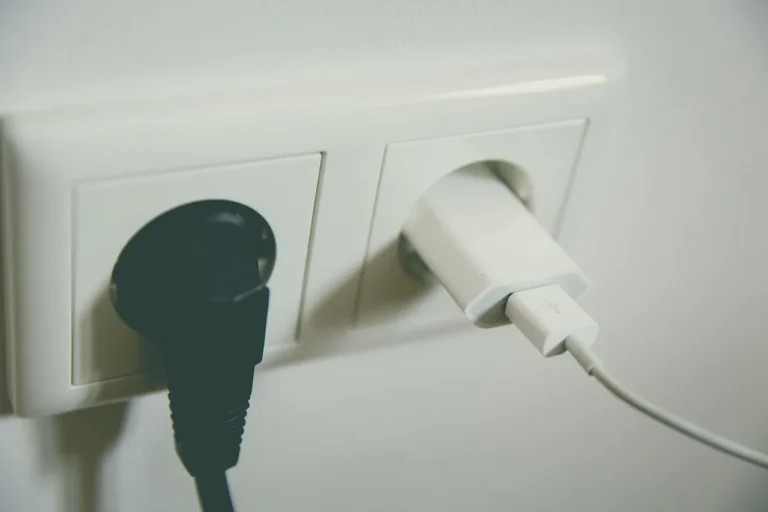
That is why plate choice starts with the device. A duplex outlet plate has two rounded openings for a standard outlet face, while a Decora or decorator wall plate has a large rectangular opening for rocker switches, dimmers, and many GFCI outlets. If the opening does not match the installed face, the swap will look wrong even if the color matches the trim.
Outlet plate types at a glance
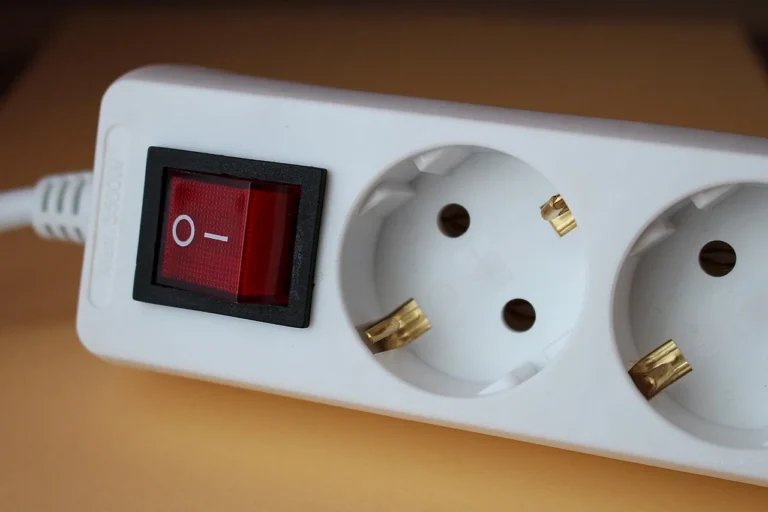
Standard duplex plate
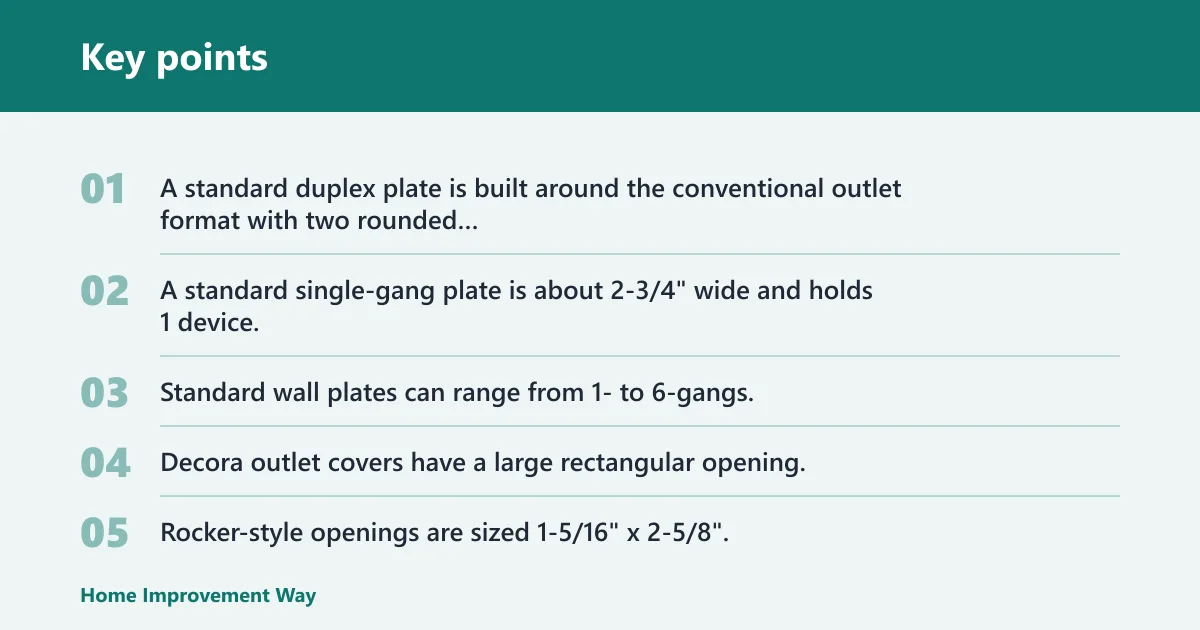
A standard duplex plate is built around the conventional outlet format with two rounded sockets. A standard single-gang plate is about 2-3/4″ wide and holds 1 device, while a 2-gang plate is about 4-1/2″ wide and holds 2 devices. Standard wall plates can range from 1- to 6-gangs, so the width changes with the number of side-by-side devices.
Decora or decorator plate
Decora outlet covers have a large rectangular opening. Rocker-style openings are sized 1-5/16″ x 2-5/8″, and decorator plates can fit GFCI outlets and phone or data jacks. Decora wall plates can have from 1 to up to 6-gangs, which makes them useful in mixed-control walls and updated kitchens or baths.
Common finishes and gang sizes
Finish is mostly about appearance once the opening is correct. White, ivory, and almond are common plastic finishes, while brass and stainless steel are often used as decorative options. Some decorative outlets use solid brass and other metal finishes, so the plate can be part of a broader trim match when the device family is already set up for it.
Gang size matters because the plate width must match the number of side-by-side devices. A single-gang opening is common for one switch or receptacle. Multi-gang layouts can run into 2-gang, 3-gang, or larger plates, and a box that is crowded or shallow can make a decorative swap feel less tidy than a simple replacement plate.
Outlet plate decision table
Use the table below as a buying check before you leave the aisle. Start with the device face, then check the box layout, then think about the room finish. If the face shape and gang count do not line up, the prettiest plate will still be the wrong part.
| Device type | Visible face shape | Compatible plate style | Common room use | Retrofit risk | Best choice |
|---|---|---|---|---|---|
| Duplex outlet | Two rounded sockets | Standard plate with duplex cutout | Bedrooms, living rooms, hallways | Low, if the box and drywall edge are sound | standard plates |
| Rocker switch | Rectangular rocker face | Decora or decorator plate | Main rooms, newer interiors, control walls | Low to moderate, depending on box depth | outlet plates |
| GFCI outlet | Rectangular device face with test and reset controls | Decora or decorator plate | Kitchens, bathrooms, garages, laundry areas | Moderate, because the cutout must be exact | outlet plates |
| Dimmer | Rocker or slider style, often rectangular | Decorator plate | Dining rooms, bedrooms, media spaces | Moderate, if the dimmer body is deep | outlet plates |
| Combination box | Mixed faces side by side | Multi-gang plate, often mixed device family dependent | Kitchens, utility rooms, shared control walls | Higher, because one mismatch can spoil the whole cover | Depends on the installed device family |
| Uneven/opening-damage retrofit | Old cutout, chipped drywall, or oversized edge | Standard plate if it hides the damage better; decorator only if the face matches cleanly | Older homes, patch repairs, after device replacement | High, especially with shallow electrical boxes | standard plates |
What plate fits each device?
The device face determines the plate. Duplex outlets want a standard duplex plate, rocker switches want a rectangular decorator opening, and many GFCI outlets follow the Decora pattern. If you start with the wall décor instead of the device, you can buy the wrong cover and still need another trip to the store.
Duplex outlet
A standard outlet has a duplex face with two rounded sockets, so it belongs behind a standard outlet plate. This is the cleanest fit when you are replacing one conventional receptacle with another. It also keeps the look consistent across rooms that still use standard devices.
Say your living room has a single 1-gang duplex receptacle near the sofa and you only need a replacement cover. A standard plate is the direct match. A decorator plate would not solve a face-shape mismatch because the outlet itself is still a duplex device.
Rocker switch
Rocker switches pair with decorator plates because the opening is rectangular, not round. The match is about the device body, not the paint color on the wall. If the switch family is already Decora-style, keeping that same plate shape is the simpler route.
GFCI outlet
GFCI outlets commonly need a Decora-style cutout, especially in kitchens and bathrooms. That is where the plate style should follow the receptacle face instead of room décor alone. If the GFCI has a rectangular front, a standard duplex plate will not be the right fit.
Dimmer
Dimmers are usually part of the decorator family, so they work with outlet plates that have the larger rectangular opening. This matters more than the finish itself. A brass plate around the wrong opening still looks wrong.
Combination box
A multi-device box can force the decision. When a receptacle, switch, and dimmer share one opening, the gang count and device family need to line up together. If one device is still standard while the others are Decora-style, the plate choice depends on the actual cutout layout, not the room’s style goal.
A common first-timer mistake is buying a 2-gang decorative plate because the wall has two devices, then finding one device is a standard duplex outlet and the other is a rocker switch. The plate might cover the box, but the openings will not match both faces. The fix is to check each device before you buy.
When should you use a standard plate?
A standard plate is often the simplest choice when the installed device is a conventional duplex receptacle and a straightforward like-for-like replacement is the goal. It is also the better choice when the goal is to keep a uniform duplex look across the home. If the opening is older, damaged, or a little uneven, standard plates are often more forgiving than a decorative swap.
Keeping a uniform duplex look
Many homes look cleaner when every conventional receptacle uses the same duplex face and the same simple cover. That consistency matters in hallways, bedrooms, and older living spaces where the rest of the hardware has not been updated. In that setting, a standard plate avoids a one-off cover that draws attention.
Simple replacement with the same device family
If you are replacing a standard outlet with another standard outlet, the least complicated path is usually a standard plate. The opening is built for the face you already have. There is less chance of a visible gap, and less chance of buying the wrong cutout by mistake.
Avoiding extra retrofit work
Older or damaged openings can make a decorative swap harder, especially if the box depth or drywall edge is uneven. A shallow electrical box can also limit how neatly a deeper device sits behind the plate. In those cases, the cleaner retrofit is usually the one that requires fewer corrections.
When does a decorative plate make sense?
Use a decorative plate when the installed device already belongs to the decorator family or when you are intentionally upgrading to rocker-style hardware. It makes sense for GFCI outlets, dimmers, and modern control walls where the rectangular opening is already the right match. The value is in fit and finish, not electrical performance.
Modern rocker-style devices
Rocker switches are the clearest use case. The rectangular face lines up with the decorator opening, and the larger shape suits many newer interiors. If the switch bank is already mixed with dimmers or modern controls, the decorator plate keeps the wall consistent.
GFCI and dimmer upgrades
When you replace a kitchen or bathroom receptacle with a GFCI, the plate often needs to follow that Decora-style face. Dimmer upgrades follow the same logic. The plate does not upgrade the device, but it does need to match the device you installed.
Matching trim and hardware finishes
Once fit is correct, finish becomes the tiebreaker. White, ivory, almond, brass, and stainless steel are all common choices for coordinating with door hardware, lighting trim, and cabinet pulls. Decorative plates are often chosen for that reason, especially in updated rooms where the device family already supports the look.
Choose standard plates if… / Choose outlet plates if…
Choose standard plates if the wall still uses duplex receptacles, if you want the least fussy retrofit, or if you are keeping the same conventional look across a home. Choose outlet plates if the device is already rocker-style, if you are installing a GFCI or dimmer with a rectangular face, or if the whole wall is being updated to a decorator family.
- Choose standard plates if the device is a standard duplex outlet with two rounded sockets.
- Choose standard plates if the opening is uneven and you want the simplest clean cover.
- Choose standard plates if you are matching existing duplex hardware throughout the house.
- Choose outlet plates if the device is a rocker switch, dimmer, or many GFCI outlets.
- Choose outlet plates if the room already uses decorator-style hardware and matching finishes matter.
- Choose outlet plates if the device family, not the wall color, is driving the upgrade.
Picture a bathroom where the GFCI outlet is already a rectangular Decora-style device, but the old cover is yellowed. A decorative plate is the correct replacement because it matches the face and the room finish. Picture a hallway with a standard duplex outlet in a 1-gang box; a standard plate is usually the cleaner and cheaper fit.
Frequently asked questions
What is the difference between decorative outlet plates and standard plates?
Decorative outlet plates use a large rectangular opening and are built for rocker switches, dimmers, and many GFCI outlets. Standard plates use duplex cutouts for conventional outlets with two rounded sockets. The difference is mostly about device shape and visible finish, not electrical performance.
When should I use a standard outlet plate instead of a decorative one?
Use a standard plate when the installed device is a regular duplex receptacle, when you want to keep a uniform look across the home, or when the wall opening is better suited to a simple retrofit. It is usually the cleaner choice for like-for-like outlet replacement.
Do decorative outlet plates fit the same electrical boxes as standard plates?
Often yes, but only if the device face and gang size line up. The box still has to accept the device depth, and the plate opening still has to match the installed face. A decorator plate can fit many boxes, yet a mismatched cutout will still cause trouble.
Can I use a decorative plate with a regular duplex outlet?
Not as a direct match in most cases. A standard duplex outlet has two rounded sockets, while a decorator plate uses a rectangular opening. If you keep the duplex receptacle, a standard plate is usually the correct cover unless the product is specifically made for that device family.
Which plate style works best for GFCI outlets and rocker switches?
Decorator plates are usually the right fit for both. GFCI outlets commonly use a Decora-style opening, and rocker switches are shaped for that same rectangular cutout. The plate should follow the device face, especially in kitchens, bathrooms, and modern control walls.
What wall plate should I choose if I want a cleaner, more modern look?
If the room already uses rocker switches, dimmers, or GFCIs, choose outlet plates with the matching decorator opening and a finish that ties into nearby hardware. If the room still uses standard duplex receptacles, a standard plate often looks cleaner because it matches the device instead of forcing a new style.
Sponsored / affiliate links. As an Amazon Associate I earn from qualifying purchases. I may earn additional commission from eligible campaigns.