Paint Calculator: How Much Paint You Need for Any Room
Use a paint calculator by dividing the total paintable square footage by the can’s stated coverage, then multiply by the number of coats; a common starting point is roughly 350 to 400 sq ft per coat for many interior walls. Guessing wrong means extra trips, wasted money, and a half-finished wall when the color runs out. This guide shows how I measure walls, subtract openings, account for surface type and coats, and convert the result into gallons, liters, and cost.
How is this calculated?
Press Calculate to see the math with your numbers.
How a paint calculator estimates coverage
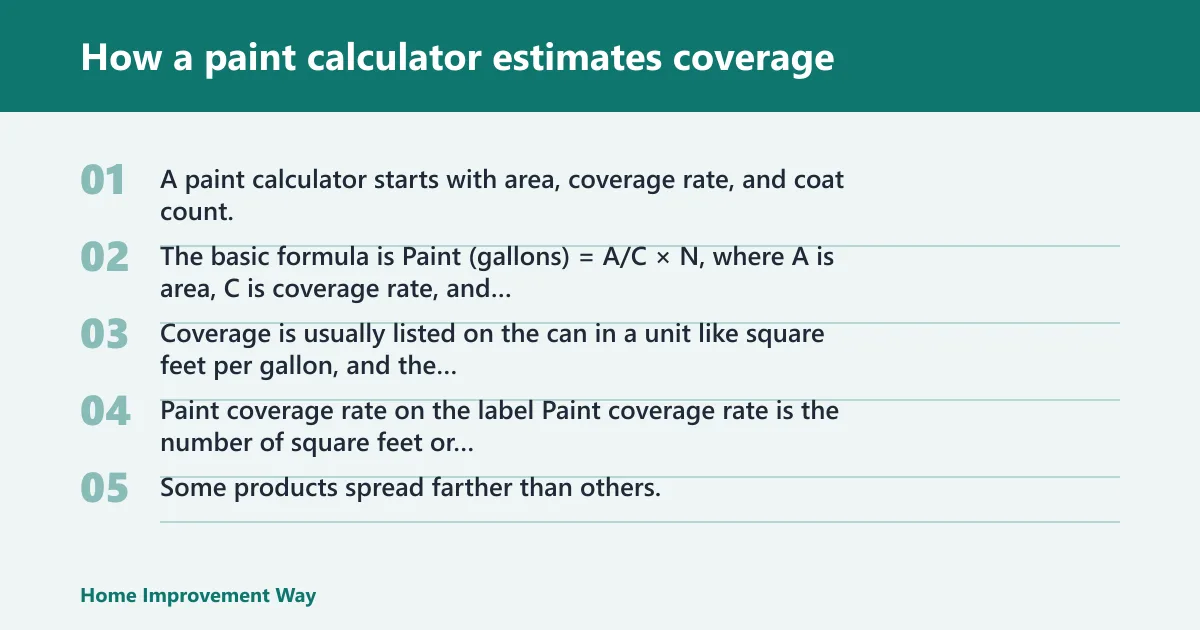


A paint calculator starts with area, coverage rate, and coat count. The basic formula is Paint (gallons) = A/C × N, where A is area, C is coverage rate, and N is number of coats. Coverage is usually listed on the can in a unit like square feet per gallon, and the label is more reliable than a rough rule of thumb.
Paint coverage rate on the label
Paint coverage rate is the number of square feet or square meters one unit of paint should cover under the product’s stated conditions. Some products spread farther than others. Flat wall paint, primer, enamel, and exterior coatings can all have different coverage, so the can label should drive the estimate.
Why liters and gallons both matter
Some stores sell paint by the gallon, others by the liter. A practical estimate needs both units because the can size may not match the math. If the calculation lands at 2.2 gallons, that is not the same as 2.2 liters, and buying the wrong unit can leave the job short.
When to round up to the next can
Round up when the estimate sits close to the can limit, when the surface is rough, or when touch-up paint matters. If the math says 1.1 gallons, a 1-gallon can is risky. The safer buy is the next size up, especially for a room that needs two coats or has patched areas.
How much paint do I need for a room?
For a room, estimate the paintable wall area from length, width, and height, then subtract doors and windows before multiplying by the number of coats. That gives a more useful buying number than room floor area alone. For a quick wall-only estimate, total wall area often comes out close to perimeter times wall height.
Measure wall area from length, width, and height
For a rectangular room, wall area is usually the perimeter times the wall height. Add the four wall lengths, then multiply by height. If a room is about 12 by 14 feet with 8-foot walls, the perimeter is 52 feet and the wall area is about 416 square feet before deductions.
Subtract doors and windows
Doors and windows remove paintable area. Measure each opening by height and width, then multiply by the number of doors or windows. A standard approach is to subtract those areas from the total wall surface before applying coats. This matters more in small rooms, where openings can change the final buy amount.
Multiply by the number of coats
One coat is often the starting point in calculators, but two coats are often used for a full color change, dark-to-light coverage, and patch blending. Number of coats is unitless in the formula, yet it changes the total paint directly. A two-coat room needs twice the paint of a one-coat room.

How do I calculate paint needed from square feet?
Divide the square footage you plan to paint by the can’s stated coverage, then adjust for coats and waste. That converts area into gallons or liters. If a can covers less than expected, the buying result changes fast, so the label number matters more than generic paint advice.
Convert square feet to gallons
Use the can’s square feet per gallon rating, then divide total paintable square feet by that figure. A paint product rated at around 350 sq ft per gallon will generally need more gallons than one rated at around 400 sq ft per gallon for the same wall area. Always use the label, not a guess.
Convert square feet to liters
If the label is in m²/liter, convert your area to square meters first, then divide by the liters-per-square-meter coverage. The same principle applies in reverse if the room is measured in feet. Metric math is cleaner for some stores, but the buying rule stays the same: area divided by coverage.
Check the can size before buying
Match the estimate to the smallest can size that clears the total with some margin. A calculation near the limit should usually move up a size, because rollers, trays, and touch-up work consume a little extra. Exact coverage can be cheaper only when the surface is smooth and the estimate is conservative.
| Common wall area | Approx. gallons at 350 ft²/gal | Approx. gallons at 400 ft²/gal | Approx. liters at 350 ft²/gal | Approx. liters at 400 ft²/gal |
|---|---|---|---|---|
| 200 ft² | 0.57 gal | 0.50 gal | 2.15 L | 1.89 L |
| 300 ft² | 0.86 gal | 0.75 gal | 3.25 L | 2.84 L |
| 400 ft² | 1.14 gal | 1.00 gal | 4.32 L | 3.79 L |
| 500 ft² | 1.43 gal | 1.25 gal | 5.41 L | 4.73 L |
| 800 ft² | 2.29 gal | 2.00 gal | 8.67 L | 7.57 L |
These figures are buying guides, not fixed outcomes. A smooth primed wall usually needs less than a rough patched wall, and two coats roughly double the base amount before any waste allowance. If the estimate lands between can sizes, round up.
What should I add for doors, windows, trim, and ceilings?
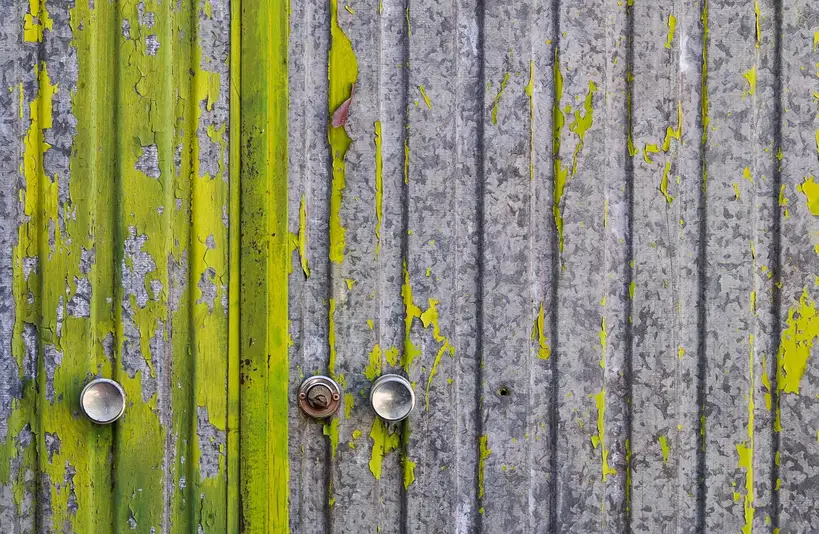
Doors, windows, trim, and ceilings should be handled separately because they do not behave like plain wall space. Subtract large openings from walls, then add dedicated quantities for trim, baseboards, and ceiling surfaces. That gives a cleaner shopping list and reduces the chance of running short mid-project.
Door area and window area deductions
Measure each door and window by height and width, then multiply by the count. That total area comes off the wall estimate. A single large window can remove enough paintable area to change the can size, especially in bedrooms, hallways, or smaller living spaces.
Trim and baseboard allowance
Trim usually needs a separate estimate because brushes, profile cuts, and narrow faces use paint differently than broad walls. A gallon can cover a meaningful amount of trim, but the exact amount depends on the profile, number of coats, and whether the trim is raw wood, primed, or already painted.
Ceilings, closets, and other separate surfaces
Ceilings are often counted apart from walls, and some calculators leave them out entirely. Omni notes that its interior calculator does not include the ceiling, so a homeowner has to add that surface separately. Closets, built-ins, and doors should also be treated as separate line items when buying paint.
| Surface or add-on | Typical buying adjustment | Why it changes the estimate |
|---|---|---|
| One standard door | Subtract its area from walls | Removes paintable wall space |
| One standard window | Subtract its area from walls | Lowers total wall coverage needed |
| Trim and baseboards | Add a separate trim quantity | Small surfaces use more paint per foot |
| Ceiling | Add a separate ceiling amount | Usually not included in wall math |
| Closets or built-ins | Add as separate surfaces | Extra corners and edges raise use |
How much extra paint should I buy for rough or porous surfaces?
Rough, porous, or first-time-painted surfaces need extra paint because they absorb more finish and leave less on the surface after the first pass. Omni says rough or porous surfaces can require up to 20% more paint, and first-time painting can need up to 30% more. Add that allowance before choosing can size.
New drywall and patched walls
Fresh drywall, mud patches, and sanded repairs usually drink paint in the first coat. The patch may look covered before it truly is, which leads to a second pass. For buying, treat these surfaces as higher-waste jobs and move closer to the upper end of the estimate.
Textured or rough siding
Textured interiors, stucco, and rough exterior siding use more paint because the surface area is effectively larger than the flat measurement suggests. The label coverage is still the starting point, but the job often takes more product than a smooth wall of the same size. This is where the extra allowance matters most.
Sprayer waste and touch-up reserve
Rollers and sprayers both waste some paint. Rollers leave a film in the tray and on tools, while sprayers can lose product to overspray. A small reserve also helps with touch-up later. If the estimate is tight, add enough for the application method and a minor repair reserve.
How much does paint cost per room?
Cost per room comes from multiplying the required gallons or liters by the price per unit volume. If the estimate sits near a can boundary, add the extra can into the budget instead of hoping the last quart will stretch. Exact coverage only saves money when the surface is predictable.
Use cost per gallon or liter
Enter the price per gallon or liter, then multiply by the calculated volume. Omni includes cost per unit volume as a field, which makes the estimate useful for budgeting as well as shopping. That is more practical than guessing a room price from floor size alone.
When exact coverage is cheaper than underbuying
Exact coverage is only cheaper when the room is smooth, the can label is dependable, and the coat count is known. If the job involves primer, texture, or color change, buying the next size up is usually the safer cost choice. A small overbuy is better than paying for a second trip.
How much does 3L of paint cover?
Three liters of paint cover the amount of area implied by the label coverage once it is converted into area. If the product covers more area per liter, 3L stretches farther; if it covers less, 3L runs out sooner. For a buying decision, compare 3L against your room area and coat count before assuming it is enough.
Worked 3L example
If a paint line covers around 10 m² per liter, 3L covers about 30 m² for one coat. If the same room needs two coats, that drops to about 15 m² of finished wall coverage. That is why the number of coats matters as much as the can size.
How much trim will a gallon of paint cover?
A gallon can cover a meaningful amount of trim, but trim coverage is harder to predict than wall coverage because profiles, edges, and brush work vary. A gallon often goes farther on smooth, primed trim than on rough or bare wood. Use the label coverage, then add a reserve for corners and touch-up.
Why trim behaves differently
Trim has more edges per foot than a wall, and those edges hold paint differently. Baseboards, window casing, and crown molding also create overlap and brush drag. That means the same gallon can cover less linear trim than a homeowner expects from wall math alone.
How much exterior paint do I need?
Exterior paint should be estimated by siding area, trim area, and exposure level, then adjusted upward for texture and application waste. Exterior work often needs a larger reserve than interior painting because siding, wind, and rough materials increase usage. Separate the siding from the trim before buying.
Exterior siding and fences
Siding and fences are not the same as interior walls. Boards, lap siding, and rough fence pickets can absorb more paint and create more waste from corners and laps. Measure the area carefully, then add extra for surface texture, weathering, and the second coat if the color change is strong.
Frequently asked questions
How much paint do I need for a room?
Measure the room’s total wall area, subtract doors and windows, then divide by the can’s coverage rate and multiply by the number of coats. For many rooms, a gallon covers roughly 350 to 400 sq ft per coat, but texture, color change, and application method can move that number.
How much does 3L of paint cover?
Three liters covers the area implied by the label’s coverage rate. As a rough buying check, 3L may be enough for a small room or a single feature wall, but two coats cut that coverage in half. Always test the room area against the can before heading to checkout.
How many gallons of paint do I need?
Divide the paintable square footage by the label coverage per gallon, then multiply by the number of coats. If the result is close to a whole can boundary, round up. A small reserve is usually cheaper than buying a second can after the first one runs out.
How many litres of paint do I need?
Convert the area to square meters if the label uses metric coverage, then divide by the liters-per-square-meter figure. Add more for a second coat, rough texture, or first-time painting. The right liter count depends on the can’s stated efficiency, not just the room’s size.
Should I include doors and windows in paint calculations?
Yes. Doors and windows should usually be subtracted from wall area because they are not painted like plain wall space. Measure each opening by height and width, multiply by the number of openings, and deduct the total before calculating gallons or liters. That makes the estimate tighter.
How much extra paint should I buy for rough or porous surfaces?
Plan for up to 20% more on rough or porous surfaces, and up to 30% more for first-time painting, according to Omni’s guidance. Use the higher allowance for patched walls, textured siding, and jobs with heavy overspray. That extra paint is often the difference between finishing and stalling out.
Sponsored / affiliate links. As an Amazon Associate I earn from qualifying purchases. I may earn additional commission from eligible campaigns.
 KINJOEK Paint Brush 14 Packs 1 Inch, Home Wall Trim House Chip Paintbrush Set, Professional Multi-Purpose Home Repair Tools for DIY Paint Stains Varnishes Glues Acrylics Cabinet Deck Fence Edge Door
 Rust-Oleum Simply Home Interior Wall Paint 332120 Simply Home Semigloss Interior Wall Paint, Pure White