What Temperature Is Too Cold To Stain A Deck? Know This
The ideal temperature range for staining a deck is generally between 50°F and 85°F (10°C and 30°C). Staining too cold or too hot can lead to poor adhesion, uneven color, and a finish that peels or fades prematurely. Always check the stain manufacturer’s specific temperature guidelines.
Understanding Deck Staining Temperature Limits
Staining a deck is more than just slapping on some color. It’s a process. The stain needs to do a few things.
It needs to soak into the wood. It needs to form a protective layer. Temperature plays a huge role in this.
It affects how the stain flows. It affects how it dries. It affects how it sticks to the wood.
Think of it like baking. Too cold, and things don’t cook right. Too hot, and they burn.
When the temperature is just right, the stain spreads easily. It penetrates the wood fibers. Then, it dries evenly.
This creates a beautiful, durable finish. It will protect your deck from the sun and rain. It will make it look great for years.
But when the temperature is outside the good range, trouble starts. The wood might not accept the stain properly. The stain itself might not cure right.
Why Temperature Matters So Much
Wood is porous. It drinks up the stain. This is how the stain protects it.
But wood also expands and contracts with temperature changes. When it’s cold, wood shrinks a little. When it’s hot, it expands.
The stain needs to bond with the wood. If the wood is shrinking or expanding too much, it can break that bond. This is especially true when the stain is still trying to dry.
The oils and pigments in deck stain are designed to work best within a specific range. They need a certain warmth to spread out. They need time to set.
If it’s too cold, the stain might be too thick. It won’t spread smoothly. You’ll see lap marks.
The color might not be even. It might look streaky. This is a frustrating sight.
You worked hard. You don’t want it to look bad.
On the flip side, if it’s too hot, the stain can dry too fast. The surface might look dry. But the stain underneath might not have cured properly.
This can lead to peeling later on. It can also cause the stain to look splotchy. The hot sun can bake the stain onto the surface.
It doesn’t get a chance to soak in as it should. So, finding that sweet spot is key.
The Ideal Temperature Window
Most experts agree. The best time to stain a deck is when the air temperature is between 50°F and 85°F (10°C and 30°C). Some products might have slightly different ranges.
Always check the can. But this is a good general rule. This range allows the stain to flow well.
It lets it soak into the wood. It also allows for even drying. This leads to the best results.
It’s not just the air temperature, though. The temperature of the wood itself matters. Wood can be warmer or cooler than the air.
This is especially true in direct sunlight. If the wood is very hot from the sun, it can dry the stain too quickly. This is why staining in direct, hot sun is often a bad idea.
It’s better to stain when the deck is in the shade. Or, stain early in the morning or late in the afternoon. This lets you avoid the peak heat.
What Happens When It’s Too Cold?
Let’s talk about the cold. What happens if you try to stain when the temperature is below 50°F (10°C)? The stain’s oils don’t flow easily.
They stay thick. This makes them hard to apply evenly. You might end up with thick patches.
You might see streaks where the brush or roller didn’t lay the stain down right. These are called lap marks. They are a sign of uneven application.
Another issue is drying. Cold temperatures slow down the drying process. This means the stain stays wet for longer.
While it’s wet, it’s more likely to pick up dirt. It’s more likely to get damaged by foot traffic. It’s also more vulnerable to dew or frost.
If frost forms on wet stain, it can ruin the finish. It can cause it to bubble or peel. This is a big problem.
The stain might not penetrate the wood properly either. If the wood fibers are tight due to the cold, the stain sits on top. It doesn’t soak in.
This means the protection won’t be as good. The color might also be inconsistent. You might get a lighter color than you wanted.
The finish might look dull. It won’t have that rich, saturated look you were hoping for.
Signs Your Deck Is Too Cold for Staining
Too Cold:
- Stain feels thick and gummy.
- It’s hard to spread evenly.
- Application leaves streaks or lap marks.
- The wood feels very cold to the touch.
- Forecast shows temperatures dropping below 50°F (10°C) soon.
- Dew or frost is expected overnight.
So, if the forecast is calling for temps in the 40s or lower, it’s best to wait. Pushing it can lead to a lot of headaches later. It’s better to reschedule than to have to redo the work.
I remember one time, I really wanted to finish a deck before a party. It was early spring. The days were getting warmer, but the nights were still cool.
I decided to stain late one afternoon. I figured it would dry by morning.
By morning, there was a light frost. The stain was still tacky in places. The frost had made it look fuzzy.
It was a mess. I had to wait for it to dry completely. Then I had to lightly sand it down.
I had to restain those areas. It took twice as long. It taught me a valuable lesson about patience.
What Happens When It’s Too Hot?
Now, let’s look at the other extreme. What happens if it’s too hot, say above 85°F (30°C)? The stain can dry too quickly.
This is a big problem. When the stain dries super fast, it doesn’t have enough time to soak into the wood. It sits on the surface.
This can lead to a surface film. This film is more likely to peel. It’s more likely to chip.
It won’t last as long.
You might also get an uneven color. The edges of your brush strokes might dry faster. This can leave visible lines.
It can create a blotchy look. This is especially true with solid stains. They have more pigment.
They don’t penetrate as deeply as semi-transparent stains. So, on a hot day, you need to work fast. But sometimes, you can’t work fast enough.
Hot Day Deck Staining Hazards
Too Hot:
- Stain dries in minutes, making blending hard.
- Visible brush strokes or lap marks appear easily.
- The finish might look blotchy or uneven.
- Wood surface can be well over 100°F (38°C) from sun.
- Risk of premature peeling or flaking.
Direct sunlight on a hot day is a double whammy. The sun heats the wood. The wood then heats the stain.
This makes it dry even faster. It can also make the stain too thin. It loses its body.
This affects its ability to adhere to the wood. So, if you’re staining on a hot day, try to work in the shade. Stain one section at a time.
Work quickly and methodically.
I recall a summer job where we had a heat wave. It was over 90°F every day. We were staining a large deck.
The instructions said to stain between 9 AM and 3 PM. But the sun was brutal. The stain was practically disappearing before we could even spread it.
We had to adjust our schedule. We worked very early. We worked late.
We had to shade parts of the deck as we went. It was a lot of extra effort.
The Wood Surface Temperature is Crucial
It’s not just about the air temperature. The temperature of the wood itself is really important. Wood is a good conductor of heat.
It can get much hotter than the air. On a sunny day, a deck’s surface can reach 150°F (65°C) or more. This is way too hot for staining.
This heat will dry the stain almost instantly. It won’t penetrate the wood.
This is why reading the weather is only part of the story. You need to feel the wood. You need to see if it’s in direct sun.
If it’s a hot, sunny day, even if the air temperature is in the 70s, the wood could be too hot. Look for shaded areas. Or, plan to stain when the sun moves.
Morning or late afternoon is often best. This gives the wood time to cool down.
Checking Wood Temperature
How to Check:
- Touch Test: Place your hand flat on the deck boards. If it feels too hot to comfortably hold for more than a few seconds, it’s likely too hot for stain.
- Infrared Thermometer: For a more precise reading, use an infrared thermometer. Aim it at the deck surface. Compare the reading to the stain manufacturer’s guidelines.
- Observe the Sun: If the deck is in direct, strong sunlight, assume it’s hotter than the air temperature.
I’ve seen people try to stain during the hottest part of the day. They end up with the worst results. The stain just sits on top.
It looks shiny. Then, a few months later, it starts to peel. They blame the stain.
But it was often the application temperature. The wood was just too hot. It’s a simple check that saves a lot of future problems.
Understanding Stain Types and Temperature
Different types of deck stains behave differently. This can affect how sensitive they are to temperature. Water-based stains tend to dry faster than oil-based stains.
This makes them more susceptible to drying too quickly on hot days. They can also be a bit more sensitive to freezing temperatures.
Oil-based stains generally have a wider temperature range. They penetrate the wood well. They tend to be more forgiving in cooler weather.
However, they can still be affected by extreme cold. And on very hot days, they can still dry too fast on the surface. Always refer to the product label.
It will have specific instructions.
Solid stains have more pigment. They cover the wood like paint. They can look great.
But they are less forgiving with temperature. They tend to sit more on the surface. If the temperature is wrong, they can dry unevenly and show brush marks.
Semi-transparent stains and toners allow the wood grain to show through. They penetrate more deeply. They are often a bit more forgiving with temperature variations.
I find that when I’m using a solid stain, I’m extra careful about temperature. I’ll make sure the day is mild. I’ll avoid direct sun.
For semi-transparent stains, I have a little more leeway. But even then, I stick to the general rules. It’s just not worth the risk of a bad outcome.
The Role of Humidity
Humidity is another factor that affects drying. High humidity can slow down the drying process. This is true for both water-based and oil-based stains.
If the air is very damp, the stain might take longer to cure. This means it stays vulnerable for longer.
It’s generally best to stain when humidity levels are moderate. Very high humidity can make it feel muggy. It can also mean there’s more moisture in the air.
This can interfere with proper drying. Low humidity is usually better for drying. But, as we discussed, extreme heat can still be a problem.
If you have a choice, pick a day that’s not too humid. Look for a forecast that shows clear skies and moderate humidity. This will give the stain the best chance to dry and cure properly.
Combine this with the right temperature, and you’re setting yourself up for success.
Predicting the Weather: Your Staining Calendar
Planning is everything. When is the best time of year to stain? In much of the U.S., spring and fall are often ideal.
These seasons tend to offer milder temperatures. They have less extreme heat and cold. They usually have lower humidity than the peak of summer.
Spring: As winter ends, the weather starts to warm up. But you need to be careful. Early spring can still have cold snaps.
The wood might still be damp from winter snow or ice. Wait until the temperatures are consistently above 50°F (10°C). Make sure the wood is fully dry.
Summer: Summer can be tricky. The days are long and sunny. This is great for having time to work.
But the heat can be a major issue. The hottest part of the day is usually mid-afternoon. Avoid this time.
Stick to early mornings or late evenings. Or, plan for a cooler, overcast day. Always check the wood temperature.
Fall: Fall can be beautiful for deck staining. The temperatures are usually pleasant. The sun is less intense.
However, as fall progresses, the days get shorter. The temperatures start to drop. You need to be mindful of the first frosts.
Ensure you have enough drying time before the cold weather sets in.
I always have a mental calendar for staining. Spring is great, but I wait for those consistently warm days. Fall is my favorite, but I watch the forecast closely for those early cold nights.
You don’t want to finish staining and then have a frost hit. That’s a recipe for disaster. I’ve learned to be patient and choose my days wisely.
What About Overnight Lows?
This is a critical point. Even if you stain during the day when the temperature is perfect, you need to consider what happens overnight. The stain needs time to cure.
It needs to be dry to the touch. And it needs to be protected from dew, frost, or freezing temperatures.
If the overnight low is going to drop below 40°F (4°C), you might be in trouble. Dew can form on surfaces. If the stain is still a bit wet, that dew can interfere with the finish.
It can cause a dull sheen or water spots. If there’s a chance of frost, it can be even worse. Frost can lift the stain right off the wood.
So, here’s a good rule of thumb: When you stain, make sure the temperature will stay above 40°F (4°C) for at least 24 hours after application. Some manufacturers recommend even warmer overnight temperatures. Always check the label.
It’s better to be safe than sorry. If there’s any doubt, wait another day.
Post-Staining Temperature Watch
What to Monitor:
- Overnight Lows: Ensure the temperature stays above 40°F (4°C) for at least 24-48 hours.
- Dew Formation: Check if dew is likely to form on the deck surface before morning.
- Frost Risk: Avoid staining if frost is forecast.
- Rain: Protect the deck from rain during the curing period.
I learned this the hard way after staining a porch railing. It looked great during the day. The temperature was perfect.
But that night, the temperature dropped into the 30s. We got a heavy dew. The next morning, the railing had a cloudy, milky appearance.
It took a lot of work to fix that. Now, I always check the 24-hour forecast.
Preparing Your Deck for Staining
Before you even think about temperature, your deck needs to be ready. Preparation is key to a good stain job. This means cleaning.
It means sanding. And it means letting the wood dry completely.
Cleaning: You need to remove all dirt, mildew, and old stain. Use a good deck cleaner. Follow the product instructions carefully.
Some cleaners require a pressure washer. Others can be applied with a brush or roller. Rinse thoroughly.
Make sure all cleaner residue is gone.
Sanding: After cleaning, you might need to sand. This smooths the wood. It opens up the pores for better stain absorption.
Use a medium-grit sandpaper. You can use a pole sander or a hand sander. If you use a pressure washer, sanding might be less critical.
But it’s always a good idea to check the wood surface.
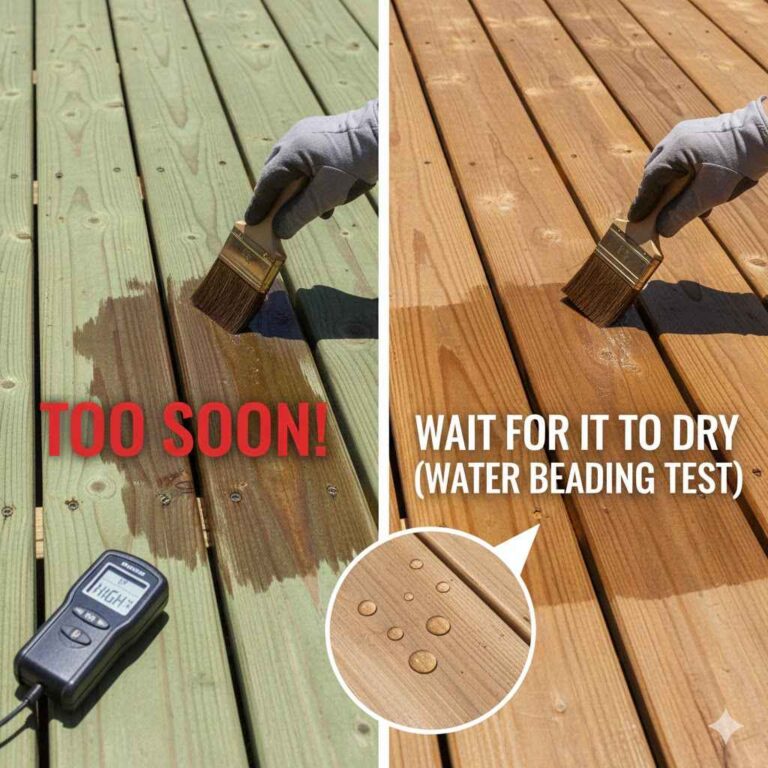
Drying: This is where temperature and time meet. The wood must be completely dry before you stain. After washing, let the deck dry for at least 24-48 hours.
If it’s humid or cool, it might take longer. You can check for dryness by touching the wood. You can also put down a small piece of plastic sheeting.
Tape it down for a day. If you see condensation underneath, the wood is still wet.
I always schedule my deck prep for a few days before staining. I clean it. I let it dry.
Then I wait another day just to be sure. This ensures that when the perfect temperature day arrives, the deck is truly ready. It’s part of the overall planning.
Common Mistakes to Avoid
Beyond temperature, what else can go wrong? People often rush the process. They don’t read the instructions.
They skip important steps.
- Skipping Prep: Not cleaning or sanding properly. This is a big one. The stain won’t stick well.
- Staining in Direct Sun: Especially on hot days. The stain dries too fast.
- Not Checking Wood Moisture: Staining wet wood is a recipe for disaster.
- Using the Wrong Stain: Not all stains are created equal. Choose one for your wood type and climate.
- Not Stirring the Stain: Pigments settle. You need to mix them back in thoroughly.
- Applying Too Thick: This leads to a sticky surface and long drying times.
- Ignoring Overnight Temps: Not thinking about dew or frost.
I’ve seen all these mistakes happen. And I’ve made some of them myself early in my DIY journey. The most frustrating ones are usually related to temperature.
Trying to get it done quickly when the weather isn’t cooperating. That’s when you end up with the sticky surface. Or the uneven color.
It’s a tough lesson to learn.
What This Means for You
So, what’s the takeaway? You need to be a bit of a weather forecaster. You need to be a deck detective.
You need to check the air temperature. You need to check the wood temperature. You need to consider the humidity.
And you need to look ahead to the overnight lows.
When it’s 50°F to 85°F (10°C to 30°C) during the day. And when the overnight low will stay above 40°F (4°C) for at least 24 hours. And when the wood itself isn’t baking hot from the sun.
Those are your golden days for staining.
If the temperature is below 50°F (10°C) or above 85°F (30°C), it’s probably too cold or too hot. If the wood surface feels too hot to touch. Or if there’s a chance of frost or heavy dew overnight.
Then, it’s time to wait. Your deck will thank you. And you’ll have a beautiful finish that lasts.
Quick Tips for a Great Stain Job
Here are some simple things to remember:
- Read the Can: Always follow the manufacturer’s specific instructions.
- Pick Your Day: Aim for mild, dry weather.
- Check Wood Temp: Don’t just rely on air temp.
- Work in Shade: If possible, avoid direct sun.
- Stir, Don’t Shake: Stir stain gently to mix pigments.
- Apply Thin Coats: Two thin coats are better than one thick one.
- Backbrush: If using a roller, use a brush to even out the stain.
- Clean Up Properly: Dispose of rags safely (they can spontaneously combust).
Frequently Asked Questions about Deck Staining Temperatures
What is the absolute coldest temperature I can stain my deck?
Most experts say the absolute coldest you should stain is around 50°F (10°C). Staining below this can lead to poor adhesion and uneven color. Some products might have slightly different recommendations, so always check the can.
Can I stain my deck if it will be below 50°F overnight?
It’s generally not recommended. While you might stain during the day when it’s warm enough, the stain needs time to cure. If the temperature drops too low overnight, dew or frost can damage the fresh stain, causing it to look cloudy or peel.
Is it okay to stain my deck on a hot, sunny day if the air temp is in the 70s?
Probably not. The direct sun can heat the wood surface much higher than the air temperature, often over 100°F (38°C). This heat causes the stain to dry too quickly on the surface, preventing proper penetration and leading to a finish that may peel later.
How long does deck stain take to dry?
Drying times vary greatly depending on the product, temperature, humidity, and application thickness. Most stains are dry to the touch within 4-8 hours. However, they may take 24-72 hours or even longer to fully cure.
Always check the product label for specific drying and recoating times.
What happens if I stain my deck when it’s too cold?
If you stain when it’s too cold, the stain will be thick and hard to spread. It won’t penetrate the wood well. This can lead to lap marks, uneven color, and a finish that doesn’t last.
The stain will also take much longer to dry and may be damaged by moisture.
Can I stain my deck if it rained yesterday?
You can, but only if the deck is completely dry. After rain, it can take 24-48 hours for the wood to dry out, especially in humid or cooler weather. Staining damp wood will cause the stain to not adhere properly, and you’ll likely see peeling or bubbling later.
Final Thoughts on Deck Staining Success
Achieving a beautiful, long-lasting deck stain finish is all about careful planning. Pay close attention to the temperature. Understand how both air and wood temperatures affect the stain.
Follow the manufacturer’s guidelines precisely. A little patience and preparation go a long way. Your deck deserves the best, and the right conditions will help you deliver it.
Sponsored / affiliate links. As an Amazon Associate I earn from qualifying purchases. I may earn additional commission from eligible campaigns.