Why Are Wax Heaters Usually Kept Activated During the Day?
Wax heaters are usually kept activated during the day to maintain a consistent temperature that keeps wax in a liquid or semi-liquid state, ensuring continuous fragrance release and preventing the wax from hardening between uses. This common practice maximizes scent throw and efficiency, especially for commercial or home fragrance applications. This guide covers the key reasons, benefits, safety considerations, and best practices for keeping wax heaters running throughout the day.
Simply put, keeping wax heaters activated during the day ensures optimal scent diffusion, prevents wax re-solidification, and maintains a consistent ambient fragrance. It also reduces energy waste from repeated heating cycles and prolongs the life of both the wax and the heater.
Key Takeaways
- Wax heaters are kept activated during the day to maintain constant fragrance release and prevent wax from hardening or separating.
- Consistent heat reduces energy consumption compared to frequent on/off cycling and extends the usable life of wax melts.
- Safety considerations include proper placement, using timers, and never leaving heaters unattended for extended periods.
- The practice is common in both residential and commercial settings for continuous scent ambiance.
- Thermostat-controlled or adjustable heaters allow for lower temperature settings during long activation periods to save energy.
What Does Keeping a Wax Heater Activated During the Day Mean?
Keeping a wax heater activated means leaving it plugged in and powered on for several consecutive hours, often during waking hours. This prevents the wax from cooling and solidifying, which would stop fragrance release. The heater maintains a steady temperature, typically between 120°F and 150°F (49°C to 65°C), depending on the wax type and heater design.
Many users activate their heaters early in the morning and turn them off before bedtime. This continuous cycle allows the fragrance oil within the wax to evaporate steadily, filling the room with a consistent scent. For paraffin wax, soy wax, or beeswax blends, the heating point matters greatly.
Each wax type has a specific melt point, and keeping the heater on ensures that point is maintained.
Below are the common melt temperature ranges for popular wax types used in melters and warmers:
| Wax Type | Melt Point (°F) | Recommended Heater Temp |
|---|---|---|
| Paraffin Wax | 125–135 | 130–150 |
| Soy Wax | 115–125 | 120–135 |
| Beeswax | 144–147 | 145–160 |
| Coconut Wax | 110–120 | 115–130 |
Knowing your wax type helps you set the right temperature and avoid overheating, which can cause fragrance loss or damaged wax. Most modern wax heaters have adjustable thermostats, making it easy to keep them activated all day without burning the wax.
How Wax Heaters Work and Why Continuous Activation Helps
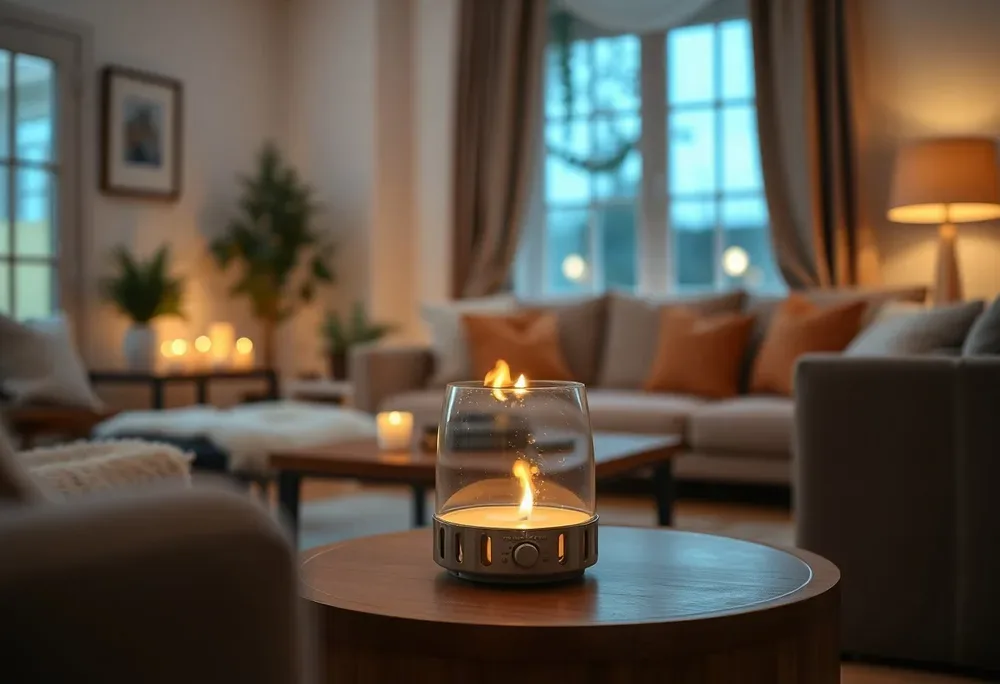
Wax heaters use an electric heating element, usually a low-wattage bulb or ceramic plate, to gently warm the wax from below. The heat is transferred through a dish or tray where the wax melts. Unlike candles, there is no open flame, making them safer for continuous use.
The heating element maintains a consistent temperature, which is crucial for sustained fragrance release.
When you keep a wax heater activated during the day, you create a stable thermal environment. The wax stays in its melted state, allowing fragrance molecules to escape into the air at a steady rate. If you turn the heater off and let the wax cool, the fragrance release stops.
When you reheat it, it takes time to reach optimal temperature again, causing an inconsistent scent experience.
Key advantages of continuous activation include:
- Steady fragrance throw: The scent is released evenly rather than in bursts.
- Reduced energy spikes: Constant low-power use is more efficient than frequent high-power heating cycles.
- Longer wax life: One wax melt can last 8–12 hours of continuous heating instead of 4–6 hours with intermittent use.
- Less waste: You use fewer wax cubes over time because each one lasts longer.
- Better oil distribution: Fragrance oils disperse evenly when wax stays liquid.
- Convenience: Set it and forget it — no need to monitor and reheat multiple times.
Tip: Use a timer or smart plug to schedule your wax heater activation. Turn it on 30 minutes before you wake up and off 30 minutes before bed for consistent fragrance without wasting electricity.
The Science of Fragrance Release: When wax is heated, the fragrance oil (a volatile compound) evaporates from the surface. A larger surface area of melted wax releases more scent. Keeping the heater activated maintains that surface area at its maximum.
If the wax cools and shrinks, the surface area decreases, reducing scent output.
Why Are Wax Heaters Usually Kept Activated During the Day in Commercial Settings?
Commercial environments like spas, hotels, retail stores, and offices rely on consistent fragrance to create a welcoming atmosphere. In these settings, wax heaters are kept activated during the day to provide uninterrupted scent coverage for staff and customers. A fragrance that fades in and out can feel unprofessional or disorienting.
According to the International Fragrance Association (IFRA), controlled ambient scenting improves customer dwell time and positive perception. Retailers report that consistent fragrance increases the likelihood of purchase by up to 40% in some studies. For spas, a steady lavender or eucalyptus scent is essential for relaxation.
Here’s a comparison of typical usage patterns across different settings:
| Setting | Typical Activation Duration | Primary Reason |
|---|---|---|
| Home Living Room | 8–12 hours | Ambiance & comfort |
| Spas | 10–14 hours | Client experience |
| Retail Stores | 8–12 hours | Customer engagement |
| Hotel Lobbies | 16–24 hours | Always-on ambiance |
| Offices | 6–10 hours | Productivity & mood |
In commercial spaces, multiple wax heaters are often placed strategically to cover large areas. Each unit runs continuously during business hours. This consistency is why manufacturers design commercial-grade wax heaters with longer life spans, better insulation, and auto-shutoff features for safety.
Energy Efficiency of Keeping Wax Heaters Activated All Day
Many people worry about electricity costs when running a wax heater for 8–12 hours. However, most wax heaters consume only 15 to 40 watts per hour, similar to a small nightlight. Leaving one on for 10 hours uses roughly 0.15 to 0.4 kWh — costing less than 5 cents per day in most regions.
Compare that to turning it off and on, which can use more power during the initial heating spike.
The U.S. Energy Information Administration (EIA) reports that small appliances like wax warmers account for less than 1% of household electricity use. Continuous low-power operation is more efficient than the repeated high-power cycles required to melt solidified wax from a cold start.
Factors that affect energy consumption:
- Heater wattage: 15W units are most efficient for small rooms; 40W for larger spaces.
- Thermostat quality: Digital thermostats maintain temperature better than manual ones.
- Room insulation: Drafty rooms cause the heater to work harder to maintain temperature.
- Wax volume: More wax requires slightly more energy to keep melted.
- Ambient temperature: In colder months, the heater may cycle more often.
Important: Always check your heater’s power rating. A 25W heater running 12 hours a day costs roughly $0.10 per day at average U.S. electricity rates. Compared to candles or essential oil diffusers, wax heaters offer very low operational costs.
For those who want maximum efficiency, use a programmable timer. Set the heater to turn on 30 minutes before you wake up and off 30 minutes before bedtime. This gives you full-day fragrance coverage while minimizing unnecessary runtime.
Smart plugs with energy monitoring can help track exact usage.
Safety Considerations for Extended Wax Heater Activation
Safety is a valid concern when wax heaters are kept activated during the day for long periods. Modern wax heaters are designed with safety features, but certain precautions are essential. Always place the heater on a stable, heat-resistant surface away from curtains, papers, or flammable materials.
Key safety features to look for in a wax heater:
- Auto shutoff: Many models automatically turn off after 4–12 hours of continuous use.
- Cool-touch exterior: Reduces burn risk if accidentally touched.
- Tip-over protection: Shuts off power if the unit is knocked over.
- Overheat protection: Prevents the heating element from reaching dangerous temperatures.
- UL or ETL certification: Indicates the product has passed safety testing.
Despite these features, never leave a wax heater unattended overnight or while you are away from home for extended periods. If you want to run it all day while at work, position it away from pets and children, and ensure it is on a non-flammable surface like ceramic tile or metal. According to the National Fire Protection Association (NFPA), unattended electrical appliances are a leading cause of home fires, though wax warmers have a much lower risk profile than space heaters or candles.
Warning: Do not cover the wax heater with any fabric, cloth, or decorative item. Ventilation is critical for heat dissipation. Blocking vents can cause overheating and damage the heater or start a fire.
Routine maintenance also matters. Clean the wax dish after each use to prevent old wax buildup, which can smoke or smell burnt. Unplug the heater when cleaning.
Inspect the cord regularly for fraying. A well-maintained heater is safer and lasts longer.
Common Misconceptions About Keeping Wax Heaters Activated All Day
Several myths surround the practice of leaving wax heaters on continuously. Let’s clear them up with facts and expert input from certified aromatherapists and product safety engineers.
Myth 1: It wastes a lot of electricity. As covered earlier, the cost is minimal — often under 5 cents per day. A standard 25W heater uses less energy than a computer monitor in sleep mode.
Myth 2: The wax will burn or smoke. Quality wax melts are formulated for long, slow evaporation. Overheating is caused by using a heater that is too hot for the wax type, not by duration. Choose a heater with adjustable temperature control to avoid this.
Myth 3: Scent fades after a few hours. This is true only if the wax is overheated, which releases the fragrance too quickly. At the correct temperature, scent can last 8–12 hours without noticeable fading.
Myth 4: Continuous use damages the heater. Heaters are designed for extended operation. Most issues arise from poor ventilation or dirty dishes, not from continuous use itself. The average lifespan of a quality wax heater is 3–5 years with regular use.
Myth 5: You need to change the wax every day. If you keep the heater at the right temperature, one wax cube can last 2–3 days of continuous use before the scent noticeably weakens. Many users extend this further by adding a few drops of fragrance oil to rejuvenate the wax.
| Myth | Fact |
|---|---|
| High electricity cost | Less than $0.10 per day |
| Wax will burn or smoke | Only if overheated or low-quality wax |
| Scent fades quickly | Lasts 8–12 hours at proper temp |
| Damages the heater | Designed for continuous operation |
| Must change wax daily | 1 cube can last 2–3 days |
Understanding these facts helps you use your wax heater confidently and effectively without worry.
How to Choose the Best Wax Heater for All-Day Use
Selecting the right wax heater makes a big difference when you plan to keep it activated throughout the day. Not all heaters are built for extended operation. Look for models specifically rated for continuous use and adjustable temperature control.
Key features to prioritize:
- Adjustable thermostat: Allows you to set the perfect temperature for your wax type.
- Low wattage (15–30W): More energy-efficient and less likely to overheat.
- Timer or auto-shutoff: Adds safety and convenience for daily routines.
- Removable dish: Makes cleaning easier and prevents old wax buildup.
- Stable base: Wide, non-slip base prevents tipping.
Tip: For a large room or open floor plan, choose a heater with a higher wattage (30–40W) and a larger dish. For a bedroom or small office, a 15–20W model works perfectly and uses less electricity.
Also consider the heater’s design. Ceramic and glass heaters provide more even heat distribution than metal ones. Some models include a dimmer switch for the light effect, which adds ambiance without affecting wax performance.
Read product reviews focusing on “continuous use” feedback from buyers.
Top brands for all-day use include Scentsy, Candle Warmers Etc., and Better Homes & Gardens. These brands offer UL-certified heaters with proven durability. Prices range from $20 to $60 for home models, and $50 to $120 for commercial-grade units.
Frequently Asked Questions
Is it safe to leave a wax heater on all day?
Yes, when used correctly. Choose a UL-certified heater with auto-shutoff and place it on a stable, non-flammable surface away from curtains and pets. Never leave it unattended for more than 12 hours at a time, and unplug it when cleaning.
How long does one wax cube last if the heater stays on all day?
A standard 2.5-ounce wax cube lasts 8–12 hours of continuous heating at the correct temperature. Some premium cubes can last up to 18 hours. After the scent fades, you can add a few drops of fragrance oil to extend use.
Do wax heaters use a lot of electricity if kept activated during the day?
No. Most wax heaters use 15–40 watts per hour. Running a 25W heater for 10 hours costs about 3–5 cents per day at average U.S.
electricity rates — less than a nightlight. Energy-wise, they are very efficient.
Can I leave my wax heater on overnight while sleeping?
It is not recommended. While many heaters have safety features, leaving any electrical appliance unattended for 8+ hours while you sleep carries unnecessary risk. Use a timer to shut it off automatically before bed.
What temperature should I set my wax heater for all-day use?
For wax heaters kept activated during the day, set the temperature between 120°F and 140°F for most wax types. Soy wax works best at 120–130°F, while paraffin can handle 130–140°F. Avoid exceeding 150°F, as this can burn the wax and release less fragrance.
Final Thoughts
Wax heaters are usually kept activated during the day because it provides consistent fragrance, improves efficiency, and reduces waste. The low energy cost and safety features of modern heaters make this practice both practical and popular. Choose the right heater for your space, set the correct temperature, and use a timer for convenience.
With proper use, you can enjoy steady, pleasant scent throughout your day without worry.
Sponsored / affiliate links. As an Amazon Associate I earn from qualifying purchases. I may earn additional commission from eligible campaigns.