Best Smart Blinds for Daylight Control: Research Shows
For daylight control, the best smart blinds and shades are motorized cellular shades for soft glare reduction and blackout smart shades for full room darkening; choose light-filtering fabric for living areas and blackout for bedrooms. Bad daylight control means screen glare, heat gain, washed-out rooms, and privacy gaps at the wrong hour. This guide compares the best options by light control, privacy, ecosystem compatibility, and install method so you can choose the right smart shade for each room.
Smart blinds and shades s Guide
Quick comparison
| Product | Badge | Best for | Price | ||
|---|---|---|---|---|---|
 |
SwitchBot Blind Tilt Motorized BlindsSwitchBot | Our pick | Smart · Motorized · Tilt control | $59.99
Price as of 8 Nov 2026
|
View |
 |
Graywind Motorized Blinds with RemoteGraywind | Also great | Smart · Light filtering · Roller shade | $339.99
Price as of 8 Nov 2026
|
View |
 |
Kincmo Motorized Cellular ShadesKINCMO | Upgrade pick | Smart · Blackout · Cellular shade | $169.99
Price as of 8 Nov 2026
|
View |
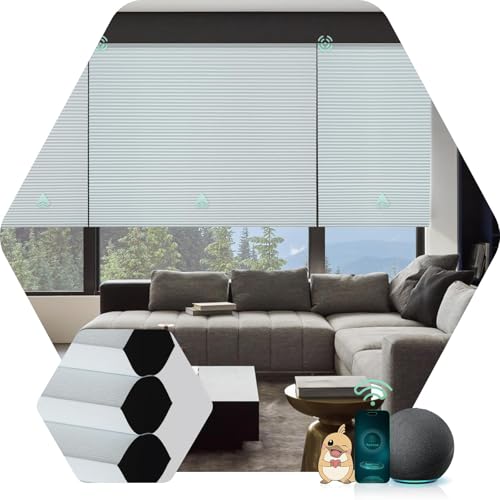 |
Yoolax Motorized Cellular ShadesYoolax | Pair with it | Smart · Light filtering · Cellular shade | $169.00
Price as of 8 Nov 2026
|
View |
Start with the room’s light problem. Then match the shade to that job, whether the issue is east-facing glare at breakfast or a bedroom that needs darkness before sunrise.

How we chose
We compared manufacturer specs, listing details, and published buyer feedback, then sorted the options by daylight behavior first, not by app features. That means glare control, privacy, blackout performance, installation path, and platform support came before price or brand familiarity. For technical claims, we relied on manufacturer documentation and published standards references where available, including Thread Group materials on mesh networking and shade-maker spec sheets for fabric and ecosystem support.
Two things matter more than most shoppers expect: fit and signal. A shade that looks great on paper can disappoint if the window size is awkward, the motor is too slow for daily use, or the home network does not reach the blind.
Graywind motorized blinds: best for bright rooms
Graywind is the strongest fit when you want soft daylight, glare reduction, and broad smart-home compatibility in one roller shade. Based on the manufacturer’s specs and published product details, it works with Apple HomeKit, Alexa, Google Home, and SmartThings, and its light-filtering fabric suits rooms where you still want daylight during the day.
It stands out for daylight balance. The light-filtering roller fabric softens harsh sun better than a clear-open blind, so it works well for south-facing windows, home offices, and living rooms where screens or TV glare are a problem but total darkness would feel too heavy.
The drawback is simple: this is not the right choice if you want blackout performance. Light-filtering shades reduce glare and preserve privacy better than bare slats, but they do not block as much light as a blackout shade, so morning brightness can still leak in around the edges and through the fabric.
KINCMO motorized cellular shades: best for blackout bedrooms
KINCMO is the best fit here when the room needs strong room darkening and privacy, especially in bedrooms or media rooms. Its single-cell blackout honeycomb design is built for maximum light blocking, and the product listing also ties it to HomeKit, Alexa, Google Home, Matter, and Thread support.
What stands out is the cellular structure. Honeycomb shades are usually better than flat fabric at helping with insulation, and blackout construction is the better choice when early sun, streetlight spill, or late-evening privacy matters more than daylight diffusion. Manufacturer literature commonly describes this cellular design as improving thermal resistance by trapping air in the cells, which is the same basic performance principle used across the category.
The drawback is that full blackout can block too much light for everyday living spaces. If you want soft morning light or a room that never feels dim, this style can feel heavy unless you pair it with another light source or keep the shade open much of the day.
Yoolax motorized cellular shades: best for soft daylight
Yoolax is the better pick for rooms where you want filtered daylight, privacy, and a softer look without going fully dark. Based on the product details, it is a light-filtering cellular shade that works with Alexa and Google Assistant, with the honeycomb build helping the shade feel more controlled than open slats.
It is a good choice for dining rooms, living rooms, and home offices that need glare reduction but still benefit from natural light. Light-filtering cellular fabric diffuses daylight more evenly than a bare blind and usually feels easier to live with than blackout fabric in daytime spaces.
The drawback is platform reach. The listing support is narrower than some of the other options here, so buyers who want Apple HomeKit should confirm exact model compatibility before ordering. Also, light-filtering fabric will not give you the same morning-darkening effect as a blackout shade.
SwitchBot Blind Tilt: best for retrofit installs
SwitchBot Blind Tilt is the right pick when you want to upgrade existing blinds instead of replacing them. It is a retrofit motorized blind opener and closer, with app, timer, and group control, plus solar-powered and built-in battery support. That makes it a lower-cost path when the current blinds still fit the window well.
Its strength is daylight control by angle. If your current blinds already stop most of the sun and you mainly want to tilt slats from the phone, this can be enough to cut glare in a morning kitchen or adjust privacy in a street-facing room without buying a full new shade.
The drawback is the fit limit. Retrofit tilt devices only work with compatible blind hardware, so they are not a fix for damaged blinds, poor window fit, or a window that needs blackout fabric. If the slats are loose, warped, or poorly matched to the frame, a retrofit motor will not solve the daylight problem.
Which one should you buy?
Choose the shade based on how the room actually behaves during the day.
- Choose Graywind if the main problem is glare in a bright room and you want a light-filtering shade with broad platform support.
- Choose KINCMO if bedroom darkness, privacy, or evening media use matters more than daylight.
- Choose Yoolax if you want a softer light-filtering cellular shade for living spaces and are comfortable checking exact ecosystem support before ordering.
- Choose SwitchBot Blind Tilt if your existing blinds still fit well and you only need motorized tilt control, not a full replacement.
Say your home office faces south and sunlight hits the monitor from 10 a.m. to 4 p.m. A light-filtering cellular shade is the better starting point than a blackout shade, because it cuts glare while keeping the room bright enough to work in without turning it into a cave.
Suppose a bedroom window faces the street and a porch light stays on all night. A blackout cellular shade makes more sense than a light-filtering model, because privacy and low-light control matter more there than preserving a soft glow.
Which smart shade handles bright rooms best?
For bright rooms, the best smart shade is usually a light-filtering cellular or roller shade with enough opacity to cut glare while keeping the space usable. South-facing rooms and west-facing afternoon windows often need more solar control than north-facing rooms, while east-facing windows usually need help mainly in the morning.
For morning glare, a light-filtering cellular shade is often the safest first pick because it softens direct light without making the room feel closed off. For all-day sun, choose a shade with stronger diffusion or fuller coverage, and keep in mind that a true blackout shade will darken the room more than most living spaces need.
East-facing morning glare
East-facing windows catch low sun early in the day. A light-filtering cellular shade or roller shade is usually the best balance because it reduces screen glare without forcing the room into darkness for the rest of the morning.
South-facing all-day sun
South-facing windows often need the most consistent control because the sun angle stays high and strong for longer periods. Look for a shade that softens light throughout the day, and consider blackout only if the room doubles as a sleep space or media room.
TV room glare control
A TV room needs glare reduction more than total blackout in many cases. A light-filtering shade can reduce reflections on the screen while still leaving enough ambient light for daytime use; blackout is better if the room is frequently used for movie viewing in daylight.
Home office daylight balance
Home offices work best with controlled daylight, not darkness. A light-filtering cellular shade usually gives the best mix of glare control and usable ambient light, especially if the desk sits near the window or a monitor faces the sun path.
Light-filtering shade: best for soft daylight
A light-filtering shade is the better choice when you want daylight, softer glare, and daytime privacy at the same time. It dims strong sun without turning the room dark, so it works well in living rooms, dining rooms, and offices where a bright, comfortable feel matters.
Compared with blackout fabric, light-filtering material gives you more usable daylight and a gentler look. It is especially useful on windows that face east or south, where the problem is usually harsh direct light rather than a need for full darkness.
Where privacy is strong enough
Light-filtering fabric is usually enough for daytime privacy in most rooms, but it depends on how close the window is to the street or neighboring homes. At night, with lights on inside, many light-filtering shades can still allow silhouettes or outlines to show through, so they are not a full privacy solution after dark.
Best room types for light diffusion
Living rooms, dining rooms, home offices, and kitchens often benefit most from this style. The goal is soft daylight and reduced glare, not complete room darkening, so the shade should leave the space bright enough for daily use.
Blackout shade: best for sleep and media rooms
A blackout shade is the better choice when the room needs maximum light blocking. Bedrooms, nurseries, and media rooms are the clearest fits because blackout fabric helps limit early sun, streetlight spill, and unwanted evening light.
Blackout works best when natural light is not the goal. If you want a room to stay bright and airy during the day, a blackout shade can feel too heavy, and it may push you to keep the shade raised more often than you planned.
Where blackout is the right choice
Choose blackout when sleep quality, privacy, or media use matters more than daylight. It is also the safer choice for street-facing windows where passersby can see in and for rooms that need a predictable dark condition at different times of day.
Where blackout can feel too dark
In kitchens, family rooms, and most offices, blackout can remove too much usable light. Those spaces usually do better with filtered daylight unless the room is used for a specific purpose that needs darkening for long stretches.
What matters more: HomeKit, Thread, Wi-Fi, or Bluetooth?
For many buyers, the platform question is about reliability and convenience, not just voice control. HomeKit matters if you use Apple devices, Thread can improve mesh reliability on compatible shades, Wi-Fi is common for direct app control, and Bluetooth often helps with setup or short-range control. Thread is defined by a self-healing mesh architecture, so a compatible shade can relay traffic through nearby Thread devices instead of depending only on a distant router.
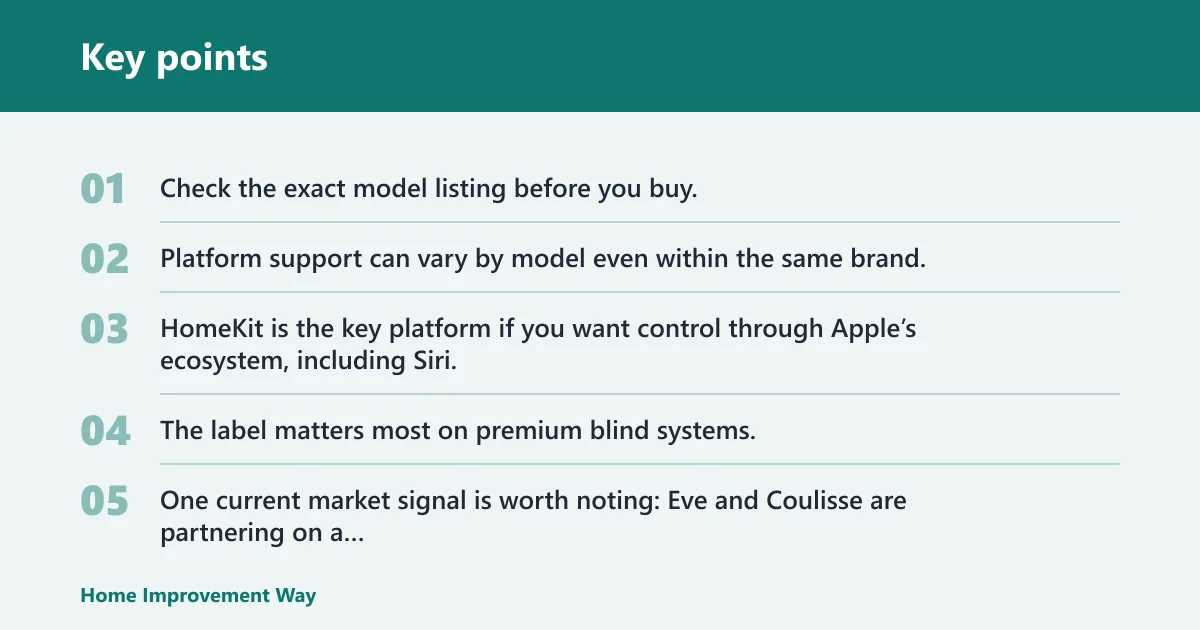
Check the exact model listing before you buy. Platform support can vary by model even within the same brand, and a shade that works with one smart home system may need a hub or a different version to work with another.
HomeKit for Apple homes
HomeKit is the key platform if you want control through Apple’s ecosystem, including Siri. The label matters most on premium blind systems, where Apple support can be a deciding factor for automations, scenes, and voice control.
One current market signal is worth noting: Eve and Coulisse are partnering on a mass-product smart shade line, and the partnership is meant to lower the cost of HomeKit blinds. That points to more options for Apple-focused homes, not just boutique products.
Thread for stronger mesh reliability
Thread is useful when you want a low-power mesh standard that can improve reliability on compatible shades. It is especially helpful in homes where Wi-Fi coverage is uneven or where a smart shade sits far from the main router. Thread Group documentation describes Thread as an IPv6-based mesh network designed to route around single-device failures, which is why it is often preferred for always-on home accessories.
Wi-Fi for direct app control
Wi-Fi is common and easy to understand because it uses the home network you already have. The tradeoff is that performance depends on coverage, so a weak signal at the window can mean slow response or inconsistent control.
Bluetooth for setup and short-range use
Bluetooth is often used for initial pairing and nearby control. It can be convenient during setup, but if you want remote access when you are away from home, check whether the model needs a hub or bridge for that function.
Motorized retrofit blinds versus full replacement
Retrofit control is the smarter choice when the existing blinds still fit the window and already do the daylight job fairly well. Full replacement makes more sense when the blinds are the wrong style, the fit is poor, or you need true blackout or better diffusion than the current hardware can provide.
The biggest limit on retrofit systems is hardware compatibility. If the blind cord, tilt rod, or slat design does not match the accessory, the motor may not work correctly, and that is a fit problem the app cannot fix.
When retrofit is the smarter buy
Retrofit makes sense when you want lower cost, less replacement work, and basic motorized tilt control. It is a good match for blinds that already block enough light but need easier daily adjustment.
Fit and hardware limits to check
Check slat type, tilt mechanism, blind width, and whether the window has enough clearance for the motor housing. A poor fit can make the blind hang awkwardly, move slowly, or fail to close evenly.
A common first-timer mistake is buying retrofit control for a window that really needs a full shade swap. A 36-inch-wide kitchen blind with warped slats may tilt electronically, but it will still leak glare if the hardware itself cannot close tightly.
When full replacement is worth it
Full replacement is worth it when daylight control is the real priority. If the room needs soft diffusion, better privacy, insulation, or blackout performance, a new motorized shade is usually the better long-term choice.
Daylight-control decision table
| Room or window scenario | Best blind or shade type | Openness or light level | Best control method |
|---|---|---|---|
| Morning east-facing glare | Light-filtering cellular shade | Moderate diffusion | App or scheduled automation |
| All-day south-facing sun | Light-filtering roller or cellular shade | Medium to higher diffusion | App control with timed scenes |
| TV room | Light-filtering shade for daytime, blackout if movie focus matters | Daytime glare reduction first | Voice or app for quick adjustment |
| Bedroom | Blackout cellular shade | Full room darkening | Schedule plus manual override |
| Home office | Light-filtering cellular shade | Balanced daylight | App, voice, or automation |
| Privacy-first street-facing windows | Blackout or tight-weave light-filtering shade | High privacy, low visibility from outside | App and schedule control |
This table is the fastest way to narrow the field. Start with the room’s daylight problem, then choose the fabric or shade type that solves that problem before you worry about voice assistants or brand preference.
Frequently asked questions
For daylight control, the best smart blinds and shades depend on the room’s brightness, privacy needs, and ecosystem. Light-filtering cellular or roller shades are best for glare reduction, while blackout cellular shades are best for sleeping and media rooms. Check model-specific compatibility before buying, especially for HomeKit, Thread, or retrofit installs.
What are the best smart blinds and shades for daylight control?
The strongest overall daylight-control choices are light-filtering cellular or roller shades for glare reduction and blackout cellular shades for room darkening. Graywind fits bright rooms well, KINCMO fits bedrooms and media rooms, Yoolax suits softer daylight, and SwitchBot works when you want to automate existing blinds instead of replacing them.
Are smart blinds worth it for bright rooms?
Yes, if the room gets direct sun at the wrong hour or if screen glare is a daily problem. The main value is not convenience alone; it is being able to match light level to the room’s use with less manual adjusting across the day.
Which smart shades work with HomeKit, Alexa, or Google Home?
Compatibility depends on the exact model, so always check the listing. In this set, Graywind lists HomeKit, Alexa, Google Home, and SmartThings support; KINCMO lists HomeKit, Alexa, Google Home, Matter, and Thread; Yoolax lists Alexa and Google Assistant; SwitchBot can work with Alexa and Google Home when paired with Hub Mini.
Do smart blinds help reduce glare without making a room dark?
Yes, if you choose a light-filtering model instead of blackout fabric. Light-filtering shades are built to soften direct sun and reduce reflections while keeping enough daylight for daytime use, which is why they work well in offices, living rooms, and kitchens.
Can smart blinds be retrofitted to existing blinds?
Yes, but only when the blind hardware is compatible. Retrofit options like SwitchBot Blind Tilt can motorize tilt control on existing blinds, yet they do not fix poor fit, warped slats, or the need for a different light-control style such as blackout fabric.
How much do smart blinds and shades cost?
Prices vary by size, fabric, power system, and ecosystem support. In this set, SwitchBot Blind Tilt is $59.99, KINCMO is $169.99, Yoolax is $169.00, and Graywind is $339.99. Full replacement shades usually cost more than retrofit control, especially when custom sizing or smart-home compatibility is included.
Sponsored / affiliate links. As an Amazon Associate I earn from qualifying purchases. I may earn additional commission from eligible campaigns.