How to Protect a Wood Deck in Winter
Clean, dry, and reseal any wood deck that no longer beads water before winter. Remove snow promptly. Keep rock salt off the boards. Moisture, freeze-thaw movement, and salt can lead to checking, cupping, fastener corrosion, and slippery surfaces. This guide covers winter prep, snow and ice removal, runoff control, and product choices by failure mode.
What you’ll need
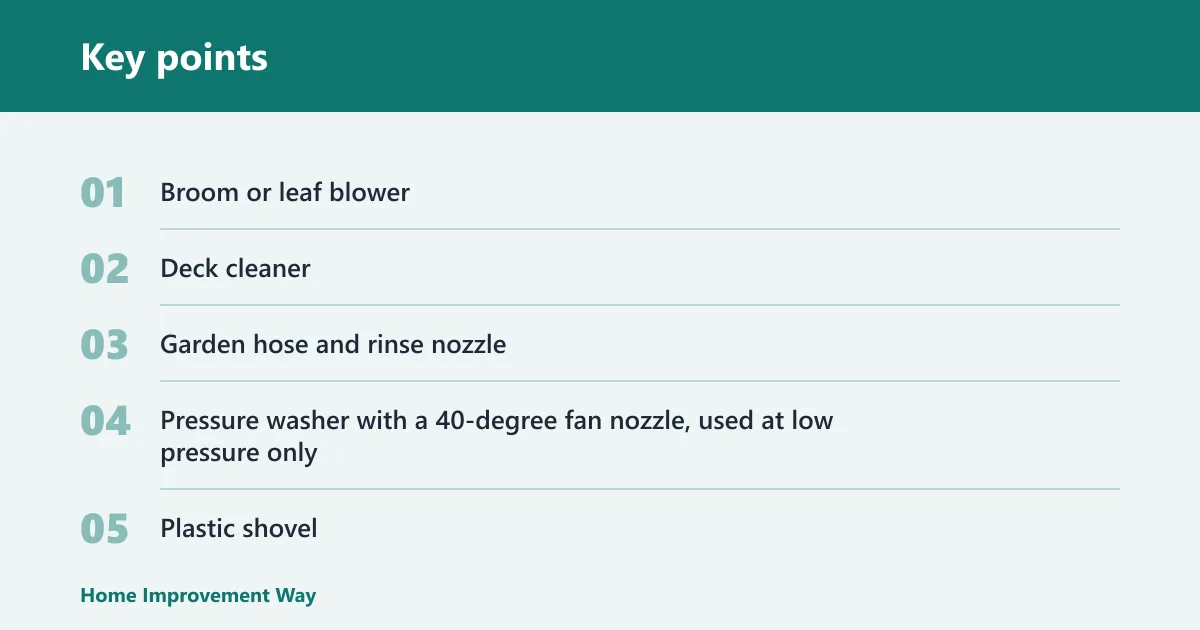


- Broom or leaf blower
- Deck cleaner
- Garden hose and rinse nozzle
- Pressure washer with a 40-degree fan nozzle, used at low pressure only
- Plastic shovel
- Moisture meter
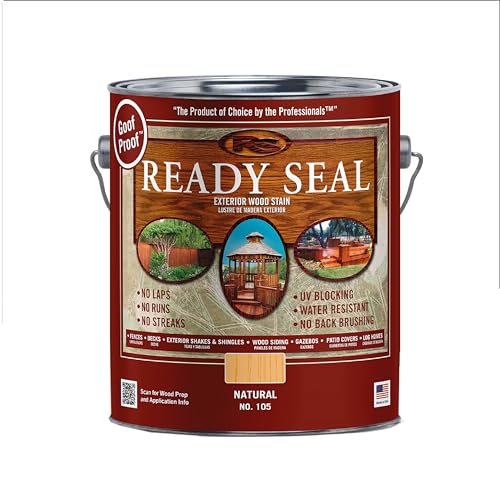
- Penetrating deck sealant, if the wood is ready
- Soft scrub brush or pad
- Bucket and clean water
- Basic inspection tools for loose fasteners, cracks, and rot
Should you seal a wood deck before winter?
Yes, but only if the deck is clean and fully dry. A penetrating sealant soaks into the grain rather than forming a surface film, and it should go on only after washing residue, mildew, and moisture are gone. If the wood is weathered, clean first; if it is too wet or temperatures are too cold, wait.
Freshly sealed decks still need some curing time before the first snow. Most sealers need a dry, open weather window, and the wood should be below the moisture level the coating calls for. If the deck already has peeling coating, fix the surface first instead of sealing over failure.
How winter damages wood decks
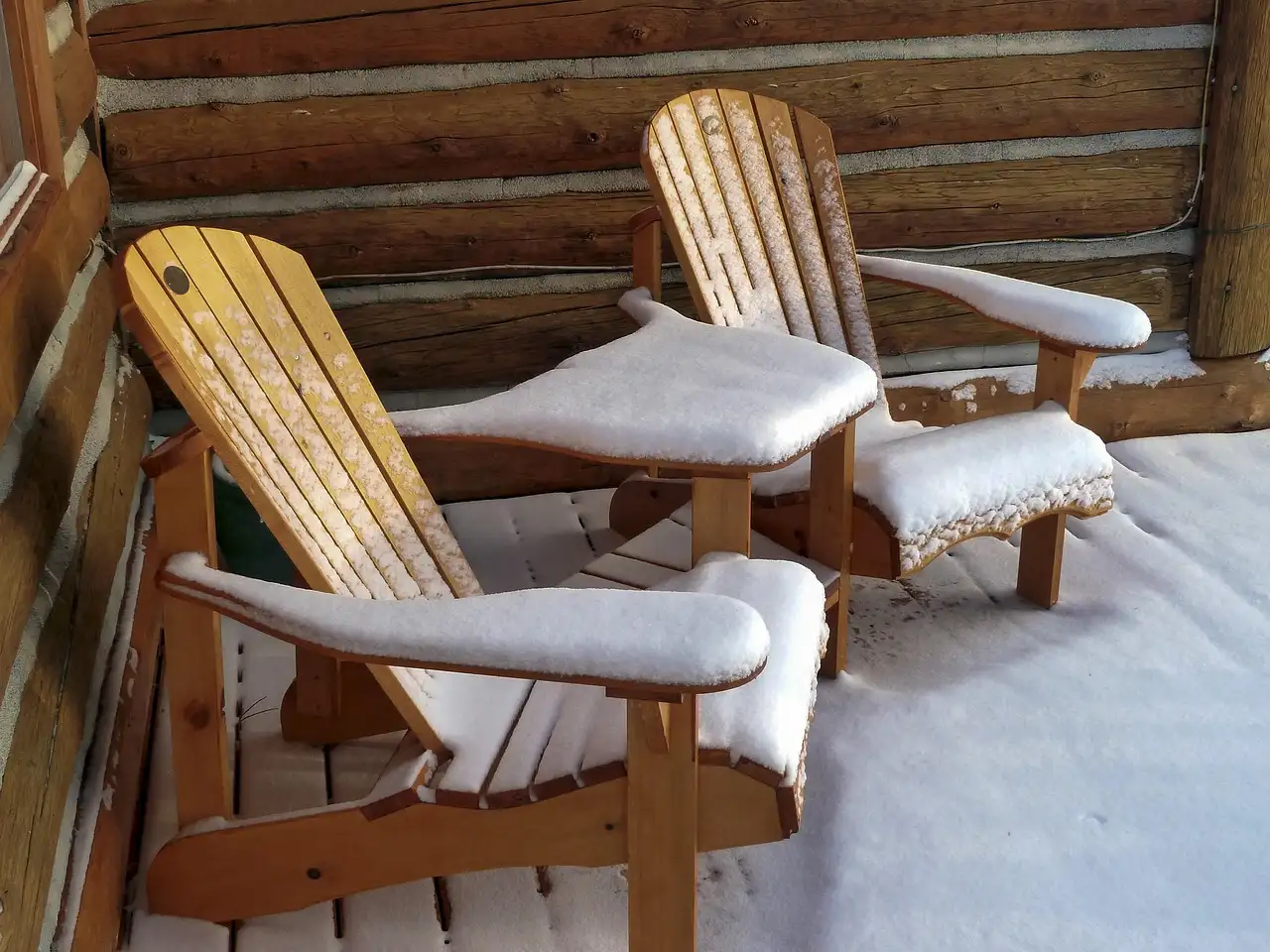
Wood decks can warp, crack, and rot from moisture that freezes and thaws. Standing water, packed snow, and meltwater loading all push wood fibers apart, then pull them back as temperatures change. Salt adds another problem: it can damage wood and metal hardware near walk paths.
Moisture absorption and rot
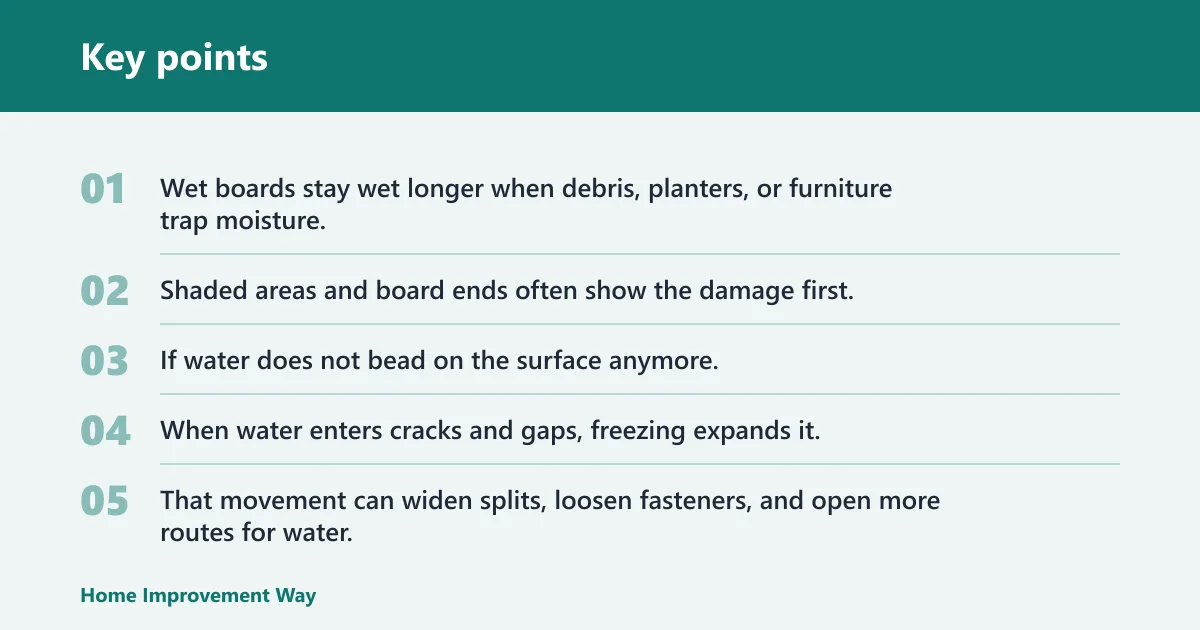
Wet boards stay wet longer when debris, planters, or furniture trap moisture. Shaded areas and board ends often show the damage first. If water does not bead on the surface anymore, the deck is likely ready for cleaning and recoating before winter.
Freeze-thaw movement in boards and fasteners
When water enters cracks and gaps, freezing expands it. That movement can widen splits, loosen fasteners, and open more routes for water. The problem is worst where runoff pools, including deck edges, post bases, and spots under downspouts.
Salt and runoff exposure near walk paths
Rock salt is a deck hazard in winter. It can damage wood and nearby metal hardware, so keep it off wood decking whenever possible. Runoff from roofs and gutters also matters, because it can keep one section saturated while the rest dries.
How do you protect your deck in the winter?

Start by clearing debris, then inspect the surface, clean problem areas, rinse, dry, and coat only if the wood is ready. That order matters because dirt, mildew, and trapped water keep sealant from soaking into the grain. If the deck already has mildew, runoff staining, or worn finish, fix those spots before winter sets in.
- Sweep or blow off leaves, twigs, pine cones, and dirt before the first snowfall.
- Inspect for cracks, loose boards, popped fasteners, soft spots, and dark areas that suggest rot.
- Apply deck cleaner to dirt, mildew, algae, and oxidation; use oxygenated bleach or sodium percarbonate for cedar and other softer woods.
- Rinse thoroughly. If you wash with a pressure washer, use only low pressure, a 40-degree fan nozzle, and hold the tip about 18 inches from the wood.
- Let the deck dry for 48 to 72 hours after washing, then confirm the wood moisture is under 15% before coating.
- Apply a penetrating deck sealant if the deck is ready, then give it the full cure time before snow exposure.
What if the deck already has mildew?
Clean it before winter. Mildew often develops under debris, furniture, rugs, or in shaded areas, and it can mean the deck is holding water too long. Treat the growth, then fix the cause or the same spots will come back wet and stained again.
How do you handle snow and ice?
Use a plastic shovel and remove snow early, before it compacts and turns to ice. Avoid metal edges that can gouge boards. For ice management, calcium chloride may be a safer alternative in some guides, but product-label compatibility with wood still matters.
- Clear loose snow with a plastic shovel, moving parallel to the boards when possible.
- Leave a thin film of packed snow rather than scraping aggressively into the grain.
- Apply calcium chloride only as directed on the label and only where the label allows wood use.
- Rinse residue in thaw periods if the product directions call for it.
- Avoid rock salt on the boards and near fasteners whenever possible.
If your 12-by-16-foot deck sits below a gutter that dumps water near one corner, that corner needs attention first. If winter foot traffic also crosses that area, you have two risks at once: extra moisture and deicer exposure. Fix the runoff first, then manage the ice path with a label-approved deicer.
Deck winter decision table
| Deck condition | Risk factor | Recommended action | Products to use or avoid | Timing |
|---|---|---|---|---|
| Freshly sealed wood | Premature wear if curing is incomplete | Keep traffic light, remove snow gently, and protect from runoff | Use a plastic shovel; avoid rock salt and wet tarps | Only after the coating has cured fully |
| Weathered unsealed wood | Water absorption, checking, and rot | Clean, dry, then seal with a penetrating product | Use deck cleaner; avoid sealing while damp | Before the first sustained freeze |
| Decks with mildew | Hidden moisture under debris or furniture | Clean growth, move items, and improve airflow | Use oxygenated bleach or sodium percarbonate on softer woods | Before winter storage and again after thaw |
| Roof runoff and deicer exposure | Saturation at edges, salt damage, and hardware corrosion | Redirect water away from posts and supports; limit deicer contact | Use calcium chloride only if the label allows it; avoid rock salt | Before snow season and after each thaw cycle |
How do I remove snow from a wood deck without damaging it?
Use a plastic shovel, not a metal one. The safer method is to push snow off in the direction of the boards or parallel to them, which reduces gouging. Keep the blade slightly raised if ice is close to the surface, and do not scrape hard at corners or board ends.
If that does not work, switch to thinner passes and remove snow earlier next time. A common first-timer mistake is waiting until the snow has packed down and frozen, then forcing the shovel against the wood. That is when scratch marks and edge chips usually start.
Should I use a tarp or cover on my deck in winter?
Only if the cover is breathable and does not trap water against the boards. A tight tarp can hold condensation, block drying, and create a wet pocket under furniture, rugs, or planters. If you cover the deck, leave space for airflow and remove standing snow from the top.
For most decks, targeted protection works better than full wrap coverage. Move items off the surface, then keep the deck open enough to dry between storms. If a cover stays damp for days, it can make mildew and rot more likely rather than less.
How often should I clean or reseal a deck before winter?
Clean before winter whenever the surface shows dirt, mildew, algae, or a gray, oxidized look. Reseal when water no longer beads on the wood or when the prior coating has worn thin. Recoat timing commonly falls around about 1-2 years or 2-3 years, depending on exposure and product type.
Plan work for a dry weather window. Pacific Home Painting advises early fall protection, and many coating directions call for at least 48 hours after cleaning before staining or sealing. Marine Home Improvement recommends applying sealant when temperatures are above 50°F.
Common mistakes
- Covering a damp deck and trapping moisture underneath. Let the wood dry first, and keep airflow around the boards.
- Leaving furniture, rugs, and planters in place all winter. Move them so the deck can dry evenly.
- Ignoring drainage at posts and supports. Check gutters, downspouts, and any place water pools near the deck.
- Using the wrong deicer or too much pressure. Avoid rock salt, and keep pressure washing low with the 40-degree fan nozzle.
How do I keep mold and mildew from growing on a deck in winter?
Remove debris, move furniture, and clean shaded areas before the first hard freeze. Mold and mildew often grow where snow melts slowly or where air cannot circulate. If you see repeat growth in one spot, check for poor drainage, blocked airflow, or a coating that no longer repels water.
Frequently asked questions
How do I protect a wood deck in winter?
Clear debris, clean mildew and oxidation, let the wood dry fully, then apply a penetrating sealant if the deck is ready. Remove snow with a plastic shovel, keep water moving away from posts and supports, and avoid rock salt on the boards.
Can snow damage a wooden deck?
Yes. Snow holds moisture against the boards, and freeze-thaw cycles can open cracks, loosen fasteners, and cause cupping or checking. Remove snow promptly and fix drainage problems before winter so meltwater does not pool and refreeze near edges or supports.
What ice melt is safe for a wood deck?
No deicer is automatically safe on wood. Calcium chloride is often listed as a safer choice than rock salt, but you still need to check the product label for wood compatibility and use only the amount the label allows.
Sponsored / affiliate links. As an Amazon Associate I earn from qualifying purchases. I may earn additional commission from eligible campaigns.