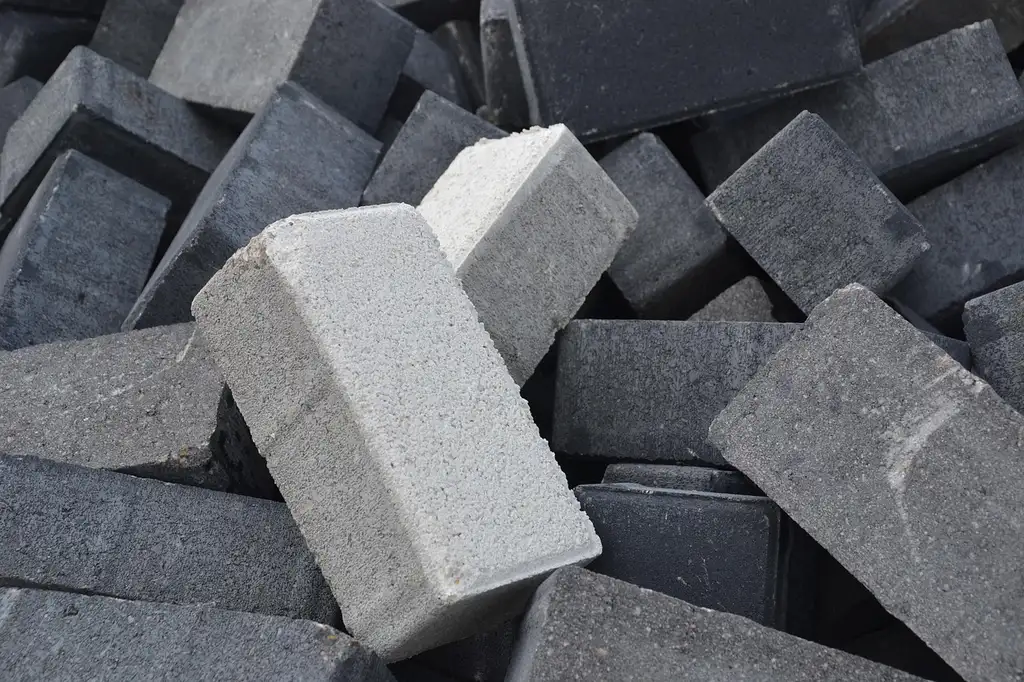
Is Ice Melt Safe for Pavers?
Ice melt choice depends on the paver material, age, and expected low temperature. The wrong ice melt can stain, pit, or spall pavers, and it can also damage joints and nearby plants. This guide sorts paver-safe deicers by temperature, surface type, and label claims so you can choose with fewer doubts.
This guide is part of our Ice Dams, Gutters and Snow: Protect Your Roof This Winter series.
How paver material and temperature dictate the safest deicer
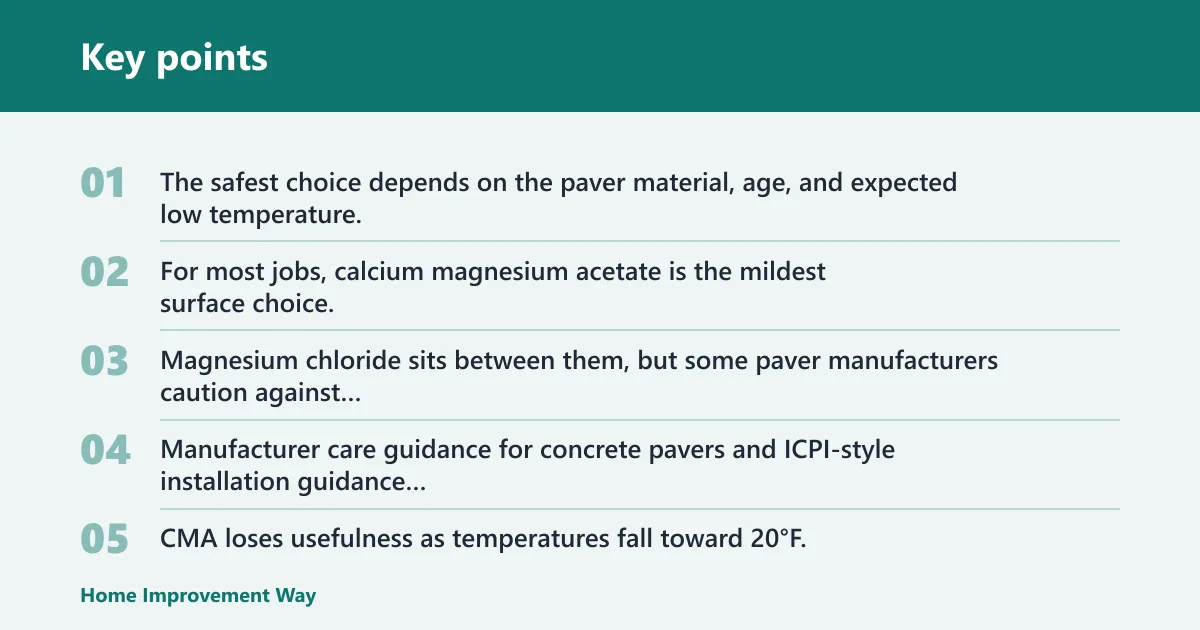


The safest choice depends on the paver material, age, and expected low temperature. For most jobs, calcium magnesium acetate is the mildest surface choice, calcium chloride is the coldest-weather choice, and sodium chloride is the baseline option only for older, less sensitive pavers in milder cold. Magnesium chloride sits between them, but some paver manufacturers caution against chloride deicers on certain finishes or newly installed surfaces. Manufacturer care guidance for concrete pavers and ICPI-style installation guidance generally put surface condition and age ahead of any blanket “best deicer” claim.
Temperature changes the answer fast. CMA loses usefulness as temperatures fall toward 20°F, while rock salt also loses bite as cold deepens. If you need a product to keep working on a very cold morning, calcium chloride is usually the better fit. If the surface is new, sealed, decorative, or joint-sensitive, the safest move may be to use less deicer, not a stronger one.
Decision table: which deicer fits which paver?
The “safest choice” column assumes you are following the paver maker’s own instructions first; when a manufacturer forbids a product, that guidance overrides any generic deicer comparison. That is especially important for sealed pavers, newer concrete, and any brick unit with a special finish or known sensitivity. Industry guidance from paver manufacturers and installation groups generally treats age, joint condition, and curing time as the deciding factors, not just the chemical name on the bag.
| Paver type | Installation age | Expected low temperature | Pet/plant sensitivity | Safest deicer choice | Do not use |
|---|---|---|---|---|---|
| Concrete pavers | Older than 1 year | 15°F to 20°F | Low | CMA if the label allows; magnesium chloride only if the manufacturer allows it | Heavy rock salt application |
| Concrete pavers | Older than 1 year | Below 15°F | Low to moderate | Calcium chloride, used sparingly | CMA, rock salt, and any heavy spread that floods joints |
| Concrete pavers | Less than 1 year | Any cold spell | Any | Clear snow first; if needed, use the least amount of calcium chloride that the label permits | Rock salt and broad coverage with any deicer |
| Brick pavers | Older than 1 year | 15°F to 20°F | Moderate to high | CMA, only if the surface is dry enough for it to work | Rock salt and repeated magnesium chloride use |
| Brick pavers | Any age | Below 15°F | Moderate to high | Usually none; clear traction first and use calcium chloride only if the label and manufacturer permit | CMA and rock salt |
| Sealed pavers | Any age | Any cold spell | Moderate to high | Lowest possible dose of the mildest permitted product | Any heavy application, especially rock salt |
| Deicer | Best fit | Main caution |
|---|---|---|
| Calcium chloride | Cold snaps and harder freeze conditions on concrete pavers | Can still stress joints, edges, and young pavers if overused |
| Magnesium chloride | Mild cold on older concrete pavers when the manufacturer allows it | Pet-friendly marketing does not make it paver-safe |
| CMA | Mildest option for many pavers when temperatures stay around 20°F | Slush and residue can linger, and it loses usefulness as cold deepens |
| Rock salt | Older, durable pavers in milder cold when cost matters most | Harder on masonry, joints, and nearby grass than the other choices |
Spring cleanup checklist
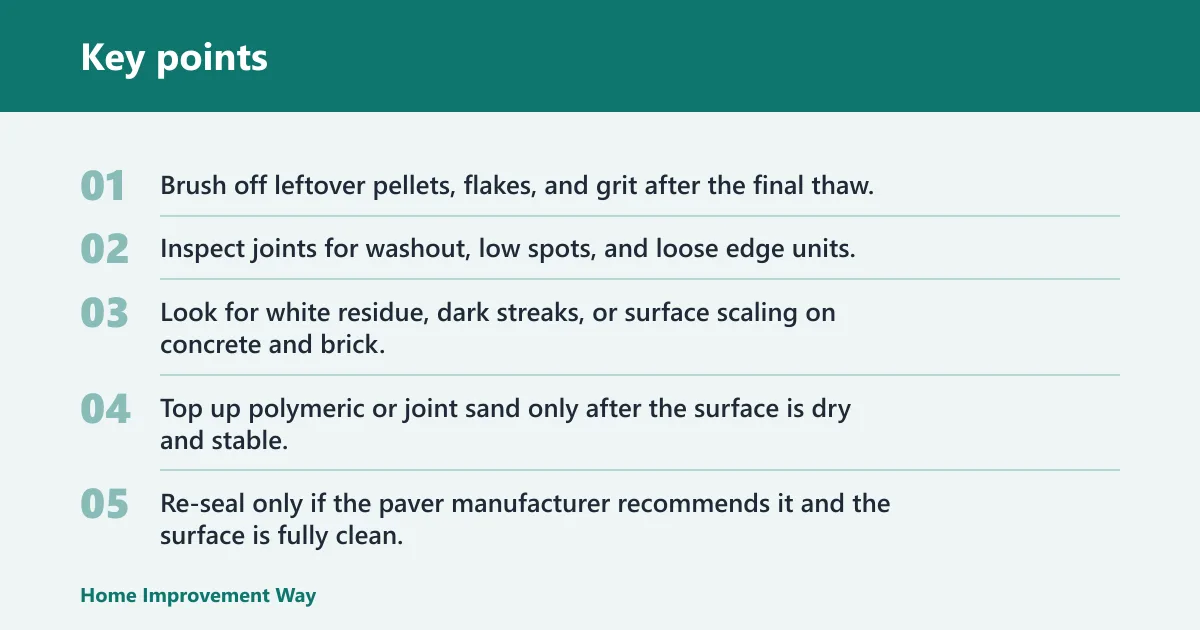
- Brush off leftover pellets, flakes, and grit after the final thaw.
- Inspect joints for washout, low spots, and loose edge units.
- Look for white residue, dark streaks, or surface scaling on concrete and brick.
- Top up polymeric or joint sand only after the surface is dry and stable.
- Re-seal only if the paver manufacturer recommends it and the surface is fully clean.
Quick picks by surface
| Deicer | Best fit | Main caution |
|---|---|---|
| Calcium chloride | Cold snaps and harder freeze conditions on concrete pavers | Can still stress joints, edges, and young pavers if overused |
| Magnesium chloride | Mild cold on older concrete pavers when the manufacturer allows it | Pet-friendly marketing does not make it paver-safe |
| CMA | Mildest option for many pavers when temperatures stay around 20°F | Slush and residue can linger, and it loses usefulness as cold deepens |
| Rock salt | Older, durable pavers in milder cold when cost matters most | Harder on masonry, joints, and nearby grass than the other choices |
What matters most before you choose?
Two surfaces that look similar can react very differently. Brick pavers are more porous masonry and can be more sensitive to freeze-thaw cycling and joint washout, while concrete pavers are often the better fit for chloride-based products when they are fully cured and sound. New installs are always the more delicate case, and many concrete makers advise against any deicer on concrete less than one year old. That warning appears often in manufacturer care sheets and should override generic product comparisons.
Brick pavers versus concrete pavers
Brick pavers usually deserve the gentlest practical treatment. Their porous nature and the joints between units can make them more vulnerable to residue, cracking, and deterioration when deicer is used heavily or repeatedly. Concrete pavers are generally the better candidate for calcium chloride, and some manufacturer guidance points that way, but only when the surface is fully cured and the label permits it.
That does not make concrete pavers immune. Pavers have strong compressive strength, but deicer does not only act on the face of the unit. It can work into joints, sealed surfaces, and tiny surface defects, then worsen freeze-thaw damage.
New installations versus older pavers
New pavers and new concrete are the highest-risk case. Many concrete makers advise against any deicer on concrete less than a year old, and that caution is worth following on pavers too unless the manufacturer gives different directions. Young surfaces and fresh joint sand are easier to disturb, especially when chloride products pull in moisture and then refreeze.
Suppose a homeowner has a new front walk with polymeric sand and a cold snap due overnight. The safest move is to clear snow, improve traction, and avoid broad salt coverage. That keeps the new joints from washing out before they have fully settled.
Polymeric sand and sealed surfaces
Polymeric sand joints can be damaged if water carries deicer down into the seams, then refreezes. That washout can leave low joints, loose edges, and spring repair work. Sealed pavers also need caution because a deicer residue can sit on the finish longer and make cleanup harder. If a sealant manufacturer bans a product, follow that instruction even if a general deicer chart looks favorable.
A common first-timer mistake is to spread ice melt like lawn fertilizer. On pavers, that usually means too much product, too much residue, and more joint damage than the ice itself would have caused.
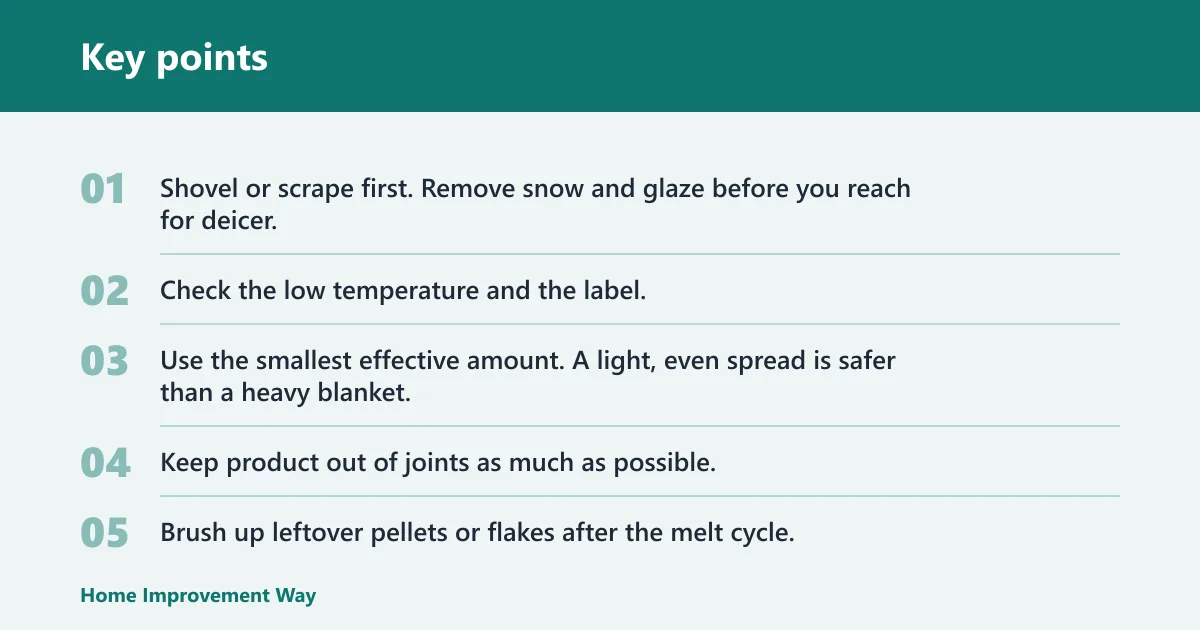
- Shovel or scrape first. Remove snow and glaze before you reach for deicer.
- Check the low temperature and the label. Match the product to the coldest part of the night, not the afternoon high.
- Use the smallest effective amount. A light, even spread is safer than a heavy blanket.
- Keep product out of joints as much as possible.
- Brush up leftover pellets or flakes after the melt cycle.
- Rinse and inspect in spring for joint loss, stains, or surface scaling.
How to apply deicer safely on pavers
Safe application matters as much as product choice. Pavers usually fail from overuse, poor cleanup, and repeated wet-freeze cycles, not from a single light application that matches the label. Use the least product that breaks the bond, then remove meltwater and residue before nighttime refreeze.
Application basics
Spread deicer lightly and evenly, then stop. Concentrating pellets in low spots dumps extra salt into the joints. If the forecast calls for repeated freezing, it is usually better to reapply a small amount later than to overload the surface at the start.
What to watch after the thaw
After the ice is gone, inspect the pavers, the edges, and the joints. White residue, pitting, and loose joint sand are early warnings that the product was too strong, too wet, or too heavy for the surface. A quick cleanup now prevents a bigger spring repair later.
Calcium chloride on pavers
Calcium chloride is the strongest practical choice in this group when the temperature drops hard. It is the best ice melt for concrete pavers in cold conditions, and it fits cold snaps better than the milder products. Use it when the surface needs real melting action and the forecast is colder than the range where CMA and rock salt are dependable. Technical sheets generally place calcium chloride among the more effective low-temperature options, but they also warn against over-application and against use on surfaces that are too new or otherwise vulnerable.
When it fits cold weather
Use calcium chloride when you need traction and melt in a serious freeze, especially on older concrete pavers. It is the clearest choice among the four when the temperature is too low for the gentler options to do enough work. That is the case where “safe” means “most effective with the least total product.”
Risks to pavers and joints
Even the better cold-weather choice can cause trouble if you use too much. Calcium chloride can still drive water into the surface, stress joints, and leave residue if the pavers are already fragile, freshly installed, or sealed. Do not treat it like an all-weather cure, and do not ignore any paver manufacturer instruction that bans chlorides on a specific finish.
How it compares with rock salt
Compared with sodium chloride, calcium chloride usually keeps working in colder weather. Rock salt is common and inexpensive, but it is also the baseline deicer many concrete makers treat cautiously, especially on younger or salt-sensitive surfaces. For pavers, better cold performance does not mean free rein.
Is magnesium chloride safe for pavers?
Magnesium chloride is one of the more disputed choices for pavers. Some product messaging treats it as gentler or pet-friendly, but paver guidance is not uniform. If you want the clearest practical rule, treat magnesium chloride as an option only when the manufacturer permits it and the pavers are older, sound, and not especially sensitive.
Why guidance conflicts
Some sources group magnesium chloride with the gentler common choices, while other paver guides say it is not recommended. That split matters because label language often focuses on pets or nearby plants, not on how the product behaves in masonry joints, sealed finishes, or repeated freeze-thaw cycles.
Pet-friendly labels and paver risk
Pet-friendly does not mean paver-safe. A product can be easier on paws and still leave residue, increase moisture in joints, or contribute to surface wear on brick or concrete pavers. The safer reading is simple: use the label as one clue, not the decision.
When to avoid it
Avoid magnesium chloride on new pavers, on brick pavers that already show joint loss, and on any surface where the manufacturer warns against it. If the forecast is very cold, choose calcium chloride or skip deicer and focus on removal and traction instead.
Is calcium magnesium acetate safe for pavers?
CMA is the safest kind of ice melt for pavers, but “safest” does not mean universal. It is best treated as the surface-friendly option for moderate cold, not the answer for deep freezes. Use it when you want the mildest practical deicer and the temperature stays around its workable range, which is commonly cited near 20°F.
Surface compatibility claims
CMA is often the first choice when surface protection matters more than fast melting speed. It is commonly described as the gentlest option for masonry because it is less aggressive than chloride salts. That still does not make it a free pass on fresh joints or decorative pavers.
Temperature limits
CMA works to about 20°F. Below that, it loses usefulness and can leave you with slush that does not clear well. If the forecast is colder than that, a better deicer choice is calcium chloride, or no deicer at all if the surface is especially new or sensitive.
Residue and slush behavior
CMA can leave residue and a wetter slush layer than some homeowners expect. That matters on pavers because lingering moisture can work into joints and freeze again overnight. If you choose CMA, use only enough to break the bond, then clear the meltwater and leftovers as soon as conditions allow.
Is rock salt bad for pavers?
Rock salt is sodium chloride, and it is the familiar baseline deicer most homeowners know. It is not the best choice for pavers, but it is common because it is cheap and easy to find. The problem is that it is harder on young concrete and grass, and it becomes less useful as temperatures fall. Many paver manufacturers and DOT/university guidance reserve sodium chloride for older, sound surfaces in milder conditions.
Why sodium chloride is the baseline option
Sodium chloride is still used because it works in mild cold and is widely available. It can work down to about 15°F. That makes it a practical last-mile choice for older, durable pavers when the cold is not extreme and the surface is not sensitive.
Temperature limits and freeze-thaw concerns
Below its useful range, rock salt can leave wet residue without enough melting power to clear the surface. That creates repeated freeze-thaw cycles, which are hard on brick, joints, and any paver with existing cracks or surface wear. The slower the melt, the more likely water stays where it should not.
Best use cases and clear no-go cases
Rock salt is one common option for concrete materials in mild weather, but it is still a poor fit for new pavers, decorative brick, and any surface with polymeric sand that you do not want disturbed. Use it only when the surface is mature and the weather is mild enough, and let manufacturer guidance override generic comparisons if the paver maker says no.
Picture a 12-year-old concrete patio with stable joints and a light overnight frost. Rock salt may be acceptable there if you apply very little. On a fresh brick walkway with new polymeric sand, the same product can leave you with washed-out joints by spring.
Asphalt near pavers
Asphalt next to pavers needs a separate plan because the seam between materials is where water, salt, and freeze-thaw damage usually show up first. The safest rule is still to use the mildest product that matches the temperature, then keep the application off the paver joints and off any sealed edge detail. If the pavers are new, treat the whole edge zone as sensitive.
Edge zone problems
When asphalt sheds meltwater toward pavers, the runoff can carry deicer straight into the joints. That can soften polymeric sand, stain edges, and create a low line where the two surfaces meet. Keep the seam clear, and do not assume the asphalt side can take a heavier load while the paver side stays untouched.
Practical edge protection
Use a shovel, broom, or plastic scraper to keep the seam open and avoid piling deicer in the trough where the two materials meet. If you need traction on the asphalt, apply the product there lightly and stop short of the paver joint line.
Frequently asked questions
What type of ice melt is safe for pavers?
The safest practical choice is CMA when temperatures stay near 20°F, with calcium chloride reserved for colder snaps on older concrete pavers. Magnesium chloride is less clear because guidance conflicts, and rock salt is the least suitable for new or sensitive pavers. Match the product to the surface, not the marketing label.
Is calcium chloride safe for paver stones?
Yes, calcium chloride is the clearest cold-weather option for many concrete pavers, especially older ones. It is still not risk-free. Use it sparingly, keep it off fresh joints when possible, and avoid heavy coverage on new, sealed, or decorative pavers where residue and washout matter more.
Is CMA safe for pavers?
CMA is the safest kind of ice melt for pavers, especially when you want the mildest surface impact. It is most useful around 20°F and less useful as the temperature falls. It can still leave residue, so clean up after the melt cycle.
What should I avoid using on new pavers?
Avoid heavy deicer use of any kind on new pavers, and avoid rock salt first. Many concrete makers advise against any deicer on concrete less than a year old. If you must treat the surface, clear snow first and use the smallest amount the label allows.
How do I use ice melt on pavers without damaging them?
Start by clearing snow, then apply the smallest effective amount in a light, even spread. Choose the product that matches the coldest temperature you expect, not just the easiest bag to find. Brush up leftovers, protect joints, and inspect for damage in spring.
What ice melt is safe for asphalt near pavers?
Asphalt near pavers usually follows the same practical rule: use the mildest product that still matches the temperature, and keep it off the paver joints as much as possible. If the pavers are new or decorative, avoid rock salt and be cautious with any chloride product near the seams.
Sponsored / affiliate links. As an Amazon Associate I earn from qualifying purchases. I may earn additional commission from eligible campaigns.
 Goo Gone Adhesive Remover - Surface Safe, Safely Removes Stickers, Labels, Decals, Residue, Tape, Chewing Gum, Grease, Tar
 DEFY Marine Seal Semi-Transparent Exterior Wood Stain and Sealer - Waterproof Sealant for Wood Docks, Boat Piers, Marinas, Boardwalks, & More - Natural Pine - 2.5 Gallon, Made in USA