How to Melt Ice on Steps Without Salt
Use sand, a snow-melting mat, or a chloride-free deicer for the safest salt-free approach on steps. If you need chemical melting in cold weather, calcium chloride and magnesium chloride work better than rock salt, but they are still chloride products and can be hard on concrete and metal. Bad choices can leave steps refreezing, stain surfaces, or damage masonry and wood. This guide sorts the options by stair material, temperature, and refreeze risk.
What to do first on icy steps
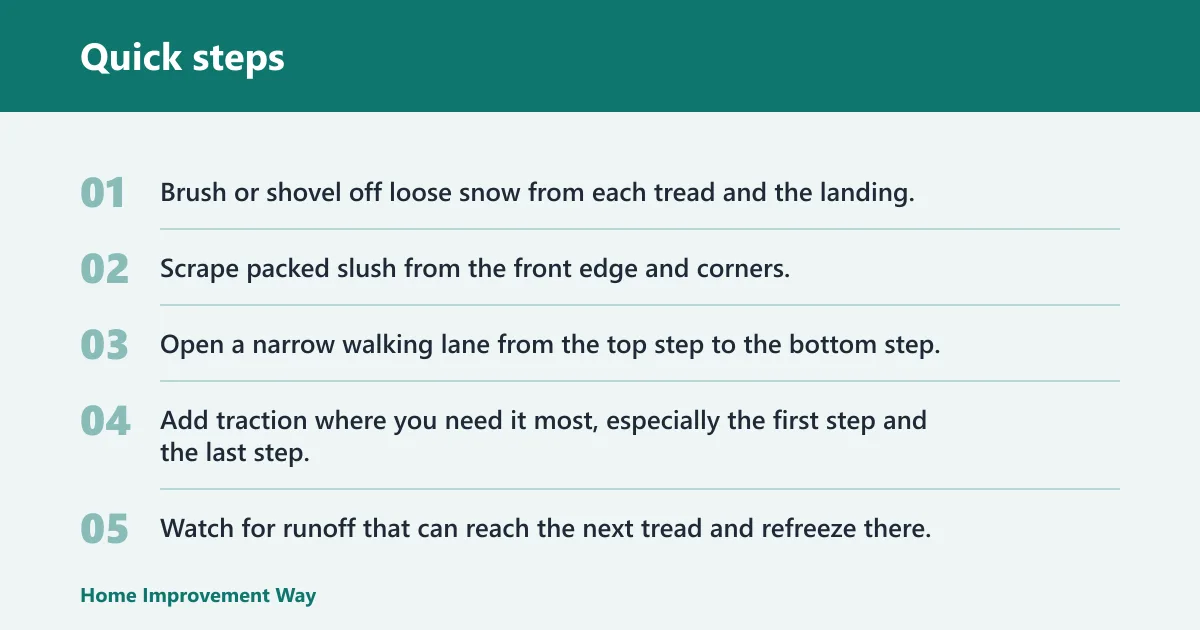


The first move is removal, not product selection. Clear loose snow, break up slush, and shovel a narrow path at the tread edge and the landing so someone can step with a full foot, then add grip before chasing a complete melt.
Stairs behave differently from flat walks. Meltwater runs to the nosings, edges, and corners, then freezes again there if the surface stays shaded or the air remains below freezing. That is why the safest method often combines removal and traction instead of one product that promises a full melt.
- Brush or shovel off loose snow from each tread and the landing.
- Scrape packed slush from the front edge and corners.
- Open a narrow walking lane from the top step to the bottom step.
- Add traction where you need it most, especially the first step and the last step.
- Watch for runoff that can reach the next tread and refreeze there.
Say your front steps are only dusted with powder but the top tread is glazed. Clearing the snow first may leave a thin film behind, and that is fine if you can add sand right away. The goal is a safer path, not a perfect bare surface.
What can you put on icy steps instead of salt?
Sand and other abrasives are the best immediate backup when you need grip more than melting. They do not melt ice. They improve footing, which is often the safer short-term fix on stairs where runoff can make a melt product work poorly.
Snow-melting mats are a non-chemical option for recurring problem steps and porches. They cost more up front than spreading granules, but they can keep a walkway usable without relying on deicers. For very small patches, a rubbing alcohol mix can help, but it is limited to light icing and small areas.
Sand and other abrasives
Use sand, clean traction grit, or a similar abrasive when you want immediate slip reduction. These materials sit on top of the ice and give shoe soles more bite. They are especially useful on textured concrete, rough brick, and older wood treads that already have some grip.
They are not a melt plan. If the ice is thick or the stairs are glazed with black ice, sand can still help, but you may need to scrape, sweep, and reapply it after foot traffic pushes it aside.
Snow-melting mats
Snow-melting mats are a practical non-chemical option for walkways and porches that freeze often. They are used on walkways and porches and work by heating the surface, which can reduce both ice buildup and refreeze risk. They make the most sense where power access is practical and repeated storms are common.
They are not the cheapest answer. The tradeoff is simple: higher upfront cost, less day-to-day spreading and cleanup.
Rubbing alcohol mixes
A common homemade mix uses dish soap and hot water, and small amounts of isopropyl alcohol can help with thin ice in a limited area. That kind of mix is best for a small patch near a doorway or a single landing, not for thick buildup on a full staircase.
A common first-timer mistake is spraying a homemade mix across several frozen treads and expecting a full melt. On stairs, that often leaves wet spots that refreeze at the nosings while the upper treads stay slick.
Ice on steps by surface decision table
This table ranks the safest no-salt choice for common stair surfaces. It separates melting from traction, because those are not the same thing. If you only need safer footing, sand may beat a chemical. If you need actual melting, a chloride-free or low-corrosion product may be the better fit.
| Step surface | Safest no-salt option | Expected temperature range | Traction benefit | Residue risk | Refreeze risk | Use on new concrete |
|---|---|---|---|---|---|---|
| Concrete | Sand for grip; calcium magnesium acetate if you need melting and the label allows it | Sand: any cold conditions; CMA: best when temperatures are not extreme | High with sand | Low to moderate | Moderate if meltwater is not removed | Yes for sand; caution for chemicals |
| Brick | Sand or a chloride-free deicer labeled for masonry | Best in mild to moderate cold | High with sand | Moderate, especially in mortar joints | Moderate | Use caution |
| Wood | Sand or traction mats | Any cold conditions | High with sand or mats | Low with sand; low with mats | Moderate if water collects in seams | Yes for sand; avoid harsh chemicals unless the maker allows it |
| Composite | Sand or traction mats | Any cold conditions | High with sand or mats | Low to moderate | Moderate around grooves and fasteners | Yes for sand; check the maker before any deicer |
Which no-salt option fits the temperature?
Temperature changes the answer. Some chloride deicers still work in cold weather, but their performance falls as the air drops. For stairs, the better choice is the one that matches the surface and the weather, not the one that sounds strongest on the bag.
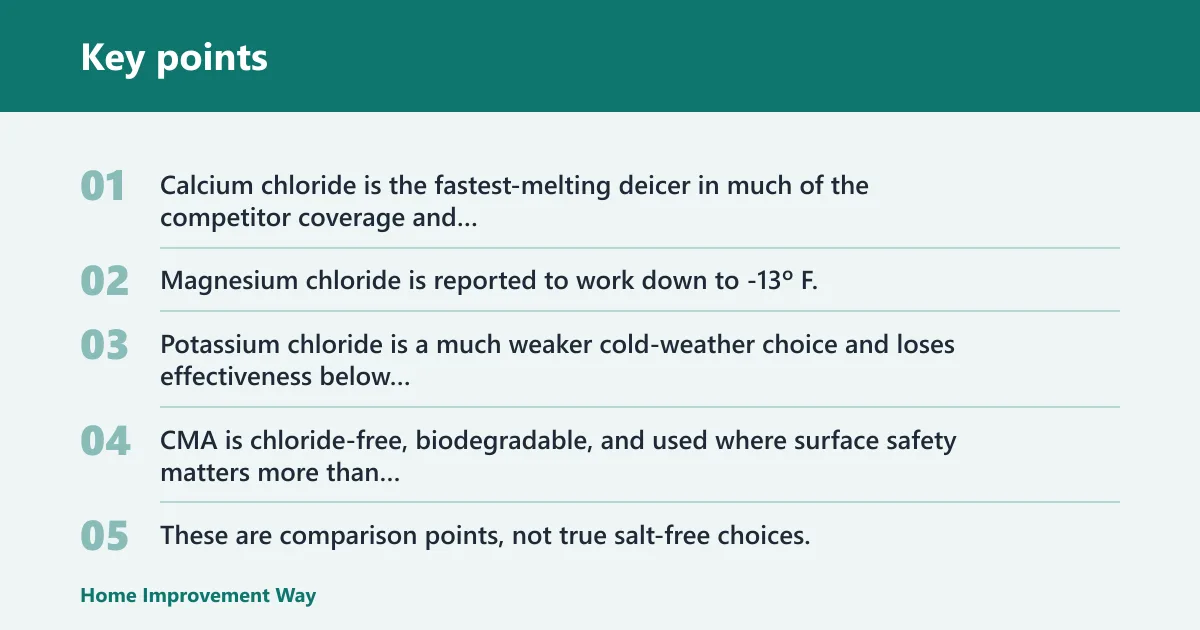
Calcium chloride is the fastest-melting deicer in much of the competitor coverage and remains effective as low as -25º F. Magnesium chloride is reported to work down to -13º F. Potassium chloride is a much weaker cold-weather choice and loses effectiveness below 25º F. CMA is chloride-free, biodegradable, and used where surface safety matters more than speed.
Calcium chloride and magnesium chloride
These are comparison points, not true salt-free choices. Bob Vila describes them as exothermic deicers, meaning they release heat as they work. That makes them useful when ordinary rock salt is too weak for the temperature, especially on concrete stairs that need a faster melt.
They are still chloride products. Use them cautiously on masonry, older concrete, and metal handrails. Thin application matters here. Piling on more does not fix a poor surface choice and can increase residue and runoff.
Potassium chloride and CMA
Potassium chloride can be a milder option, but it is not the answer for very cold storms. It loses effectiveness below 25º F, so it belongs in the mild end of the cold-weather range. CMA is the more surface-friendly comparison product because it is chloride-free and fully biodegradable.
CMA is often the safer choice for newer concrete, but it should not be treated as a free pass for every stair material or every storm. If the steps are already soaked, shaded, and near freezing, traction first may be the better move.
How do you keep steps from refreezing?
Refreeze is a runoff problem as much as a temperature problem. Remove meltwater before it turns to black ice, especially on the front edge of the tread, the side seam near the stringer, and the landing below the steps. Shaded stairs refreeze first.
Use a broom, scraper, or towel to pull standing water off the walking line. Reapply deicer only when the surface condition changes, such as after new snowfall or fresh glaze. More product on top of wet ice can leave a slick film if the meltwater has nowhere to go.
Picture a shaded back stair with three narrow concrete treads. If the top tread melts but the landing stays wet, the safest fix may be to clear the water, add sand at the nosing, and keep traffic off the stair until the surface stops shining.
What to avoid on new concrete
New concrete deserves extra caution, especially if it is less than a year old. That first winter is when freeze-thaw damage is most likely to show up. Deicer can speed up surface wear, and chloride products are the biggest concern on fresh concrete.
CMA is often described as a gentler deicer for newer concrete, but restraint is still the better rule. If you can get by with shovel work, sand, and a traction mat, that is usually the lower-risk path. On new steps, abrasion is often safer than chemistry.
Why chloride products need extra caution
Chloride-based deicers can contribute to spalling, scaling, and cracking over time. Safe Paw says concrete exposed to road salt can lose up to 25% of its surface strength in five winters, which is why many homeowners avoid chloride products on fresh concrete and on porous masonry when possible.
That warning matters on stairs because the damage shows where feet land and water collects. Nosings, joints, and edges take the most abuse.
Where abrasion is safer than chemical treatment
Sand is often the better answer on a new stair set when the ice is thin and the goal is safe footing. It does not melt the ice, but it reduces slip risk without adding chloride stress to the surface. That tradeoff is often worth it during the first winter.
DIY mixes and their limits
Vinegar is not a dependable first-choice ice-melt method for stairs. It may loosen light frost in some cases, but it is not a reliable answer for thick ice, shaded steps, or repeated refreeze. On stairs, a weak mix can make the surface wet without making it safe.
Rubbing alcohol can help in small spots, but it is best used sparingly and only where a quick patch treatment makes sense. It works better on smaller areas than on an entire staircase. That is why DIY mixes belong in the backup category, not the main plan.
Why vinegar falls short
Vinegar is often suggested because it is easy to find, but it is a poor choice when you need dependable stair traction. It does not replace a real deicer or a traction aid, and it does little for refreeze once runoff starts collecting at the tread edge.
Where rubbing alcohol may help
A small spot on one tread, a doorway landing, or a handhold area near the top step are the only realistic use cases. If the ice is thick or the whole staircase is glazed, switch to removal and traction instead of hoping a homemade spray will carry the load.
How do I melt ice on steps without salt?
Start by clearing loose snow, then choose between traction and melting. Sand or a traction mat is the safest no-salt answer when grip is the main problem. If you need actual melting, use a chloride-free deicer such as CMA on compatible surfaces, and treat new concrete with extra caution.
The stair-specific rule is simple: remove what you can, add grip where you must, and only then choose a melting product. That order matters because steps can refreeze at the edges even when the center tread looks wet and clear.
Frequently asked questions
Will vinegar melt ice on stairs?
Not reliably. Vinegar may loosen light frost, but it is not a dependable stair deicer and should not be counted on for thick ice or shaded steps. It can leave the surface wet without solving the slip problem, which is a bad trade on stairs.
Can rubbing alcohol melt ice on concrete steps?
It can help on small patches of thin ice, especially in a homemade mix used for a limited area. It is not a full-stair solution and will not handle thick buildup well. Use it only as a small-spot backup, then add traction if the surface still feels slick.
Is sand better than salt for icy steps?
For traction, yes. Sand gives grip without the concrete, metal, plant, and pet concerns that come with rock salt. It does not melt the ice, so it is better for immediate safety than for clearing the surface. On stairs, that is often the more useful goal.
What ice melt is safe for new concrete steps?
New concrete is the hardest case, especially in the first winter. Sand is the safest default because it adds traction without chemical damage. CMA is the chloride-free deicer most often described as the safer chemical option for newer concrete, but even then, caution is still the better stance.
How do I keep steps from refreezing after melting ice?
Remove standing water right away, especially from nosings, seams, and shaded edges. Reapply only when conditions change, such as after new snow or a fresh glaze. If the stairs stay wet and the temperature stays low, the safer move may be traction rather than more deicer.
What temperature does ice melt stop working?
It depends on the product. Potassium chloride loses effectiveness below 25º F, magnesium chloride is reported to work down to -13º F, and calcium chloride remains effective as low as -25º F. Rock salt works in a much narrower band, which is why it fails sooner in colder weather.
How do I melt ice off steps without damaging concrete?
Use the least aggressive option that solves the problem. Start with shovel work and sand, then move to a chloride-free deicer if melting is necessary and the surface can take it. Avoid deicers on concrete that is less than a year old unless the label and the surface condition clearly allow it.
How can I make stairs safer if the ice won’t fully melt?
Combine partial melting with traction. Clear a walking path, treat the tread edge, and add sand where feet land and turn. If the surface is still glazed, stop treating it like a melt problem and treat it like a slip problem instead.
Sponsored / affiliate links. As an Amazon Associate I earn from qualifying purchases. I may earn additional commission from eligible campaigns.