What Is the Safest Ice Melt for a Concrete Driveway?
Calcium chloride is usually the safest fast-melting choice for concrete, and magnesium chloride is the safer low-temperature backup; avoid rock salt on new concrete under 1 year old, and use any deicer only when temperatures stay above its label rating. Wrong deicer use can pit, scale, and flake concrete, especially on fresh slabs. This guide compares ingredients, temperature ratings, and concrete age so you can pick the least risky option for your driveway.
This guide is part of our Ice Dams, Gutters and Snow: Protect Your Roof This Winter series.
What makes an ice melt safe for concrete?
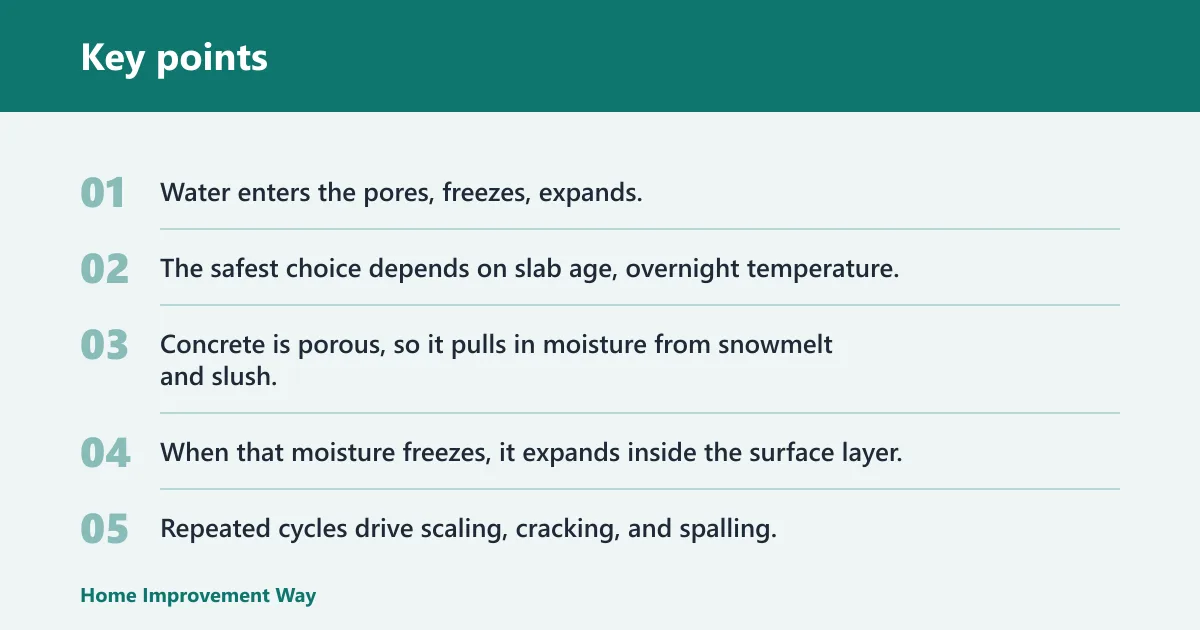


Freeze-thaw cycles break concrete down. Water enters the pores, freezes, expands, and stresses the surface each time it thaws and refreezes. The safest choice depends on slab age, overnight temperature, and whether runoff can reach plants, pets, or metal.
Freeze-thaw damage starts with absorbed water
Concrete is porous, so it pulls in moisture from snowmelt and slush. When that moisture freezes, it expands inside the surface layer. Repeated cycles drive scaling, cracking, and spalling, especially when deicers keep the slab wet and that slush refreezes later.
A common first-timer mistake is leaving a thin, half-thawed film on the driveway after sunset. It may look better for a while, then harden into a rough, bonded layer overnight. That refrozen slush is one of the easiest ways to make surface damage worse.
Why surface age changes the risk
Fresh concrete is especially vulnerable for the first year. It is highly porous and should not be treated with deicer immediately. Older concrete can still be damaged, but the risk drops if the slab is sealed, kept clear of standing water, and protected from repeated freeze-thaw cycles.
How nearby plants, pets, and metal details affect the choice
Runoff matters. Salt can corrode nearby metal edging, garage thresholds, and door hardware, and it can harm plants where meltwater drains into beds or turf. Pet-safe and child-safe labels can reduce irritation risk, but they still need a label check because some blends contain chloride.
Which ice melt should I use on concrete?
Start with the slab’s age, then match the product to the overnight low and the area around the driveway. On seasoned concrete, calcium chloride is the usual fast-melting pick for colder conditions. For lower-corrosion use near landscaping or metal, magnesium chloride or calcium magnesium acetate can be better choices.
| Driveway age | Overnight low temperature | Pets/plants nearby | Recommended product type |
|---|---|---|---|
| Under 1 year | Any icy condition | Any | Traction only with sand, or pre-treat with an acetate/formate anti-icer if the label allows; avoid routine deicer use |
| Over 1 year | Above the bag’s rating | Low exposure | Calcium chloride for faster melting, especially on packed snow or thicker ice |
| Over 1 year | Below 0°F to about -13°F | Plants or pets nearby | Magnesium chloride or a chloride-free premium blend; read the label for sodium chloride content |
| Over 1 year | Very cold, down to about -25°F | Low exposure, but metal nearby | Calcium chloride, used sparingly and followed by prompt cleanup |
| Any age | Any | High concern for corrosion or runoff | Calcium magnesium acetate or sand, depending on whether you need melting or just grip |
| Any age | Any | Any | Avoid: heavy sodium chloride use, especially on new concrete; it raises the chance of scaling, spalling, and cracking |
| Any age | Any | Plants, pets, or metal nearby | Avoid: blends that hide sodium chloride high in the ingredient list, because they still carry chloride runoff and corrosion risk |
What to avoid and why
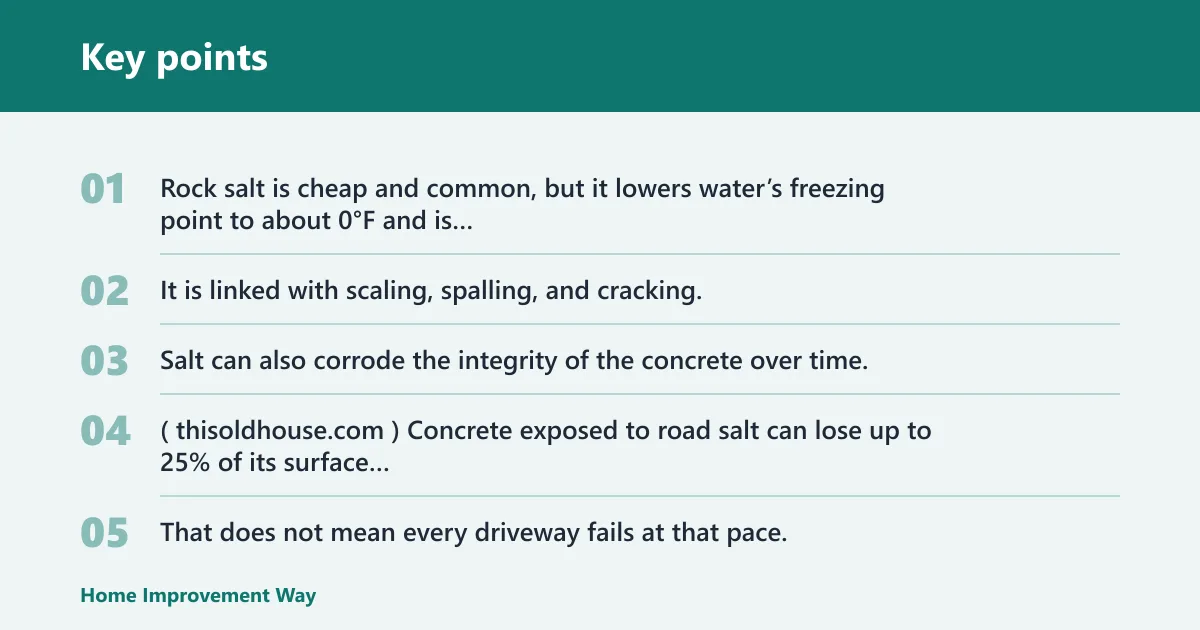
Rock salt is cheap and common, but it lowers water’s freezing point to about 0°F and is not ideal for concrete. It is linked with scaling, spalling, and cracking, and it can corrode nearby metal and harm plants. Salt can also corrode the integrity of the concrete over time. (Thisoldhouse)
Concrete exposed to road salt can lose up to 25% of its surface strength in just five winters, according to ACI-related guidance. That does not mean every driveway fails at that pace, but it does show why repeated salt exposure is a poor long-term bet for concrete.
How to match the product to pets and plants
When pets or landscaping sit close to the driveway, choose the least corrosive option that still matches the temperature. Magnesium chloride is often presented as more plant-friendly, while calcium magnesium acetate is chloride-free, biodegradable, and anti-corrosive. Pet-safe labels can help, but they do not guarantee a salt-free formula.
Suppose a driveway borders a narrow planting bed and a metal garage threshold. In that case, a chloride-free pre-treatment or a lower-corrosion option makes more sense than a bag of mixed salts, because the runoff path matters as much as the melting speed.
Is rock salt bad for concrete?
Yes. Rock salt is the least concrete-friendly default because it is inexpensive, widely sold, and effective enough for many driveways, but it is also the ingredient most tied to surface damage over time. It can help with ice, yet it increases the risks that matter most on concrete: scaling, spalling, cracking, and corrosion.
Why sodium chloride is common but hard on concrete
Sodium chloride lowers freezing point to about 0°F, which is why people reach for it first. The problem is that it leaves chloride behind while also keeping the slab wet longer. That combination increases freeze-thaw stress and can speed up surface loss on concrete that already has small pores or hairline cracks.
How it affects metal and landscaping
Runoff from rock salt can land on garage trim, door hardware, edging, and nearby walkways. It can also move into soil where it harms plants. If the driveway slopes toward beds or a metal threshold, the choice should shift away from sodium chloride unless there is no better option for the temperature.
When traction-only use still makes sense
If your real goal is grip, not melting, sand is often the better call. It provides no melting, just friction. You may need to reapply it after storms, but it is safer for concrete than salt in that traction-only role.
Are calcium chloride and magnesium chloride safer?
They are generally safer choices for concrete than sodium chloride, but they are not harmless. Calcium chloride melts at lower temperatures than rock salt and can work in very cold weather, while magnesium chloride is often presented as a lower-corrosion option for places where plants, pets, and runoff matter. Both still need correct application.
Calcium chloride in very cold weather
Calcium chloride is another melt that works well for thick or packed ice because it generates heat as it dissolves. Competitor product pages describe it as effective to about -25°F, and Blue Heat Ice Melt Pellets are said to perform efficiently down to about -25°F.
That cold-weather strength is useful, but it does not make calcium chloride gentle. It can still be harsh on pets and waterways, so it is best used sparingly and cleaned up after the storm clears.
Magnesium chloride as a lower-corrosion option
Magnesium chloride is often positioned as a safer salt option for concrete and nearby surfaces. It is often described as working to about -13°F, and it is often presented as more plant-friendly than sodium chloride. The tradeoff is cost: magnesium chloride is the most expensive of the ice melters.
How to read cold-weather claims on the bag
Temperature ratings are useful only if they match your forecast. A product rated to -10°F can still underperform if the driveway is already wet, shaded, or covered with packed ice. Use the label rating as a floor, not a promise, and avoid spreading a deicer when temperatures are below its listed temperature range.
Concrete-safe alternatives worth considering
If you want less chloride exposure, calcium magnesium acetate, pre-treatment blends, and sand are the main alternatives. CMA is the premium concrete-friendly option for many homeowners, while sand is the simplest choice when you only need traction. Pre-treatment products work best before snow bonds to the slab.
Calcium magnesium acetate for chloride-free use
Calcium magnesium acetate is chloride-free, biodegradable, and anti-corrosive. It is often positioned as the gentlest premium option for concrete and nearby metal. Snow Joe Premium Enviro Blend uses calcium magnesium acetate and works to -10°F, which makes it a useful reference point for lower-corrosion use in moderate cold.
Acetate and formate pre-treatments before snowfall
Acetate- and formate-based anti-icers are applied before snowfall to prevent bonding instead of melting after the fact. That proactive approach can reduce corrosion and surface damage because you are limiting the ice bond before it sets up on the slab. They make the most sense when you can forecast the storm and treat early.
Sand for traction without melting
Sand is the simplest fallback when the driveway is too cold for reliable melting or when you want to avoid more salt. It gives traction only. Keep in mind that it must be reapplied after storms, especially if plows, foot traffic, or meltwater move it off the surface.
How do you keep ice melt from damaging concrete?
Seal the driveway, remove slush quickly, and use only the amount the label calls for. Those three habits do more for concrete than buying a more expensive bag alone. Protective concrete sealant is recommended to shield surfaces from freeze/thaw cycles, and it helps reduce absorption before winter starts.
Seal the driveway before winter
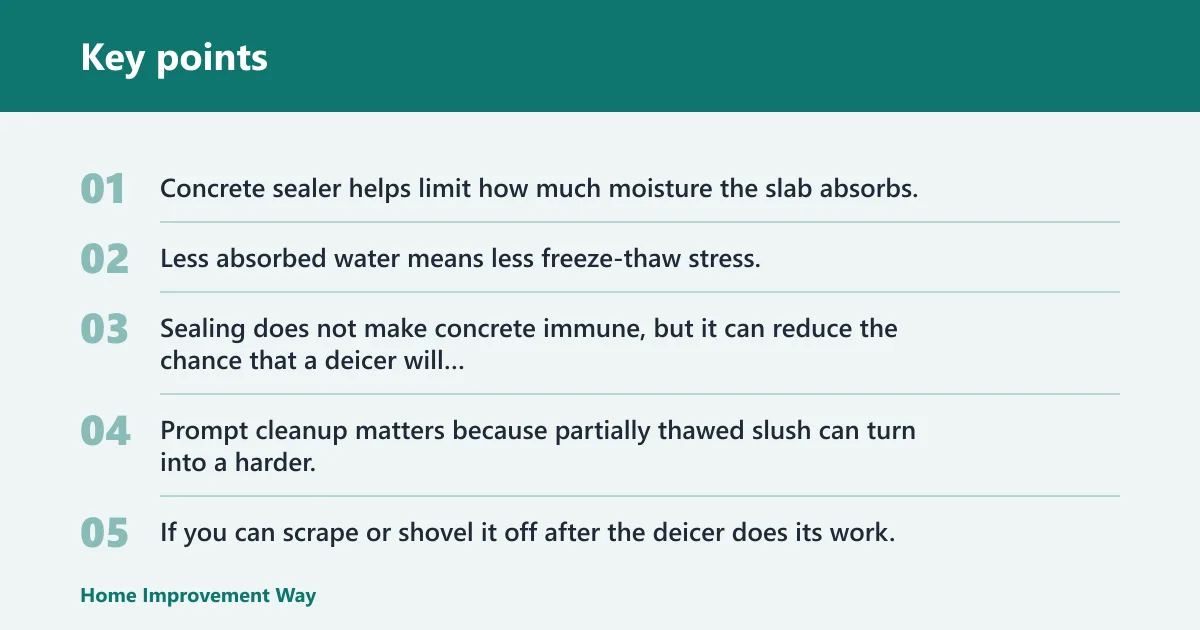
Concrete sealer helps limit how much moisture the slab absorbs. Less absorbed water means less freeze-thaw stress. Sealing does not make concrete immune, but it can reduce the chance that a deicer will be pulled deep into the pores and held there through repeated temperature swings.
Remove slush promptly so it does not refreeze
Prompt cleanup matters because partially thawed slush can turn into a harder, rougher layer overnight. If you can scrape or shovel it off after the deicer does its work, you reduce the moisture left behind for the next freeze. That is one of the simplest ways to protect the surface.
Picture a 2-car driveway that gets late-afternoon sun and then freezes at night. If the snow turns to slush by evening, leaving that slush in place can create a slick refreeze on top of damp concrete. Clearing it the same day lowers the chance of a second freeze cycle.
Use only the amount the label calls
More product is not better. Overapplication can leave excess chloride on the slab, increase runoff, and keep the surface wet longer than needed. If a light application does not clear the surface, re-evaluate the product type and temperature rating rather than piling on more salt.
Concrete ice melt checklist
Use the label and the bag’s ingredient list before you buy. Many products marketed as concrete-safe still contain sodium chloride, and some pet-safe or child-safe blends are only partly chloride-free. A quick label check can prevent the wrong product from reaching the driveway.
- Check the driveway age first. If it is under 1 year old, avoid routine deicer use.
- Look for the overnight low and compare it with the product’s effective temperature rating.
- Scan the ingredient list for sodium chloride, rock salt, or blends that include both chloride and fertilizer.
- Choose magnesium chloride, calcium chloride, or CMA based on temperature and nearby exposure risks.
- Use sand if you only need traction.
- Plan to remove slush after the melt starts working.
- Keep deicer away from planting beds, garage thresholds, and exposed metal where runoff collects.
Some bags sound concrete-friendly but still include sodium chloride. Snow Joe Pet-Safer Ice Melt Blend combines CMA, sodium chloride, and fertilizer, which means it is not the same as a fully chloride-free product. Read past the front label and check the ingredient panel every time.
Pet-safe or child-safe wording should trigger a label review, not automatic trust. The product may still contain chloride, and chloride content is what drives much of the concrete and runoff risk.
Frequently asked questions
What ice melt is safe for concrete?
The safest practical choices for seasoned concrete are usually calcium chloride, magnesium chloride, or calcium magnesium acetate, depending on temperature and runoff concerns. Fresh concrete is different: avoid routine deicer use for the first year, and rely on traction-only sand or a pre-treatment only if the label supports it.
What is the safest ice melt for a concrete driveway?
For a mature driveway, calcium chloride is usually the safest fast-melting choice in cold weather, while magnesium chloride is often the better lower-corrosion option near plants and metal. If the goal is only grip, sand is safer for the slab because it adds traction without melting ice.
Can I use ice melt on new concrete?
New concrete should not be treated like an older slab. It is highly porous and especially vulnerable for the first year. If you need winter traction during that period, sand is the safer default, and the best long-term protection is sealing the slab and keeping it dry as much as possible.
Does ice melt damage plants or pets?
It can. Chloride-based products can irritate paws, stress plants, and carry runoff into beds or drains. Magnesium chloride and CMA are often chosen to reduce that risk, but no bag should be treated as harmless. Keep product off planting beds where possible and rinse paws after exposure.
Sponsored / affiliate links. As an Amazon Associate I earn from qualifying purchases. I may earn additional commission from eligible campaigns.