Can You Replace Shingles in Winter?
Winter shingle replacement is generally workable when the roof deck is dry, temperatures are within the shingle manufacturer’s guidance, and the repair area can be sealed without cracking shingles. Poor cold-weather work can lead to leaks, brittle shingles, loose nails, and a repair that fails before spring. This guide explains when to patch now, when to replace now, and what winter installation details help the fix hold.
Shingle decision table


Use the roof condition first. Then match the action to the safest outcome. Winter roofing is a triage decision, not a one-size-fits-all fix.
| Roof condition | Safest action | Why | What a contractor should do differently |
|---|---|---|---|
| Missing shingles after wind | Replace now if the deck is dry; otherwise patch now | Exposed underlayment can let in water fast, especially during thaw cycles | Clear snow and frost, inspect the deck, install matching shingles, and hand seal exposed edges if needed |
| Active leak at a ceiling or wall | Patch now, then plan a fuller repair or replacement | A leak needs immediate water control, but the whole roof may still need more work than winter allows | Trace the entry point, dry the area, add temporary water shedding, and avoid bending brittle tabs |
| Brittle tabs or cracked shingles | Replace the affected section if weather and product guidance allow; otherwise wait and protect the area | Cold shingles can crack or delaminate when lifted or bent | Handle shingles gently, keep bundles warm when possible, and use careful nailing and hand sealing |
| Ice-dam staining at eaves or in the attic | Repair now if water is entering; address attic heat loss and plan roof work | Ice dams can force meltwater back under shingles and into the roof edge | Add ice and water shield at eaves and valleys, check ventilation paths, and review insulation at the attic ceiling |
| Frost-covered deck | Wait | Frost, snow, and ice create slip hazards and can trap moisture under new roofing | Delay until the deck is dry and clear enough for safe fastening and sealing |
| Near-end-of-life roof with widespread wear | Schedule replacement, but use a winter-capable crew only if the roof is actively failing | A patch on an aging roof may buy only a short delay | Check manufacturer limits, plan hand sealing, protect vulnerable edges, and confirm the installation window is dry |
Missing shingles: replace now or patch now
When shingles are missing, the safest choice depends on exposure. If the deck is dry and the weather window is usable, a winter replacement or section repair can be reasonable. If snow, frost, or active moisture are present, a temporary patch is safer until conditions improve.
A missing shingle is not the same as a failed roof. One damaged slope may need only a targeted repair. A roof with repeated blow-offs, curling, or widespread aging may need a larger plan, even if the immediate fix is small.
Active leak: temporary repair versus full replacement
If water is entering the home, you need the fastest safe fix, not the largest one. A temporary repair can stop active intrusion, while a full replacement may need to wait for a better weather window. The key is to stop water first without creating a brittle, poorly sealed repair.
Suppose a roof leak shows up near a bathroom vent after a freeze-thaw cycle. A crew may need to patch the damaged area, dry the deck, and return later for a larger reroof. That is different from a roof that has one isolated puncture and otherwise sound shingles.
Brittle tabs, ice-dam staining, and end-of-life roofs
Brittle tabs, dark staining from ice dams, and widespread wear point to a roof that needs more than a quick patch. Cold weather makes asphalt shingles harder to bend, and bent tabs can crack or delaminate. If the roof is already near the end of its service life, winter work may still be justified when leaks or blow-offs are happening.
Ice-dam staining is a clue, not a cosmetic issue. It often means warm attic air is melting rooftop snow, then the water refreezes at the edge. That cycle can damage gutters, fascia, attic insulation, and interior ceilings.
Frost-covered deck: when to wait
Waiting is generally the safest call when the roof surface is frosted, snowy, or icy. Those conditions create fall hazards and moisture problems, and they also make it harder for shingles to lie flat and seal. A good contractor will not force work onto a wet deck just to keep the schedule moving.
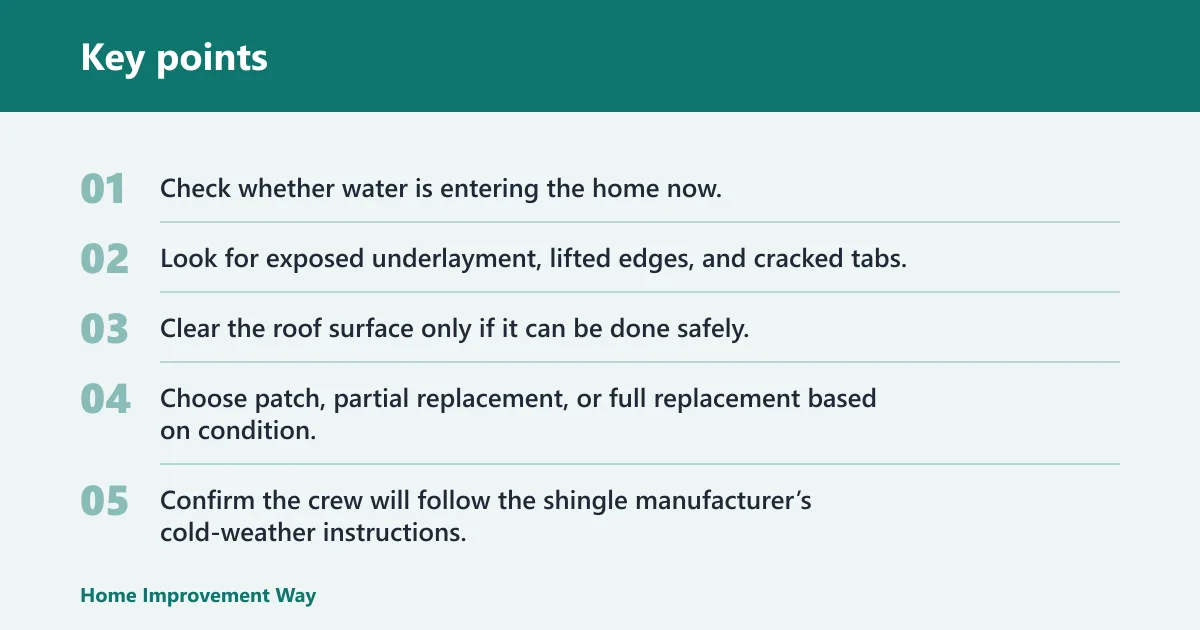
- Check whether water is entering the home now.
- Look for exposed underlayment, lifted edges, and cracked tabs.
- Clear the roof surface only if it can be done safely; snow and ice removal on a winter roof is a major fall hazard.
- Choose patch, partial replacement, or full replacement based on condition, not convenience.
- Confirm the crew will follow the shingle manufacturer’s cold-weather instructions.
Can you replace shingles in winter?
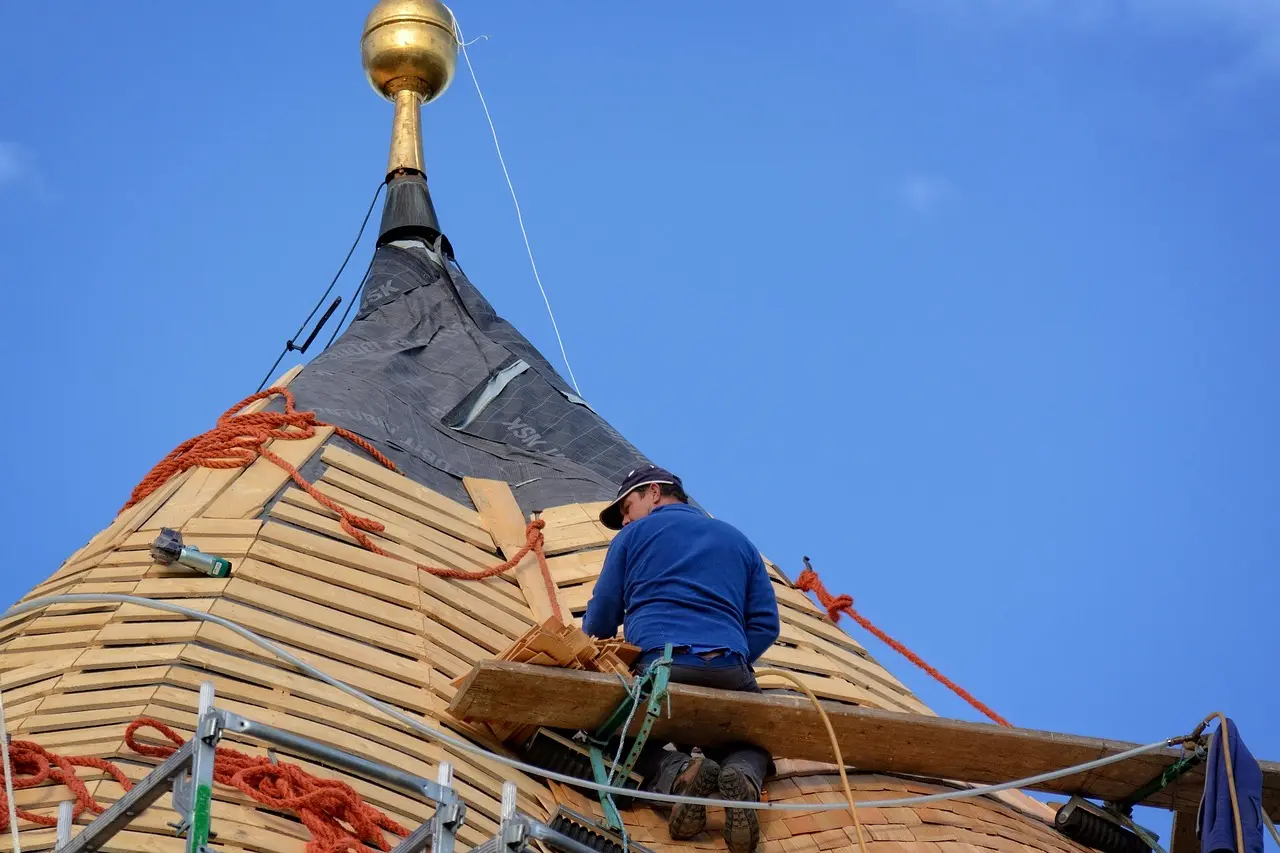
Yes, but winter replacement is best treated as a controlled repair, not a normal-season install. It can work when the roof is dry, the temperature is within the product’s guidance, and the crew changes its handling and sealing steps for cold conditions.
When winter replacement is reasonable
Winter replacement makes sense when the roof is leaking, shingles are blowing off, or damage is concentrated in one area. It also makes sense when the rest of the roof is stable enough that a targeted or full replacement can be completed without fighting frost, snow, or active wetness.
Product instructions vary by brand and product line, so the actual rule comes from the shingle instructions, not a universal code number.
When a temporary repair is safer
A temporary repair is safer when the roof is damp, the shingles are too stiff to bend, or the weather turns unstable. If the problem is limited to a small area, a short-term fix can stop water and avoid cracking the surrounding shingles during a rushed winter install.
Factory sealant strips may not activate below the manufacturer’s temperature guidance, so a temporary repair may need manual sealing to hold until warmer weather arrives. That is especially important at exposed edges and penetrations.
When waiting for warmer weather makes sense
Waiting makes sense when the damage is not leaking, the deck is frosted, or the roof needs a large multi-slope replacement that would stretch into unsafe conditions. Winter work often takes longer because crews have shorter dry work windows and must slow down for handling, sealing, and access.
Picture a house with a few curled shingles on the south slope but no leak and no missing tabs. In that case, a planned spring replacement may be better than a winter tear-off that risks cracking more shingles than it fixes.
Why cold weather changes shingle behavior
Cold weather changes how asphalt shingles bend, seal, and fasten. Flexibility drops, cracking risk rises, and the sealant strip may not bond right away. That is why winter work demands different handling and more attention to the edges.
Asphalt shingles get stiffer in the cold
Asphalt shingles become less flexible as temperatures fall. One cited line of guidance says colder weather starts changing roofing performance below 10°C (50°F), and shingles stored warmer than 10°C (50°F) stay more flexible. Cold shingles are more likely to split when lifted, slid, or bent over a ridge.
Cracking, delamination, and handling damage
Cold-weather damage is often caused during handling, not only after installation. Tabs can crack at the nail line, edges can fracture when lifted, and layers can delaminate if a shingle is forced flat after it has stiffened. That is why crews need to move slowly and avoid unnecessary bending.
A common first-timer mistake is to pull on a cold tab to check a fastener and crack the shingle at the same time. That turns a small repair into a larger replacement area.
What the manufacturer temperature threshold changes
The manufacturer threshold determines whether the factory sealant strip should activate normally. Below that point, the strip may stay inactive until warmer weather arrives, which leaves tabs more exposed to wind uplift. That is a product instruction issue, not a guess.
Because thresholds vary by brand, a contractor should verify the exact shingle instructions before work begins. The same roof may need different steps depending on the product line and how cold the deck is.
How winter installation should differ
Winter installation should be slower, drier, and more deliberate. The goal is to prevent immediate failure from poor sealing, brittle tabs, and loose fasteners. A qualified crew changes how it seals, nails, and stages the roof.
Hand sealing with roofing cement
Hand sealing means applying roofing cement under shingle edges or in small spots so the tabs stay put until warmth activates the factory sealant. It is commonly used at eaves, rakes, hips, and ridge areas where wind uplift is more likely. Roofing cement is a holdover measure that matters in cold weather.
This does not replace normal bond conditions. It supports the shingle until temperatures rise enough for the factory strip to do its job.
Nailing details and pneumatic gun settings
Cold shingles need proper fastener placement, and the nailer needs careful adjustment. A pneumatic nail gun can overdrive fasteners through cold shingles if pressure is too high, which weakens the shingle and can create leaks. Fastener count and placement should follow the specific shingle instructions and local code or wind-zone requirements.
That fastening count matters because cold shingles are less forgiving. Nails must be placed correctly, driven flush, and not punched through the surface.
Clearing snow, ice, and frost before work
Snow, ice, and frost should be cleared from the roof surface before installation starts. They create fall hazards and moisture problems, and they can prevent new shingles from lying flat. A dry deck is one of the basic conditions for a winter repair.
The crew also needs a clean work area at the eaves and valleys. If those surfaces stay wet or frozen, the repair may fail before the first thaw.
Ice dams and roof damage
Ice dams matter because they can force water back under shingles and into places that should stay dry. They are often tied to attic heat loss, poor insulation, and weak ventilation. Winter roof decisions should account for those causes, not only the visible damage. (Thisoldhouse)
How ice dams force water under shingles
Ice dams form when meltwater refreezes at the roof edge. The ridge-to-eave melt pattern creates a backed-up water line, and that water can work under shingles, underlayment, and flashing. Damage can show up in gutters, fascia, attic surfaces, and interior finishes.
Why insulation and ventilation matter
Roof ventilation and insulation are part of the repair decision because they affect whether the problem repeats. Warm attic air can melt rooftop snow from below, and poor ventilation can make winter damage worse. If the attic stays too warm, new shingles may not solve the underlying cause.
That is why a winter roofing plan should include attic checks, not just surface patches. Fixing the roof edge without addressing heat loss can leave the same ice-dam pattern in place.
Where ice and water shield fits
Ice and water shield is a self-adhering membrane used at eaves and valleys where ice dams and wind-driven water are more likely. It is usually part of a replacement or broader tear-off plan, not a standalone step on every repair, and it helps prevent water penetration when meltwater backs up under the shingles.
What a contractor should do in winter
A winter-capable contractor does more than install shingles on a cold day. The crew should confirm product instructions, protect the roof edges, and make sure the deck is dry enough to fasten and seal. Those steps reduce the chance of early failure.
Check product guidance before installation
Before any winter reroof, the crew should confirm the exact manufacturer temperature limits and fastening instructions. Thresholds vary by brand and product line, so one shingle’s acceptable range may not match another’s. That guidance should direct the job, not a general habit from summer work.
Protect eaves, valleys, and vulnerable edges
Eaves, rakes, hips, and valleys need extra attention because they take more wind and water exposure. Hand sealing and ice and water shield are especially useful there. These details help keep the roof stable until normal sealing conditions return.
Confirm the roof is dry enough to work
Dry does not mean warm. It means the deck is free of frost, snow, ice, and active moisture that would interfere with fastening or bonding. If the roof cannot be made dry enough, the safer answer is to wait or limit work to a temporary repair.
Can you repair shingles in cold weather?
Yes, you can repair shingles in cold weather, but the repair size matters. Small fixes are often possible when the roof is dry and the damage is limited. Larger repairs need more caution because cold shingles crack more easily and may not seal on their own.
Small repairs versus larger roof sections
A small repair can be practical if one or two shingles are damaged and the surrounding field is stable. Larger sections are harder because the crew must remove more material, expose more underlayment, and handle more cold shingles that may crack during the process.
Temporary fixes that buy time
Temporary fixes can stop water until a better weather window opens. That may include replacing one missing shingle, sealing a lifted edge, or protecting a vulnerable seam with roofing cement. The goal is to reduce immediate water entry without overworking brittle material.
Suppose a few shingles at a valley edge were lifted by wind and the attic shows a small wet spot. A targeted winter repair may make sense if the deck is dry and the crew can hand seal the replacement tabs.
Signs the whole roof should not wait
If the roof has widespread curling, repeated leaks, large areas of brittle tabs, or extensive ice-dam staining, the whole roof may not be a good candidate for delay. Those signs point to a roof that is failing in more than one place. A patch may not buy enough time.
Can you replace roof in winter?
Yes, you can replace a roof in winter, but only when the condition of the deck, the weather window, and the product instructions line up. Whole-roof replacement is harder in cold weather because the crew must manage sealing, fasteners, and snow or frost while moving across the entire surface.
Whole-roof replacement limits in cold weather
Full replacement in winter is limited by temperature, moisture, and safety. If the roof cannot stay dry and clear, the installation window closes quickly. Even when work goes forward, the roof may need extra hand sealing and more careful handling than a warm-weather job.
Flat roof and low-slope roof notes
Flat roof work is a different system from asphalt shingles, so shingle rules do not carry over directly. If a home has a low-slope roof section, the crew should follow that roofing system’s own cold-weather instructions instead of assuming the shingle guidance applies. Moisture, freeze cycles, and poor adhesion can still cause failure if the deck is not dry enough.
When to schedule for warmer conditions
Schedule for warmer conditions when the roof is not leaking, the damage is localized, and the crew would have to fight frost or repeated freeze-thaw cycles to finish. Winter work can be done safely in colder climates with the right crew, but that does not mean every roof should be done immediately.
Frequently asked questions
Can you replace roof shingles in winter?
Yes, roof shingles can be replaced in winter, but the work is more limited by weather and product instructions than a summer job is.
Can you replace shingles in cold weather?
Yes, but cold weather changes how shingles behave. They get stiffer, can crack when bent, and may not seal right away.
Can you repair roof in winter?
Yes, roof repairs in winter are common when leaks or missing shingles cannot wait. If the surface is wet, icy, or frosted, a temporary fix is usually safer than a full tear-off.
Can you replace a flat roof in winter?
Yes, but flat roof replacement in winter has its own material limits and water concerns.
Sponsored / affiliate links. As an Amazon Associate I earn from qualifying purchases. I may earn additional commission from eligible campaigns.