Are Icicles on the Roof Bad?
Roof icicles are often normal after snow and freeze-thaw cycles, but if they build at the eaves, back up behind gutters, or repeat after each storm, treat them as an ice-dam warning sign. Left alone, that trapped water can seep under shingles, stain ceilings, rot roof decking, and turn a small fix into a several-thousand-dollar repair. This guide shows how to tell weather-only icicles from an ice-dam problem and what to inspect first before spending money.
When icicles signal a roof problem
Sometimes, but not always. Icicles can be a harmless sign that snow melted, dripped, and refroze along the roof edge. They also can point to a roof issue when they keep forming in the same place, collect above gutters, or show up with interior stains, wet insulation, or leaks after a thaw.
When icicles are a normal winter sign
Small or moderate icicles after a storm do not automatically mean roof damage. Icicle size alone does not diagnose an ice dam. A roof with steady cold weather, no interior stains, and no repeat leaks may simply be shedding meltwater at the edge as temperatures swing above and below freezing.
When icicles point to a roof problem
Icicles become more concerning when the roof edge stays colder than the attic above it, snow piles at the eaves, or water appears to stall at the gutter line. That pattern can signal heat loss from the attic, poor drainage, or both. Ice and water shield helps in vulnerable areas during roof replacement, but it is not a quick fix for active buildup.
How icicles and ice dams connect
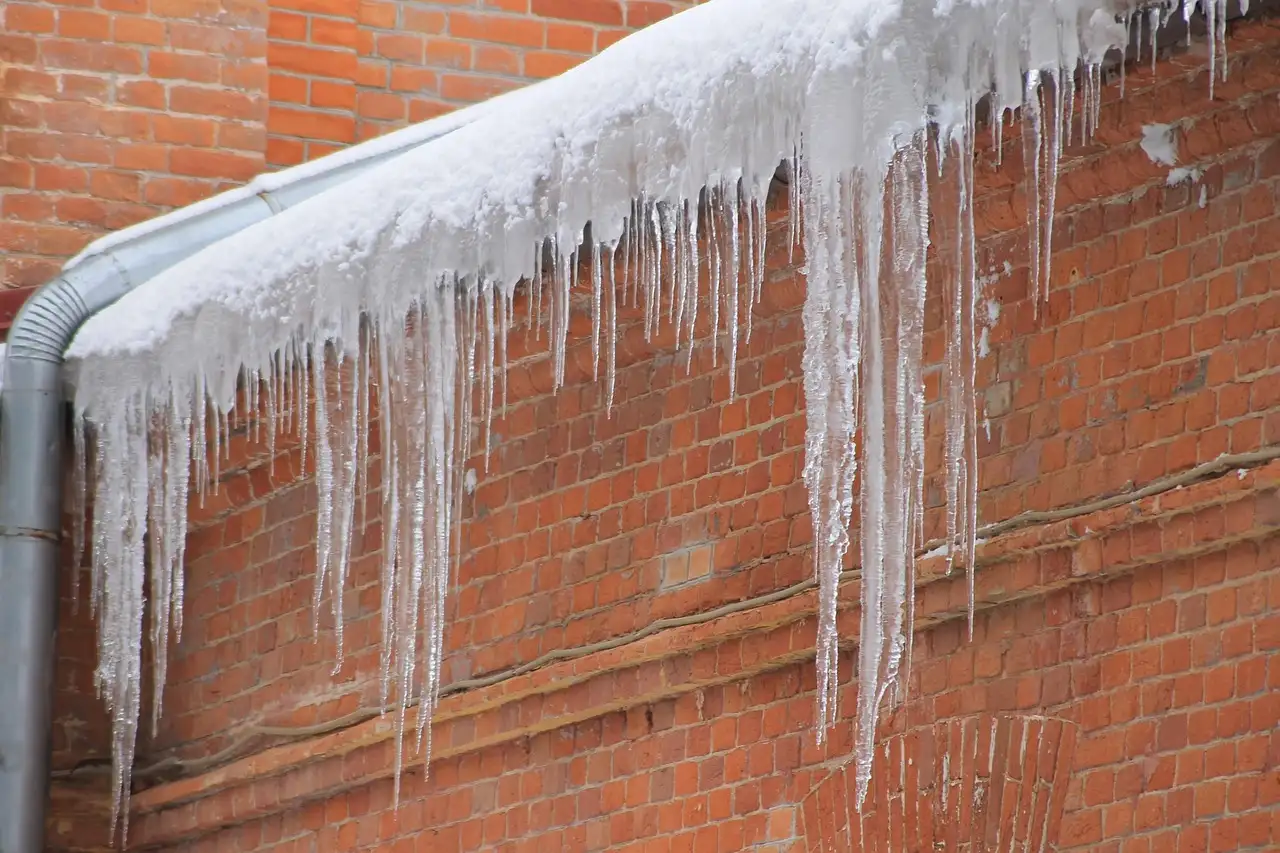
Icicles and ice dams often share the same cause: snow melts on the warmer roof surface, then refreezes at the colder eaves. An ice dam is a roof-edge ridge of ice that blocks meltwater drainage. Once water backs up behind it, it can force its way under shingles and into the roof system.
Why warm attic air matters
Heat escaping into the attic warms the underside of the roof deck. That can melt snow near the top of the roof while the edge stays colder, creating the conditions for refreezing. Insulation and air sealing matter here. Ventilation helps keep roof temperature more uniform, but it does not cure heat loss by itself.
Why clean gutters can still leave you with ice dams
Clean gutters help water move away, but they do not rule out an ice-dam problem. If the attic is leaking heat, meltwater can still refreeze at the edge even with clear gutters. Networx notes that ice dam problems can follow heavy snowfall and several days of freezing temperatures, which is exactly when roof-edge backup tends to show up.
When icicles become a hazard
Icicles become a safety issue when they hang over places people or vehicles pass through. Falling ice can injure people, pets, or vehicles beneath it. They can also stress gutters, fascia, and shingles when the ice gets heavy enough to pull on the roof edge.
Entryways, walkways, and drive areas
Watch closely over front steps, side doors, garage entries, decks, and driveways. A recurring line of icicles above a path is generally more concerning than an isolated one on a back slope. If ice can drop onto a landing zone, treat it as a hazard even if the roof itself looks intact.
Gutters, fascia, and shingles
Large icicles can bend gutters or pull them away from the fascia. Ice dam conditions can also loosen shingles and send water under the roof edge. If you see gutter sagging, detached sections, or roof-edge ice locked into the gutter line, the issue has moved beyond a winter nuisance.
Situations that call for fast action
Fast action is warranted when you see water inside, ice building at the same eave after each storm, or roof-edge ice directly above a main entry. Suppose a two-story home has a strip of icicles over the front walk after every thaw. That repeat pattern is not a one-off. It points to a recurring roof-heat or drainage problem that deserves inspection.
What to check outside first
Start outside so you can separate a seasonal icicle from a roof-edge pattern. Look for where the ice forms, how it interacts with the gutter line, and whether the same location keeps repeating. That gives you a better read before you spend money on repairs.
Roof edge and eaves
Check for a ridge of solid ice at the roof edge, especially if it is sitting just above or inside the gutter. That is the classic ice-dam zone. Also look for heavy snow packed at the eaves, repeated icicles in the same spot, and icicles that seem to start from the same cold roof area after each storm.
Gutters and downspouts
Inspect whether gutters are clear, sagging, or bent out of line. Gutters and downspouts are supposed to carry meltwater away, but clogged or damaged sections can worsen backup. Even with clean gutters, ice can still form if the roof edge is too cold or the attic is too warm.
Snow pattern near problem spots
Notice whether one section of roof keeps shedding and refreezing while the rest stays clean. That pattern often shows up near valleys, lower roof sections, or over rooms with more heat loss. A roof rake can help reduce buildup from the ground by removing snow near the eaves before meltwater has a chance to refreeze there.
What to check inside and in the attic
Interior clues matter because water damage often shows up after the roof has already started backing up. The attic is especially important. It tells you whether roof heat loss, wet insulation, or air leaks may be part of the problem.
Interior leak clues
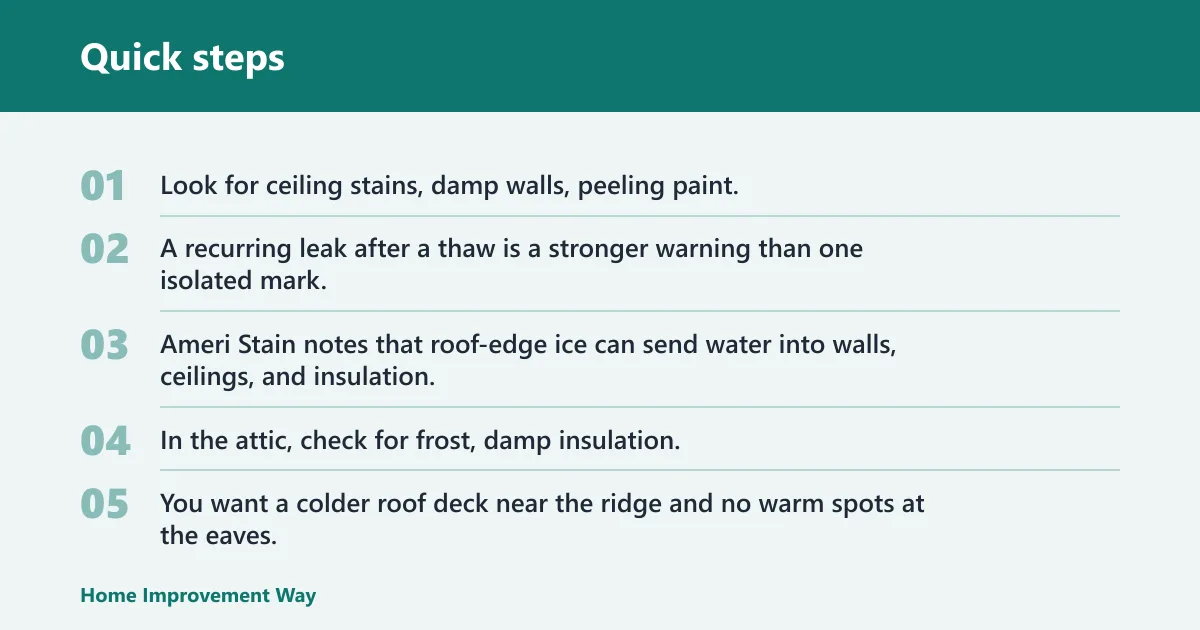
Look for ceiling stains, damp walls, peeling paint, and window condensation near exterior walls. A recurring leak after a thaw is a stronger warning than one isolated mark. Ameri Stain notes that roof-edge ice can send water into walls, ceilings, and insulation, which is why interior damage often appears away from the actual icicles.
Attic air leaks and wet insulation
In the attic, check for frost, damp insulation, and visible air leaks around penetrations such as plumbing vents, wiring, bath fan housings, and attic hatches. You want a colder roof deck near the ridge and no warm spots at the eaves. Warmth at the edge often means air is reaching the roof deck where it should not.
Insulation and ventilation basics
Attic insulation reduces heat transfer to the roof. The same source lists R-38 as a typical insulation target for many U.S. climates, but local code and climate zone matter. Air sealing is just as important, because insulation alone does not stop warm indoor air from leaking into the attic. Soffit and ridge vent balance then helps carry that heat away.
Icicle risk triage checklist
This checklist helps you decide whether you are looking at normal winter runoff, a situation to watch, or a problem that needs a roofer now. Use the clues you can see from outside, inside, and the attic. Do not rely on icicle size alone.
| Probably normal | Monitor closely | Call a roofer now |
|---|---|---|
| Small icicles after a recent snow, no repeat at the same eave, no interior stains, no attic moisture. Action: observe after the next thaw. | Icicles return in the same spot, gutters are clear but snow piles at the eaves, or you see slight gutter sag. Action: inspect the attic and plan preventive steps. | Solid ice ridge at the roof edge or inside the gutter, leaking ceilings, torn or loosened shingles, or water backing under the roof. Action: arrange professional help promptly. |
| Icicles form away from entries and walkways, with no falling-ice exposure. Action: keep people clear underneath. | Icicles hang near a porch, side door, deck, or driveway, but no damage yet. Action: reroute foot traffic and keep watch. | Large icicles threaten walkways or vehicles, or have already fallen near them. Action: avoid the area and get a roofer involved. |
| Attic insulation looks dry and the roof deck feels uniformly cold. Action: no urgent repair, just monitor. | Light frost, a few air leaks, or damp insulation near one roof bay. Action: seal obvious leaks and schedule a deeper inspection. | Wet insulation, widespread frost, or warm attic air reaching the eaves. Action: prioritize diagnosis of air sealing, insulation, and ventilation. |
| Gutters drain normally and downspouts stay open. Action: clear them as routine maintenance. | Gutters are clean but icicles still repeat after storms. Action: look beyond the gutters for attic heat loss. | Gutters are bent, detached, or strained by ice. Action: stop using the area below and call a pro. |
How to reduce the chance of more icicles
The best prevention ranks from diagnosis to long-term fix. First, reduce snow buildup at the eaves. Then correct attic heat loss. After that, add roof details that help vulnerable areas handle future storms.
Roof raking from the ground
A roof rake is the safest first tool for reducing eave buildup because you use it from the ground instead of climbing onto an icy roof. Remove snow near the lower edge, not the entire roof. That lowers the amount of meltwater available to refreeze at the gutter line.
Air sealing and insulation
If icicles repeat, attic air sealing and insulation should move up the list. Close leaks around attic hatches, ducts, pipes, and fixtures, then bring insulation up to the target used in your climate. That limits heat reaching the roof deck and lowers the chance of melt-and-refreeze cycles at the edge.
Ice and water shield and heated cables
Ice and water shield is generally a long-term roof replacement detail for eaves and valleys, not a same-day repair. Heated cables can help in some cases, but they are generally a supplemental or last-resort measure. They do not fix attic heat loss, and they should be installed per manufacturer guidance. WarmlyYours also notes that rock-salt pucks can corrode aluminum gutters, flashing, and fasteners, so they are a poor choice near roof edges.
Say your ranch home gets a 6-foot run of icicles above the back door after each thaw, while the front slope stays clear. That pattern points to a localized heat or airflow problem near that section, not a whole-roof failure. The fix starts with inspection, not with tearing off every icicle.
Frequently asked questions
Are icicles on the roof bad?
Not always. Icicles can be a normal winter result of meltwater freezing at the eaves. They become a problem when they repeat in the same place, build at the roof edge, or show up with leaks, wet insulation, or damaged gutters. The pattern matters more than the size.
Are icicles on your roof a bad sign?
They can be. Icicles on your roof may point to roof heat loss, drainage trouble, or an ice dam. If you also see stains, peeling paint, sagging gutters, or frost in the attic, treat the icicles as a warning sign and inspect further before you spend money on cosmetic fixes.
Do icicles mean I have an ice dam?
No. Icicles do not prove an ice dam is present. An active ice dam is a ridge of solid ice built along the roof edge and inside the gutter, and it blocks drainage. Icicle size alone does not tell you whether that ridge exists. Look for backup, staining, or attic moisture.
When do icicles become dangerous?
They become dangerous when they can fall on people, pets, or vehicles, especially above walkways, steps, decks, or driveways. They are also a concern when they strain gutters or signal water backing under shingles. If an icicle line sits above a path, treat it as a safety issue.
How do I know if icicles are causing a leak?
Check for ceiling stains, damp drywall, peeling paint, and leaks that appear during a thaw after snow has been on the roof. Also inspect the attic for wet insulation or frost near the roof edge. A leak that repeats after warm spells often points to an ice-dam-related backup.
How do I stop icicles from forming again?
Start with the ground: use a roof rake to reduce snow at the eaves. Then address attic heat loss with air sealing and insulation, and verify that soffit and ridge vents are balanced. If the roof is due for replacement, ice and water shield can protect vulnerable areas. Heated cables are only a supplement.
Sponsored / affiliate links. As an Amazon Associate I earn from qualifying purchases. I may earn additional commission from eligible campaigns.