Can a Dryer Vent Freeze Shut? Signs and Safe Fixes
Yes. A dryer vent can freeze shut when moist exhaust hits a cold exterior cap, especially if lint slows airflow or the flap sticks closed. Left alone, that can trap heat, lengthen dry times, and raise fire risk if the real problem is a deeper vent blockage. This guide shows how to tell a frozen outlet from a whole-line airflow problem and how to clear the vent safely.
What a frozen dryer vent looks like
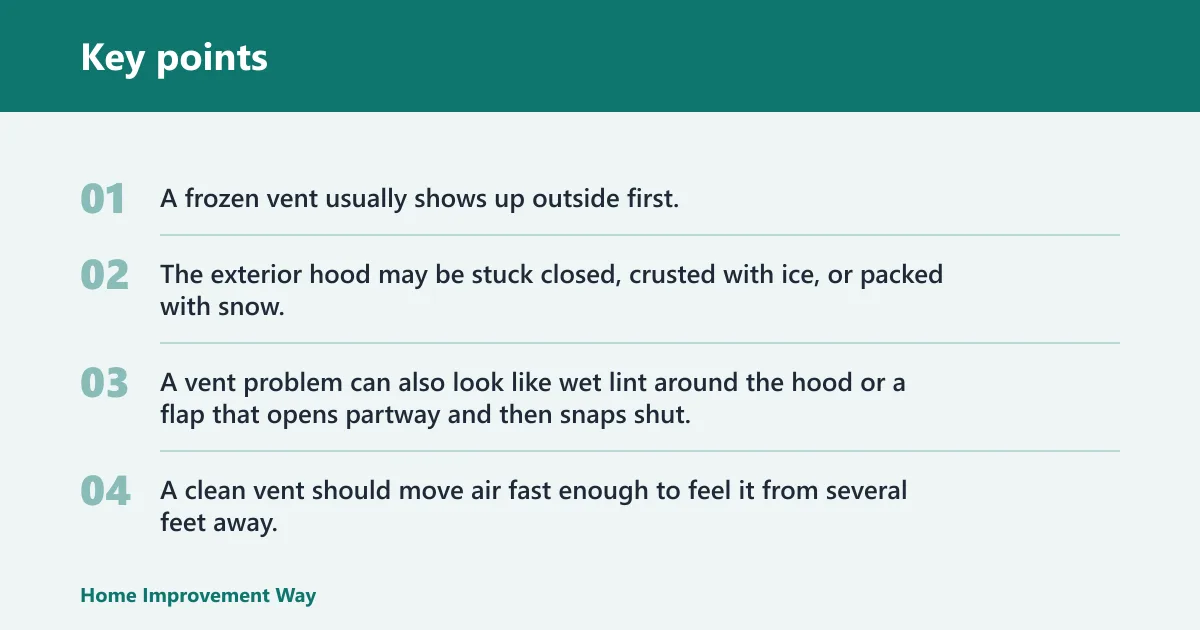


A frozen vent usually shows up outside first. The exterior hood may be stuck closed, crusted with ice, or packed with snow. Inside, you may notice longer dry times, a hot laundry room, a burning smell, or weak airflow at the outlet even while the dryer runs.
A vent problem can also look like wet lint around the hood or a flap that opens partway and then snaps shut. A clean vent should move air fast enough to feel it from several feet away.
What you’ll need
- Flashlight
- Gloves
- A stiff nylon brush or dryer vent brush kit sized to the full duct length
- Vacuum with hose attachment
- Foil tape for sealing metal duct joints
- Bucket or tarp for lint debris
- Leaf blower only if the duct layout and vent hood allow safe use
- Plastic scraper or wooden stick for light ice at the exterior hood
Can a dryer vent freeze shut?
Yes. Moist exhaust can condense on cold duct metal and freeze at the exterior hood. That is one of two common winter problems: the condensation clog and the frozen flap. If the flap cannot open, exhaust may be dumped back into the duct instead of leaving the home.
How condensation turns to ice
Hot, moist dryer air cools fast in winter. On cold metal, that moisture can turn lint into sticky sludge before it leaves the house. If the outside termination is exposed to wind, shade, or runoff, that sludge can freeze and build into a total exhaust blockage.
Why lint traps moisture in winter
Lint is absorbent and light, so it gathers in elbows, low spots, and the hood. The lint screen should be cleaned after each load, and the duct and hood need regular cleaning too. That hidden buildup is what turns winter moisture into a clog.
How flap shape affects freezing
The exterior vent hood has a flap designed to keep critters and cold air out. It should open and close with airflow when the dryer turns on and off. If the flap is warped, recessed, or held shut by ice, the vent can freeze closed even when the duct behind it is partly clear.
How to check the exterior vent first
Check outside before opening anything inside. The hood is where snow, ice, lint, and wind meet, so it often tells you whether the problem is a frozen flap, a blocked outlet, or a deeper duct issue. A vent that is buried, shaded, or near roof runoff may be more likely to freeze.
- Shut the dryer off. Let the drum stop, then unplug the dryer if the plug is reachable. That prevents hot-air buildup while you inspect the outlet.
- Inspect the hood. Look for snowdrift, ice, lint mats, or a flap that will not swing freely. If the flap is frozen shut, the blockage may be at the cap rather than deep in the line.
- Clear the opening. Remove loose snow by hand and lift away ice with a plastic scraper or wooden stick. Avoid metal tools that can dent a plastic hood or scratch aluminum parts.
- Test airflow. Run the dryer on air-fluff or a no-heat cycle for a minute and check the hood again. If the flap does not open, or airflow feels weak from the start, move on to the duct.
Picture a wall-terminated vent under a roof drip line. A thin ice ridge can hold the flap shut after one cold night, while the lint screen still looks normal. That points to a frozen termination, not a clean duct.
Dryer vent troubleshooting matrix
This matrix separates a frozen flap from a full duct blockage and from an appliance fault. Start with the symptom you can confirm outside, then take the safest first step. If the symptom does not fit the cause, do not keep forcing the same fix.
| Symptom | Likely cause | Safest first step |
|---|---|---|
| Flap frozen shut | Ice on the exterior hood or flap; moisture froze the termination closed | Clear snow by hand, then thaw the flap gently and recheck movement |
| No airflow but lint screen full | Lint buildup in the duct or hood, not just the screen | Clean the lint screen, then inspect and clean the full duct run |
| Long dry times with cold air entering | Flap leaking open, poor sealing, or cold air pushing back through the vent | Check the hood for free flap movement and seal obvious leaks with foil tape on metal joints |
| Vent clear but dryer still not heating | Appliance fault such as a failed heating element, thermostat, or belt issue | Stop on the vent side and schedule appliance diagnosis |
How to thaw and clear a frozen vent
Thaw only the exterior hood first, then confirm that the flap opens freely. If the flap moves after thawing but airflow is still weak, the duct likely has lint buildup farther inside. A frozen cap is one problem; a packed duct is another.
- Warm the hood gently. Aim room-temperature air at the exterior flap or pour lukewarm water over the ice, then dry the area. Do not use boiling water or a torch, which can warp plastic or stress aluminum.
- Free the flap. Tap the hood lightly and move the flap by hand if it is accessible. The flap should open and close without sticking once the ice is gone.
- Clean the duct path. Use a dryer vent brush kit that matches the total duct length. Some setups move better with a drill attached to the brush, but stop if the brush binds or cannot pass an elbow.
- Recheck airflow. Run the dryer and feel for strong exhaust at the outside hood. If you cannot feel air from several feet away, the vent is still restricted and needs more cleaning.
Suppose the vent run is about 18 feet long with two 90-degree bends. A brush kit sized for only a short run may clear the first section and leave the rest packed. In that case, the problem is not the flap alone; it is a longer, more restrictive path.
Common mistakes
Cleaning only the lint screen is the most common miss. The screen catches lint after each load, but winter moisture can turn hidden lint in the duct or hood into sticky sludge that keeps blocking airflow.
Another mistake is treating every winter vent issue as a frozen flap. A vent can be clear at the hood and still have a bent, crushed, or lint-packed duct inside. Vinyl and thin foil ducting kink more easily than rigid metal and can trap lint where the run bends.
Do not assume a short DIY brush will solve a long or elbow-heavy run. Building code caps a single dryer duct run at 35 feet, and longer or elbow-heavy runs may need professional cleaning. Roof-terminated vents, recessed hoods, and snowdrift-prone outlets also deserve a pro’s look.
How to prevent winter freeze-ups
Clean the lint screen after each load and clean the vent on a regular schedule. A recommended vent-cleaning interval is every 6 to 12 months, and winter weather can justify the shorter end of that range if the vent freezes or clogs more than once.
Use rigid metal dryer duct where possible. It holds shape better than vinyl or foil ducting, reduces kinking and crushing, and gives lint fewer places to collect. Seal metal duct joints with foil tape rather than duct tape so the seal is more likely to hold up under heat.
If the vent outlet sits under a roof drip line, in a recessed wall pocket, or where snow drifts against it, keep the hood clear after storms. Moisture and condensation freeze most easily where cold air, snow, and lint meet.
Frequently asked questions
Will a clogged dryer vent prevent heating?
It can stop proper drying and may make the dryer seem weak or overheated, but it does not automatically mean the heater itself failed. If the vent is clear and the drum still produces no heat, the next check is the appliance side, including the heating element and thermostat.
Does a dryer need a vent?
Most vented dryers do. They need a clear exhaust path to move hot, moist air outside. Without that path, moisture stays in the drum area, dry times rise, and the room can feel hotter and damper than it should.
How do you properly vent a dryer?
Use a straight, short run where possible, with rigid metal ducting and the fewest bends you can manage. Keep the termination outdoors, not into an attic or crawlspace, and make sure the exterior hood opens freely when the dryer runs.
How do you vent a dryer in cold weather?
Keep the exterior hood clear of snow and ice, clean the lint screen after each load, and inspect the termination more often during freeze-thaw cycles. If the flap keeps freezing, the outlet location may be too exposed and may need a different termination or a pro review.
How do you know if your dryer vent is blocked?
Look for long dry times, a hot laundry room, a burning smell, lint around the hood, or weak airflow outside. A clean vent should move air fast enough to feel several feet away from the outlet.
What should you do if the exterior dryer vent flap is frozen?
Turn the dryer off, clear snow from the hood, and thaw the flap gently with lukewarm water or room-temperature air. If the flap still will not move after thawing, or if the duct stays weak afterward, the blockage is deeper than the cap.
Sponsored / affiliate links. As an Amazon Associate I earn from qualifying purchases. I may earn additional commission from eligible campaigns.
 Repa Market 5 Inch Round Dryer Duct Flange - Galvanized Steel Dryer Vent Wall Plate - Wall, Ceiling Rigid or Flex Pipe Adapter for Dryer Duct Hose, AC Exhaust Hose, HVAC Dryer Vent Duct Connector
 HVAC OV 6 Inch Duct Connector Flange – Galvanized Steel Dryer Vent Cover Plate for HVAC & Air Ventilation – Wall & Ceiling Mount – Adapter Fits Standard 6 Inch Round Ducts – Heating & Cooling