Does Attic Ventilation Prevent Ice Dams?
Attic ventilation can help prevent ice dams only when it keeps the attic cold and balanced; if heat is leaking in, air sealing and insulation come first. Bad fixes can lead to roof leaks, ruined insulation, stained ceilings, and repeat repairs. This guide explains when ventilation works, when it does not, and what to fix first.
How ice dams form and cause leaks
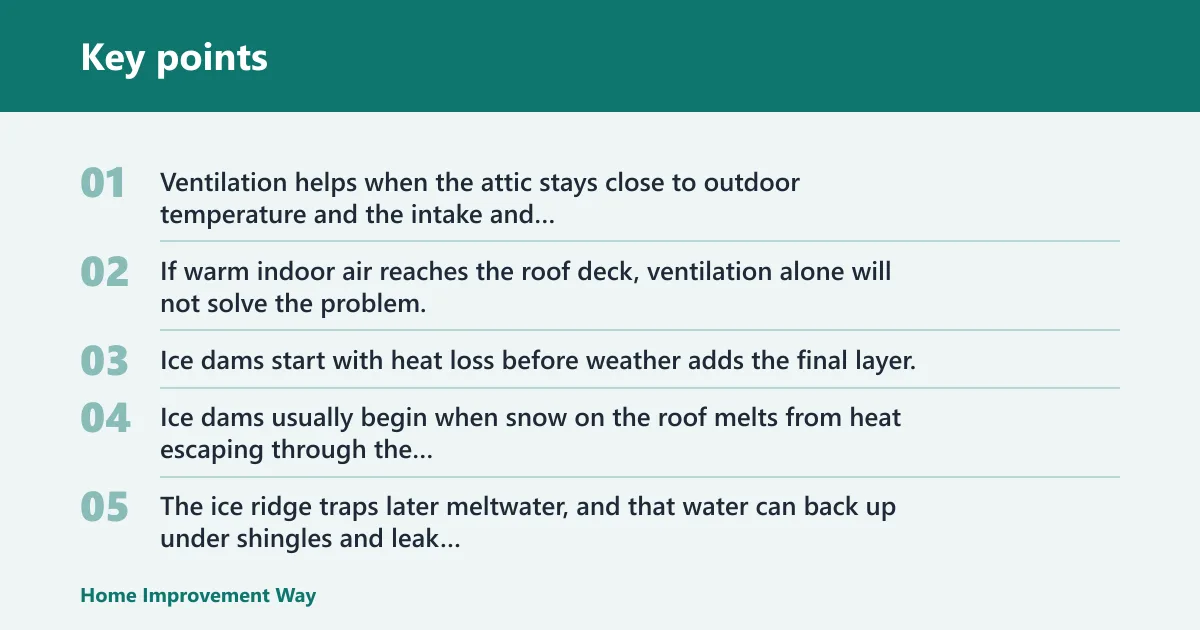


Sometimes. Ventilation helps when the attic stays close to outdoor temperature and the intake and exhaust paths are open and balanced. If warm indoor air reaches the roof deck, ventilation alone will not solve the problem. Ice dams start with heat loss before weather adds the final layer.
Why colder attic air matters at the eaves
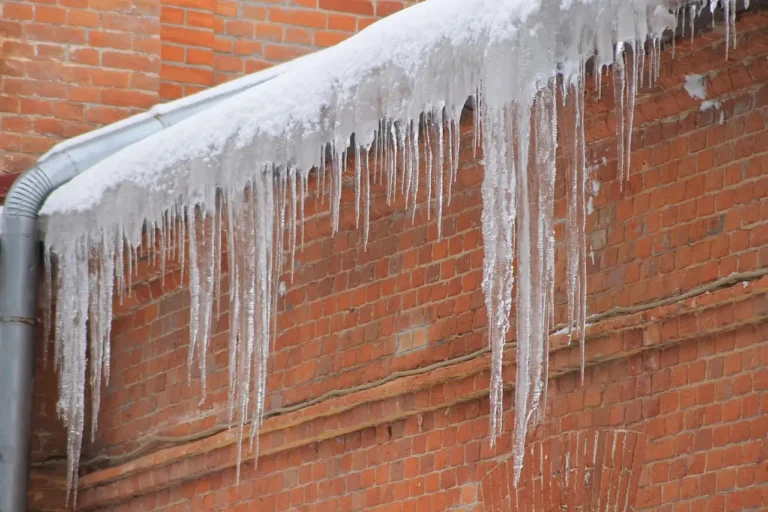
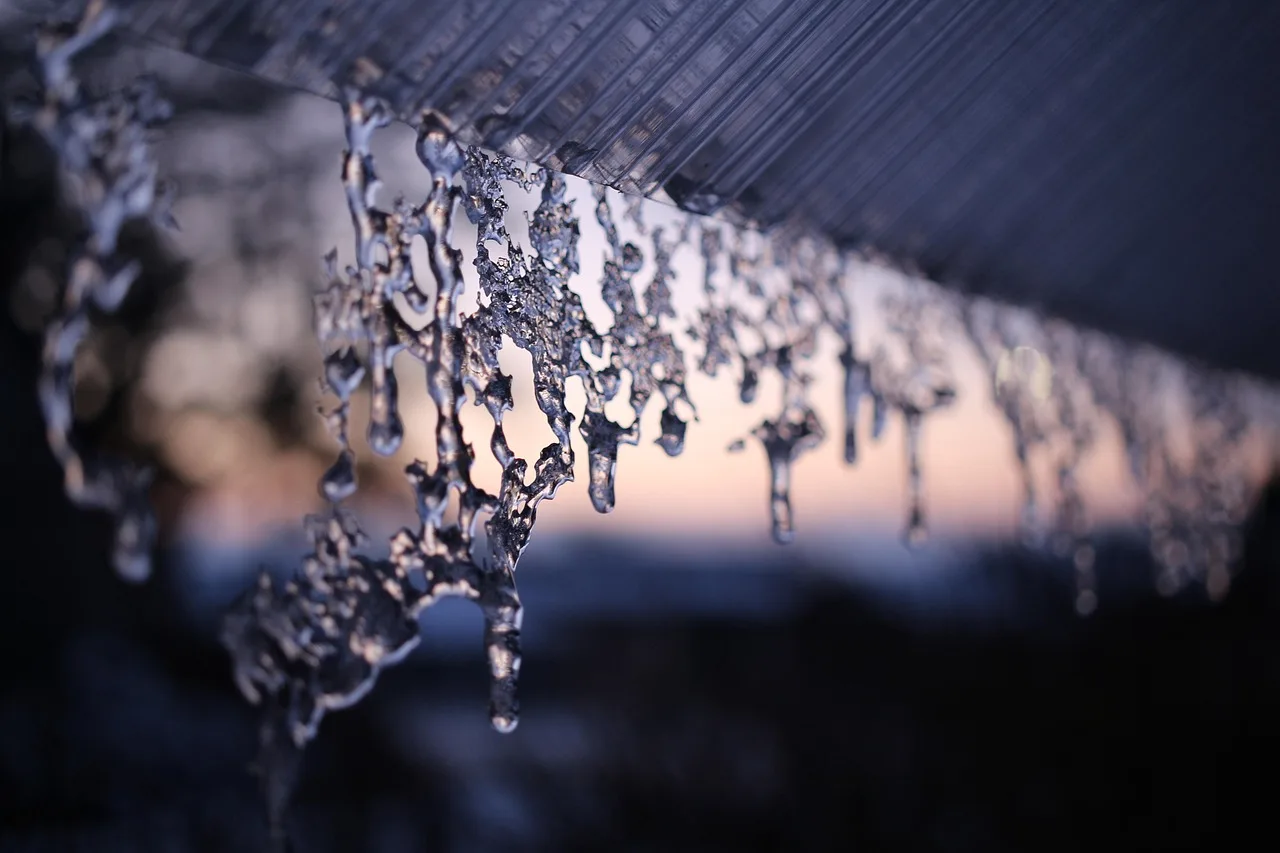
Ice dams usually begin when snow on the roof melts from heat escaping through the ceiling, then refreezes at the colder eaves. The ice ridge traps later meltwater, and that water can back up under shingles and leak into the roof edge, walls, or ceiling.
Brady Roofing says ice dams are caused by heat, not bad shingles. That distinction matters because a new roof can still fail at the edge if the attic stays warm.
How ice dams form at the roof edge
The pattern is simple. Warm roof surface, meltwater, cold eaves, refreeze. The deeper issue is not the snow load itself. It is uneven roof temperature, usually from heat escaping into the attic or from roof sections that stay warmer than the rest.
That is why damaged drywall or damp insulation often shows up near exterior walls, not just at the roof peak. The leak path starts at the eaves.
What matters more: insulation or ventilation?
Insulation and ventilation address different parts of the same problem, but insulation and air sealing usually come first. If the attic floor leaks heat, ventilation has less chance to keep the roof cold. Adding insulation alone rarely stops ice dams by itself.
Why air sealing comes before insulation
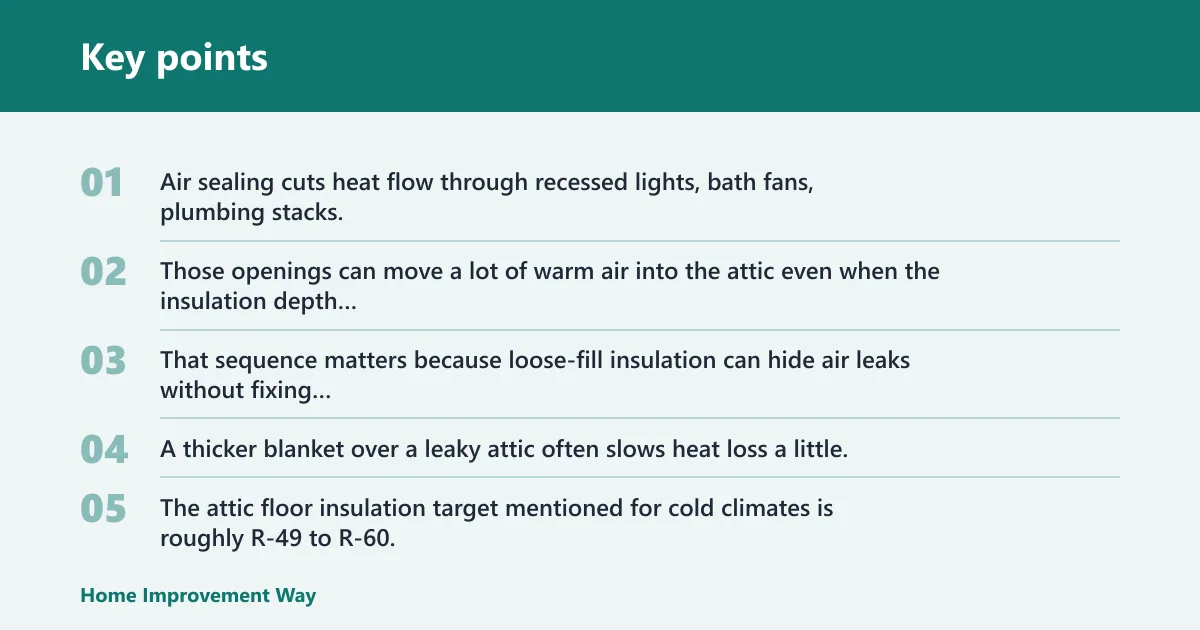
Air sealing cuts heat flow through recessed lights, bath fans, plumbing stacks, and the attic hatch. Those openings can move a lot of warm air into the attic even when the insulation depth looks acceptable. Seal the leaks first, then add insulation.
That sequence matters because loose-fill insulation can hide air leaks without fixing them. A thicker blanket over a leaky attic often slows heat loss a little, then leaves the real problem in place.
How insulation targets and continuity affect heat loss
The attic floor insulation target mentioned for cold climates is roughly R-49 to R-60. Just as important, the layer needs to stay continuous at the perimeter. Thin spots at the eaves let heat reach the roof edge, which is where ice dams begin.
Do not let insulation block soffit vents. If the batt or loose fill closes off the intake path, ventilation drops and the attic can stay warmer than it should.
Where ventilation helps and where it cannot
Ventilation helps most when the attic is already fairly tight and insulated, but the roof deck still needs a cooler path for moisture and stray heat. It cannot fix a cathedral ceiling with no vent channel, a blocked intake, or a roof shape that traps heat in one section.
Suppose a house of around 1,800 square feet has ridge vents but the soffit vents are painted over. The roof may still form ice dams because the exhaust has little or no fresh intake to move air through the attic.
Attic ventilation decision matrix
Use this table to match the attic type to the likely failure point, whether ventilation will help, and the first fix to try. The point is not to add vents everywhere. The point is to fix the part of the assembly that is actually causing the roof edge to warm up.
| Attic type | Likely failure point | Whether ventilation helps | First fix to try |
|---|---|---|---|
| Vented attic | Warm air leaking through ceiling gaps; uneven insulation at the perimeter | Yes, if soffit intake and ridge exhaust are open and balanced | Air seal, then bring insulation up to roughly R-49 to R-60 |
| Blocked soffits | Paint, debris, or insulation blocking intake at the eaves | Limited until intake is restored | Clear soffits and add baffles to keep the airflow path open |
| Cathedral ceiling | No attic cavity to ventilate, or no clear vent channel above the insulation | Often no, unless the roof assembly was built for ventilation | Check the roof assembly; focus on air sealing, insulation, and any needed reroof detail at the eaves |
| Mixed rooflines | One section is vented, another is not, or valleys trap snow and heat | Only in the vented sections that can actually move air | Treat each roof section separately; fix leaks and insulation gaps where they start |
Attic Authority identifies climate zones 5 through 8 as the primary ice dam risk corridor. In those climates, a partial fix often leaves the worst roof sections unchanged.
Start by sealing ceiling air leaks, then add insulation, then verify that soffit vents stay open with baffles. The goal is a continuous thermal layer at the attic floor, especially at the edges where the roof meets the outside wall. That is where heat escape causes the most trouble.
Keep insulation continuous at the perimeter
Gaps near the eaves are a common failure point. If the insulation thins out at the outside wall, heat can reach the roof deck and melt snow near the edge. A continuous layer matters more than a bigger pile in the center of the attic.
Think of the perimeter as the first line of defense. If the edge is weak, the roof edge warms first.
Use baffles so soffit vents stay open
Baffles are placed at the eaves to keep a clear airflow path above the insulation. They prevent loose fill or batts from blocking soffit vents. Without that channel, even a well-vented roof can lose intake air and lose much of its cooling effect.
This Old House says a ridge vent paired with continuous soffit vents is most effective. That setup depends on the eave channel staying open.
Common problem spots: hatch, lights, fans, and stacks
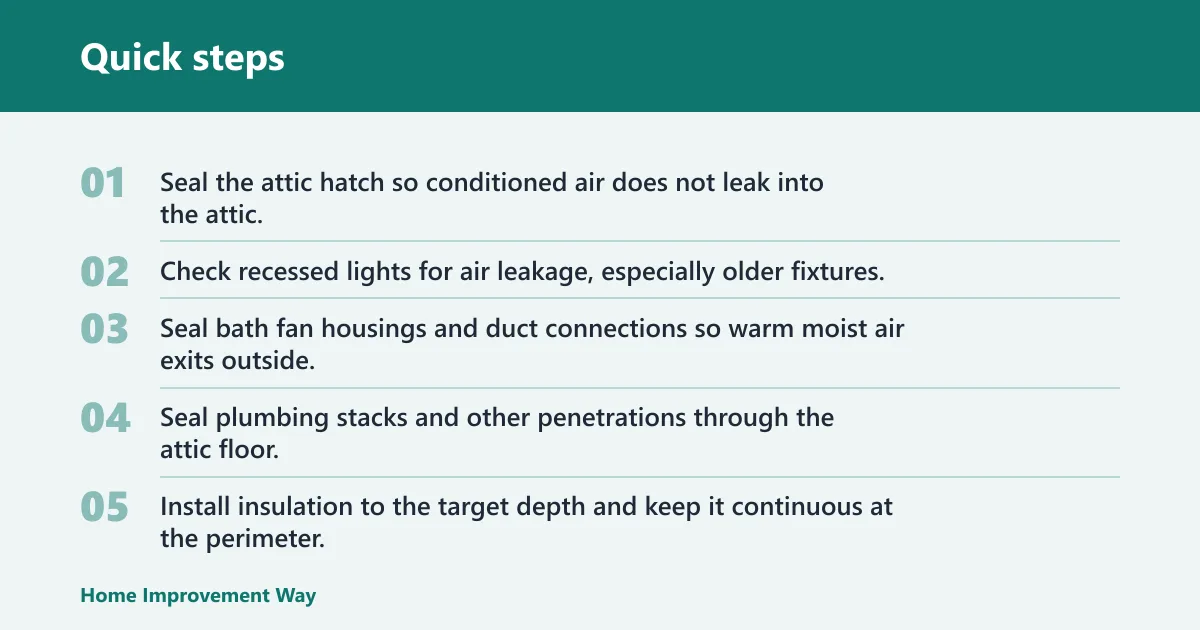
- Seal the attic hatch so conditioned air does not leak into the attic.
- Check recessed lights for air leakage, especially older fixtures.
- Seal bath fan housings and duct connections so warm moist air exits outside, not into the attic.
- Seal plumbing stacks and other penetrations through the attic floor.
- Install insulation to the target depth and keep it continuous at the perimeter.
- Add baffles at the eaves before topping off loose fill.
A common first-timer mistake is piling insulation higher in the middle of the attic while leaving the hatch, can lights, and top plates leaky. That can make the center colder while the eaves still stay warm enough to start ice dams.
When ventilation changes will help most
Ventilation changes help most when the attic already has a solid air seal and enough insulation, but the roof still needs better air movement at the eaves. Balanced soffit intake and ridge exhaust can keep the attic temperature closer to outdoor conditions. A ridge vent with blocked soffit vents does almost nothing.
Why ridge vents alone are not enough
Ridge vents need soffit intake to function well. Without intake, the exhaust path has little fresh air to pull from below. That is why a ridge vent by itself is not a cure for ice dams, even though the roof may look properly vented from the outside.
This Old House gives a ventilation ratio of 1 square foot per 300 square feet of attic floor. That rule only matters if the intake and exhaust are both usable. (Thisoldhouse)
Signs the attic is still too warm
If the upper roof melts snow while lower sections stay cold, the attic is still leaking too much heat. Other signs include damp insulation near the eaves, frost on the underside of the roof deck, or recurring ice ridges in the same place each winter.
The same source notes that poor or blocked ventilation traps heat against the roof deck. That can keep the roof warm even after a reroof.
Ice and water shield, heat cables, and roof replacement
Ice and water shield helps prevent leaks at the eaves, but it does not stop ice dams from forming. Heat cables can reduce buildup in limited spots, but they are a backup, not a fix for heat loss. Roof replacement alone will not solve recurring ice dams if the attic problem remains.
What ice and water shield does at the eaves
Ice and water shield is installed under shingles at the vulnerable edge. If water backs up under the roof covering, the membrane helps keep that water from reaching the roof deck. The same source says it does not stop ice dams from forming, and that limitation matters.
When electrical heat cables are a limited option
Heat cables can help on short roof edges, valleys, or problem spots where the geometry is hard to fix right away. They do not solve warm attic air, missing insulation, or blocked soffits. Use them as a targeted aid, not as the main answer.
Why roof replacement alone does not solve the problem
A new roof can still develop ice dams if the attic stays warm or the ventilation is out of balance. New shingles do not change heat loss through the ceiling, and they do not restore blocked soffits. If the cause stays in the attic, the damage usually returns.
Frequently asked questions
Do roof vents prevent ice dams?
Roof vents can help, but they do not prevent ice dams by themselves. They work best when the attic can be kept cold with strong air sealing, enough insulation, and open soffit intake. If the intake is blocked or the attic leaks heat, vents alone will not solve the issue.
Will soffit vents prevent ice dams?
Soffit vents help, but only as part of balanced ventilation with an exhaust path at the ridge. If the attic is underinsulated or leaky, soffit vents alone cannot stop the roof from warming. They are a necessary intake piece, not a complete fix.
Can ridge vents alone stop ice dams?
No. Ridge vents need soffit intake to function well, and a ridge vent with blocked soffit vents does almost nothing. Ridge exhaust can support a cold attic only when air enters low at the eaves and moves across a clear channel. Without that path, the system is weak.
What matters more for ice dams: insulation or ventilation?
Insulation and air sealing usually matter first because they cut the heat that starts the problem. Ventilation matters after that because it helps keep the attic colder and drier. If heat is pouring into the attic, more vents will not fix the root cause.
Why do ice dams form even with a new roof?
Because the roof covering is not the main cause. Ice dams form when heat from the house warms the roof deck, snow melts, and water refreezes at the eaves. A new roof can still leak if the attic is warm, the soffits are blocked, or the insulation is weak at the perimeter.
Sponsored / affiliate links. As an Amazon Associate I earn from qualifying purchases. I may earn additional commission from eligible campaigns.