Why Does My Roof Leak Only When Snow Melts?
A roof that leaks only during snowmelt is often an ice-dam backup, but if the leak starts at one spot, follows wind-driven snow, or happens indoors without roof meltwater, flashing, condensation, or an old repair is more likely. A bad diagnosis leads to the wrong fix, repeat leaks, damaged drywall, and higher repair bills. This guide shows how to separate the common causes and what to check before you call for roof work.
Thaw leak decision table


| Symptom | Likely cause | Where to inspect first | Fastest safe next step |
|---|---|---|---|
| Leak only during daytime thaw | Ice dam backup from melt-refreeze cycles | Roof edge, gutters, downspouts, and eaves | Contain the drip inside, then have the roof edge inspected |
| Leak only on sunny afternoons | Snowmelt concentrated by roof heat loss or sun on one slope | Attic hatches, light fixtures, bath fans, and the warmed roof plane | Check for attic air leaks and wet insulation |
| Ceiling stain with no drip | Water spread along the roof deck or framing before it reached the ceiling | Attic above and around the stain, plus nearby valleys or transitions | Mark the stain edge and inspect a wider attic area |
| Leak at one exterior wall | Flashing gap, wall intersection leak, or water running inside a wall cavity | Step flashing, sidewall flashing, and the attic side of the wall | Prioritize flashing inspection over shingle replacement |
| Leak near bathroom | Bath fan duct condensation or attic air leak around the fan box | Fan housing, duct slope, exterior cap, and attic insulation around the fan | Check whether the duct discharges outdoors and stays insulated |
| New roof still leaks | Missed flashing, bad pipe boot, poor ice and water shield coverage, or a ventilation issue left in place | Valleys, skylights, chimneys, vents, and the eaves | Ask for a detailed warranty inspection of the leak path |
| Metal roof seam leak | Slow-moving backup at seams, failed sealant, loose fasteners, or panel movement | Seams, fasteners, penetrations, and transitions | Have the seam details and fasteners checked in thaw conditions |
| Leak that returns after repair | Repair missed the real entry point, often above or beside the stain | Higher roof areas, attic framing, and nearby penetrations | Trace the water path, not just the stain location |
Why does my roof leak only when snow melts?
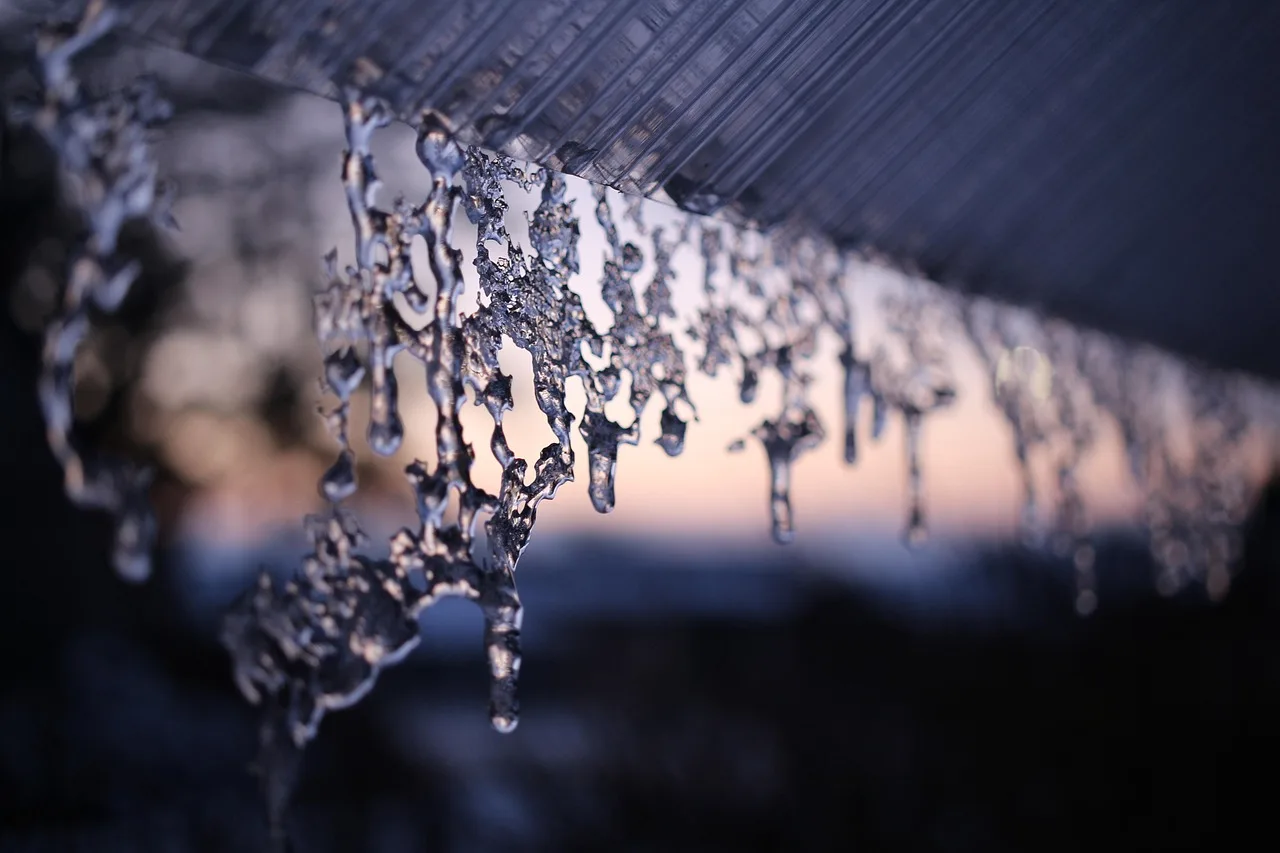
A thaw-only leak usually means water is moving when the roof changes temperature, not when rain falls. Ice can form near the roof edge during melt-refreeze cycles, and water can work under shingles after several freeze-thaw cycles. A roof can stay dry in rain yet still leak during warm-ups if heat loss, flashing gaps, or a vent boot fail under slow-moving meltwater.
Separate ice-dam backup from other winter leaks
Ice dams form at the roof edge, where meltwater refreezes into a ridge. That ridge can hold water higher on the roof, and shingles are not built to hold a pool. If the leak appears only after daytime thaw, the first suspect is often backup at the eaves. If it starts at one spot, think flashing, a pipe boot, nail pops, or cracked sealant instead.
Why timing matters
Leaks that show up during sunny afternoons often point to snowmelt from below, because heat can leak from rooms into the attic and warm the roof above. A leak that appears only when temperatures rise can also trace to slow drainage at a valley, a chimney, or a seam that opens when water backs up. Rain does not always load those details the same way.
Where snowmelt leaks start first
Start inside, then move to the attic, then to the roof edge. The stain often appears away from the entry point because a roof leak can travel through attic insulation and inside a wall cavity. The roof deck can also carry water sideways before it drips, so the wet spot may not sit directly below the problem.
Follow the water path instead of the stain
Check the roof edge, gutters, downspouts, eaves, then move up to valleys, skylights, chimneys, vents, and roof transitions above the stain. If the attic looks dry right above the stain, keep tracing along framing and roof sheathing toward higher points. Say the ceiling stain is located under a hallway some distance from the exterior wall. The leak may still start at the wall flashing or a valley above it.
What to inspect indoors first
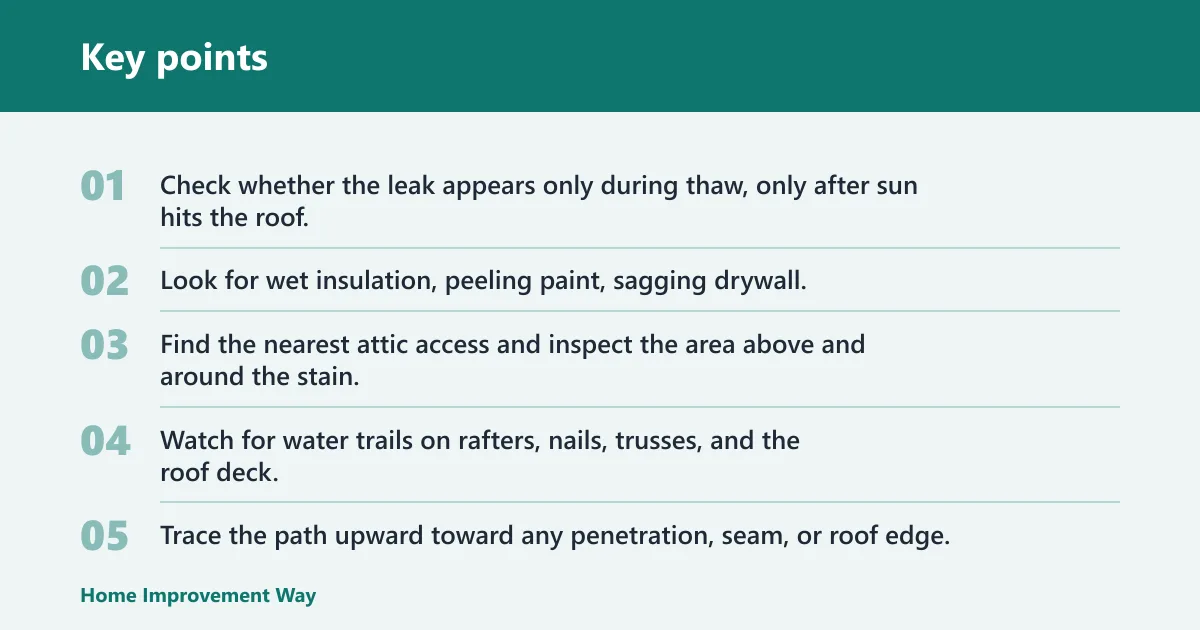
- Check whether the leak appears only during thaw, only after sun hits the roof, or during every warm spell.
- Look for wet insulation, peeling paint, sagging drywall, or plaster that is soft or stained.
- Find the nearest attic access and inspect the area above and around the stain.
- Watch for water trails on rafters, nails, trusses, and the roof deck.
- Trace the path upward toward any penetration, seam, or roof edge.
Can ice dams cause a roof leak?
Yes. An ice dam is a ridge of ice near a roof edge, and it can force water under shingles and flashing. Ice dams are more likely when attic heat loss warms the roof above, insulation gaps leave cold spots, and ventilation is poor or blocked. Cold-climate roofs often need ice and water shield at vulnerable edges and valleys to resist backup.
Why the eaves are the problem zone
Soffit vents bring cold air into the attic, and ridge vents let air leave near the roof peak. Both need to stay open and correctly sized. If insulation blocks the path near the eaves, the ventilation path can fail, heat builds in the attic, and the roof edge stays cold enough to refreeze meltwater. That is how an ice dam starts at the edge and then pushes water uphill.
What makes an ice dam more likely
Insulation should limit heat loss into the attic, but it should not block the vent path at the eaves. Debris or ice in gutters and downspouts makes the drainage problem worse, and downspouts should move water away from the foundation. If meltwater cannot leave the edge cleanly, the roof edge stays wet longer and backup becomes more likely.
Attic leaks that trigger thaw leaks
Many snowmelt leaks are really attic air leaks. Warm indoor air escaping around lights, pipes, wires, bath fans, and attic hatches can heat the roof deck from below. That can melt snow from underneath and create a leak pattern that looks like roof failure, even when the roof covering is intact.
How condensation can mimic a roof leak
Moist air from a bathroom fan can leak into the attic if the duct is disconnected, crushed, or poorly vented. Frost can build on cold surfaces, then thaw during a warm-up and drip onto insulation or drywall. If the leak appears near a bathroom, do not assume the shingles are the source. Check the fan duct, the housing, and the attic air seal first.
Attic clues that point to heat loss
Look for frost on nails, damp insulation, darkened sheathing, or warm patches in one section of the roof deck. A Michigan winter ceiling leak with no storm is described as almost always an ice dam, but attic heat loss can be the driver behind that ice dam. In plain terms, the attic leak upstream may be the real problem.
Flashing, vents, and metal roof seams
Not every thaw leak is an ice dam. Flashing around chimneys, skylights, vents, valleys, and roof transitions is a common hidden entry point for snowmelt water. Pipe boots can split, sealant can crack, and fasteners can loosen. Those failures often leak only when snowmelt moves slowly or backs up against a detail.
Common non-ice-dam winter failures
Nail pops can open tiny pathways near shingle fasteners. A vent boot can crack around the pipe and leak when water ponds around it. A chimney sidewall or skylight curb can leak only when meltwater lingers longer than rain would. If one room leaks every thaw but not every snowfall, that pattern often points to a detail problem, not blanket roof failure.
How to fix a leaking metal roof
Start with seams, fasteners, and penetrations. Metal roof leak repair usually depends on finding movement, failed sealant, or a loose closure at a lap or transition. Because water can move quickly across metal and then leak at a slow point, the visible drip may be far from the entry point. Have the seams checked during thaw, when the roof is under real load.
Emergency steps before repair
Contain the leak indoors, document the stain and the timing, and keep people away from icy exterior areas. Do not chop ice, use a torch, or walk on an icy roof. If the pattern points to condensation or a bath fan duct, call the right trade. If the leak appears at a roof detail, call a roofer for inspection and repair.
What to do right away
- Move furniture and electronics away from the drip.
- Catch water in a bucket or pan and protect the floor.
- Take photos of the stain, attic moisture, and roof-edge ice if visible from the ground.
- Check gutters and downspouts from a safe spot for blockage or ice buildup.
- Arrange an inspection before the next thaw if the leak repeats.
Why is my roof still leaking after repair?
A repeat thaw leak usually means the repair missed the real entry point. Water may have traveled through the roof deck or a wall cavity, so the visible damage was fixed while the source stayed open. If the leak returns in the same room but not after every snowfall, ask for a wider inspection of flashing, boots, valleys, and the attic pathway.
Why a new roof can still leak
A new roof still leaking often means the problem was not in the shingles alone. Poor ice and water shield coverage at eaves or valleys, missed flashing, a bad vent boot, or ventilation left out of balance can all leave a leak path in place. A new roof should be inspected for details, not just surface materials.
Frequently asked questions
Why is my roof leaking after snow melts but not during rain?
Snowmelt can linger on the roof edge, in valleys, or around penetrations long enough to expose small defects. Rain often moves off faster. If the leak only shows during thaw, inspect the eaves, flashing, pipe boots, and attic air leaks before assuming the whole roof covering has failed.
Why is there a ceiling stain when the snow melts?
A stain can appear long after the water entered because the roof deck, insulation, and framing can carry moisture sideways. Ceiling drywall or plaster may stain, sag, or fail after repeated leaks. The visible stain marks where the water finally emerged, not always where it started.
Why is the attic dry right above the leak?
Water can travel along the roof deck or framing before it drips inside, so the first dry spot in the attic does not prove the roof is fine. Check higher up, around nearby valleys, flashing, and penetrations. The actual entry point is often several feet away from the ceiling stain.
Sponsored / affiliate links. As an Amazon Associate I earn from qualifying purchases. I may earn additional commission from eligible campaigns.
 Extendable Roof Snow Rake for Snow Removal, Telescopic Handle Up to 236 Inch Reach, Reinforced 3-Point Connection, Thickened Hardware, Anti-Slip Lock Grip, Snow Remover for Roof
 197 Inch Extendable Snow Rake for Roofs, Lightweight Aluminum Snow Removal Tool with Anti-Slip Grip and Large Shovel Head, Perfect for Clearing Heavy Snow from House