Why Are My Gutters Pulling Away From the House in Winter?
Winter gutters usually pull away because ice or clogged downspouts add weight, then water backs up, rots the fascia, or loosens hangers. If the gap is growing or the gutter is sloping, inspect it now. Ignoring it can lead to roof-edge leaks, soffit damage, and a longer repair list. This guide shows how to spot whether the weak link is ice, clogging, fascia rot, hanger failure, or drainage backup.
Ice weight, freeze-thaw cycles, and weak hangers
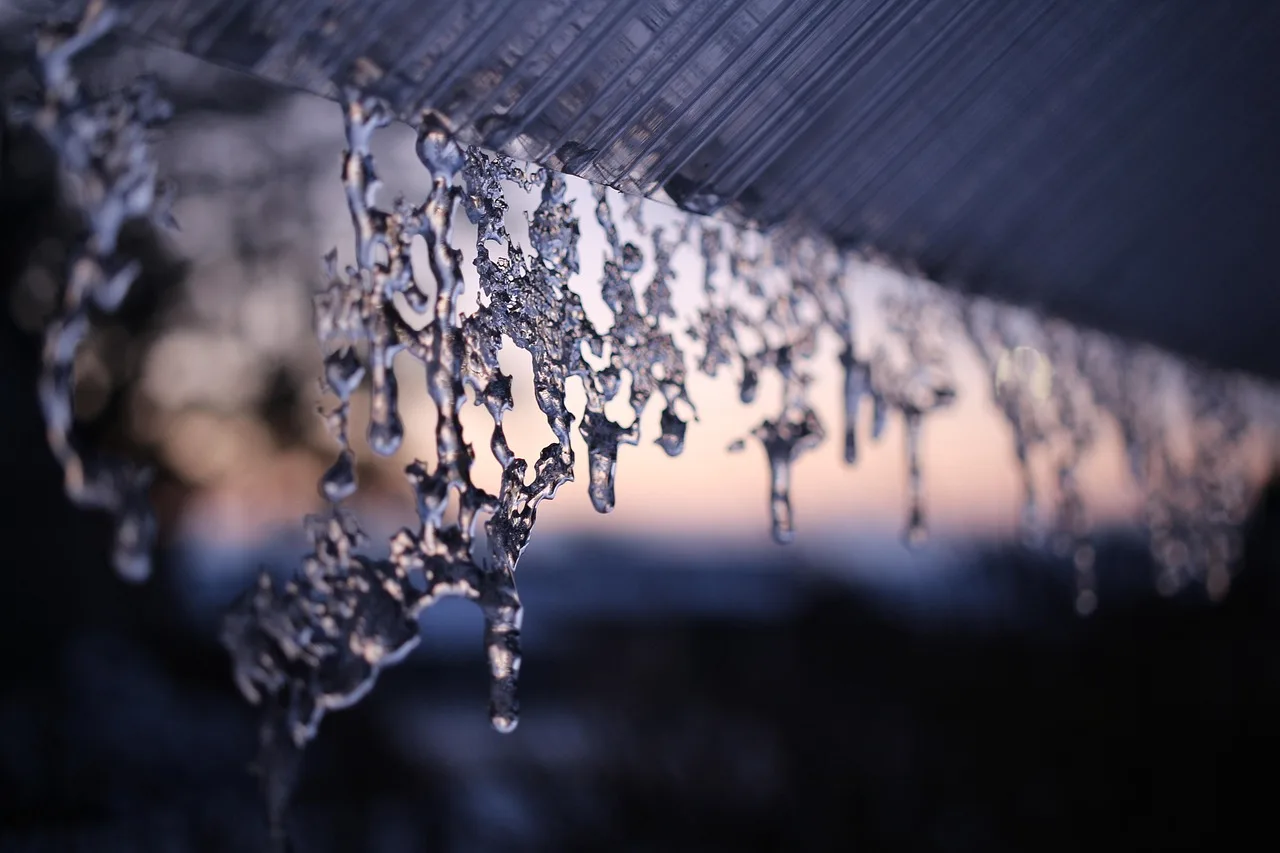


Winter makes a gutter problem worse because water changes state, loads the run, and stays in contact with wood and fasteners longer than rain alone. Gutters are designed to channel rainwater away from the foundation and prevent water damage, but frozen standing water can overload that system fast.
The failure chain usually starts with debris. Leaves, twigs, and dirt trap water in the gutter, and that water can freeze and expand. Once the run holds ice, the added weight strains hangers, weakens attachment points, and can open small gaps at the fascia.
Ice weight and standing water
Ice is a load problem, but it is rarely the only one. Frozen water adds mass, blocks the gutter channel, and can force overflow behind the metal if the slope is wrong or the downspout is restricted. That overflow is what often starts wood damage at the fascia and roof edge.
Freeze and thaw cycles are especially hard on gutters, fascia, and the roof edge. Repeated expansion and contraction can loosen fasteners, widen seams, and make a section that looked secure in fall start to separate in the middle of winter.
Clogs, hangers, and weak fasteners
Gutter hangers carry the load of the run. If they are spaced too far apart, corroded, bent, or fastened into weakened wood, the gutter can sag before it actually tears free. Hidden hangers that are spaced correctly for winter ice weight give better support than loose or missing clips.
Clogged gutters can also lead to wood rot in the fascia board. Once the fascia softens, the gutter loses its anchor and the pull-away can accelerate from a small gap to a visible drop at one end or in the middle.
Fascia rot and roof-edge damage
Water soaking fascia and soffit boards can cause gutters to lose their anchor. That is why a gutter that looks “just loose” may point to a larger repair at the roof edge. Backed-up water can also leak under shingles, especially near the gutter line where ice and overflow sit for long periods.
If the gutter is already separated, look for stains, peeling paint, or dark streaks on the fascia. Those signs often mean water has been running where it should not, and the repair may involve more than rehanging the gutter.
How to tell what failed first
Start from the ground. You can often tell whether the first failure was clogging, hanger stress, fascia rot, or drainage backup without climbing a ladder. Look for the place where the problem first appears, then decide whether the issue is a local repair or a broader section replacement.
From the ground
Visible gaps between the gutter and fascia are a warning sign. Sagging gutters are another. If the gutter slopes the wrong way, bows in the middle, or seems lower near one downspout, that often points to a load problem or a blocked outlet rather than a purely cosmetic issue.
-
Check the gutter line. Walk the perimeter and look for gaps, bowing, or sections that sit lower than the rest. A straight run that suddenly dips often means the weakest hanger or fastening point is nearby.
-
Inspect downspout discharge. Confirm that water can leave the system freely. If a downspout is iced over, packed with debris, or draining slowly, the gutter can keep filling even when the roof is shedding meltwater normally.
-
Look for overflow traces. Streaks on fascia, icy ridges at the gutter edge, and water marks below the run suggest water has been spilling or backing up. That often means the problem is not only the gutter itself.
-
Decide what needs a ladder. If the gutter is high, iced, or visibly loose, stop at ground level and call for help. Ladder work near frozen metal and weak wood adds fall risk and can make the separation worse.
Say your front gutter sags only near one downspout after a freeze. That pattern usually points to a blocked outlet or backed-up drain path, not a full-run failure. If the same gutter bows along its middle section on a dry day, hanger spacing or fastener failure is more likely.
When the weak link is drainage
Downspouts move roof runoff away from the house. If they clog, freeze, or dump into a short extension that ends at the foundation, water can pool in the system and around the base of the wall. Underground drains can back up too, which keeps the gutter full longer than expected.
That is why a winter gutter issue is not always a gutter issue. The gutter may be the visible part, while the real fault is a blocked downspout, a buried drain that is slow or closed, or an extension that sends water right back to the foundation.
Can ice in gutters make them detach?
Yes. Ice in gutters can detach them when frozen water adds enough weight to bend hangers, pull fasteners loose, or pry softened fascia away from the house. The risk is higher when the gutter already holds debris, because trapped water freezes in place and creates a longer, heavier load.
What frozen water does to gutter load
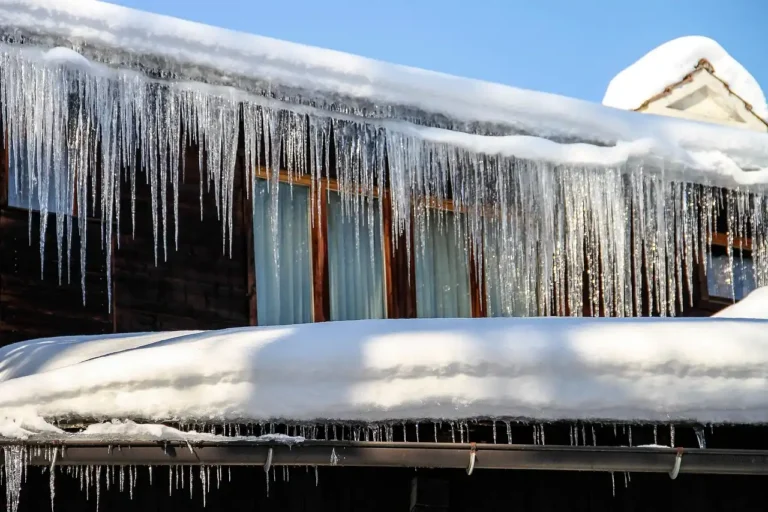
Water trapped in a clogged gutter can freeze and expand. That expansion, combined with the extra mass of ice, can bend or detach gutters. Ice at the eaves can also block meltwater from escaping, so the gutter fills again each time temperatures rise and fall.
How freeze-thaw cycles loosen attachments
Freeze-thaw cycles do more than add weight. They work on seams, hangers, and the roof edge over and over, opening small gaps and weakening fasteners. A section that seemed firm in early winter can start to move after repeated cold snaps and brief warm-ups.
In older installations, the issue is often spacing and fastening, not just material age. If hangers are too far apart or the wood behind them is soft, the added winter load shows up as sag first, then pull-away.
When ice means a bigger roof-edge problem
If ice is hanging at the eaves, water is backing up under shingles, or the gutter line shows staining and separation together, the problem has likely moved beyond the gutter alone. That is the point to inspect the roof edge, not just the metal trough.
Do not chip ice off with force from the ground or a ladder. That can bend the gutter, tear loose fasteners, or damage shingles at the edge where the roof already has the most stress.
Clogged gutter failure checklist
This checklist helps you match the symptom to the weakest link before you decide on repair. Use it from the ground first. If the gutter is icy, high, or unstable, leave the ladder out of it until conditions improve.
| Symptom | Likely cause | Safest same-day action | Repair priority | Do not do |
|---|---|---|---|---|
| Ice in gutter | Frozen standing water from a clog or slow downspout | Keep people away from drip lines and watch for falling ice | High if the gutter is bending or pulling loose | Do not pry ice out or strike the gutter |
| Seam separation | Freeze-thaw stress, weak sealant, or a section under load | Photograph the gap and check nearby hangers from the ground | Medium to high depending on water entry | Do not assume sealant alone will solve a sagging section |
| Sagging middle section | Debris weight, hanger spacing, or bent fasteners | Look for a downspout backup and reduce water flow if safe | High if the run is dropping farther each freeze | Do not load the gutter with temporary weight or climb on it |
| Fascia softness | Prolonged overflow, rot, or water trapped behind the gutter | Mark the area and keep water away from the wall base | High before rehanging any loose section | Do not fasten new hangers into soft wood |
| Downspout backup | Ice, debris, short extension, or underground drain blockage | Clear the discharge path at ground level if it is accessible and safe | High because water will keep backing up | Do not ignore the outlet just because the gutter looks intact |
| Water behind gutter | Overflow, ice damming, or failed roof-edge drainage | Inspect the fascia line and look for stains or soft spots | High if the roof edge or soffit shows damage | Do not keep using the gutter as-is through repeated storms |
How do I tell if the fascia board is rotted behind the gutter?
Soft, darkened, or crumbly wood behind the gutter is often a strong sign of rot. If the gutter pulls away when touched lightly, or if fasteners do not hold, the fascia may no longer be carrying the load. Water stains and peeling paint near the gutter line often point to the same issue.
Signs of soft wood behind the gutter
You may see gaps that widen near a certain length, screws that no longer bite, or a gutter edge that moves when the wind pushes on it. Clogged gutters can contribute to fascia and soffit damage, so these signs matter more when winter overflow has been happening for weeks.
Another clue is staining below the roof edge. If water has been soaking the fascia and soffit boards, the gutter anchor can fail even when the metal itself still looks fine.
Why rotten fascia changes the repair
Rotten fascia changes the job from a gutter repair to a wood repair first. The wood has to be repaired or replaced before the gutter is rehung, or the new fasteners will fail again. That is why some winter pull-away issues keep returning after a quick patch.
Fascia and soffit repairs are often separate from gutter replacement, but they protect the roof edge and the mounting surface at the same time. If the wood is weak, rehanging the gutter first only delays the next failure.
When soffit damage may be present too
Soffit damage often travels with fascia rot because both are exposed to the same overflow. Look for swelling, discoloration, or soft spots where the gutter line meets the underside of the roof overhang. Those signs mean water has likely been in the assembly long enough to weaken more than one board.
A common first-timer mistake is to focus on the visible gutter gap and ignore the wood behind it. If the attachment point is failing, the visible gap is a symptom, not the whole problem.
What to fix first
Separate temporary winter-safe stabilization from permanent repair decisions. If the gutter is loose but still attached, the safest short-term goal is to keep water moving and prevent more pull-away until conditions are right for a proper fix. If the wood or the run is badly damaged, replacement may be the better call.
Temporary winter-safe stabilization
-
Reduce the water load. Clear accessible debris from the gutter outlet or downspout mouth only if you can do it safely from the ground. Lowering the load reduces the chance of further sag while you arrange a full repair.
-
Protect the base drainage. Add a splash block or check an extension so runoff moves away from the house. Foundation drainage matters because overflow at the base can raise basement or crawlspace moisture risk.
-
Watch the gap daily. Mark the edge of the separation with tape or a photo so you can tell whether the pull-away is still moving. A growing gap means the gutter is still under stress.
Repair now or monitor
Repair now if the gutter is sagging, a seam is open, or water is reaching the wall behind the run. Monitor only when the gutter is intact, the gap is small, and the real issue appears to be a temporary outlet blockage that can be cleared before the next freeze.
If the problem repeats after each cold snap, do not keep monitoring indefinitely. Freeze and thaw cycles can keep loosening the same weak point until the gutter fails in a larger section.
When replacement is the better call
Replace part of the run when the gutter is bent, the hangers are failing across a long span, or the fascia has enough rot that new fasteners will not hold. A partial replacement is often enough if the damage is localized. Full replacement becomes more likely when the roof edge and wood are both involved.
Hidden hangers spaced correctly for winter ice weight can support a repaired run, but only if the mounting surface is sound. If the fascia is soft, the best hanger in the world will not hold for long.
Could drainage be part of the problem?
Yes. Downspout backups, short extensions, and buried drainage problems can keep water in the system and make winter pull-away worse. If water cannot leave the house quickly, it can freeze in the gutter, back up behind the fascia, and collect near the foundation.
Downspout backups
Check whether the downspout drains freely. A clogged downspout can cause overflow even when the gutter trough itself looks clean. That backed-up water adds weight and may force the gutter to sag or separate near the outlet.
Extensions and splash blocks
Runoff should move away from the house, not stop at the wall line. Short extensions may leave water too close to the foundation, where it can contribute to moisture problems. Splash blocks or longer extensions are simple fixes when the drainage path is otherwise clear.
Underground drain issues and foundation risk
If the downspout ties into an underground drain, a buried blockage can make the whole system act like a closed pipe. That keeps water trapped higher up in the gutter and can also direct moisture toward the foundation. Prolonged overflow at the base raises the risk of basement or crawlspace moisture problems.
If the gutter section keeps pulling away after the downspout is cleared, the drainage path may still be failing underground. That is a separate repair from the gutter itself.
Frequently asked questions
Why are my gutters pulling away from the house in winter?
Winter pull-away usually starts with ice, clogged gutters, or a blocked downspout that traps water and adds weight. That load strains hangers, weakens the fascia, and can open seams. If the gap is growing or the gutter is sloping, treat it as an active failure, not a cosmetic issue.
Does clogged gutter debris cause gutters to sag?
Yes. Leaves, twigs, and dirt hold water in the gutter, and that standing water adds weight even before it freezes. Once debris blocks the outlet, the gutter can sag in the middle, overflow at seams, or start pulling away near the downspout.
Is a gutter that pulls away always a repair or does it need replacement?
Not always replacement. A local pull-away may only need rehangers, fastener replacement, or a short repaired section. If the gutter is bent, the hangers are failing along a long span, or the fascia is rotten, replacement of part or all of the run is more likely.
When should I call a professional for a loose gutter?
Call a professional if the section is high, iced, visibly detached, or linked to soft fascia or roof-edge damage. You should also get help when the problem keeps returning after cleaning, or when drainage may involve an underground line. Those cases can need structural repair, not just a gutter reset.
Should I clean gutters before winter to prevent this?
Yes. Cleaning before winter helps stop standing water, ice load, and overflow at the roof edge. Most homes in Northern New Jersey should have gutters cleaned at least twice per year, and heavily wooded properties may need three, four, or even five cleanings to keep debris from trapping water.
Can freeze-thaw cycles loosen gutter hangers?
Yes. Freeze-thaw cycles expand and contract materials, which can work fasteners loose and open seams over time. They are especially hard on gutters, fascia, and the roof edge when water keeps freezing in the run. If hangers are already spaced poorly, winter stress shows up faster.
Sponsored / affiliate links. As an Amazon Associate I earn from qualifying purchases. I may earn additional commission from eligible campaigns.