Why Are My Gutters Frozen and How Do I Thaw Them?
Frozen gutters usually mean one of three problems: a short ice plug, a blocked downspout, or an ice dam. If only a short section is frozen, a careful thaw may be enough. Repeated freezing points to drainage trouble. Left alone, trapped water can back up under shingles, leak into walls, and damage fascia. This guide shows how to identify the cause, thaw gutters safely, and decide when to clear the downspout or call for ice-dam prevention.
Why frozen gutters matter in winter


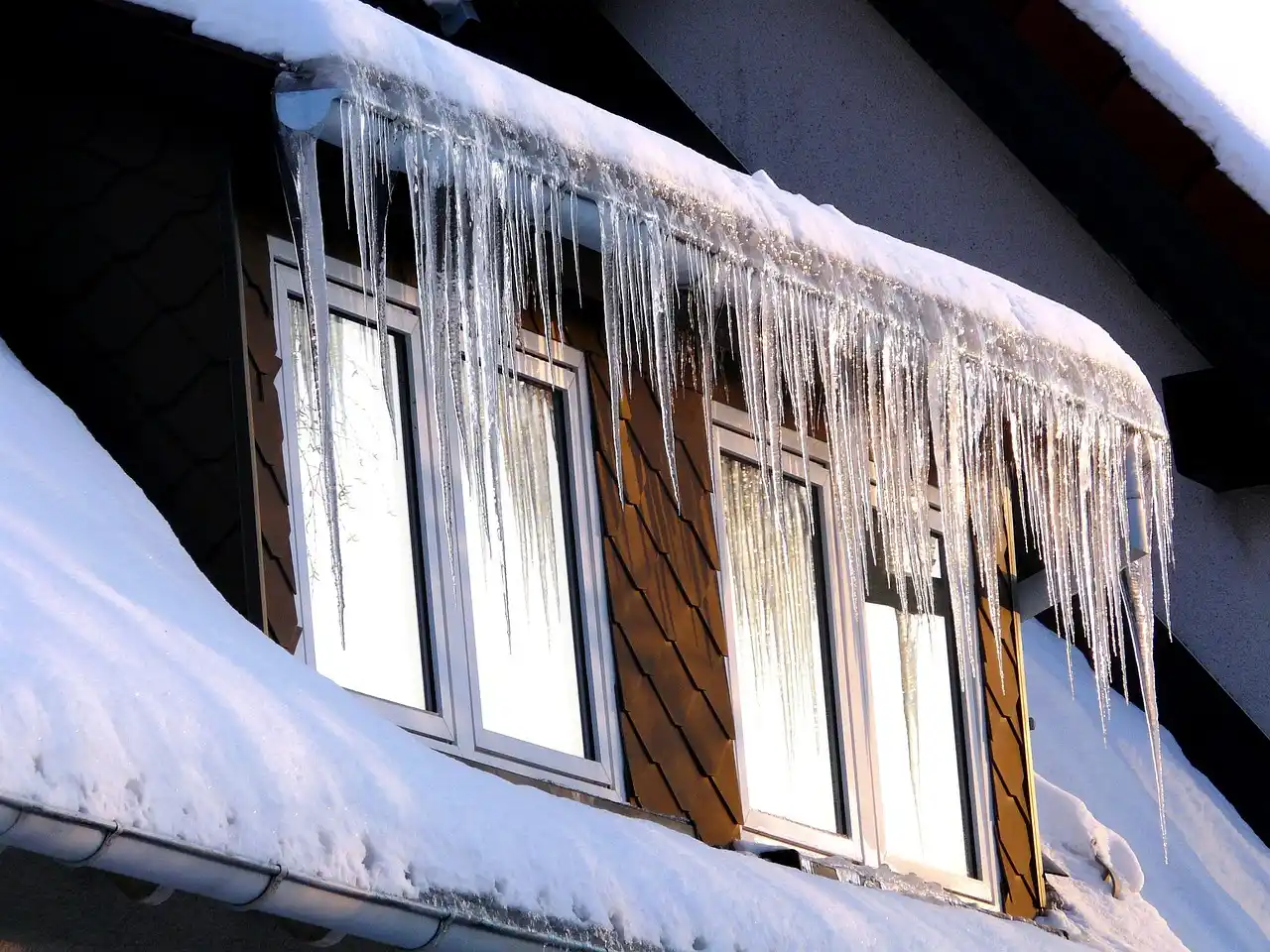
Frozen gutters happen when water sits in the trough, turns to ice, and blocks normal flow. That ice adds weight to the gutter run and brackets, then can worsen sagging or pull-away during freeze-thaw cycles. When meltwater cannot move out, it may also refreeze near the roof edge and start an ice dam.
The risk is not limited to the trough. Overflow can wet fascia boards and soffits, and ice backup at the eave can push water under shingles. In that case, the gutter problem is often a roof-edge drainage problem, not just an icy trough.
How ice in the trough adds weight and stress
Ice adds load where gutters were built to carry water, not frozen mass. Gutter brackets and fasteners matter here; poor spacing or weak attachment can let a section bow, loosen, or pull away. A gutter full of ice also tends to hold water in the low spots, which can increase refreezing.
Suppose a 20-foot section is blocked at one dip and stays frozen through the afternoon. The ice may soften only at the top, while the low spot remains packed. That is a sign to check slope and downspout flow, not just the visible ice.
Why overflow can damage fascia and soffits
When water spills over the front edge or backs up behind the gutter, it can soak the fascia board and soffit material. That damage often starts quietly: peeling paint, staining, or soft wood near the roofline. If the gutter has started to pull away, the gap can worsen the overflow.
What you’ll need
- Work gloves with a good grip
- Safety glasses
- Binoculars or a phone camera for ground-level inspection
- Bucket or container for catching runoff
- Warm water, not boiling
- A stocking or sock for calcium chloride, if used
- Heat cable, if the gutter already has one installed
- Garden hose for a ground-level downspout check, if conditions allow
- Flashlight for checking the downspout outlet
How do you thaw frozen gutters?

Start from the ground and choose the least forceful method that fits the problem. A short ice plug in the trough can often be thawed with warm water, a heat cable, or calcium chloride in a sock. If water still does not move, the downspout may be blocked, or the roof edge may be backing up with an ice dam.
- Check the outlet first. Look at the downspout opening where it meets the ground. If snow, ice, or debris blocks the lower end, clear that area before trying to thaw the gutter, because meltwater has nowhere to go.
- Apply a safe thaw source. Use warm, not boiling, water in a slow pour, or place calcium chloride in a stocking or sock and set it at the ice line. Hot water is usually only temporary and may refreeze before the next cold night.
- Move in short passes. Add more thawing only after runoff starts. A practical approach is about one 1-quart pour at a time, then wait a few minutes and recheck flow. This limits refreezing and keeps you from flooding a cold gutter with too much water at once.
- Stop if the ice stays put. If the same section freezes again quickly, shift to the downspout check or ice-dam branch below. Repeated refreezing means the root problem is still there.
Calcium chloride can melt ice in gutters, but it should not sit directly on aluminum. It can corrode aluminum if it touches it directly, and it can stain or discolor roof shingles if it reaches the eave in loose granules or runoff. LeafCo also warns against pouring salt on gutter ice because it can rust metal and damage gutters.
Frozen gutter triage checklist
Use this as a quick yes/no screen before you decide on the next fix. Answer each branch from the ground. If two or more answers are yes in a red-flag section, it is generally best to skip DIY thawing and move to the escalation step.
| Check | Yes / no prompt | Do this next |
|---|---|---|
| Safe ground-level thaw | Is the ice limited to one short section, with no sagging, no roof-edge buildup, and no visible overflow stains? | Try warm water or a calcium chloride sock from the ground. |
| Blocked downspout | Does the downspout outlet look packed with ice, debris, or a frozen splash block? | Clear the outlet and test flow downward before thawing the trough again. |
| Ice dam or heat loss | Is there a ridge of ice along the roof edge, or does meltwater seem to refreeze at the eave? | Stop DIY thawing and plan for attic, ventilation, or roof-edge repair. |
| Structural strain | Are brackets loose, gutter sections bowed, or fasteners pulling away? | Do not load the gutter further; arrange a repair inspection. |
How do you tell whether the problem is a downspout clog or an ice dam?
A downspout clog usually shows up as standing water in the trough, ice at the lower end, or no discharge at ground level. An ice dam usually shows up at the roof edge, where meltwater refreezes and backs up under shingles. Both can happen together, so check the outlet before assuming the roof is the only problem.
Signs the downspout is frozen or blocked at the outlet
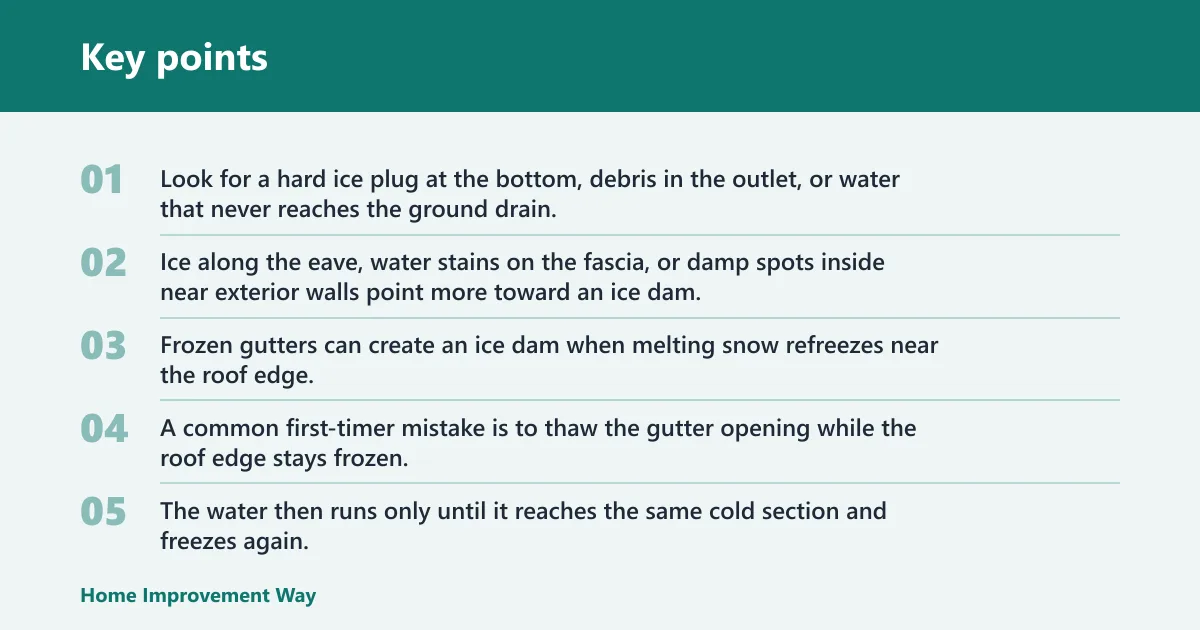
Look for a hard ice plug at the bottom, debris in the outlet, or water that never reaches the ground drain. Downspouts move meltwater away from the roofline, so a blocked lower end can freeze solid even if the top of the run looks only partly frozen.
Clear the outlet at ground level first. If a hose or poured water still cannot drain, the clog may be inside the vertical run, and a professional cleanout may be the safer next step.
Signs the roof edge is backing up because of an ice dam
Ice along the eave, water stains on the fascia, or damp spots inside near exterior walls point more toward an ice dam. Frozen gutters can create an ice dam when melting snow refreezes near the roof edge. That backup can push water under shingles and cause leaks or ceiling stains.
A common first-timer mistake is to thaw the gutter opening while the roof edge stays frozen. The water then runs only until it reaches the same cold section and freezes again. When that happens, the gutter is a symptom, not the root cause.
How do you stop gutters from freezing again?
Long-term prevention depends on the cause. Clean gutters, keep the downspout outlet open, and check gutter slope so water drains instead of sitting in place. If freeze cycles repeat at the roof edge, attic insulation and ventilation deserve attention because heat escaping through the roof can keep melting snow that later refreezes.
- Clear debris before winter. Remove leaves, seed pods, and packed sludge from the troughs and outlets. Clogged gutters are a major reason ice forms in the first place.
- Verify gutter slope. Make sure the run drains toward the outlet instead of holding standing water. Proper gutter slope helps water drain instead of freezing in place.
- Keep the outlet open. Check the downspout at ground level after storms and during thaws. If the lower end stays open, meltwater has a path away from the roofline.
- Reduce roof heat loss. Add attic insulation where inspection shows thin coverage, and confirm ventilation is not blocked. Adding attic insulation can reduce heat escaping through the roof, which helps limit refreezing at the edge.
- Use heat cable only where needed. One quick thaw method is to use a heat cable, especially on a problem section that repeatedly refreezes. It is a helper, not a cure for poor drainage or attic heat loss.
Heat cables, gutter guards, and insulation can help, but they solve different problems. Gutter guards reduce debris-related clogs, while insulation and ventilation address roof-edge refreezing. None of them can fix a loose bracket or a blocked downspout by themselves.
Common mistakes
Many winter gutter problems get worse because the wrong fix is used on the wrong cause. These are the failures to avoid.
- Chipping ice with tools. Sharp tools or hammers should not be used to break gutter ice. They can dent the metal, crack shingles, or loosen fasteners.
- Using open flame or unsafe heat. LeafCo says a blow dryer or other heat source can be a fire hazard. Use a heat cable or warm water instead.
- Pouring salt directly. Salt can rust metal and damage gutters, and it can stain nearby roofing material.
- Ignoring a frozen outlet. If the downspout base stays blocked, the thaw may fail and refreeze almost immediately.
- Assuming the trough is the whole issue. Ice backup near the eave can be an ice dam, which needs a different fix than a simple gutter thaw.
Say your gutter thaws for 10 minutes after a warm-water pour, then freezes again before nightfall. That pattern usually points to a downstream blockage or roof-edge heat loss, not a one-time ice plug in the trough.
If that did not work, move to the next level: clear the ground-level downspout opening, then inspect for ice at the roof edge. If the gutter is hanging low, has separated at the fascia, or the ice spans a long run, stop and schedule professional thawing. A steam system is the more complete tool for clearing gutter ice when DIY methods are not enough.
Frequently asked questions
How to thaw a gutter downspout
Start at the lower end, where blockages most often stop meltwater. Remove visible ice or debris at ground level, then apply warm water from the top if conditions allow. If the pipe stays frozen solid, a longer blockage inside the downspout may need professional clearing or a steam system.
Sponsored / affiliate links. As an Amazon Associate I earn from qualifying purchases. I may earn additional commission from eligible campaigns.