How to Remove an Ice Dam Safely
Use a roof rake from the ground, then place calcium chloride in a sock on the dam. If water is entering the home, stop and call a roofer or water-damage contractor. Bad removal can tear shingles, make leaks worse, and soak insulation or drywall. This guide explains the safest DIY steps, when to stop, and how to choose a pro method.
What an ice dam



An ice dam forms when snow melts on the roof and refreezes before it leaves the roof edge. Warm roof sections keep feeding meltwater downhill, while the cold eave area traps it. That backup pushes water under shingles and into the home. (Familyhandyman)
The same freeze-thaw cycle can also load gutters and downspouts with ice. When that happens, the gutter path stops working and the meltwater has fewer places to go.
What you’ll need
- Roof rake with a telescoping handle and a protective buffer or bumpers
- Calcium chloride socks or fabric sleeves
- Bucket for carrying socks or collecting slush
- Gloves
- Eye protection
- Ladder only if you can work from the ground or a safe lower edge
- Short-handled brush for clearing reachable gutter debris, if the gutters are intact
Ice dam triage checklist
Use roof access, dam thickness, active leaking, and gutter condition to choose the least risky fix. The best move is the one that opens a drainage path without adding fall risk or tearing the roof system apart.
| Roof access | Dam thickness | Active leaking | Gutter condition | Best next step |
|---|---|---|---|---|
| Safe ground access | Thin or early | No | Intact | Roof rake from the ground |
| Safe ground access | Moderate | No | Intact | Roof rake, then calcium chloride socks |
| Any access problem | Thick or widespread | Yes | Loose, bent, or pulling away | Call for low-pressure steam removal |
| Steep or high roof | Any | Any | Any | Do not proceed; call a pro |
Do not proceed if any of these are true
- Do not proceed if the roof is steep enough that footing is uncertain.
- Water is already entering the home.
- Gutters are torn loose, bent, or visibly sagging.
- Ice is thick enough to bridge large sections of the roof edge and gutter.
Start from the ground and open a drainage path, not a full breakup of the ice. Roof raking is the safest first step because it removes snow above the dam before meltwater keeps feeding the blockage. Calcium chloride can then help create channels through the ice.
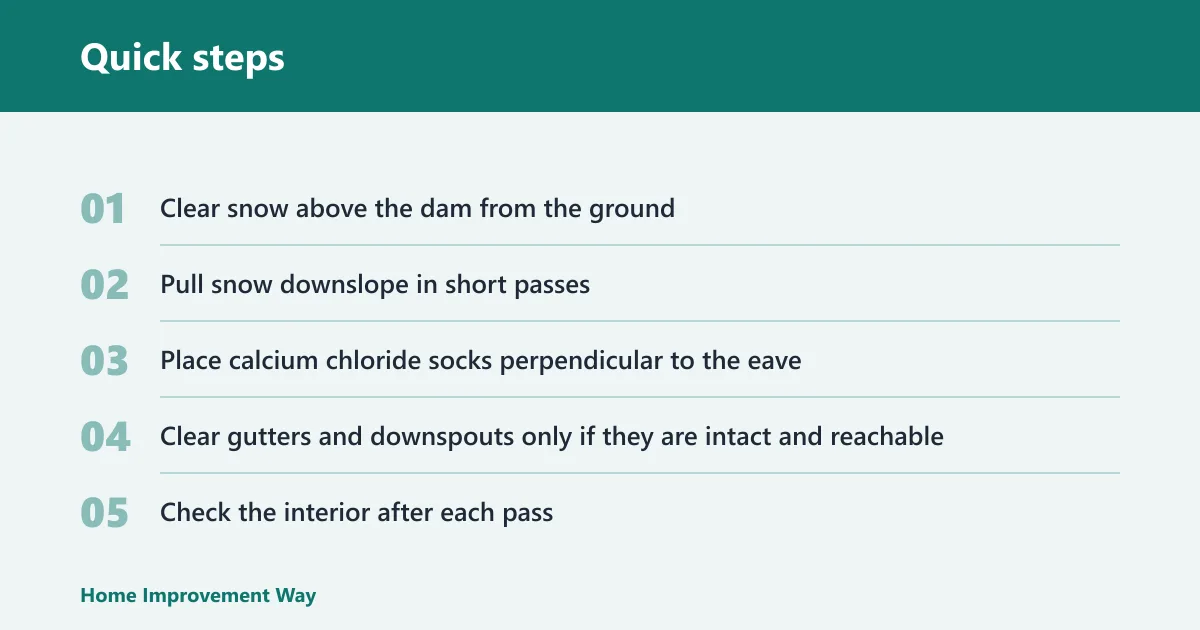
- Clear snow above the dam from the ground. Use the roof rake from the ground, not from an icy roof. A telescoping handle helps you reach the lower roof edge, and bumpers reduce the chance of shingle damage.
- Pull snow downslope in short passes. Clear the lower 3–4 feet of roof above the eaves first. That limits new meltwater from reaching the same cold edge.
- Place calcium chloride socks perpendicular to the eave. Fill fabric sleeves or socks with calcium chloride pellets and lay them across the dam. The goal is to open melt channels, not to remove every bit of ice.
- Clear gutters and downspouts only if they are intact and reachable. Remove loose debris and slush so water can drain. Stop if the gutter is pulling away, bending, or freezing solid in the downspout.
- Check the interior after each pass. If staining grows or dripping starts, stop and move to professional steam removal.
Calcium chloride is often preferred over rock salt for roof use, but it still has limits. It can open a path through the dam, and it can also be corrosive to metal if left in place too long. It is a temporary channel-opening tactic, not a full removal method.
Say your roof has a shallow 4-foot eave section with no active leak and gutters that still hang straight. A roof rake plus a couple of calcium chloride socks may buy drainage until the weather changes. Suppose the same house now shows water at a ceiling stain; the DIY threshold is crossed, and steam removal becomes the safer choice.
Can I remove an ice dam myself?
Yes, but only when you can stay on the ground, the dam is still limited, and the gutters are intact. DIY works best for early or moderate buildup, especially when the main goal is to relieve trapped water before it reaches the house.
Roof pitch changes the risk. Steeper roofs raise the chance of a slip, and high roofs push the job toward pro service even if the dam looks manageable from the yard. Ice on the edge is not the place to test footing.
Visible interior leaks are a different category. Once water is already inside, the safest move is to stop the leak at the roof with steam and then dry the affected materials.
When should you call a pro?
Call a pro when the dam is stubborn, widespread, or paired with active leaking. Low-pressure steam removal is commonly used as a full-removal method because it can melt ice without blunt-force damage. It is also the preferred choice when the roof edge, gutters, or interior finishes are already at risk.
Active water entering the home
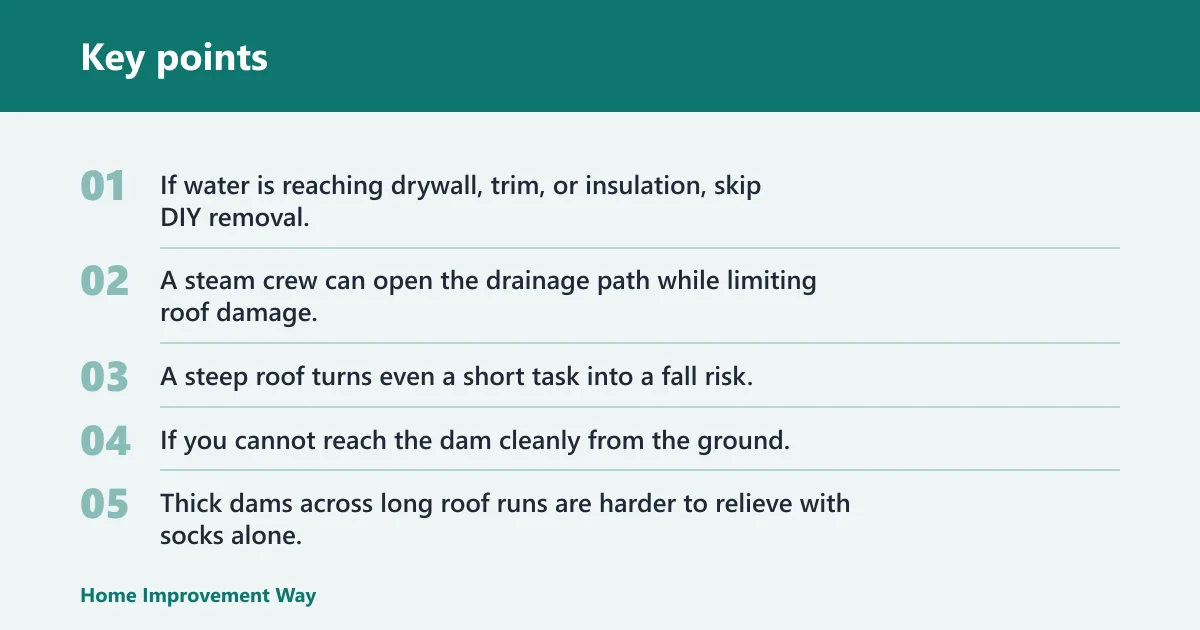
If water is reaching drywall, trim, or insulation, skip DIY removal. A steam crew can open the drainage path while limiting roof damage, then you can address drying and repairs after the leak is controlled.
Steep or high roofs
A steep roof turns even a short task into a fall risk. If you cannot reach the dam cleanly from the ground, or the access angle forces awkward positioning, the job belongs with a pro.
Heavy, stubborn, or widespread ice
Thick dams across long roof runs are harder to relieve with socks alone. If the ice is broad enough that one section keeps feeding another, steam is the cleaner break.
Loose, bent, or damaged gutters
Ice weight can pull gutters loose or bend them. Once that happens, DIY clearing can make the failure worse. Damaged gutters and downspouts need repair before the next freeze, and a pro can tell whether they should be replaced.
Common mistakes
The biggest errors are the ones that turn a water problem into a roof repair. Keep the work gentle, ground-based, and limited to drainage relief.
- Chipping, hammering, or picking at ice: this can crack shingles and drive water into the roof layers.
- Using a pressure washer or open flame: both can damage roofing materials and make runoff worse.
- Using rock salt on shingles: rock salt can damage shingles, landscaping, and concrete as it runs off the roof.
- Leaving calcium chloride in contact with metal too long: remove it after the melt path is working so corrosion risk stays lower.
- Trying to save loose gutters with force: a gutter that is already failing can tear free under added load.
How do you keep ice dams from returning?
Recurring dams usually point to a roof heat-loss problem, not a bad luck problem. The long-term fix is better attic insulation and ventilation, which reduces the roof warmth that starts the melt-refreeze cycle at the eaves.
Roof-safe heat cable is a prevention tool, not a removal tool. It is often installed along the eaves and into gutters or downspouts, sometimes in a zigzag pattern, and it needs outdoor power access. Use it for next season, not for an active dam.
Keep gutters and downspouts clear before freeze-up so meltwater has a path out. That simple step matters more when the home has a known history of repeated dams.
Frequently asked questions
Can I remove an ice dam myself: yes, if you can do?
Yes, if you can do the work from the ground and the dam is still limited to the eave area. DIY is a bad fit when the roof is steep, the ice is thick and widespread, or there is already a ceiling stain or drip inside the house.
What should I never do when removing an ice dam?
Do not climb onto an icy roof, chip at the ice with hand tools, use a pressure washer, or spread rock salt on shingles. Those moves can damage the roof surface, tear gutters loose, and send meltwater into places it should not go.
When should I call a professional for ice dam removal?
Call a professional as soon as water is entering the home, the roof is steep or high, or the dam is large enough that roof raking only helps a little. Low-pressure steam is the safest full-removal method when the roof system is already stressed.
Sponsored / affiliate links. As an Amazon Associate I earn from qualifying purchases. I may earn additional commission from eligible campaigns.
 Extendable Roof Snow Rake for Snow Removal, Telescopic Handle Up to 236 Inch Reach, Reinforced 3-Point Connection, Thickened Hardware, Anti-Slip Lock Grip, Snow Remover for Roof
 197 Inch Extendable Snow Rake for Roofs, Lightweight Aluminum Snow Removal Tool with Anti-Slip Grip and Large Shovel Head, Perfect for Clearing Heavy Snow from House