Calcium Chloride vs Rock Salt vs Magnesium Chloride for Ice
Climate context: This comparison is written for common homeowner winter conditions in the upper Midwest, Northeast, and other freeze-thaw regions where shaded walks, north-facing steps, and overnight refreeze can push surfaces colder than the daytime forecast suggests. For colder areas, use the surface temperature you actually see on the driveway or sidewalk, not the warmest reading from the day. For concrete-specific care, see deicing concrete safely; for a step-by-step winter routine, see winter walkway maintenance; and for activation help, see brine/pre-wetting.
Rock salt is commonly reported to work to around 15°F, magnesium chloride to around 5°F, and calcium chloride to around -25°F. Those ranges align with DOT and university-extension guidance for the chloride deicers most homeowners use, though exact limits vary by formulation and moisture conditions (University of Minnesota Extension; Michigan State University Extension; state DOT winter maintenance guides). Match the product to the coldest temperature your surface reaches. The wrong choice leaves ice slick, drives up cost, and can damage concrete, plants, and metal with repeated use. This guide compares temperature limits, surface fit, and the failure points that matter on walkways, steps, and driveways.
Ice melt comparison at a glance
| Decision factor | Rock salt | Calcium chloride | Magnesium chloride | Winner |
|---|---|---|---|---|
| Working temperature | Best around 15°F to 32°F; quits below 15°F | Works down to about -20°F to -25°F | Works to about -13°F | Calcium chloride |
| Speed | Slower; needs moisture to start working | Fastest-acting and powerful in extreme cold | Middle-ground speed | Calcium chloride |
| Cost | Cheapest and widely available | Calcium chloride is often reported to cost about 2 to 4 times as much as rock salt. | Middle price range | Rock salt |
| Surface and runoff risk | Harder on plants and concrete | Can still damage surfaces if overused; can sting paws | Gentler on concrete and vegetation than rock salt | Magnesium chloride |
What matters most: working temperature, not label hype
The lower-temperature cutoff matters more than broad claims on the bag. A product that looks fine on paper can fail first on a shaded step, a north-facing walk, or a driveway that cools below the bag’s practical range. That is why the coldest temperature on your surface should drive the choice, not the marketing copy.
Rock salt is sodium chloride. Calcium chloride and magnesium chloride are chloride salts too, but they do not behave the same once the temperature drops and the ice is already packed down. More product is not always better. If the deicer is outside its useful range, extra granules mostly add residue and runoff. For pre-treatment and faster activation, see brine/pre-wetting.
Which ice melt works at your temperature?

The simplest rule is to match the product to the coldest conditions your walkway or driveway actually sees. Rock salt fits mild winter weather, magnesium chloride gives you more margin in colder conditions, and calcium chloride is the choice for the coldest stretch. The lower cutoff matters more than the label claim.
Above 25°F: where rock salt usually fits
Above 25°F, rock salt is usually the cleanest budget choice for normal walkways and driveways. It is cheap, widely available, and effective in the range most homeowners see during a typical thaw. It still needs moisture to start working, so very dry pavement can slow it down (University extension guidance on sodium chloride activation and application).
Use it where you want a low-cost melt for routine traffic and you are not trying to fight deep cold or a long overnight refreeze. If the surface stays wet from slush or sun, rock salt is often enough. On a typical suburban driveway apron that catches afternoon sun, it can be the practical pick; on a shaded front step that refreezes before school pickup, it is more likely to underperform.
15°F to 25°F: when magnesium chloride or calcium chloride wins
In the teens and low 20s, rock salt is the first option to fail. That is the range where magnesium chloride or calcium chloride starts making more sense, especially on shaded steps and north-facing sidewalks. Magnesium chloride is the middle-ground choice; calcium chloride is the faster, colder-weather choice (University of Minnesota Extension; state DOT winter maintenance guidance).
If the refreeze window is short and the surface gets foot traffic, calcium chloride has the edge. If you want a gentler option for concrete or nearby planting beds, magnesium chloride is usually the better compromise.
Below 15°F: why calcium chloride is the main choice
Below 15°F, calcium chloride is the main choice because it keeps working when rock salt stops and magnesium chloride is nearing its limit. It also acts fastest, and its exothermic reaction helps it begin melting in colder conditions. That is why it is the strongest option for brutal cold (DOT winter maintenance manuals and university extension comparisons).
This is the point where cost and control matter most. Calcium chloride is usually the most expensive option, but paying for a product that works is better than spreading a cheaper one that sits on top of the ice. On a south-facing sidewalk in a January cold snap, that difference can be the gap between usable traction and a still-glassy surface at sunrise.
Why the product label still matters
Bag labels can list a wide range, but the exact cutoff varies by product and formulation. Two products with the same ingredient can behave differently because of pellet size, blend ratio, and how much moisture is already present. Always read the range on the bag before you buy.
If you already own a bag, check the working range first, then check the surface you plan to treat. A product that is fine for a driveway may be the wrong pick for steps, sealed concrete, or a path that runs beside shrubs. For surface-specific cautions, see deicing concrete safely.
Which is better for ice: calcium chloride, rock salt, or magnesium chloride?

There is no single best ice melt for every job. Calcium chloride is the fastest and strongest in cold weather, rock salt is the cheapest and best for mild conditions, and magnesium chloride sits between them with better surface and plant behavior than rock salt. The best pick depends on temperature, surface, and risk.
| Factor | Rock salt | Calcium chloride | Magnesium chloride | Winner |
|---|---|---|---|---|
| Cold-weather reliability | Fails first in the teens | Best below 15°F | Better than rock salt, not as cold-tolerant as calcium chloride | Calcium chloride |
| Budget | Lowest cost | Usually 2 to 4 times the price of rock salt | Middle price range | Rock salt |
| Surface tolerance | Harder on plants and concrete | Can be harsh if overused | Gentler than rock salt | Magnesium chloride |
Fastest melting: calcium chloride
Calcium chloride wins on speed because it is fast-acting and powerful in extreme cold. It also gives off heat as it dissolves, which helps it get started sooner than rock salt. That matters on a step that needs to clear now, not after the sun comes out (DOT and university-extension winter maintenance guidance).
Speed is useful on short, high-traffic paths and on surfaces that refreeze overnight. It is less useful if you are treating a large driveway at a moderate temperature where a slower, cheaper product would do the job.
Best budget pick: rock salt
Rock salt is sodium chloride, and it is the cheapest option. It is also widely available, which makes it the default choice for many homeowners. Its weakness is temperature. Once the surface drops below about 15°F, it stops being the right tool.
That price advantage matters most for broad, low-risk surfaces where you can tolerate slower action and modest performance. It is not the best choice for a frozen front step that needs to clear before morning traffic.
Middle-ground performance: magnesium chloride
Magnesium chloride is the compromise product. It reaches colder temperatures than rock salt and is generally gentler on concrete and vegetation, but it does not match calcium chloride in deep cold. That makes it a strong fit for many households that want better surface behavior without paying top dollar (extension guidance on chloride deicers and surface effects).
It is especially useful when you want one bag that handles most winter events but does not feel as harsh as rock salt on nearby planting beds or on a newer slab.
When a blend makes more sense than a single ingredient
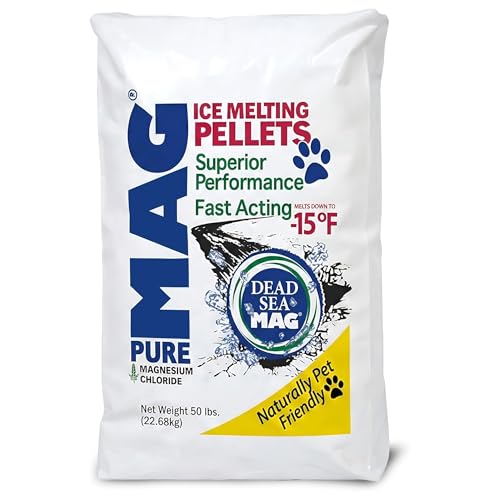
A blend makes sense when you need a balance of cost, speed, and surface safety. Many pet-friendlier blends rely on magnesium chloride or CMA, while some general-purpose blends mix ingredients to widen the temperature range. That can be a better buy than betting on one ingredient alone.
Choose a blend when the same path faces different conditions: a shaded landing, a warmer driveway apron, and planting beds along the edge. A single ingredient is cleaner when the temperature and surface risk are consistent. See also pet-safe ice melt for blend considerations around paws and cleanup.


What each deicer does to concrete, plants, and pets
All chloride salts can affect surfaces and runoff. New concrete is especially vulnerable, chloride salts can contribute to scaling and spalling, and pets can get irritated paws. The right choice depends on how close the treated area is to concrete that is still curing, to beds planted nearby, and to paws that will walk through residue (ACI guidance on deicer exposure and concrete durability; extension publications on runoff and vegetation).
New concrete and why it needs extra caution
New concrete is the surface that needs the most caution. Concrete less than one year old is particularly vulnerable to scaling, especially when chloride deicers enter the pores during freeze-thaw cycles. Chlorides can contribute to scaling and spalling, so even a “gentler” product deserves restraint on young slabs (ACI and extension guidance).
If you are dealing with a newer driveway, steps, or patio, reduce use and limit application to the smallest area that actually needs traction. For that kind of surface, magnesium chloride or a blended formula is usually a better starting point than straight rock salt. For more detail, see deicing concrete safely.
Pets and paws: irritation, stinging, and cleanup
Chloride salts can irritate paws, and calcium chloride can sting more than the others. That matters on pet-heavy paths, porch steps, and short runs where animals cross the same spot again and again. Pet-friendly blends often use magnesium chloride or CMA for that reason (extension guidance on pet exposure and deicer residue).
For households with dogs or kids, the safest rule is simple: choose the least aggressive product that still works at your temperature, and clear residue after the ice is gone. If the path is touched by bare paws or hands, overapplication is a bad trade. For more guidance, see pet-safe ice melt.
Vegetation and runoff: what chloride salts can do
Salt runoff can burn plants, and both sodium and chloride create environmental concerns. Rock salt is the bigger problem near foundation beds, lawn edges, and shrubs that catch meltwater. Magnesium chloride is generally gentler on vegetation than rock salt, but it is not harmless (university extension guidance on chloride injury to plants and runoff).
Suppose a 20-foot front walk runs beside azaleas and a strip of mulch. Rock salt may be the cheapest bag, but repeated runoff can push the wrong way into the bed. A magnesium chloride product or a lower application rate is the safer call there.
Why application rate matters as much as ingredient choice
More product is not always better. Overapplication increases runoff, leaves residue, and raises the odds of surface damage without making the ice melt faster in any useful way. The right rate is the smallest one that gets the surface moving (DOT winter maintenance application guidance).
Pre-wetting or brining can help here. It speeds activation and reduces bounce, which is especially useful for rock salt. That means less granule loss and a better chance of the product staying where you put it. See brine/pre-wetting for how that works on walkways and drives.
Decision matrix for temperature and surface risk
This matrix turns the choice into a practical rule. Start with the temperature band, then fold in the surface and the nearby risks. The best answer changes when the surface is new concrete, when pets cross the area, or when plant beds sit beside the path.
| Temperature band | Best deicer choice | Expected downside | Best use case |
|---|---|---|---|
| Above 25°F | Rock salt | Slower activation; harder on plants and concrete than magnesium chloride | Driveways and walks with routine traffic |
| 15°F to 25°F | Magnesium chloride or calcium chloride | Calcium chloride costs more and can sting paws; magnesium chloride is less aggressive but not the coldest-weather option | Shaded steps, morning refreeze, and low-20s conditions |
| Below 15°F | Calcium chloride | Highest cost and greater risk if overused | Sub-zero storms, icy steps, and hard refreeze windows |
| New concrete | Magnesium chloride or a carefully chosen blend | Still needs caution because chlorides can contribute to scaling and spalling | Slabs less than one year old |
| Pet-heavy paths | Magnesium chloride or pet-focused blend | Residue can still irritate paws if left behind | Short paths, porches, and entries used by dogs |
| Plant-adjacent areas | Magnesium chloride | Runoff still needs control; sodium and chloride can burn plants | Walks beside beds, shrubs, and lawn edges |
Avoid this when… the temperature is below the product’s practical range, the surface is new concrete, or the treated area drains into plant beds. That is when the cheapest bag can become the most expensive mistake.
Should you use a blend instead of one deicer type?
Use a blend when your conditions are mixed and one ingredient would either fail too early or feel too harsh for the surface. A blend can make sense for a front walk that sees pets, a driveway apron that stays a little warmer, and a set of steps that refreeze overnight. A single ingredient is cleaner when the job is simple.
When blends beat single-ingredient products
Blends are a good fit when you want one bag for more than one condition. They are useful for households that deal with borderline temperatures, nearby plants, and higher foot traffic. They can also be a reasonable choice when you want the product to work in a wider range without choosing the harshest option.
When a single ingredient is the cleaner choice
Choose a single ingredient when the use case is narrow. If the issue is a sub-zero driveway, calcium chloride is the direct answer. If the issue is a mild thaw on a large walk and cost matters most, rock salt is simpler and cheaper.
Blends can hide the real active ingredient if you do not read the bag closely. Check the label for sodium chloride, calcium chloride, magnesium chloride, or other ingredients before you assume the product will behave like a pure bag of one material.
How to read the bag for the actual active ingredients
Start with the working temperature range. Then check the active ingredient order and look for words that signal a blend rather than a single salt. If the bag does not clearly say what it is designed to do in cold weather, skip it and buy a product with a stated range.
That step matters because the same general category can perform very differently once the temperature drops. The bag should tell you more than the marketing line on the front panel.
How to apply chloride deicers without wasting product
Good application does as much as ingredient choice. Pre-wetting or brining can speed activation and reduce bounce, especially for rock salt. A thin, even application works better than a heavy scatter that ends up in the grass or on the garage floor (DOT maintenance guidance; university extension recommendations on spreading and pre-wetting).
- Clear loose snow first so the deicer reaches the ice.
- Use the smallest amount that matches the label and the temperature.
- Focus on shaded spots, steps, and refreeze zones before open pavement.
- Pre-wet or use a brined product when the label allows it.
- Sweep up leftovers after the ice is gone.
- Store the bag dry so the product does not clump or lose performance.
Why sweeping up leftovers matters
Leftover granules keep working after the ice is gone. That means more runoff, more residue, and more exposure for paws, plants, and the concrete itself. Sweeping after the event is one of the easiest ways to cut waste.
It also helps keep the next storm from starting with a contaminated surface. A clean, dry bag stored indoors will do more useful work than a damp one left open in the garage.
Choose rock salt if…
Choose rock salt if your temperatures stay above about 15°F, the surface is a standard driveway or walk, and cost matters most. It is the cheapest option and widely available, but it is the wrong tool for deep cold, newer concrete, or plant-heavy edges.
Choose calcium chloride if…
Choose calcium chloride if the ice needs to melt fast, the temperature drops below 15°F, or the area has a hard refreeze window. It is the strongest cold-weather option, but it costs more and deserves caution around new concrete, paws, and overapplication.
Choose magnesium chloride if…
Choose magnesium chloride if you want a middle-ground option for low-20s temperatures, pet-heavy paths, or areas near vegetation and newer concrete. It is not the cheapest and not the coldest-weather option, but it often gives the best balance of performance and surface tolerance.
Frequently asked questions
What temperature does rock salt stop working?
Rock salt is effective around 15°F to 32°F and quits working below 15°F. That lower cutoff matters more than broad label claims. If the surface sits in the teens or below, choose magnesium chloride or calcium chloride instead (University extension and DOT guidance).
Is calcium chloride faster than magnesium chloride for melting ice?
Yes. Calcium chloride is the fastest-acting option and is described as powerful in extreme cold. Magnesium chloride works well, but it is the middle-ground choice rather than the fastest one. Use calcium chloride when speed matters and the temperature is very low.
Which ice melt is safest for concrete and new concrete?
Magnesium chloride is generally gentler on concrete and vegetation than rock salt, so it is often the safer starting point for concrete. New concrete is still especially vulnerable, though. Chloride salts can contribute to scaling and spalling, so use any deicer carefully on slabs less than one year old (ACI guidance; extension guidance).
Is magnesium chloride better for pets and plants than rock salt?
Usually yes. Magnesium chloride is commonly used in pet-friendlier blends and is gentler on vegetation than rock salt. It is not harmless, though, and residue can still irritate paws or reach plant beds through runoff. Cleanup still matters.
Sponsored / affiliate links. As an Amazon Associate I earn from qualifying purchases. I may earn additional commission from eligible campaigns.