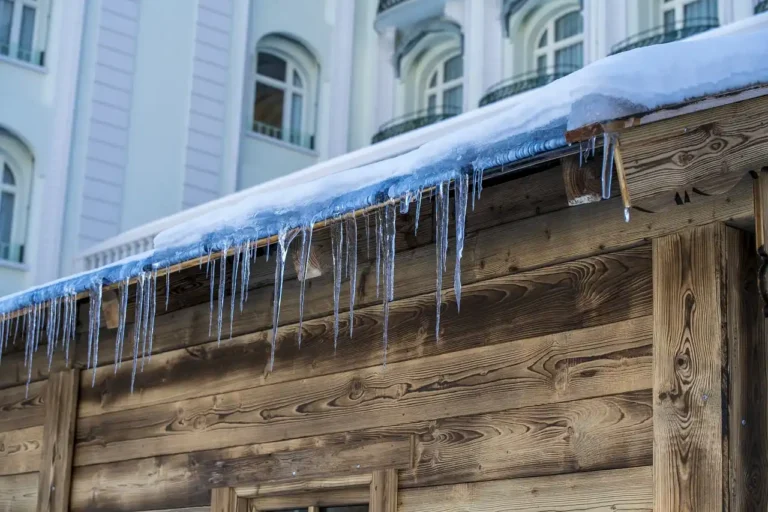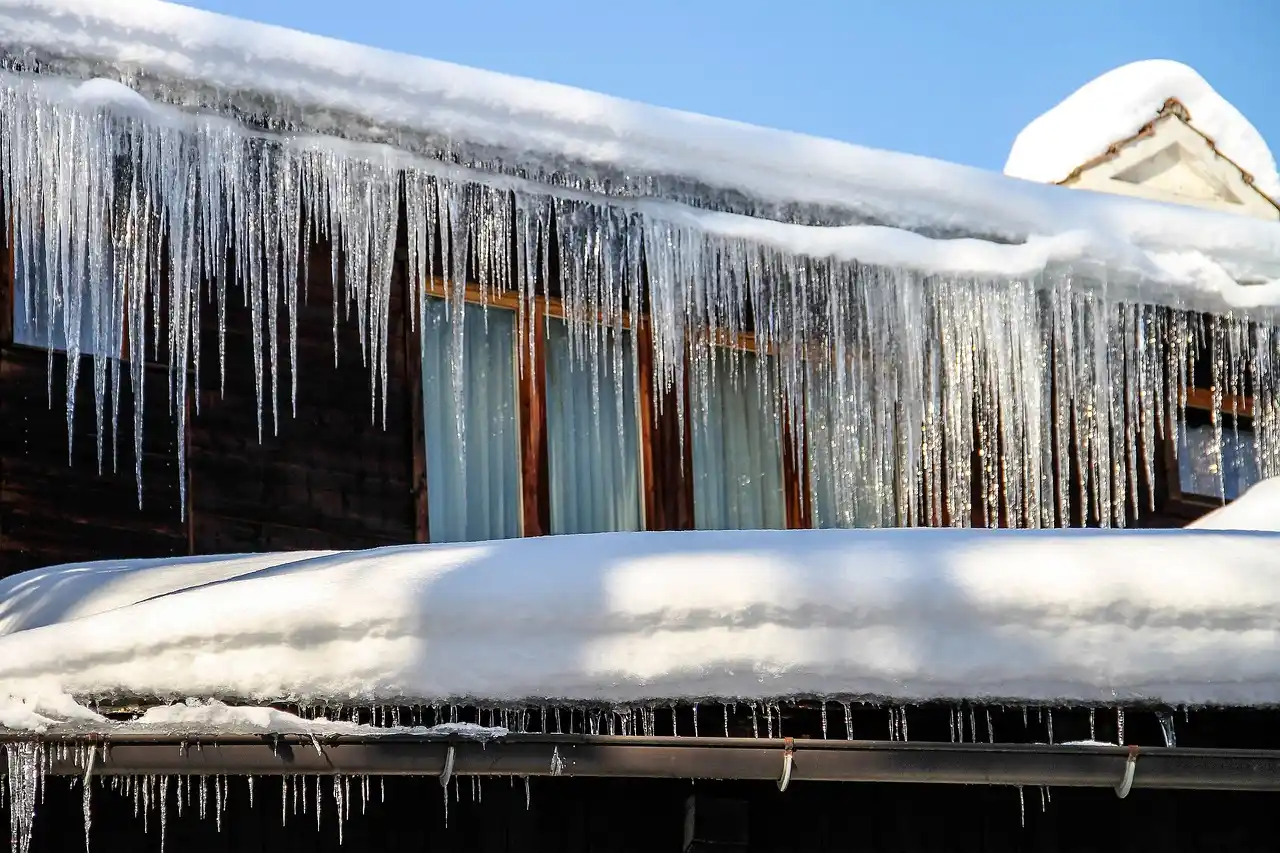
Why Do I Have Icicles Only on One Side of the House?
One-sided icicles can suggest that one roof plane is losing heat, getting warmer air from the attic, or draining differently than the rest of the house. Left alone, that imbalance can contribute to ice dams, shingle damage, leaks, and higher heating bills. This guide explains how to tell whether the cause is heat loss, ventilation, or gutter and drainage trouble.
What one-sided icicles usually mean
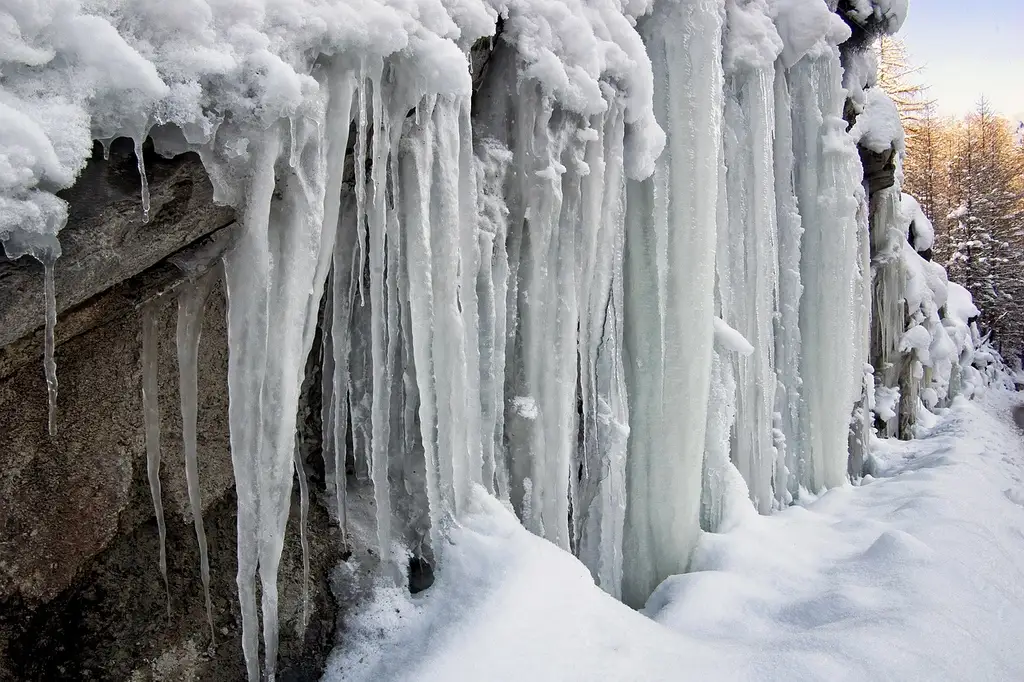


When icicles show up on only one side, that side is usually warmer, wetter, or slower to drain than the others. The pattern matters more than the icicles themselves, because it points to a localized roof-balance problem instead of a whole-house winter issue.
That uneven pattern can come from attic heat loss, blocked ventilation, sun exposure, or drainage trouble at one eave. It can also come from a single heat source in the attic, such as a bathroom fan leak, a recessed light, a chimney chase, or a warm duct run.
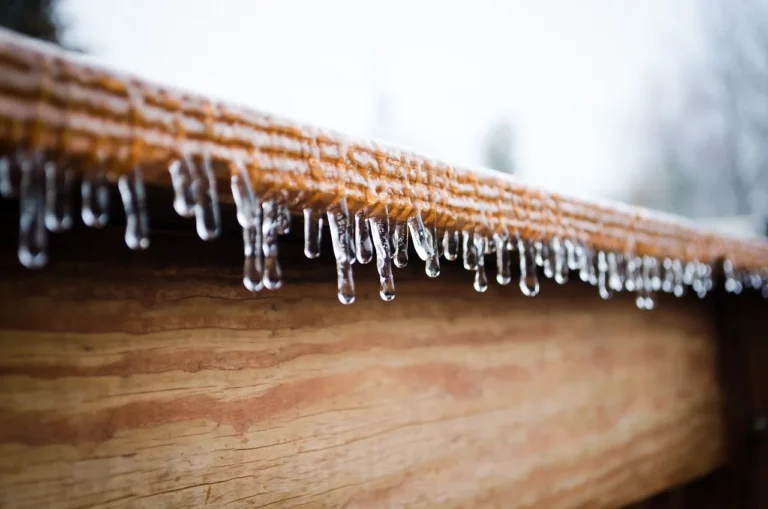
One-sided icicles also match a common ice-dam setup. Snow melts on the roof, the meltwater runs toward a colder edge, and then it refreezes at the eave. If the roof-edge ice grows, water can back up under shingles. The U.S. Department of Energy notes that ice dams are commonly caused by heat escaping into the attic and melting snow on the roof, with refreezing at the colder edge. See DOE Energy Saver: Ice Dams and NRCA: Ice Dams.
Why the pattern matters more than the icicles themselves
A house with symmetrical heat loss often shows similar melt patterns on multiple slopes. A house with one-sided icicles usually has one roof plane that behaves differently. That difference is your clue.
Look for the side that gets the most sun, the side above a bath or furnace chase, or the side where gutters clog first. Those clues often separate a roof-plane issue from a whole-attic problem.
Can one-sided icicles point to an ice dam?
Yes. One-sided icicles can be part of an ice dams problem when roof-edge meltwater refreezes at the eave. The bigger risk is not the hanging ice itself. It is meltwater backing up under shingles and reaching the roof deck or interior.
How ice dams form at the roof edge
Ice dams form when snow on the roof melts from below, then refreezes at the colder edge. Heat loss from the house often starts the melt. If the roof edge stays cold while the upper roof stays warmer, the meltwater can keep moving downhill and freeze at the perimeter. DOE Energy Saver and NRCA both describe this warm-roof/cold-eave pattern as the core mechanism behind ice dams.
That is why the upper roof can look mostly clear while the eave grows long icicles. It is also why the same side of the house may repeat the problem every winter.
Why backup under shingles is the bigger risk
Ice at the edge can hold water against the shingles and underlayment. If the backup continues, the water can enter the roof assembly and show up as stains, damp sheathing, or ceiling marks.
Ice and water shield at the roof edge can reduce leak risk, but it is a secondary defense. It does not fix the heat loss, airflow imbalance, or drainage cause that started the melt. Builders and roof industry guidance commonly treat the membrane as backup protection, not the primary solution.
One-sided icicle diagnostic matrix
Use this table to narrow the cause by roof side, attic clue, and ground-level clue. Start with the row that best matches what you see, then decide who should inspect first.
| Roof side affected | Likely cause | Attic clue | Ground-level clue | Urgency | Who to call first |
|---|---|---|---|---|---|
| South- or west-facing plane | Sun exposure warming one slope | No clear attic moisture pattern | Earlier melt on the sunny side after clear days | Monitor; inspect if it repeats | Roofer |
| One eave line under a vented soffit | Blocked soffit vent | Insulation packed against the intake, frost near the edge | Icicles along one continuous roof edge | Prompt | Roofer |
| Directly above a bath, hall, or closet | Attic air leak | Warm stain line, frost, or air movement near penetrations | Repeat icicles in the same spot | Prompt | Insulation contractor |
| Near a bath fan outlet | Bathroom fan leak or disconnected duct | Damp insulation, frost, or vented moisture in the wrong place | Localized ice and stains at one roof section | Prompt | Insulation contractor |
| At the eave on a single slope | Missing or thin insulation at the edge | Insulation stops short of the exterior wall line | Icicles begin at one strip of roof edge | Prompt | Insulation contractor |
| Along a gutter run | Clogged gutter or downspout | No attic clue, or only minor warming above | Ice sitting in the gutter, overflow marks, or downspout blockage | Prompt | Gutter pro |
| Above a mechanical chase | Warm duct run | Warm duct or loose insulation around ducts | Icicles limited to one bay or roof section | Prompt | Insulation contractor |
| Below a shaded tree line or dormer shadow | Partial roof shading | No major attic defect visible | Shaded side keeps snow and ice longer than the rest | Monitor; inspect if damage repeats | Roofer |
How to read the matrix
Start with the ground-level clue, then check the attic if it is safe to do so. If the same roof section keeps icing up, the problem is probably tied to that plane, that eave, or the bay below it.
Say your north roof plane has long icicles over one 12-foot section, while the rest of the house stays clear. If the attic above that section has thin insulation and frost around a bath fan duct, the likely issue is local heat and moisture leakage, not the entire roof.
Is your attic sending heat to one roof plane?
Yes, and that is one of the most common reasons for icicles on only one side. Thin insulation, air leaks, or a heat source in one bay can warm the roof deck above that area and create a localized melt pattern. The DOE recommends sealing attic air leaks and restoring insulation coverage to reduce this kind of heat loss.
Insulation gaps and air leaks to check first
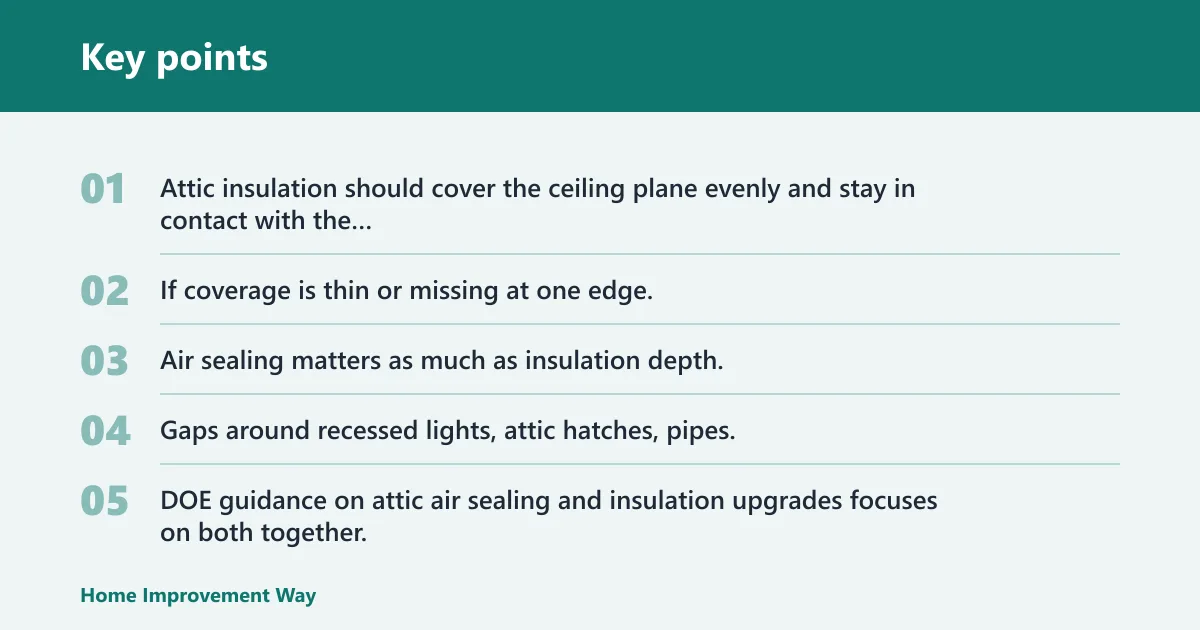
Attic insulation should cover the ceiling plane evenly and stay in contact with the areas around hatches, lights, plumbing penetrations, and top plates. If coverage is thin or missing at one edge, heat can rise into that section and warm the roof above it.
Air sealing matters as much as insulation depth. Gaps around recessed lights, attic hatches, pipes, and wiring can move warm indoor air into the attic, where it warms the roof deck unevenly. DOE guidance on attic air sealing and insulation upgrades focuses on both together, not one without the other.
Bathroom fans, recessed lights, chimneys, and ducts
Bathroom fan ducts should move moist air outdoors, not into the attic. A loose or disconnected duct can dump warm, wet air into one area and may contribute to frost, damp insulation, and uneven snow melt.
Recessed lights, chimneys, and warm supply ducts can do the same thing if they are not properly isolated. Any one of those can warm a single roof section enough to change the icicle pattern below it.
Why ventilation problems can stay on one side
Roof ventilation works best when intake and exhaust stay balanced. If soffit vents are blocked on one side, or if one attic bay gets poor airflow, that roof plane can run warmer than the rest and grow more icicles. DOE and extension guidance both stress that ventilation only works when intake is not obstructed and exhaust has a clear path.
Blocked soffit vents and intake imbalance
Soffit vents are often the intake side of the attic ventilation system. Snow, debris, or insulation pushed against them can cut off airflow at one eave while the other side may still vent normally.
That one-sided blockage can warm the roof deck above the blocked side. The result is often a narrow band of melt and refreeze at the edge, not a uniform problem across the house.
When roof planes and attic bays behave differently
Different roof planes do not heat the same way. A split roof, a garage roof meeting a house roof, or a roof with multiple attic bays can trap warm air in one section while the other side stays cold.
Valleys and intersections can also steer meltwater into one area. That is why the icicles may cluster under one roof junction instead of along the whole perimeter.
Could gutters or roof drainage be the culprit?
Yes. Gutters and downspouts can turn a small melt problem into a visible one-sided icicle line. If water cannot drain, it stays at the eave longer, freezes there, and feeds larger icicles.
Clogs, downspouts, and water held at the eave
Leaves, needles, and debris can block the gutter trough or the downspout outlet. When that happens, meltwater pools at the edge instead of draining away, and the ice in the gutter can become part of the problem.
If the downspout is blocked, the gutter may fill farther than usual. That can make one side look much worse than the rest even when the roof itself is only mildly warm. The FEMA home maintenance guidance and extension publications on winter roof drainage both emphasize keeping gutters and downspouts clear so meltwater can exit quickly. See your local extension office guidance on winter roof drainage and gutter and downspout problem issues.
How valleys and intersections can steer meltwater
A valley or roof intersection can collect more runoff than a straight eave. If that area also has a gutter clog, the ice pattern may look very concentrated on one side of the house.
Picture a 20-foot roof plane that drains into a valley above a single gutter run. If the gutter is partially blocked, the meltwater keeps finding the same exit point and freezes there first.
When roof orientation and shading matter
Sun exposure can make one roof plane melt faster than another. That can create one-sided icicles even when the attic is in decent shape, especially after sunny days followed by a cold night.
Sun-exposed roof planes versus shaded planes
South- and west-facing slopes often warm sooner in winter sun. Shaded slopes may stay colder and keep snow in place, while the sunny side melts and refreezes at the edge.
That difference does not rule out heat loss or ventilation trouble. It only means the sun may be amplifying a smaller problem on one roof plane.
Why only one section may melt and refreeze
One section can get more sun because of a dormer, chimney, tree line, or nearby building. Even a partial shadow pattern can make one side behave differently enough to form icicles in one spot only.
That is why a one-sided pattern should be read like a clue, not a verdict. The cause may be sun alone, but it is often sun plus a local roof or attic problem.
How to tell if it is insulation, ventilation, or gutters
Use the pattern, the attic clue, and the repeat behavior together. The key distinction is whether the problem starts in the attic, at the intake/exhaust path, or at the eave drainage path. Soffit vents, roof planes, and heat sources in the attic are the main clues; ice-and-water-shield helps with leak resistance but does not change the root cause.
| Most likely cause | Distinguishing clues | Repeat-pattern indicator | Urgency | First-call trade |
|---|---|---|---|---|
| Insulation or air sealing | Thin attic coverage, gaps at penetrations, warm spots above the affected room, frost near leaks | Same roof section melts first every cold snap | Prompt | Insulation contractor |
| Ventilation imbalance | Blocked soffit vents, uneven intake, poor airflow in one bay, vent path blocked by insulation | One eave line keeps building ice while adjacent slopes look normal | Prompt | Roofer |
| Gutters or drainage | Overflow, backed-up downspouts, ice sitting in the trough, water staining below the eave | Ice forms at the same gutter section after thaw-and-freeze cycles | Prompt | Gutter pro |
| Sun/shading | Sunny side clears earlier, shaded side stays snowy, no strong attic moisture clue | Melt follows clear-sky days or afternoon sun | Monitor | Roofer |
Who to call first for the fix
Choose the first trade based on the clue that fits best. A roofer is usually the first call for roof-plane, vent, shingle, or drainage questions. An insulation contractor is the better first call for attic air leaks, thin coverage, or warm duct and fan issues. A gutter pro fits clogs and downspout problems.
Signs the issue needs prompt inspection
Call sooner if you see interior stains, damp insulation, attic frost, peeling paint near the ceiling line, or the same eave icing up every winter. Those signs suggest repeat water movement, not a one-time weather event.
If the roof edge looks loaded with hanging ice, stay off the roof and avoid knocking icicles loose. Falling ice can injure people below and can also damage gutters, siding, and windows. Extension safety guidance commonly recommends keeping clear of roof edges and never working directly under unstable icicles.
Simple inspection path
- Look from the ground for the exact roof side, eave line, and gutter section involved.
- Check whether the problem matches sun exposure, shade, or a single valley.
- Inspect the attic safely for insulation gaps, frost, damp spots, and blocked soffit intake.
- Check bath fan ducts, recessed lights, chimneys, and any warm duct run near the problem area.
- Match the clue to the right trade and schedule an inspection before the next thaw-and-freeze cycle.
Quick checklist
- Note which roof plane has the icicles.
- Check whether that side is sunny, shaded, or under a valley.
- Look for blocked soffit vents on the affected side.
- Inspect attic insulation for thin coverage at the eave.
- Look for air leaks around hatches, lights, pipes, and wires.
- Confirm bathroom fans vent outdoors, not into the attic.
- Check the gutter and downspout for clogs or overflow.
- Watch for repeated staining, frost, or damp insulation.
Frequently asked questions
Why do I have icicles only on one side of the house?
One-sided icicles usually mean one roof plane is warmer, wetter, or slower to drain than the rest of the roof. The cause is often localized attic heat loss, a blocked soffit vent, a warm duct or fan leak, sun exposure, or a gutter and downspout problem on that side.
What does it mean when icicles form on one side of my roof?
It usually means that side of the roof is melting and refreezing differently from the others. That difference can point to insulation gaps, air leaks, ventilation imbalance, or a drainage issue at the eave. The side and the location of the icicles matter more than their length.
Can one-sided icicles mean an ice dam problem?
Yes. They can be part of an ice dam pattern when roof-edge meltwater refreezes and builds up at the eave. The risk is water backing up under shingles, not the icicles alone. Repeating ice on the same roof plane deserves a closer look.
Is a warm attic causing icicles on one side of the house?
It can. Warm attic air can escape through thin insulation, air leaks, a loose bath fan duct, recessed lights, or a warm chimney or duct chase. If only one roof plane is affected, the leak or heat source is often near that side of the attic.
Can clogged gutters cause icicles on one side of the roof?
Yes. Clogged gutters and blocked downspouts can hold meltwater at the eave, where it freezes into icicles. If the rest of the roof looks normal, a drainage blockage may be a bigger clue than roof heat loss. Check the gutter run and outlet on the affected side.
Should I knock icicles off my house?
Do not treat that as a routine fix. Icicles can fall without warning, and roof-edge removal can damage gutters, shingles, or siding. Keep people clear of the area and focus on the cause. If the ice is large or recurring, have the roof and attic inspected.
Sponsored / affiliate links. As an Amazon Associate I earn from qualifying purchases. I may earn additional commission from eligible campaigns.