Signs of Ice Dam Damage Inside Your House
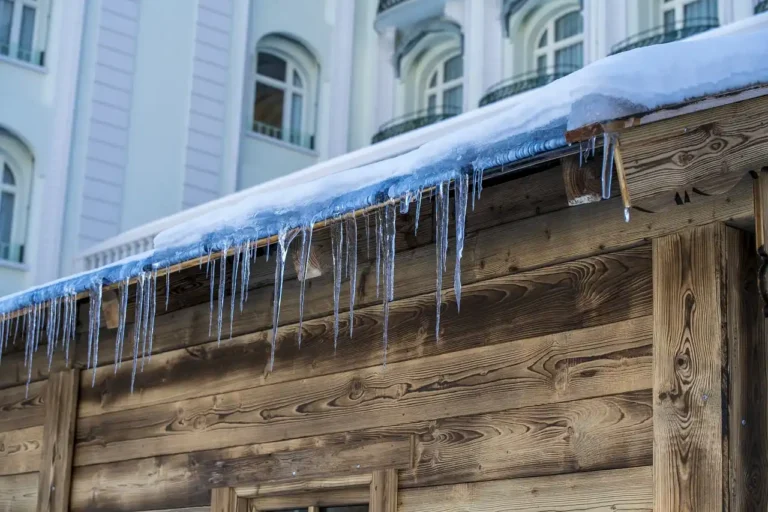
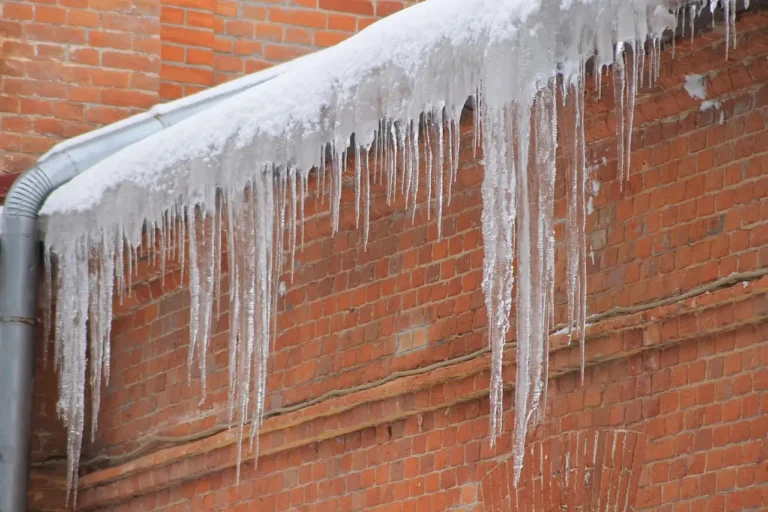
If you see stains, bubbling paint, damp insulation, or dripping after a thaw near exterior walls or ceilings, treat it as possible ice dam damage. Leaks that reach drywall need prompt action. Left alone, they can soak insulation, feed mold, warp trim, and drive repair costs far above a basic roof inspection. Ice dams form when heat escaping into the roof melts snow, the meltwater refreezes at the colder eaves, and new water backs up behind that ridge; university extension guidance, FEMA, and DOE all describe this roof-edge backup mechanism and the role of attic heat loss and ventilation. University of Minnesota Extension | FEMA | DOE Energy Saver This guide shows how to trace interior clues from attic to wall, separate ice dam signs from other winter moisture, and decide when to document, monitor, or call a roofer.
Where to spot ice dam stains indoors


The first signs usually appear where the roof meets the upper walls, not at the middle of the room. Check for yellowish or brown stains, peeling paint, damp drywall, or moisture at the ceiling-wall junction after snow or ice on the roof has started to melt. When water is driven in by an ice dam, it can show up away from the entry point because it travels along framing, drywall seams, and the underside of roof sheathing before it becomes visible indoors. Travelers Ice Dam Prevention and Cleanup
What interior clues point to roof-backed water
Water that enters at the eaves can travel inward under shingles, through sheathing, and into insulation before it appears inside. That is why a stain may appear a few feet from the roof edge or along an exterior wall instead of directly under the leak source.
- Stains near exterior walls are more suspicious than stains in the center of a room.
- A leak that appears after a thaw is more consistent with ice damming than with a random indoor drip.
- Water can follow framing and drywall seams, so the visible spot may not match the entry point.
What makes ice dam damage look different from other winter leaks
Ice dam leaks often involve several layers at once, such as the ceiling finish, the attic insulation, and the underside of the roof deck. Plumbing leaks usually track with bathrooms, supply lines, or fixtures. Bathroom vent problems often leave moisture near the fan or duct run, not at the roof eaves.
If the upstairs hallway ceiling has a yellow stain near the outside wall, and the attic insulation above that area feels clumped and dark, that pattern may fit roof-related water intrusion better than a pipe leak. Roof-edge water usually leaves a broader path than a single fixture leak.
Ceiling and wall stains
Water stains on ceilings and walls are a common warning sign, but the location matters more than the color alone. Yellowish or brown discoloration near exterior walls and ceiling-wall junctions often points to moisture entry from the roof, especially after freeze-thaw weather.
Yellow or brown marks near exterior walls
Start where the ceiling meets an outside wall. Ice dam water often shows up there first because meltwater backs up at the eaves, finds a gap, and moves inward along framing or drywall seams. Stains can appear as a soft ring, a crescent, or a darkened edge.
If the stain is dry, flat, and unchanged for months, it may be old damage. If it looks soft, darker at the edges, or still spreads after a thaw, treat it as active until proven otherwise.
- Look for a halo or crescent shape near the wall-ceiling line.
- Check whether the stain darkens after another melt event.
- Compare both sides of the room to see if the mark follows an exterior wall.
What stains at ceiling-wall junctions usually mean
Ceiling stains from ice dams can appear near the ceiling-wall junction because water often follows the path of least resistance. That path may run from the eaves, across the underside of the roof deck, and down the top plate before it reaches finished surfaces.
This is why a stain directly above a window or along an exterior corner matters. It may trace back to the roof edge even when the leak appears lower inside the room.
Fresh moisture versus old, dry discoloration
Fresh moisture usually looks darker, cooler, or slightly glossy. Old stains are often flat, brittle, and fully set into the paint or drywall paper. Bubbling paint, soft drywall, or a stain that grows after the next thaw points toward current movement of water, not just past damage.
- Check the stain after a thaw, not during a dry spell only.
- Press gently near the edge of the stain; soft drywall suggests active moisture.
- Look above and beside the stain for a matching path along the wall or ceiling seam.
- Compare it with nearby rooms to see whether the pattern follows an exterior wall.
How do ice dams show up in the attic?
In the attic, ice dam damage often shows up first in wet or compressed insulation, stained roof sheathing, or damp air near the eaves. Inspect the attic for those clues after an ice event, because hidden moisture there can keep feeding future leaks and heat loss. Wet insulation and damp sheathing are not minor finds; they can reduce thermal performance and create conditions that support mold growth and wood damage. Natural Resources Canada | EPA Mold Course
Wet or compressed insulation
Wet insulation is a major clue because it loses much of its insulating value after moisture exposure. Compressed insulation near the eaves can also mean meltwater has soaked it and then settled it flat, which leaves the roof edge colder and more likely to form another ice dam.
Dark staining, clumping, or a musty feel in the insulation near the outer walls should be treated as more than a cosmetic issue. It can mean water reached the attic and stayed there long enough to soak the material.
- Insulation that mats down near the eaves often signals repeated wetting.
- Clumps or dark streaks suggest water moved through the attic cavity.
- Wet insulation should be documented before anything is disturbed.
Staining on roof sheathing near the eaves
Inspectors often find attic sheathing stains along the eaves after ice damming. Check for discoloration, wet spots, or dark streaks on the underside of the roof deck, especially where the roof edge meets the attic space.
Visible daylight through roof boards in the attic indicates gaps or holes, but a stain alone can also matter. A stain near the eaves with dry areas farther up the roof deck usually points to water entering at the lower roof sections.
Musty odor and damp air in the attic
Musty odors in upper rooms or the attic are a warning sign of hidden roof damage. Damp air, wet wood, or a stale smell near the eaves suggests moisture has been trapped long enough to affect insulation, sheathing, or both.
Suppose the attic smells damp only near the front eaves after a thaw, while the center of the attic stays dry. That localized odor supports water entry at the roof edge more than a whole-house humidity problem.
What roof deck clues matter most?
The most useful roof deck clues are underside staining, wet spots along the lower roof sections, and damage concentrated at the eaves. Those signs help you trace the leak path without stepping onto the roof, which is unsafe when ice or snow is present. Homeowners should avoid climbing icy roofs because slips and falls can be severe, and insurers and safety agencies consistently warn against roof access in icy conditions. National Safety Council | Travelers winter roof safety
Underside staining on the sheathing
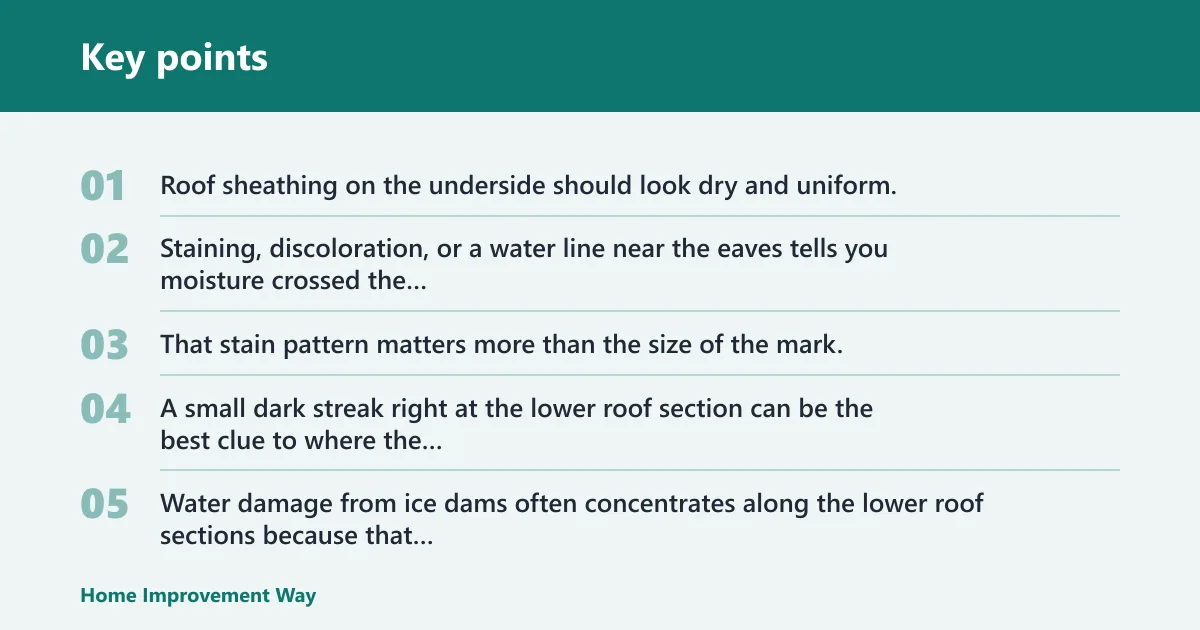
Roof sheathing on the underside should look dry and uniform. Staining, discoloration, or a water line near the eaves tells you moisture crossed the roof assembly and reached the deck from above or at the edge.
That stain pattern matters more than the size of the mark. A small dark streak right at the lower roof section can be the best clue to where the water first entered.
Wet spots along lower roof sections
Water damage from ice dams often concentrates along the lower roof sections because that is where meltwater backs up. The eaves are the key inspection zone. Lifted or missing shingles along roof edges are a known sign of damage, and sagging gutters filled with ice are a related warning sign visible from the ground.
Granules from asphalt shingles may appear in gutters after ice melts, which can support a roof-edge problem. That does not prove ice damming by itself, but it strengthens the case when paired with attic staining and ceiling marks.
Why the eaves are the key inspection zone
Ice dam water usually starts at the roof edge, then moves inward under shingles or into small openings. That is why lifted, cracked, or missing shingles at the eaves matter so much. Damage concentrated along the roof edge is more suspicious than scattered wear high on the roof.
| Location inspected | What you see | What it most likely means | Action |
|---|---|---|---|
| Ceilings | Yellowish or brown stain near a ceiling-wall junction | Possible roof-backed moisture entry, often from the eaves | Document |
| Upper walls | Stain or bubbling paint near an exterior wall | Water may have migrated inward from the roof edge | Document |
| Attic insulation | Wet, compressed, or darkened insulation near the eaves | Moisture reached the attic and may have reduced insulation performance | Call roofer |
| Roof deck underside | Discoloration or wet spots on sheathing along lower roof sections | Water intrusion above the attic, often near the roof edge | Call roofer |
| Paint and trim | Peeling paint, swollen trim, or soft drywall near the roofline | Finish damage from hidden moisture, possibly active | Document |
| Musty odor | Stale or damp smell in the attic or upper rooms | Hidden moisture may still be present in wood or insulation | Call emergency mitigation |
Yes. Peeling paint, swollen trim, bubbling tape, and soft drywall can point to moisture that has already moved past the roof edge and into the finish materials. These signs do not prove an ice dam on their own, but they often fit the same roof-to-interior path.
Peeling paint and swollen trim
Peeling soffit paint is one of the springtime signs inspectors look for, and peeling or bubbling paint near the roofline can result from hidden moisture. Swollen trim near the top of a wall also suggests water has been sitting where it should not.
Check whether the damage sits near an exterior wall or above a window. That placement makes a roof-edge leak more likely than a random interior humidity problem.
Soft drywall, bubbling tape, and minor finish failure
Soft drywall, bubbling tape, and small cracks near the ceiling can appear after moisture reaches the paper face of the board. These signs often follow a stain or a brief leak, then remain after the area dries. Old damage may still look warped, but active moisture usually feels softer and looks less stable.
When finish damage points to active moisture
If the paint is bubbling now, the drywall feels soft, or the stain keeps changing after a thaw, do not wait for it to dry on its own. That pattern means water may still be entering above the finish layer and can continue into insulation or framing.
Ice dam inspection checklist
Use a sequence like this: ceilings, upper walls, paint and trim, attic insulation, the underside of the roof sheathing, musty odor, and then exterior clues visible from the ground. That order helps you sort the strongest interior evidence before you decide whether the damage looks old, current, or urgent.
- Check ceilings near exterior walls for yellowish or brown stains.
- Check upper walls and corners where the wall meets the ceiling.
- Look for peeling paint, swollen trim, or soft drywall.
- Inspect attic insulation near the eaves for wet, compressed, or dark areas.
- Inspect the underside of roof sheathing for staining or wet spots along lower roof sections.
- Note any musty odor in the attic or upper rooms.
- From the ground, look for sagging gutters, ice-loaded gutters, damaged fascia, peeling soffit paint, lifted shingles at the eaves, and granules in gutters or on the ground.
How do you separate ice dam damage from other leaks?
Start by asking where the moisture appears and what is above it. Ice dam damage usually starts near exterior walls, the ceiling-wall junction, or the attic eaves. Plumbing leaks, bathroom vent leaks, and unrelated roof leaks often follow different routes and show a different stain pattern.
Bathroom vent and plumbing false positives
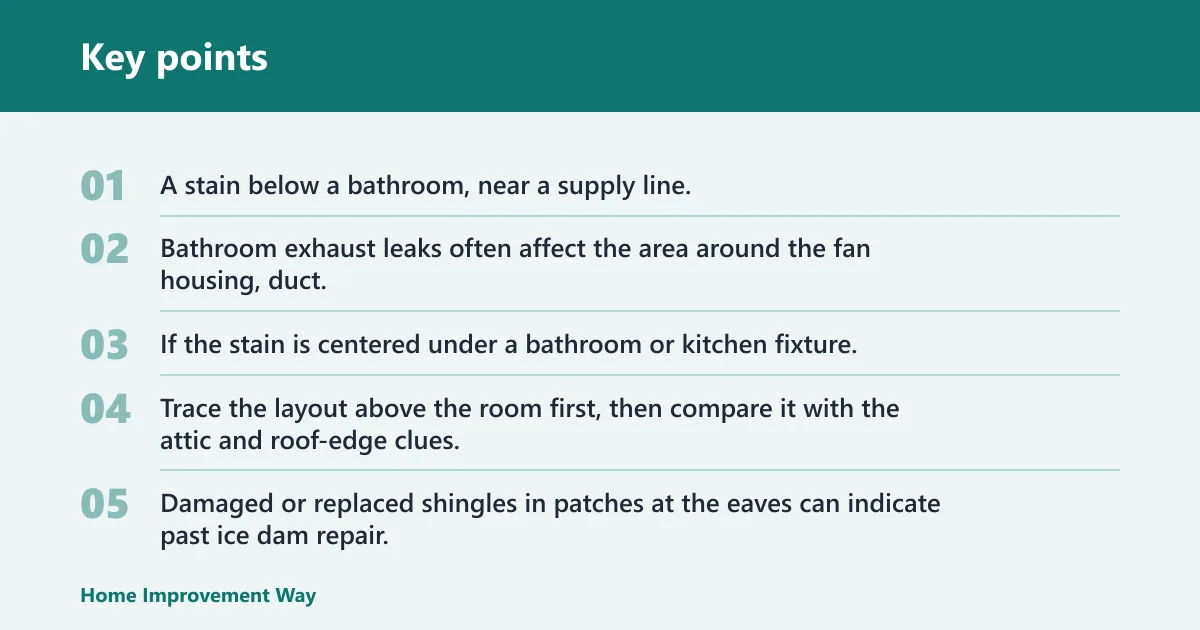
A stain below a bathroom, near a supply line, or around a vent fan can point to plumbing or ventilation rather than an ice dam. Bathroom exhaust leaks often affect the area around the fan housing, duct, or ceiling in the room directly below the bath.
If the stain is centered under a bathroom or kitchen fixture, do not assume it is roof-related. Trace the layout above the room first, then compare it with the attic and roof-edge clues.
Old repairs versus current leaks
Damaged or replaced shingles in patches at the eaves can indicate past ice dam repair. That does not always mean the current stain is active. Look for dry, patched areas with no new discoloration, versus wet insulation, fresh bubbling paint, or a stain that changed after the last thaw.
Older staining is often stable and dry. Current leaks tend to spread, darken, or show up with damp attic materials after a melt event.
When the stain pattern does not fit an ice dam
If the stain is far from exterior walls, appears under a single fixture, or matches a known plumbing path, the leak may come from somewhere else. If the stain is high on a wall but nowhere near the attic eaves, it may also be unrelated to ice damming.
A common mistake is to see any winter ceiling stain and call it an ice dam. The better approach is to match the stain location with attic moisture, roof-edge damage, and ground-level clues before deciding.
Ice dam vs plumbing leak vs bath fan condensation vs flashing/skylight leak
| Possible cause | Location pattern | Timing | Attic clues | What it usually means |
|---|---|---|---|---|
| Ice dam | Near exterior walls, ceiling-wall junctions, upper walls, or eaves | After snow, freeze-thaw, or a warm-up | Wet insulation or stained sheathing near the roof edge | Water backed up at the roof edge and moved inward |
| Plumbing leak | Below bathrooms, sinks, tubs, or supply lines | Often not tied to weather | No roof-edge staining pattern | Water from pipes or fixtures above the stain |
| Bath fan condensation | Near the fan housing, duct run, or bathroom ceiling | Shows up after showers or high indoor humidity | Condensation around the fan or duct, not the eaves | Warm moist air condensed because venting is poor or blocked |
| Flashing/skylight leak | Near a skylight, chimney, vent, or roof penetration | May worsen during wind-driven rain or thaw | Localized staining near the penetration, not broad eave damage | Water entered at a roof opening or failed flashing detail |
What should you do next?
Use the severity of the clues to choose one of four actions: monitor, document, call a roofer, or call emergency mitigation. If water is still dripping, drywall is soft, or insulation is wet, do not wait for the next storm cycle to sort it out.
Monitor, document, call a roofer, or call emergency mitigation
Monitor dry, flat discoloration that has not changed and does not match attic moisture. Document any stain, warped trim, or granule loss with photos and dates. Call a roofer when stains line up with attic sheathing damage, wet insulation, or eave-area shingle problems. Call emergency mitigation if water is actively dripping, drywall is sagging, or the leak is spreading fast.
- Monitor only when the stain is old, dry, and stable.
- Document when you see visible damage but no active dripping.
- Call a roofer when attic or eave clues support roof-related intrusion.
- Call emergency mitigation when water is active or the interior finish is failing.
What to photograph before anyone repairs the area
Take wide photos of the room, then close photos of the stain edge, trim, and any soft drywall. In the attic, photograph wet insulation, stained sheathing near the eaves, and any daylight through roof boards. Outside, take ground-level photos of gutters, ice buildup, soffit, fascia, and damaged shingle edges.
Those photos help a roofer distinguish current damage from an old repair and can support an insurance claim if one applies.
Frequently asked questions
What are the first signs of ice dam damage inside a house?
The first signs are usually yellowish or brown stains near exterior walls, ceiling-wall junctions, or the upper edges of walls. Soft drywall, bubbling paint, damp attic insulation, and a musty odor in upper rooms are also common early clues that moisture entered from the roof edge.
How do ice dams cause water stains on ceilings and walls?
Ice dams block meltwater at the roof edge, so water backs up under shingles or into small openings. It can then move inward through the roof deck, framing, or insulation before showing up as stains near the ceiling-wall junction or along an exterior wall.
Where should I check in the attic for ice dam damage?
Check the attic insulation near the eaves first, then inspect the underside of the roof sheathing along lower roof sections. Look for wet, compressed, or darkened insulation, staining on the deck, damp air, and any visible daylight through roof boards.
What does ice dam damage look like in insulation and roof decking?
In insulation, it often looks wet, matted, or compressed near the roof edge. On roof decking, look for discoloration, dark streaks, or wet spots along the eaves. Those signs suggest water reached the attic and may still be affecting the roof assembly.
How do I tell if a ceiling stain came from an ice dam?
Check whether the stain is near an exterior wall or ceiling-wall junction, and whether the attic above that area shows wet insulation or sheathing stains. If the stain appeared after snow, ice, or a thaw, and the pattern tracks the roof edge, an ice dam becomes more likely.
How can I check for ice dam damage without climbing on the roof?
Stay on the ground and inspect gutters, downspouts, fascia, soffit, and shingle edges with binoculars if needed. Then check inside for ceiling stains, attic moisture, and musty odors. You do not need to climb onto an icy roof to collect useful evidence.
When should I call a professional for ice dam damage?
Call a roofer when stains are growing, insulation is wet, the attic sheathing is stained, or shingles at the eaves are damaged. Call emergency mitigation if water is actively dripping or drywall is sagging. Fast action can limit rot, mold, and finish repairs.
Sponsored / affiliate links. As an Amazon Associate I earn from qualifying purchases. I may earn additional commission from eligible campaigns.
 Moisture Meter for House, Water Meter, Tester Hygrometer for Indoor Outdoor Garden Lawn Farm, No Batteries Needed, Accurate Sensor for Gardening(White)
 Moisture Meter for House, Water Meter, Tester Hygrometer for Indoor Outdoor Garden Lawn Farm, No Batteries Needed, Accurate Sensor for Gardening(Green)