Can Ice Damage Gutters? Signs, Causes, and Fixes
Yes. Ice damages gutters in two main ways: heavy direct loading bends them or tears them loose, while ice-dam backup forces meltwater under shingles and over the gutter edge. Leave it alone, and you can end up with sagging gutters, fascia rot, leaks, and costly roof repairs. This guide shows how to tell direct ice loading from ice-dam backup and what to do first.
Can ice damage gutters?


Yes. Gutters are built to move water, not hold frozen weight. Direct ice loading can sometimes sag a run, crack a bracket, split a seam, or pull a section away from the fascia. Ice-dam backup is different: meltwater refreezes at the roof edge, then backs up into the gutter and can push water where it should never go.
Which gutter parts fail first?
The weak points are usually hangers, seams, end caps, downspouts, and the fascia board behind the gutter. Old gutters are especially vulnerable because snow and ice can pull old gutters away from the fascia. Ice can also crack gutter brackets, which starts a failure even if the metal or vinyl run still looks intact.
What winter damage looks like at the house
Look for a gutter line that dips between hangers, drips at a joint, stains below an end cap, or a downspout that suddenly stops draining during a thaw. Hidden damage often shows up first on the fascia board as staining, soft spots, or peeling paint. That usually means water has been sitting too long.
Ice dams and gutter damage
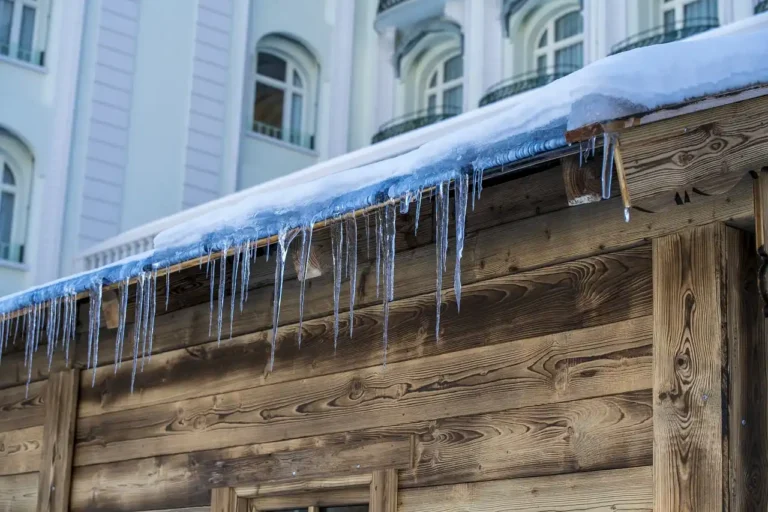
Ice dams form when snow on the roof melts and then refreezes in the gutters. That ridge of ice can block drainage, trap water in the gutter, and force water to back up under shingles. The gutter may look like the problem, but the roof edge is often where the failure starts.
How backup pushes water into seams and under shingles
When the eave is blocked, meltwater has nowhere to go. It can sit in the gutter, seep through seam seals, or spill over the front edge and wet the fascia and siding. If the ice extends far enough up the roof, water can move under shingles and reach the roof deck before it ever reaches the gutter outlet.
Why frozen water can trap load in the gutter
Frozen water adds weight fast. A gutter full of ice carries both the ice itself and any new meltwater that enters during the day. In a snowy climate, roof snow load can keep feeding that cycle, especially when snow on the roof keeps melting at the eave and refreezing overnight.
Is it ice load or an ice dam?
This is the decision that matters most. Ice load damage usually shows up as a bent or detached gutter with no obvious roof leak above it. Ice-dam backup usually shows up as overflow, staining, or water moving behind the gutter line. Use the symptom table below to separate the two before you start repairs.
| Visible symptom | Likely failure mechanism | Immediate safe action | When to call a pro |
|---|---|---|---|
| Sagging section between hangers | Direct ice load or loose hangers | Clear loose snow near the area and stay off the roof edge | If the run bows, twists, or pulls from the fascia |
| Overflow behind gutters | Ice dam backup or blocked outlet | Check the downspout opening and stop water from pooling at the eave | If water is entering under shingles or into the attic |
| Frozen downspout | Drainage blockage and refreezing | Clear the outlet and look for ice at elbows and seams | If the downspout is split, crushed, or detached |
| Split seam or open joint | Freeze-thaw expansion or heavy ice load | Mark the leak and avoid prying the joint apart | If the seam keeps opening after thaw |
| Fascia staining below the gutter | Chronic overflow or hidden backup | Inspect from the ground for drip points and ice buildup | If the fascia feels soft or paint is peeling in strips |
| Gutter pulled away from the house | Heavy ice load or failing fasteners | Keep people clear of the area | If any section is hanging loose or the fascia is cracked |
| Ice hanging from the gutter lip only | Direct gutter freeze-up, often from poor drainage | Improve drainage before trying to chip ice | If repeated thawing and refreezing keeps rebuilding the ice |
| Water spots inside exterior walls | Ice dam backup under shingles | Reduce interior heat loss and document the leak | If water is reaching insulation, drywall, or ceiling finishes |
Picture a roughly 20-foot gutter run on a north-facing roof. If the only symptom is a dip at one hanger after a wet snow, the likely issue is direct load or a loose fastener. If that same run also has staining below the eave and frozen water at the downspout, ice-dam backup is probably part of the problem too.
Why gutters sag after freeze-thaw
Freeze-thaw cycles repeat daily when snow melts and water refreezes overnight. That expansion and contraction widens small cracks, loosens sealant, and works fasteners back and forth until seams start to separate. A gutter that looked fine in the morning can show a leak by evening.
How blocked drainage adds weight
If the downspout is blocked, meltwater stays in the trough instead of leaving the system. That standing water can freeze solid, add weight, and strain the hangers. The same blockage also makes overflow more likely, so one frozen outlet can create both sagging and siding stains.
What part usually fails first in a freeze-thaw winter
Hangers often fail first because they carry the load and are exposed to repeated movement. After that, seams and end caps usually show leaks. Fascia damage may already be hidden behind the gutter by the time the outside damage becomes obvious.
What should you check first?
A common approach is to start at the outlet, then move along the run. Downspouts must stay clear so meltwater can exit, and seams, end caps, and hanger spacing should all be checked for strain. Finish with the fascia board, because it can rot or crack from chronic overflow before the gutter itself gives way.
- Check each downspout opening for ice, leaves, or packed debris.
- Look for frozen elbows and seams near the bottom of the downspout.
- Inspect gutter seams and end caps for drips, gaps, or rust lines.
- Look at hanger spacing for sagging between supports.
- Probe the fascia gently with a screwdriver only if the wood already looks soft or stained.
A common mistake is to chip away at the frozen overhang and ignore the hidden ice packed inside the gutter. That can leave the real blockage in place, so the repair looks good for one thaw and then fails again the next cold night.
How do you stop refreezing in gutters?
Start with cleaning. Clean gutters and downspouts before winter so water can move out fast during warm spells. Then reduce roof heat loss where ice dams form, because the problem starts when heat escapes into the roof and melts snow at the eave. If the roof stays colder, less water reaches the gutter to refreeze.
Heat cable placement in the gutter and downspout
De-icing cables use electrical resistance to generate heat. The recommended cable layout is a zigzag or serpentine pattern, and the cable should extend into the gutter and downspouts so the meltwater has a path to leave. Cables should be plugged into a GFCI, not a regular outlet.
Temporary de-icer use and its limits
De-icer or calcium chloride can open a channel through ice when used in stockings or fabric sleeves. That is a temporary fix, not a cure. Overuse can corrode metal and harm plants, so place it sparingly and keep runoff away from sensitive plants.
Warm water is safer than boiling water for melting ice dams. Boiling water can crack cold materials and may lead to rapid refreezing. If you need a short-term opening method, use it only to restore drainage long enough to address the cause.
Should you fix the roof or the gutter?
Fix the gutter when the damage is local and the fascia is sound. Replace a hanger, reseal a seam, clear a downspout, or repair an end cap when the run is still straight and secure. If the gutter has pulled away, the fascia is soft, or water has been getting behind the system for a while, the repair plan changes.
When gutter repair is enough
If the problem is a split seam, a cracked bracket, or a frozen downspout with no visible fascia damage, the gutter system can often be repaired without major carpentry. The key is to make sure the outlet works and the run is still properly supported before the next freeze.
When fascia damage changes the plan
If the fascia board is cracked, rotted, or no longer holding fasteners, a simple gutter repair will not last. The supporting wood has to be repaired first, or the gutter will keep sagging and pulling away. That is the point where a full section may need rebuilding rather than patching.
When attic insulation or ventilation needs attention
If you keep seeing ice dams in the same spot, look above the roofline. Poor attic insulation or weak ventilation can let roof heat escape, which drives the melt-and-refreeze cycle at the eave. Reducing that heat loss is often the most effective long-term fix.
Suppose a home has a clean gutter run but repeated ice buildup at the same front corner every cold snap. The gutter may be doing its job, while attic heat loss is feeding the ice dam. In that case, gutter repair alone will not solve the pattern.
Frequently asked questions
Does ice melt damage gutters?
Yes, if the meltwater refreezes or keeps backing up. Repeated thawing and refreezing widens cracks, weakens sealant, and adds weight to the run. Meltwater can also leak through seams and soak the fascia board, which may fail before the gutter does.
Do gutters make ice dams worse?
Not by themselves. Ice dams form when roof snow melts and refreezes at the eave, usually because heat is escaping from the roof. A clogged or frozen gutter can worsen backup once the dam forms, but the gutter is usually not the original cause.
Why do gutters sag after a freeze-thaw cycle?
Because the load changes every day. Meltwater enters the gutter, then freezes overnight and expands. That repeated movement loosens hangers, opens seams, and adds weight to any weak section. A blocked downspout makes the sagging worse because the water has nowhere to go.
Can ice dams pull gutters away from the house?
Yes. Ice dams can add enough weight to strain the gutter run, especially on older systems. If the fasteners are already weak or the fascia is soft, the gutter can separate from the house. That is a repair warning, not just an appearance issue.
What part of the gutter system fails first in winter?
Hangers and brackets usually fail first because they carry the load and take the strain from ice buildup. After that, seams, end caps, and downspouts often show leaks or splits. Fascia damage may be hidden behind the gutter until the fasteners stop holding.
How do you stop ice from refreezing in gutters?
Clear the gutter and downspout before winter, reduce roof heat loss, and keep water moving out of the system. Heat cable can help when it is placed in a zigzag or serpentine pattern and extended into the gutter and downspout. De-icer can open a temporary channel, but it is not a long-term fix.
Should you clean gutters before winter to prevent ice damage?
Yes. Clean gutters and downspouts before winter so meltwater can drain during warm spells instead of freezing in place. This is one of the simplest ways to reduce overflow, sagging, and seam failure. It also makes it easier to spot loose fasteners before they fail under load.
Sponsored / affiliate links. As an Amazon Associate I earn from qualifying purchases. I may earn additional commission from eligible campaigns.