When Should You Remove Snow From Your Roof?
Leave roof snow alone when it is shallow, even, and not obviously heavy; if you know your roof’s design load or local pounds-per-square-foot guidance, use that as a check, and clear the eaves first if ice dams are forming, and call a pro for heavy, uneven, or sagging loads. Ignoring the wrong signal can trigger leaks, ceiling damage, or even roof collapse. This guide gives a simple rule for safe snow, eave-only clearing, and urgent warning signs.
This guide is part of our Ice Dams, Gutters and Snow: Protect Your Roof This Winter series.
When can roof snow stay put?
Most roofs can carry normal local snowfall without help, so you do not need to strip snow after every storm. Depth matters less than weight, roof shape, and visible stress. Light, even powder on a steep roof often stays put. Uneven drifts, however, change the risk fast.
Why depth alone is not enough
A shallow layer of wet snow can weigh more than a deeper layer of powder. That is why the question is not “how deep is it?” but “how heavy is it, where is it sitting, and is the roof showing stress?” Snow load matters more than depth.
Steeper roofs shed snow faster. Flat roofs need more manual snow removal than steep-pitched roofs, and low-slope roofs may need more attention because snow does not slide off on its own. Attached garages and porch roofs may deserve extra caution because they are smaller and can behave differently from the main roof.
What light powder usually means
Dry powder is usually less concerning than dense, wet snow. If the roof is even, the weather has stayed cold, and there are no warning signs inside or outside, the safest move is often to monitor and wait. Do not clear the roof just because it looks white.
Suppose a single-story home has about 4 inches of dry powder after a cold storm. The roofline looks straight, doors close normally, and there are no stains inside. That is a monitor case, not an automatic removal case.
When uneven drifting changes the risk
Drifting snow changes the load pattern. A roof can carry a moderate average depth and still strain at a ridge, in a valley, or behind a dormer. Drifted banks are more concerning on low-slope sections, roof transitions, skylights, and attached garages.
If snow is piled much deeper on one side, or if wind has packed it into a hard crust, treat the roof as higher risk. If one area is much deeper than another, avoid creating a larger imbalance and consider professional help.
How does snow weight change the risk?
Wet snow is heavier than light, powdery snow, and that difference matters more than a quick glance at depth. Warm spells, mixed precipitation, and refreeze can turn a manageable layer into a much heavier one. Older roofs and low-slope roofs deserve extra caution.
Wet snow versus dry powder
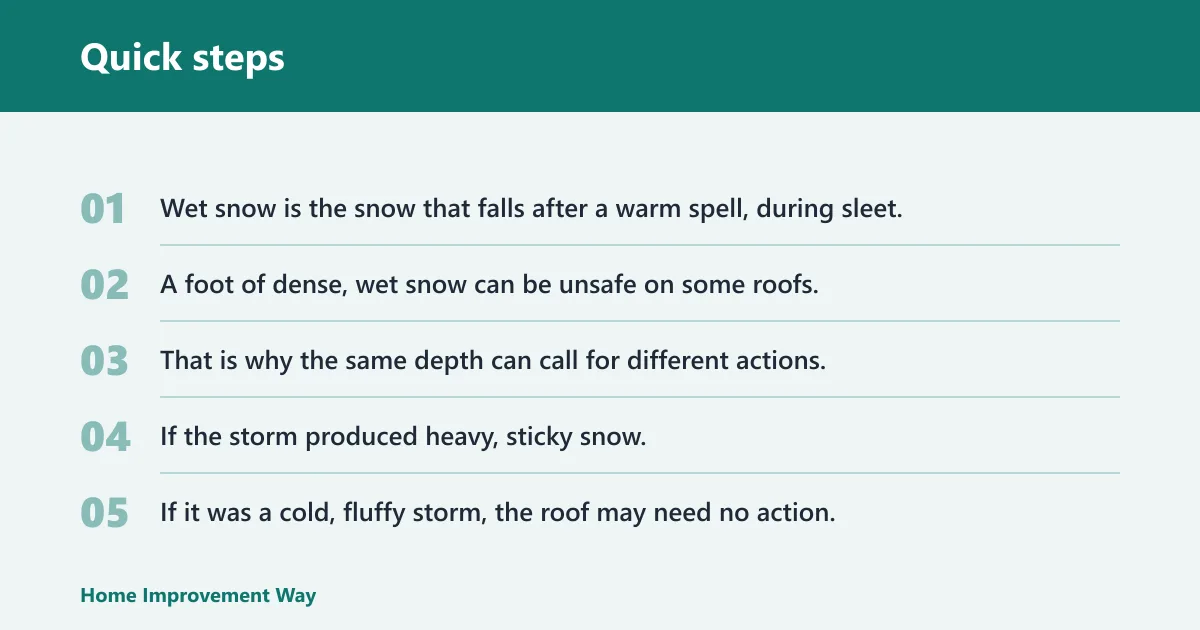
Wet snow is the snow that falls after a warm spell, during sleet, or in a mixed storm with rain, ice pellets, and snow. It packs tightly and clings to shingles. A foot of dense, wet snow can be unsafe on some roofs, while a deeper layer of powder may be less concerning on the same structure.
That is why the same depth can call for different actions. If the storm produced heavy, sticky snow, you should move sooner to monitoring for stress, eave buildup, or a pro call. If it was a cold, fluffy storm, the roof may need no action.
Warm spells, mixed precipitation, and refreeze
Warmth changes the snowpack. Meltwater can soak the lower layer, then refreeze into dense crusts or ice bands. Layered snow with crusts is harder to move and more likely to load the roof unevenly. It also creates a better setup for ice dams at the eaves.
When that happens, the concern is not only total weight. It is also the way meltwater moves through the pack and refreezes near the roof edge. If the lower roof edge is building up, the problem may be shifting from general load to ice-dam risk.
Why low-slope and older roofs deserve more caution
Flat roofs need more manual snow removal than steep-pitched roofs. Low-slope roofs hold snow longer, so weight stays on the structure instead of sliding off. Older roofs are less forgiving if there is already wear, prior leakage, or aging decking.
On a low-slope section, even a modest storm can justify closer monitoring. If the roof is older, has prior repairs, or has visible wear near the eaves, it belongs in the higher-caution group rather than the wait-and-see group.
Roof snow decision checklist
Use this checklist to sort roof snow into three actions: leave it alone, clear only the eaves, or call a pro. The triggers below focus on load, roof type, and warning signs, not just depth.
| Observe | Risk level | Next step |
|---|---|---|
| Even layer of light powder; roof is steep; no inside or outside warning signs | Low | Monitor and leave it alone |
| Wet snow after warm or mixed precipitation; layer is heavier than expected | Moderate | Watch closely; prepare to clear eaves if ice-dam signs start |
| Drifting snow, crusted layers, or uneven banks on one section of the roof | Moderate to high | Check for stress signs; consider targeted eave clearing or a pro |
| Low-slope or flat roof, especially on an older roof | High | Monitor more often; call a pro if buildup continues |
| Sagging roofline, creaking noises, sticky doors, or new ceiling stains | High | Call a pro now |
| Heavy eave buildup with signs of ice at the roof edge | High | Clear the lower roof edge from the ground or call a pro |
| Active leak, wet drywall, or leak history in the same area | High | Call a pro now; snow removal alone may not solve the problem |
What roof warning signs mean trouble?
Warning signs mean the roof may be overloaded or already leaking. The clearest signs are a sagging roofline, cracks in interior drywall, sticking doors, and creaking or popping noises. If any of these appear, the question shifts from “should snow stay?” to “how fast can the load be reduced safely?”
Sagging roofline and creaking sounds
A roofline that dips, bows, or looks uneven is a structural warning sign. Creaking or popping noises can mean the framing is moving under load, though homes can also make seasonal winter noises for other reasons. Those sounds are a reason to stop waiting and get a professional involved.
Do not wait for the roof to look dramatically deformed. Small changes can matter. If the sag is new or getting worse, treat it as an urgent sign.
Sticking doors, drywall cracks, and ceiling stains
Doors that suddenly stick, fresh drywall cracks, or new ceiling stains can point to load stress or a leak. Signs of roof stress include sagging ceilings and sticky doors. If the interior changes happened after a storm, the roof needs closer attention now.
A common first-timer mistake is assuming a door is sticking because of dry indoor air. In winter, that may be true sometimes. But if the issue appears after wet snowfall or drifting, do not dismiss it.
When a leak changes the answer
An active leak changes the plan because snow removal alone may not stop the water path. Leaks can come from ice dams, lifted shingles, flashing issues, skylights, or long-term wear. If water is entering now, the problem is beyond a simple snow-depth decision.
New ceiling stains, dripping, or wet insulation call for prompt action. You may still need roof snow removed, but the roof should be evaluated for the leak source at the same time.
How do you remove snow from the roof safely?
If you remove snow, do it from the ground with a roof rake. Do not climb onto a snow-covered roof with a shovel. Most homeowners should not climb onto a snow-covered roof. The safest approach is usually targeted removal, not a full clean-off.
Use a roof rake from the ground
A roof rake is a long-handled tool designed to pull snow off while you stand safely on the ground. Use one with a plastic or soft blade so it is less likely to damage shingles. Keep the work controlled and short. Do not dig into the roof surface.
The goal is to reduce load, especially near the edges, not to scrape the roof bare. Professionals often leave a thin blanket of snow to protect the roof surface, and that is a useful benchmark for homeowners too.
Why eaves come first
The eaves are the main area where ice dams form, so they are the first zone to clear with a roof rake. Clearing the lower roof edge can reduce the chance that meltwater refreezes there. It can also open a path for water to drain off the roof.
Clear only enough to relieve the edge buildup. You do not need to strip the whole roof unless a professional says the structure needs wider snow removal. That limited approach lowers risk for both the roof and the person on the ground.
Tools and methods to avoid
Avoid metal tools, axes, and sharp blades. They can cut shingles, damage flashing, or force you to reach farther than is safe. Do not climb ladders onto a snowy roof just to “finish the job.” That adds fall risk without solving the underlying load issue.
If the snow is deep, icy, or uneven enough that a roof rake cannot handle it safely from the ground, stop and switch to professional help.
Why do ice dams change the plan?
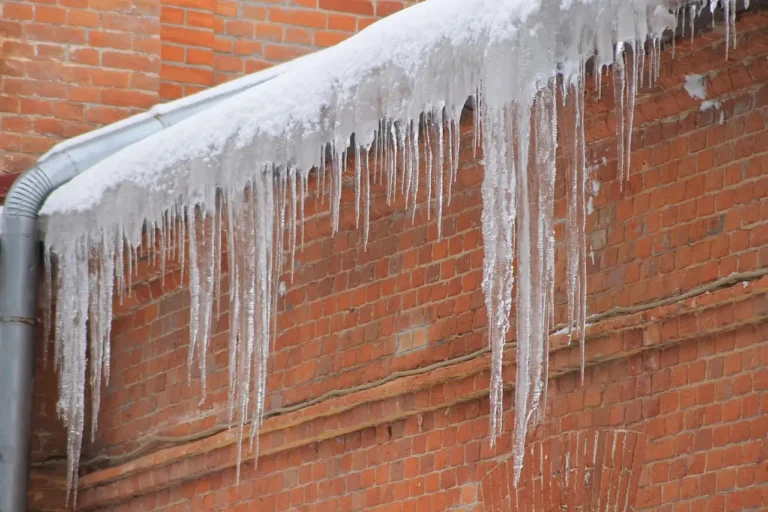
Ice dams form at the eaves when meltwater refreezes. They can push water back under shingles and into the roof assembly. That is why clearing the lower roof edge sometimes helps, but it does not solve every ice-dam problem.
How ice dams form at the eaves
Heat escaping from the house or warming the roof surface can melt snow above. The water runs downslope until it reaches a cold edge and freezes again. The eaves are the main ice-dam zone because they stay colder than the roof above them.
Once an ice dam is in place, water can pool behind it. That pooled water may work under shingles and show up as ceiling stains, wet insulation, or wall damage.
When clearing the lower roof edge helps
When the problem is still at the buildup stage, removing snow from the lower roof edge can help reduce new meltwater from refreezing there. That is the best time for a roof rake. It targets the area where the dam starts, not the whole roof.
Say your front porch roof has heavy snow at the eaves but the rest of the roof is still even. Clearing only the lower edge may reduce ice-dam pressure without disturbing the rest of the snowpack.
When snow removal will not fix the problem
If an ice dam already exists, removing snow may not fully stop the leak. Water can already be trapped, and the roof may still need controlled ice removal, which should match the roofing material and the contractor’s method, ventilation work, or leak repair. This is one of the main reasons to call a pro instead of trying to solve everything with a rake.
Snow removal helps most when the edge buildup is still forming. It helps less once water has backed up under shingles or into interior materials.
When should you call a pro?
Call a pro when the roof load looks high, access is unsafe, or warning signs are already present. Professional snow removal is the safer choice for large jobs or risky roofs. Crews use fall protection and specialty tools, and they may use steam or other controlled ice-removal methods.
Unsafe access and high load
If the roof cannot be reached safely from the ground, or if the snow is too heavy, too deep, or too uneven for a rake, the job belongs to a pro. Wet snow is the main reason to move faster. It is heavier, clings more, and can add load quickly.
Use extra caution after warm or mixed precipitation, or when snow has refrozen into layered crusts. Those conditions make the load harder to judge from the ground.
Older roofs, skylights, and low-slope sections
Older roofs, low-slope roofs, and roofs with skylights deserve more care. Skylights create leak points and awkward snow paths. Low-slope sections keep snow longer. Older systems may have less reserve if the decking, fasteners, or flashing are already worn.
Attached garages, porch roofs, and roof additions also belong in the higher-caution group. Their framing can differ from the main house, and that can change how much snow they should carry.
What professional snow removal may include
Professional crews may remove snow in a controlled way, leave a thin blanket to protect shingles, and handle ice with specialty tools. They may also use steam or other controlled ice-removal methods around the eaves, gutters, and other problem spots, depending on the roofing material and the contractor’s method.
That is a better fit than guesswork when the roof is steep, the load is uneven, or the home already has leak history. A pro can also judge whether the issue is simple snow load or a bigger roof problem.
Frequently asked questions
When should you remove snow from your roof?
Remove snow only when it is necessary. The main triggers are heavy wet snow, uneven drifting, sagging, sticky doors, or ice-dam buildup at the eaves. If the roof is steep and the snow is light powder with no warning signs, monitoring is usually enough.
Should you clean your roof of snow?
Usually no, not after every storm. Most roofs can handle normal snowfall without intervention. Cleaning the roof makes sense when snow is wet, uneven, or causing stress signs, or when eave buildup suggests an ice dam may form. Otherwise, leave it alone and watch it.
How do you remove snow from your roof safely?
Use a roof rake from the ground, and focus on the lower roof edge first. Pick a tool with a plastic or soft blade, and avoid climbing onto the roof. Do not use metal tools or shovels on shingles. If the load is high, stop and call a pro.
Should you remove snow off your roof after every storm?
No. Snow removal should happen only when needed, not as a routine after every snowfall. The better test is weight, roof pitch, and warning signs. Heavy wet snow and low-slope roofs deserve more attention, while light powder on a steep roof often does not.
Who can remove snow from my roof?
A professional snow-removal crew is the safest choice for large, heavy, or awkward jobs. They use fall protection and specialty tools, and they can handle controlled ice-removal work near the eaves. Homeowners can use a roof rake from the ground for limited edge clearing only.
Do you need to remove snow from your roof if it is light powder?
Usually not. Light powder is less concerning than wet snow, especially on a steep roof with no warning signs. Keep an eye on drifting, refreeze, and eave buildup. If the roof is low-slope, older, or already leaking, monitor more closely even with lighter snow.
Sponsored / affiliate links. As an Amazon Associate I earn from qualifying purchases. I may earn additional commission from eligible campaigns.
 Extendable Roof Snow Rake for Snow Removal, Telescopic Handle Up to 236 Inch Reach, Reinforced 3-Point Connection, Thickened Hardware, Anti-Slip Lock Grip, Snow Remover for Roof
 Wheeled Roof Snow Remover Rake, Roof Snow Rake Extendable Pole Kit, 4 Extension Poles, Metal Braces + Adapter Included, Remove Snow from Roof Safely from The Ground