Does Homeowners Insurance Cover Ice Dam Damage?
Usually yes, if the ice dam causes sudden, accidental water damage to covered parts of the home; many policies deny damage from deferred maintenance or long-term seepage. Bad filings can cost you a deductible, a denial, or a delayed repair while mold spreads. This guide explains what is usually covered, what insurers often exclude, and what proof to gather before you file.
How standard policies handle resulting water damage
Usually, but only for the damage the ice dam causes, not the ice dam itself. Standard homeowners insurance often covers the structure, belongings, and loss of use, and it may cover sudden and accidental water damage. Whether your claim pays depends on policy language, exclusions, and the adjuster’s cause-of-loss decision.
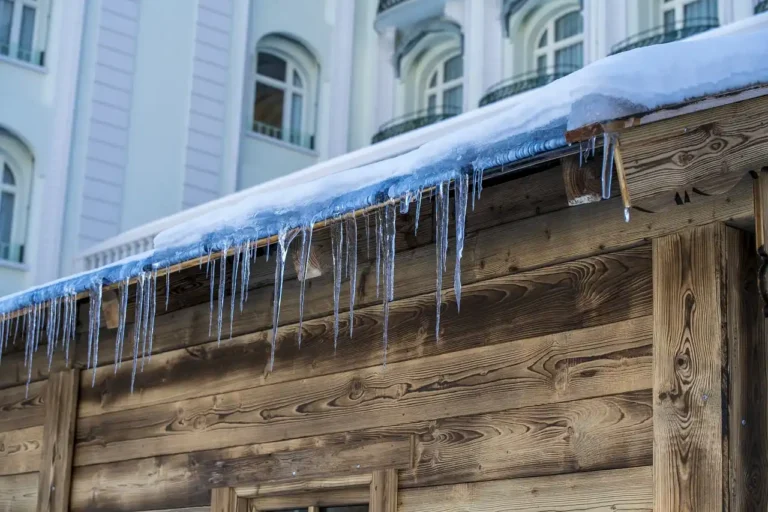
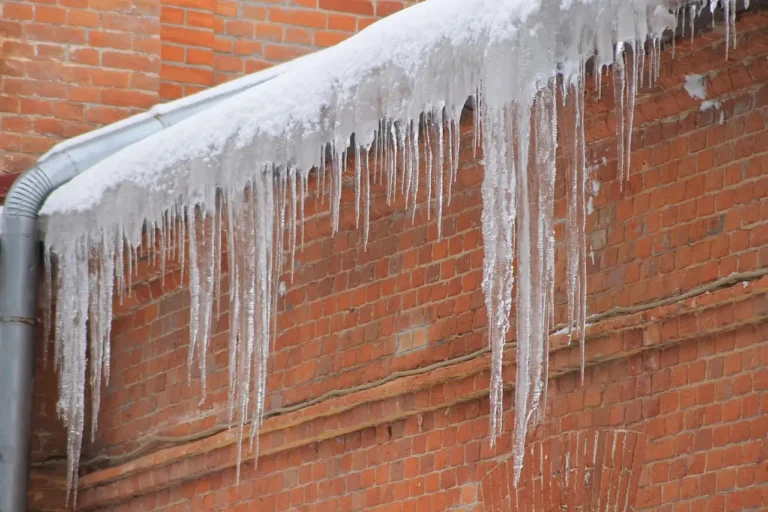
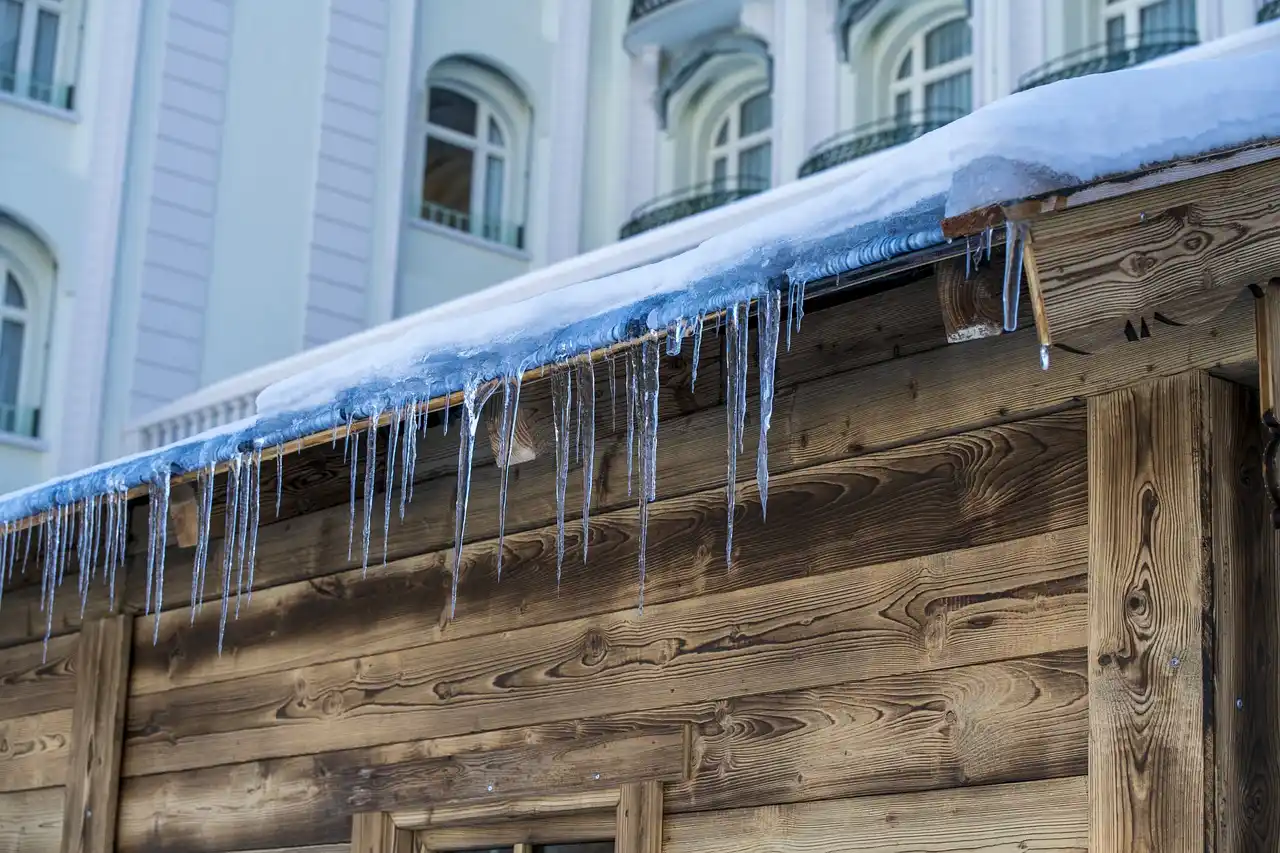
An ice dam can push meltwater under shingles and into ceilings, drywall, or insulation. That kind of interior water intrusion is often the part insurers will review first. The roof-edge ice buildup may be the trigger, but the covered loss is often the water damage inside the home.
What standard policies usually cover
Dwelling coverage is often the main bucket for drywall, framing, insulation, and other parts of the structure. Personal property coverage may apply if furniture, rugs, or electronics are damaged by the leak. Loss of use coverage may help with temporary living costs if the home is uninhabitable.
Homeowners insurance may cover water damage after a burst pipe, roof leak, or other sudden accidental release of water. It may also cover storm-related damage from heavy rain, snow, or hail, depending on the policy. A roof leak from a sudden covered event may be covered, but poor maintenance is not.
Why policy language matters
Ice dam damage may be covered, but the details depend on the policy. Some policies treat the weight of ice, snow, or sleet as a named peril. Others focus on whether the water entry was sudden, whether the source was a covered peril, and whether any exclusion applies.
That wording matters because carriers often dispute claims by blaming maintenance failure instead of a covered loss. If the policy excludes wear and tear, gradual seepage, or neglected upkeep, the same leak can move from payable to denied.
Ice dam damage claim checklist
This checklist separates damage coverage from removal coverage. Use it to sort what may be paid under dwelling, personal property, or loss of use coverage, and what may be denied as maintenance or gradual damage. The key question is not just “Was there an ice dam?” It is “What did it damage, and what proof shows when and how it happened?”
| Damage type | Usually covered or not | Exact evidence needed |
|---|---|---|
| Interior water intrusion from a roof leak | Usually covered if sudden and accidental | Dated photos of active staining or dripping, a written loss timeline, weather records showing the storm or freeze-thaw period, and moisture readings taken before demolition or drying |
| Ceiling stains and drywall damage | Usually covered if tied to a sudden leak | Photos of the stain edge, damaged drywall, and any bubbling paint; repair invoices; adjuster inspection notes; moisture readings in the ceiling cavity |
| Insulation damage | Usually covered if it was soaked by a covered leak | Photos before removal, contractor notes showing wet insulation, humidity or moisture readings, and a timeline showing the leak began during the ice dam event |
| Roof-edge damage from ice buildup | Sometimes covered, sometimes disputed | Photos of lifted shingles, damaged flashing, or torn roof edges; weather records; roofer’s written opinion on cause; the policy language for named perils and exclusions |
| Emergency mitigation | Sometimes covered, but not automatic | Itemized invoices for water extraction, drying equipment, or tarping; photos before mitigation; records showing the work was needed to prevent further covered damage |
| Removal of the ice dam itself | Usually not covered | Separate invoice for roof clearing or steam removal, plus policy review showing whether it is treated as maintenance rather than covered damage |
| Damage linked to neglect or poor maintenance | Often denied | Evidence that the roof had longstanding issues, clogged gutters, repeated seepage, missing maintenance, or prior unrepaired leaks |
Suppose water stains appear on a second-floor bedroom ceiling after a freeze followed by a thaw and a late snowstorm. If you photograph the stain that day, keep the weather report, and document the moisture reading before the drywall is cut open, the claim is easier to tie to a sudden event instead of a long-term leak.
A common first-timer mistake is paying for roof clearing first and only then calling the insurer. That can make it harder to show the condition of the ice dam, the leak path, and the first point of damage. Documentation before mitigation matters because the adjuster needs to see what changed.
What damage is usually covered?
Interior water intrusion is the most common part of an ice dam claim that may be paid. Ceiling stains, drywall damage, wet insulation, and damaged personal property can fit under dwelling coverage or personal property coverage if the policy’s covered-cause standard is met. Loss of use may also apply if the home becomes unsafe or unlivable.
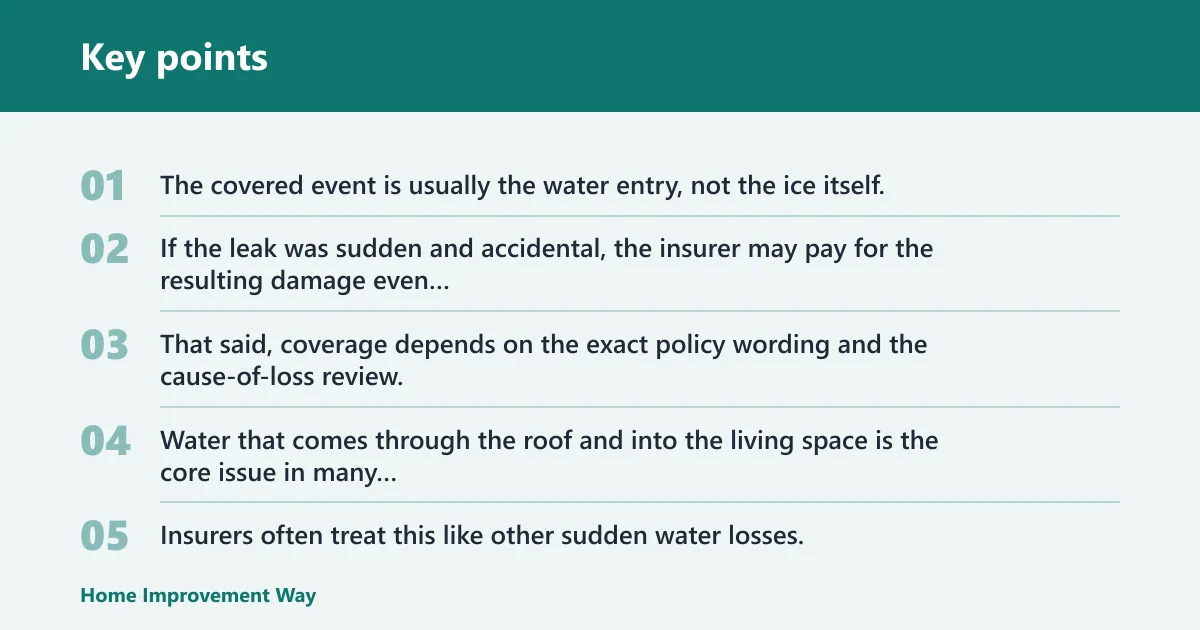
The covered event is usually the water entry, not the ice itself. If the leak was sudden and accidental, the insurer may pay for the resulting damage even when the ice dam formed on the roof edge. That said, coverage depends on the exact policy wording and the cause-of-loss review.
Interior water intrusion
Water that comes through the roof and into the living space is the core issue in many ice dam claims. Insurers often treat this like other sudden water losses, similar in concept to a burst pipe claim, where the source is a covered accidental release rather than a slow leak. The policy language still controls the outcome.
Storm-related water entry can be covered when the event fits the policy. If a snow load, freeze-thaw cycle, or heavy storm leads to a sudden roof leak, the damage may fall within covered water damage. The adjuster will still look for signs that the leak was abrupt rather than gradual.
Ceiling, drywall, and insulation damage
Ceiling stains are often the first visible sign. Drywall can soften, sag, or crack once water gets behind it. Insulation may clump, lose effectiveness, or need replacement if it was soaked. These repairs are often reviewed as part of the dwelling portion of the claim.
Keep damaged material until the adjuster documents it, if local safety rules allow. Moisture readings in the ceiling cavity or wall space help connect the visible stain to hidden wet materials. Without that record, insurers may argue the damage predated the ice dam.
Personal property and loss of use
If water reaches furniture, carpets, stored items, or electronics, personal property coverage may apply. Loss of use coverage may help with temporary lodging, meals, or other added living costs while repairs are underway. Those benefits are usually subject to the policy’s limits and deductible.
Do not assume every cost tied to the leak is reimbursable. The deductible still applies, and some small mitigation costs may end up below it. That is why it helps to compare the likely covered damage against the deductible before filing a claim.
What damage is often excluded?
Ice dam removal is generally treated as a maintenance expense, not covered damage. Insurers also often deny losses tied to neglect, wear and tear, poor roof upkeep, clogged gutters, or gradual seepage. The difference usually turns on whether the loss looks sudden or long-developing.
Normal wear and tear and lack of maintenance are excluded perils. If the carrier decides the leak was caused by a known roofing issue, repeated deferred repairs, or an unaddressed drainage problem, the claim can be denied even if water entered during winter.
Ice dam removal and roof clearing
Removing the ice itself is usually not the same thing as repairing the covered water damage. A roofer’s steam treatment, snow raking, or other roof clearing work is often treated as maintenance. That means the roof-clearing bill may be your cost even if the interior leak is covered.
Do not merge the two when you file. List the emergency work separately from the interior repairs. If the insurer pays any mitigation expense, it is usually because the work was necessary to prevent further covered damage, not because the ice dam itself was insured.
Neglect, wear and tear, and gradual damage
Neglect or poor maintenance, such as not clearing snow and ice, may not be covered. A carrier may also deny claims for repeated seepage, deteriorated flashing, damaged shingles, or long-term moisture that built up over time. These cases often turn on old stains, rot, or prior repair history.
Carrier disputes often hinge on whether damage is blamed on maintenance failure rather than a covered loss. If the roof had been leaking for months, or gutters were blocked long enough to worsen the condition, the insurer may treat the claim as excluded gradual damage.
Clogged gutters and poor upkeep
Clogged gutters can contribute to ice buildup and back-up at the roof edge. That does not automatically defeat a claim, but it can create denial risk if the insurer sees the clog as the main cause of the loss. Gutter condition matters because it may point to preventable drainage failure.
Older gutters may be paid at actual cash value rather than full replacement cost. If the claim includes gutter repair, ask the adjuster how the insurer is valuing that line item and whether depreciation applies under the policy.
How insurers decide a claim
An insurance adjuster reviews cause of loss, documentation, and timing before making a coverage decision. The key issue is whether the water damage came from a covered sudden event or from an excluded maintenance problem. That review often decides the claim faster than the repair estimate does.
The adjuster will usually inspect visible damage, ask for the loss timeline, and review any repair invoices or weather records. If the evidence shows a sudden leak after a storm or freeze-thaw cycle, coverage is more likely. If it points to old seepage, denial risk rises.
Adjuster investigation and cause of loss
The adjuster’s job is to determine what happened, when it happened, and what part of the loss is covered. That means checking where the stain started, whether materials were wet recently, and whether the roof damage appears fresh or longstanding. The insurer then makes a coverage decision based on the policy.
Policy language and state-specific interpretations can change the result. Two similar leaks may be treated differently if one policy covers certain winter water losses and another excludes them more broadly. That is why a denial should be read against the actual contract, not a generic summary.
Documentation that supports sudden damage
Adjusters want dated photos, moisture readings, and a written timeline before mitigation begins. Add weather records if possible, especially if the leak followed heavy snow, freezing temperatures, or a thaw. Repair invoices help show what had to be fixed and when the work began.
Get the denial reason in writing if the insurer says the loss is excluded. That creates a record you can compare with the policy wording, and it helps if you later ask for reconsideration or escalation. Do not treat a first denial as the final word.
Why timing can change the outcome
Timing matters because water damage changes quickly. Fresh stains, active dripping, and measurable moisture support a sudden-loss theory. Dry, discolored, or recurring staining can point the other way. If you wait too long, the insurer may argue the problem was ongoing before the ice dam formed.
Picture a two-bath home where one upstairs hallway ceiling starts staining after a weekend thaw. If the owner waits a week to report it, the insulation can dry out and the evidence gets weaker. Filing promptly preserves the condition the adjuster needs to see.
Filing an ice dam claim
File when the damage is above your deductible, the leak looks sudden, and the policy may cover the type of water intrusion you found. Pay out of pocket when the damage is small, clearly excluded, or likely to fall below the deductible. If the damage is serious or the cause is unclear, report it quickly and let the insurer review it.
Do not wait for mold, rot, or collapsed drywall before making the call. At the same time, separate temporary mitigation from permanent repair. That helps the adjuster see what was necessary to stop further damage and what was a full restoration item.
What to document first
- Take dated photos of the ice dam, the leak area, and every damaged surface before cleanup starts.
- Record a simple loss timeline: when the snow or thaw began, when the stain appeared, and when you noticed dripping.
- Save repair invoices, even for temporary tarping, drying, or water extraction.
- Collect weather records that show heavy snow, freezing temperatures, or a thaw cycle.
- Ask for moisture readings in walls, ceilings, or insulation before demolition.
When to call the insurer
Call as soon as you can confirm interior water damage. The longer you wait, the harder it becomes to connect the loss to the ice dam event. A prompt report also reduces the chance that the insurer will say you delayed mitigation or allowed the damage to spread.
If you already hired a contractor, give the insurer the invoice and explain why the work could not wait. Keep the scope narrow: emergency mitigation first, permanent repairs later. That sequence fits the way many claims are reviewed.
When to pay out of pocket
Paying out of pocket can make sense when the damage is minor, the repair estimate is near or below the deductible, or the loss clearly looks like excluded maintenance. That avoids a claim that may raise questions without producing a payment.
If you are unsure, ask the insurer how a claim would affect the deductible and what parts might be covered under dwelling, personal property, or loss of use. A short call can prevent a filing that costs more in friction than it returns in benefits.
Preventive steps to reduce future ice dam risk
Prevention is not a claim strategy, but it does reduce the chance of another leak. Clean gutters before winter, inspect the roof edge for damage, and improve attic air sealing and insulation where heat loss is feeding roof melt. Those steps do not guarantee a claim, but they can reduce repeat losses.
Keep records of maintenance, too. If a future claim is questioned, proof of gutter cleaning, roof inspection, and insulation improvements can help show the home was not ignored. That record can matter when an adjuster is deciding whether a leak looks sudden or preventable.
Frequently asked questions
Does homeowners insurance cover water damage from ice dam?
Often yes, if the water damage was sudden and accidental and the policy does not exclude the cause. Interior staining, drywall damage, and wet insulation are commonly reviewed as covered damage, while the ice dam itself and slow seepage may be excluded. Policy wording controls the result.
Does homeowners insurance cover damage caused by ice dams?
Sometimes. Damage caused by ice dams can be covered when the event leads to a sudden roof leak or other covered water entry. The insurer will still check for maintenance problems, gradual leakage, and any exclusions that apply to your policy.
What parts of ice dam damage are usually covered?
Usually the interior water damage is the main covered part: ceilings, drywall, insulation, and sometimes damaged belongings or temporary living costs. The claim is stronger when you can show the damage started during a specific freeze-thaw or storm event and not over a long period.
When can an insurer deny an ice dam claim?
An insurer can deny a claim when the loss looks like neglect, wear and tear, clogged gutters, poor roof upkeep, or gradual seepage instead of a sudden covered event. Denials also happen when the policy language excludes the cause or when the documentation is too thin.
Does insurance pay for ice dam removal or only the water damage?
Usually only the water damage. Ice dam removal is generally treated as a maintenance expense, not covered damage. Some emergency mitigation costs may be reimbursed if they were necessary to prevent further covered loss, but the roof-clearing bill itself is often separate.
What documentation do I need for an ice dam insurance claim?
Start with dated photos, a written loss timeline, weather records, repair invoices, and moisture readings. Take the photos before mitigation begins if possible. Those records help the adjuster decide whether the damage was sudden, accidental, and tied to a covered cause.
Does neglect or poor maintenance affect ice dam coverage?
Yes. Neglect or poor maintenance can reduce or eliminate coverage if the insurer concludes the loss came from lack of upkeep rather than a covered event. Clogged gutters, old roof damage, and repeated seepage are common reasons for denial or reduced payment.
Does homeowners insurance cover ice dam damage: usually yes?
Usually yes for sudden water damage, but not automatically. The answer depends on the policy, the cause of the leak, and the exclusions in play. If the damage is from gradual seepage, neglected maintenance, or ice removal itself, the insurer may deny all or part of the claim.
Does homeowners insurance cover water damage from ice dam: often yes?
Often yes, if the water entered the home suddenly and the policy covers that type of loss. The claim is strongest when you can show fresh interior damage, a clear timeline, and weather conditions that match the leak. Slow or repeated leakage is much harder to insure.
Sponsored / affiliate links. As an Amazon Associate I earn from qualifying purchases. I may earn additional commission from eligible campaigns.