Should You Clean Gutters in Winter?
Clean gutters in winter when debris is visible and the gutters are easy to reach safely; stop if ice, deep snow, or ladder slip risk makes the job unsafe. Waiting too long can let trapped water freeze, push gutters loose, and send meltwater under shingles or against the foundation. This guide explains when winter cleaning helps, when to stop, and when to hire a pro.
Deciding when to clean, wait, or hire a pro
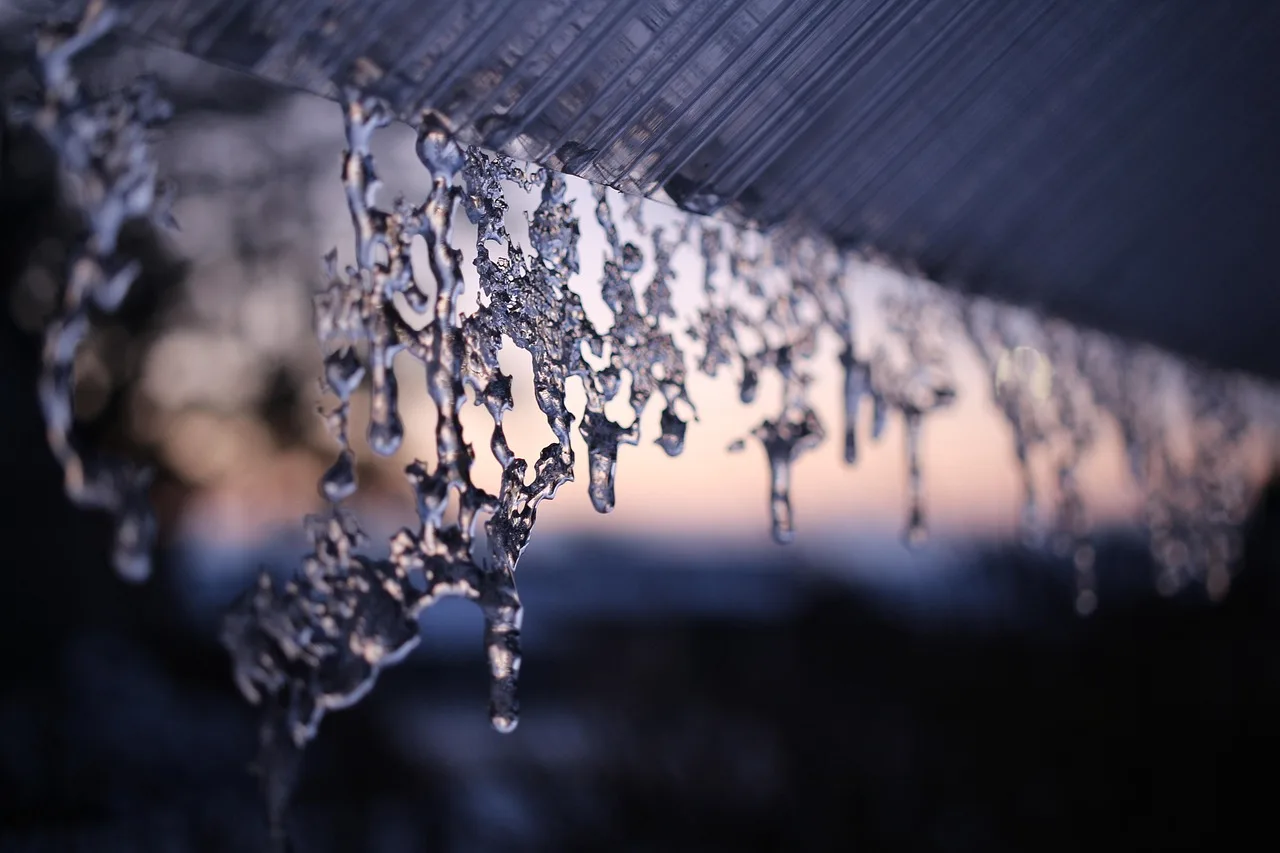


Yes, but only under the right conditions. Winter gutter cleaning helps when leaves and roof debris are still reachable, the ladder can sit on stable ground, and the gutters are not packed with ice. Once access turns icy or the material has frozen solid, the safer choice is usually to wait for a thaw or hire help.
When winter cleaning helps
Winter cleaning makes sense when you can see a clear clog at the gutter opening, the downspout is slow or blocked, and the roof edge is still open enough to work from the ground or a secure ladder. Gutters move roof runoff away from the home, so clearing them before a freeze can stop overflow and backup before it starts.
F1 treats winter gutter cleaning as essential for preventing ice dams and water damage. That matches the practical rule here: clean when the blockage is still soft enough to remove and the work area is safe.
When winter cleaning is too risky
Do not treat a winter cleaning as automatic. If the gutter is full of frozen leaves, the ladder feet can slide, the upper story is hard to reach, or the roof pitch feels steep from the ground, stop. Frozen debris is harder to remove and can crack seams or warp hangers when forced.
Cold weather also changes the job itself. Standing water turns to ice in the freeze-thaw cycle, which makes debris heavier, slicker, and more likely to jam in the gutter or downspout.
How to choose between cleaning, waiting, and hiring a pro
Use a simple rule: clean now when the blockage is visible and reachable, wait for a safer thaw when the debris is frozen but the roof is not actively overflowing, and hire a pro when height, pitch, or ice makes the ladder work unsafe. That rule fits most homes better than a blanket winter yes or no.
| Condition | Clean now? | Wait for thaw? | Hire a pro? |
|---|---|---|---|
| Visible overflow at the gutter edge | Yes | No | Maybe, if access is unsafe |
| Debris still loose and reachable | Yes | No | No, unless the roofline is tall |
| Frozen debris or packed ice in the trough | No | Yes | Yes, if cleanup must happen now |
| Steep roof pitch or tall two-story reach | No | No | Yes |
| Icy footing or ladder slip risk | No | Yes, if a thaw improves access | Yes |
| Heavy tree cover with recurring clogging | Yes, if safe | Maybe | Often yes |
| Signs of ice damming at the roof edge | No, if the area is hazardous | Sometimes | Usually yes |
Winter gutter decision checklist
Use this checklist before you climb. It separates a quick clean from a job that should wait or be handed off. A winter gutter cleaning is only worth it when the gutter, the downspout, and the access route all pass the safety check.
- Clean now: debris is visible, the gutter is open enough to scoop, and the ladder can rest on flat ground.
- Clean now: the downspout opening is blocked but still reachable from a safe position.
- Wait for a safer thaw: debris is frozen, the trough is full of ice, or runoff is locked in place.
- Wait for a safer thaw: the only access would require standing on slick soil, snow, or glazed pavement.
- Hire a pro: the home is tall, the roof pitch is steep, or the work would require overreaching.
- Hire a pro: there is heavy ice, upper-story access, or repeated clogging under dense tree cover.
Say your single-story ranch has leaves packed only around one downspout, and the ladder sits on dry concrete. That is a clean-now situation. Suppose the same gutter is on a two-story home with a steep front pitch and a crust of ice at the eaves. That is a hire-a-pro situation, even if the clog looks small from below.
Can clogged gutters cause ice dams?
Yes. Clogged gutters can contribute to ice dams by trapping meltwater at the roof edge, where it refreezes. But the gutter is only part of the problem. Ice dams also form when attic heat loss melts snow on the roof, then the water refreezes at the colder edge.
How ice dams form at the roof edge
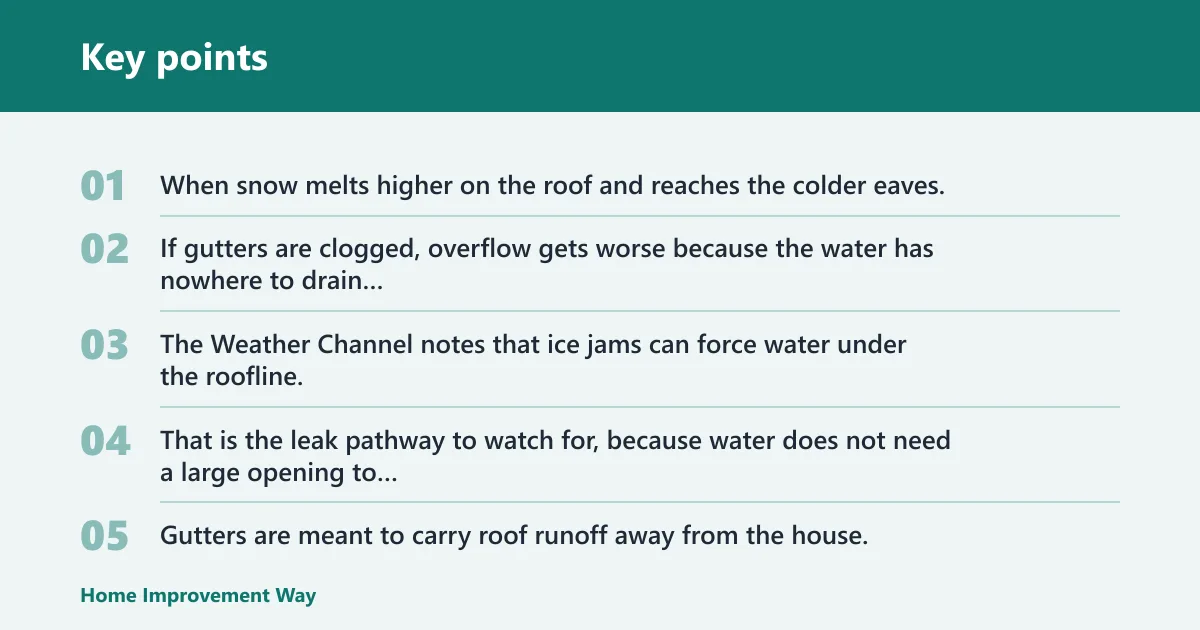
When snow melts higher on the roof and reaches the colder eaves, it can refreeze into a ridge of ice. That ridge blocks more meltwater behind it. If gutters are clogged, overflow gets worse because the water has nowhere to drain before it refreezes.
The Weather Channel notes that ice jams can force water under the roofline. That is the leak pathway to watch for, because water does not need a large opening to get under shingles.
Why backed-up gutters make overflow worse
Gutters are meant to carry roof runoff away from the house. When they clog, they can overflow onto fascia, siding, walkways, and soil near the foundation. In winter, the same backup can freeze in place and add stress to the gutter system.
That backup can also load the gutter with wet debris and standing water, which increases sagging and can pull loose sections away from the fascia.
Why attic heat loss and ventilation still matter
Do not treat gutter cleaning as the whole fix for ice dams. Attic insulation and ventilation can help reduce heat loss that melts snow near the roof edge. That matters for winter roof protection, especially on homes with older insulation or uneven attic airflow.
If you keep getting ice dams after clearing gutters, the roof may still be losing too much heat. In that case, the problem is broader than a single clogged run.
Signs your gutters need attention now
Look for water where it should not be. Overflow, drips from the gutter lip, and streaks on the fascia point to a clog or a blocked downspout. Sagging sections, loose hangers, and separated seams point to stress that can get worse through a freeze-thaw cycle.
Overflow, drips, and waterlines at the edge
Overflow during snowmelt often means water cannot move through the trough or downspout fast enough. If you see a waterline on the outside of the gutter, a stain on the fascia, or drips at multiple points, the system needs attention before the next freeze.
Frozen debris and packed downspouts
Downspouts need a separate check. They often clog at the opening, and they must direct water away from the foundation by at least three to six feet. If the outlet is blocked by ice or packed leaves, clearing the top gutter alone will not solve the backup.
Sagging sections, loose hangers, cracks, or separated seams
The Weather Channel warns that frozen debris can crack seams and warp hangers. That matters because a gutter that already sags, pulls loose, or has split joints is more likely to fail when water refreezes. Inspect cracks and loose sections before a winter cleanup, not after.
Is it safer to wait for a thaw?
Often, yes. If the debris is frozen, the ladder footing is icy, or the roofline is hard to reach, waiting for a safer thaw is usually the better call. A cleaner gutter is not worth a fall, and frozen material often comes loose more safely after temperatures rise.
What freezing does to debris and standing water
Standing water turns into ice, and wet leaves turn into a packed mass that resists scooping. That makes winter cleaning slower and less effective. A blocked gutter can also hold a hidden ice plug in the downspout, which can look minor from the ground but stop runoff completely.
How freeze-thaw can crack seams and warp hangers
Each thaw lets water move. Each freeze turns that water solid again. Repeated cycles can crack seams, distort hanger alignment, and widen small gaps. The gutter may still look attached, but the metal or fasteners can already be stressed.
When delaying is the safer call
Wait when the only way to reach the gutter is to overreach from a ladder, step onto snow-covered ground, or work next to an icy roof edge. Homeowners with older houses, steep rooflines, or upper-story runs should be especially cautious, since one awkward move can turn a short job into a fall risk.
F10 gives a clear deadline at 32 degrees Fahrenheit. Once temperatures are at or below freezing, the job changes fast, and the margin for safe DIY work gets smaller.
Downspouts, gutter guards, and attic airflow
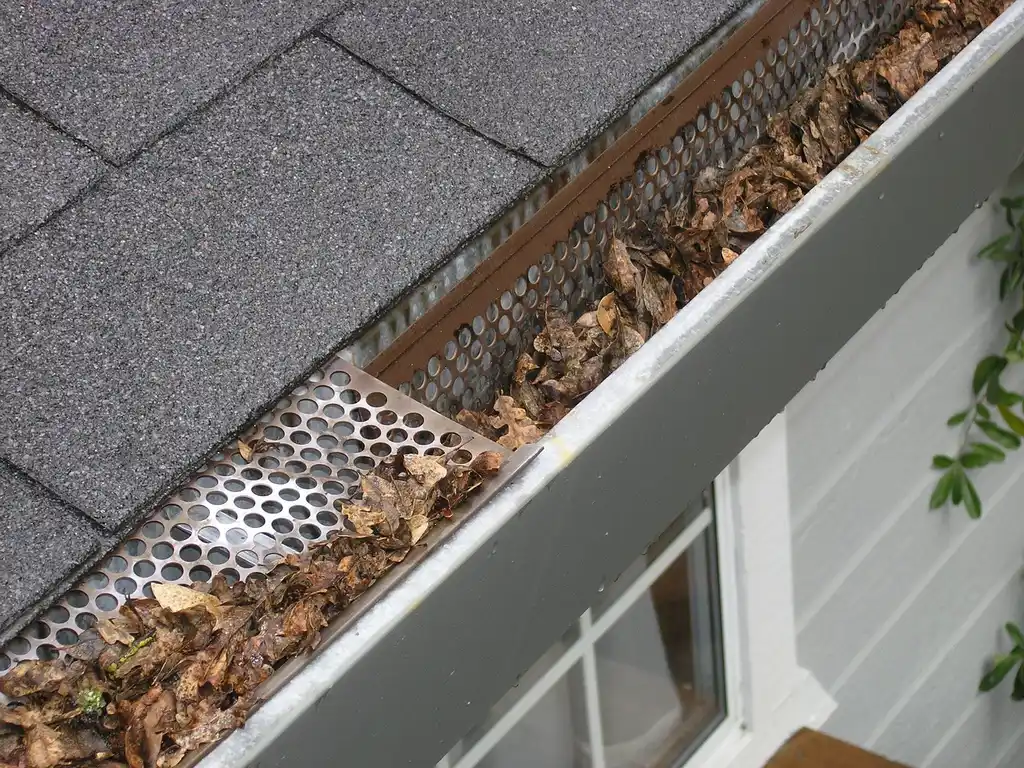
Clear gutters are only part of the system. Downspouts move the water out and away, gutter guards reduce debris but do not remove maintenance, and attic insulation and ventilation help keep snow from melting too quickly at the roof edge.
Why downspouts need a separate check
A cleared trough can still fail if the downspout is blocked. Check the outlet, the elbow, and any buried extension. If water cannot move at the bottom, it will back up at the top. That is why winter cleaning should include the whole path, not only the visible gutter.
What gutter guards can and cannot do
Gutter guards can reduce debris buildup, especially under heavy tree cover. They do not eliminate maintenance. Fine needles, seed pods, and roof grit can still collect at the edges or around the openings, and winter ice can still form above or beneath the guard surface.
That means guards may lower the frequency of cleanings, but they do not remove the need for inspection before and during winter.
How insulation and ventilation fit into winter roof protection
Attic insulation and ventilation belong in the same conversation as gutters because they help reduce heat loss that melts roof snow. Better airflow lowers the chance of meltwater refreezing at the eaves. If ice dams keep returning, the attic may need attention even after the gutters are cleared.
Guidance commonly recommends inspecting or cleaning gutters at least twice a year, and some homes may need cleaning two to three times before winter. F5 adds that gutters may need another cleaning after fall debris drops. In snowy climates with heavy trees, that extra check is often worth it.
Frequently asked questions
Can you clean gutters in winter?
Yes, if the debris is visible, the gutters are reachable, and the ladder can sit on stable ground. Skip the task once ice, deep snow, or slippery footing makes access unsafe. Winter cleaning helps most when you can remove loose debris before it freezes harder.
Should you clean gutters before winter?
Yes. Fall cleaning before freezing weather is the safer baseline because it removes leaves before the first hard freeze. The Weather Channel says many people wait until about 70% of nearby leaves have fallen, but the exact timing still depends on your tree cover and local weather.
When’s the best time to clean gutters?
The best time is before freeze-up, after most leaves have dropped, and before standing water can turn to ice. In heavy tree cover, some homes need another cleaning later in fall. If winter has already started, clean only when the gutters are still accessible and unfrozen.
Should gutters be cleaned every year?
Yes, at minimum. A common recommendation is at least twice a year, and some homes need more frequent cleaning. If your roof sits under large trees or your downspouts clog often, two or three cleanings in the lead-up to winter may be more realistic.
Do clogged gutters cause ice dams?
They can contribute to them. Clogged gutters trap meltwater at the roof edge, where it refreezes and can push water under shingles. But attic heat loss and poor ventilation are also part of the cause, so cleaning gutters alone may not solve the whole problem.
What happens if you wait too long to clean gutters?
Water can back up, freeze, and stress the gutter system. That can lead to overflow, sagging, loose sections, cracked seams, and water forced under the roof edge. It can also worsen foundation runoff problems if downspouts are blocked or discharge too close to the house.
Sponsored / affiliate links. As an Amazon Associate I earn from qualifying purchases. I may earn additional commission from eligible campaigns.