Do Ridge Vents Let Snow in?
Properly installed ridge vents should not let snow in; a light dusting can happen, but repeated deposits or visible wind-driven entry usually point to a problem. Left alone, that can turn into wet insulation, attic frost, ice dams, and hidden roof damage. This guide explains when snow near a ridge vent is normal, when the vent design is failing, and when the roof itself needs repair.
What is a ridge vent and how does it work?
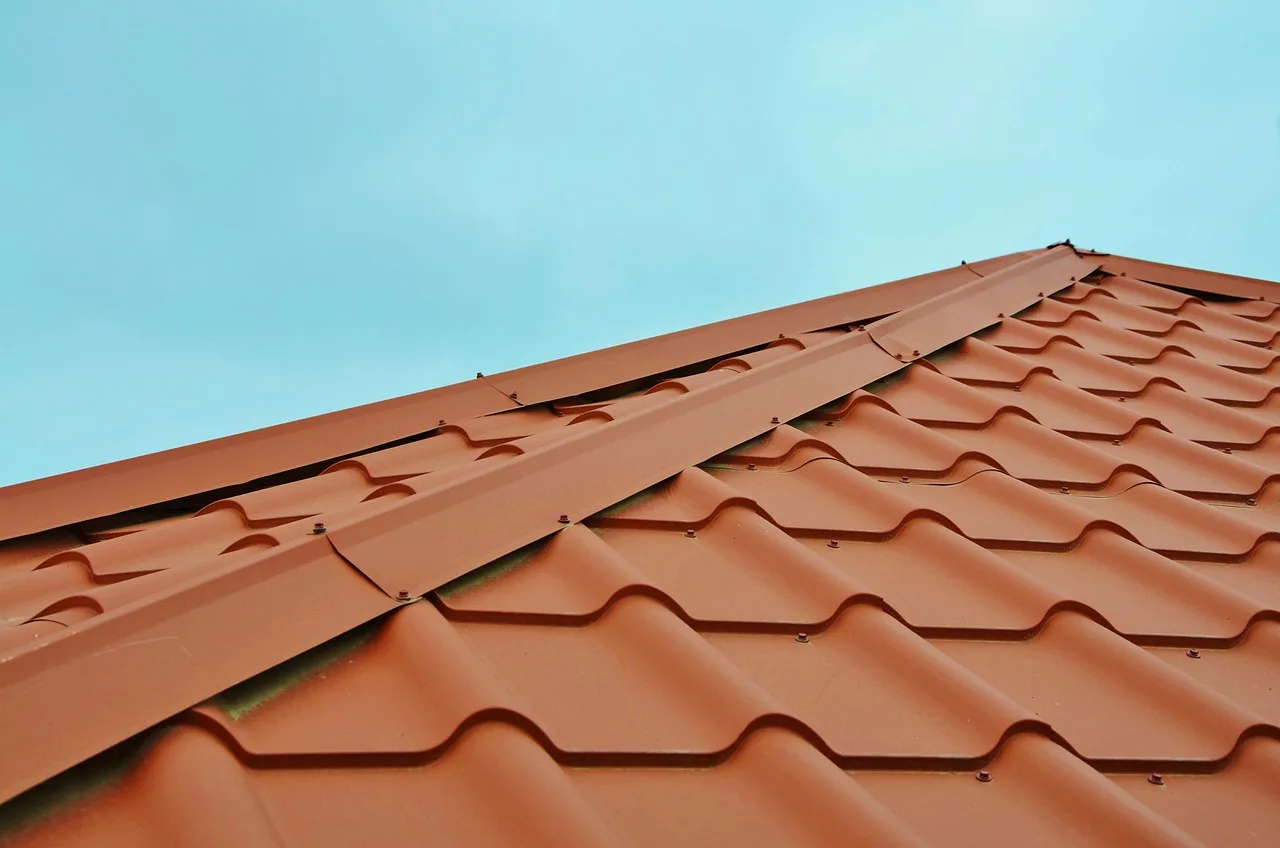
A ridge vent is a continuous vent strip installed along the roof peak. It exhausts attic air through a ridge slot, then gets covered by ridge cap shingles for weather protection. Common products are rolled or rigid, and they may be made from plastic, metal, or composite materials.
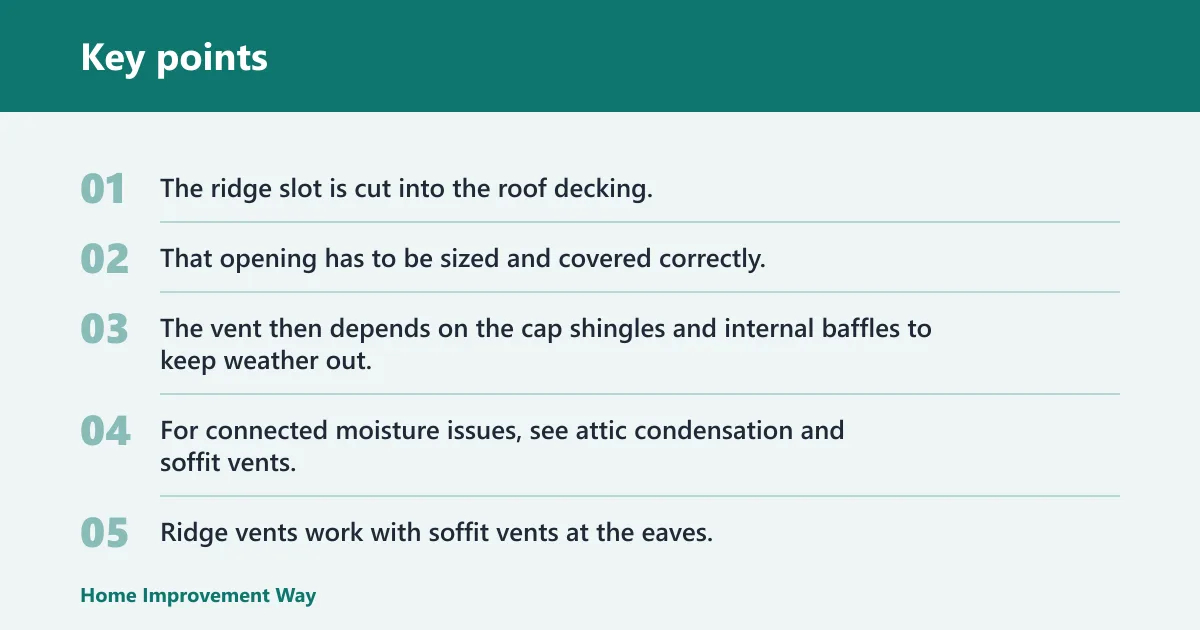
The ridge slot is cut into the roof decking, typically 1 to 1.5 inches wide on each side of the ridge. That opening has to be sized and covered correctly, because the slot gives the vent its airflow path but should not weaken the ridge too much. The vent then depends on the cap shingles and internal baffles to keep weather out. For connected moisture issues, see attic condensation and soffit vents.
Why do soffit vents matter at the eaves?
Ridge vents work with soffit vents at the eaves. Soffit vents pull cooler air into the attic, and the ridge lets warmer air out at the top. That intake-and-exhaust pair is what creates balanced attic ventilation, and soffit vents must stay open for the ridge vent to work properly.
Net free area, or NFA, is the ventilation rating used to size vent capacity. Many residential ridge vents provide about 12-18 square inches of NFA per linear foot, but the exact rating varies by model and must be matched to soffit intake so the system stays balanced. The FHA and DOE both emphasize balanced intake and exhaust rather than exhaust-only ventilation, and the IRC requires ventilation areas to be calculated and distributed correctly.
Do ridge vents let snow in?
Normally, no. Ridge vents are designed to keep out weather while letting attic air escape, and many modern products use internal baffles to help resist wind-driven rain and snow. A little snow dusting near the opening can happen in severe conditions, but the vent should not let a large amount of snow into the attic when the system is installed and maintained correctly. Manufacturer testing and product literature commonly describe resistance to wind-driven rain and snow when the cap, slot, and end closures are installed to spec.
When snow shows up inside the attic or on insulation below the ridge, treat it as a warning sign. The issue may be a damaged vent section, a ridge cap problem, blocked soffit intake, or roof damage around the slot. The key question is whether snow is briefly entering the vent opening or actually getting into the attic space. If you also see leaks elsewhere, review roof leaks and ridge vent installation and repair.
When does snow entry point to a problem?
Snow that melts on a warm surface and leaves a damp trail is different from dry flakes pushed by wind. If you see repeated deposits, wet insulation, frost patterns under the ridge, or stains on the ceiling below, the vent system or roof assembly likely has a fault. That is not normal winter behavior.
Say your 30-foot ridge vent sits on a steep roof and you notice a thin line of snow dust on the attic floor after a blustery storm. That may be brief wind-blown entry with no moisture damage. If the same area shows wet insulation or frost on the underside of the roof deck, the problem has moved beyond harmless dusting.
How does wind direction change the risk?
Wind matters. A windward ridge can take direct pressure from storm flow, while a leeward ridge can see swirl and suction that may pull snow toward a weak point. Drift zones near roof peaks, valleys, and higher neighboring structures can load one section of the ridge much more than the rest.
Roof pitch also matters. Low-slope segments and shallow transitions shed snow more slowly, which raises the chance that drifting snow lingers near the vent. On steeper roofs, the risk often comes from strong gusts and exposed ridges rather than standing snow.
Why do some ridge vents fail in winter?
Winter failures usually trace back to installation or roof-system problems, not the idea of a ridge vent itself. A ridge vent can leak snow if the ridge cap is misaligned, the vent section is damaged, the end caps are open, the soffits are blocked, or the roof deck around the slot has gaps or deterioration. That is why manufacturers stress correct slot width, cap coverage, and balanced intake.
How do missing or misaligned ridge cap shingles cause leaks?
Ridge cap shingles must cover the vent opening without blocking it. If they are shifted, cracked, loose, or nailed poorly, wind can get under the cap and push snow through the vent path. A gap at the ridge cap edge can also let meltwater or snow dust reach the attic.
What happens when vent sections or end caps are damaged?
A crushed, split, or lifted vent section can defeat the internal baffles that resist weather entry. Open end caps are another common weak point, especially where the ridge vent terminates. If the ends are not sealed to the product instructions, wind can drive snow straight into the vent body.
How do blocked soffits or missing baffles affect the system?
If soffit vents are clogged by insulation, paint, dirt, or pest screening that has become blocked, the attic loses balanced airflow. That can allow warm, moist air to collect near the ridge. Missing or damaged vent baffles make the problem worse because they no longer slow backflow under wind pressure.
A common first-timer mistake is blaming the ridge vent for a snow stain in the attic while ignoring blocked soffits. That can happen on a 1,600-square-foot house with plenty of roof vent length, but little usable intake at the eaves. The vent system cannot work if air has nowhere to enter.
What should you look for in a ridge vent winter failure checklist
Use this checklist when you suspect snow entry. Look for the symptom, match it to the likely cause, then check the next step before assuming the ridge vent itself is bad. The most useful clues are often the ones that show up both in the attic and at the roofline.
| Symptom | Likely cause | Next step |
|---|---|---|
| Light snow dusting near the ridge after a windstorm | Brief wind-driven intrusion through a working vent | Monitor the attic for wet insulation, frost, or repeat deposits |
| Snow piles or damp spots directly under one ridge section | Misaligned ridge cap shingles or a damaged vent section | Inspect the ridge cap alignment and replace the damaged section |
| Snow entry at the ends of the ridge vent | Open or poorly sealed end caps | Check the termination details and reseal or replace the end caps |
| Wet insulation, attic frost, or ceiling staining below the ridge | Air leakage, blocked soffit intake, or roof-deck gaps | Seal attic air leaks, clear intake, and inspect the roof deck around the slot |
| Snow problems only on windward or drift-prone roof segments | Roof pitch, exposure, or drifting load at the ridge | Compare the exposed side with protected sections and note whether the issue follows wind direction |
| Little attic airflow and warm, humid attic conditions | Balanced ventilation is lost because intake is restricted | Clear soffit vents and confirm the ridge vent has matching intake area |
| Visible gap between ridge cap and vent body | Ridge-cap misalignment or fastener error | Check nail placement, shingle overlap, and cap coverage along the full ridge |
| Wind-driven snow appears at the vent ends first | Open end caps or missing closure pieces | Verify end caps are installed per the manufacturer’s instructions and sealed properly |
| Soffit vents look clear from outside but airflow seems weak | Hidden soffit blockage, insulation contact, or screened obstruction | Inspect the soffit from the attic side for blocked openings and restore clear intake |
| Attic shows frost, damp sheathing, or wet insulation near the ridge | Attic air leakage, ventilation imbalance, or prolonged moisture accumulation | Document the attic evidence, then trace the source to air leaks, blocked intake, or roof defects |
| Leak pattern changes on shallow vs. steep roof areas | Roof pitch and exposure are changing the snow load and wind effect | Record the pitch and note which ridge areas face stronger wind or drifting |
| Problems occur only on the most exposed side of the roof | Higher wind exposure or drift concentration | Compare exposed and sheltered sides and note prevailing wind direction during storms |
What should you inspect in the attic?
Look for frost on the roof deck, wet insulation, dark stains, or a damp line that follows the ridge. Check that insulation is not blocking the soffit vents from the inside. If the attic feels unusually warm in winter, that often points to air leaks from the living space rather than the ridge vent itself.
What should you inspect on the roofline?
Check ridge cap shingles for gaps, buckling, missing pieces, or exposed nail lines. Look at the vent body for crushed sections, lifted edges, or cracked plastic. At the ends, verify that the closure details are intact and that the slot is covered evenly from end to end.
How do ridge vents stay dry in winter?
Ridge vents stay dry by combining shape, airflow, and balanced attic ventilation. Internal baffles slow wind-driven rain and snow entry, while the stack effect helps warm attic air rise and exit through the ridge. When soffit intake and ridge exhaust are matched, the system is far less likely to backflow. Manufacturer guidance generally treats wind resistance as a system result, not a single-product promise.
That balance matters because a ridge vent only works when intake and exhaust are matched. If the soffits are blocked or undersized, the vent can lose its normal airflow path. Then wind can press through weak points, and moisture from the attic can collect near the roof peak instead of leaving the attic. For more on moisture behavior, see attic condensation.
How does balanced airflow affect winter condensation?
When the system is working, the ridge vent can help prevent winter condensation by moving humid air out before it condenses on cold roof decking. That does not mean the vent fixes every moisture problem. It only helps when attic air leaks are controlled and the intake path stays open.
Picture a leeward ridge on a metal-roofed addition with blocked soffits on one side. The attic may show frost near the peak even though the ridge vent looks intact from outside. In that case, the ventilation problem is less about snow entry and more about lost airflow balance.
Will ridge vents make ice dams worse?
No ridge vent does not cause ice dams by itself. Ice dams usually start when attic heat loss warms the roof deck, snow melts, and the meltwater refreezes at the colder eaves. Poor attic ventilation, air leaks, and low insulation matter more than the ridge vent alone.
Ventilation can help when the attic is otherwise dry and the airflow path is correct. But if warm air is leaking into the attic from recessed lights, attic hatches, plumbing penetrations, or open bypasses, the roof can still melt unevenly. In that case, air sealing and insulation work often matter more than vent changes. See also ice dams and soffit vents.
- Check the attic first for wet insulation, frost, or staining under the ridge.
- Inspect soffit vents for blockage from insulation, dirt, paint, or pests.
- Look at ridge cap shingles, end caps, and vent sections for gaps or damage.
- Note roof pitch, exposed ridges, and any drift-prone or windward sections.
- If damage or repeated moisture is present, call a roofer for repair or replacement.
When do ventilation fixes help, and when does insulation matter more?
If the attic is dry but ice dams still form, focus on ceiling air sealing and insulation before changing the ridge vent. If the ridge vent itself is damaged or the soffits are blocked, repair the ventilation system first. Both issues can exist at the same time, and each needs a different fix.
How much ridge vent length do I need?
Ridge vent length depends on the vent model, its NFA rating, and how much intake you have at the soffits. A common residential ridge vent provides about 12-18 square inches of NFA per linear foot, but the total system still has to be matched with equivalent intake. More ridge length does not help if the soffits are restricted, and product ratings vary by model.
As a practical check, compare the manufacturer’s NFA listing for the ridge vent with the available soffit intake area. If the intake is much smaller, airflow can stall. If you are changing roof sections, skylights, or a dormer layout, the needed length can change too.
Example: if a ridge vent is rated at 18 square inches of NFA per linear foot and you need 180 square inches of total exhaust capacity, that suggests 10 linear feet of ridge vent at that rating. But the soffit intake should be sized to match the system, because balanced intake and exhaust are what keep airflow moving. Use the product’s actual NFA, not a generic estimate.
Can ridge vents be installed on different roof types?
Yes, ridge vents can be installed on shingle roofs and on some metal roofs, but the product and flashing details must match the roof type. Ridge cap shingles are used on shingle-over systems, while metal roof assemblies need compatible vent and cap details that fit the panel profile and fastener layout.
That fit matters because the ridge slot, covering, and cap all have to work together. A vent built for shingles may not seal correctly on a metal roof, and the wrong match can leave openings that invite wind-driven snow. Always verify the product instructions for the roof type being used, and compare them with the manufacturer’s snow and rain resistance details.
Frequently asked questions
Can snow blow into a ridge vent during a storm?
Yes, wind can push snow toward a ridge vent during a storm, especially on an exposed roof peak or a windward side. Modern vents use internal baffles to resist that flow, so brief intrusion is not the same as a failed system. Repeated entry deserves a roof inspection.
Is a ridge vent supposed to leak snow?
No. A ridge vent is meant to exhaust attic air while keeping weather out. If snow is entering in a way that leaves wet insulation, frost, or stains, the issue is not normal vent behavior. It usually means the vent, ridge cap, or roof deck has a problem.
What causes a ridge vent to leak in snow?
Common causes include misaligned ridge cap shingles, open end caps, broken vent sections, blocked soffit intake, missing baffles, and roof-deck gaps around the slot. Roof pitch and wind exposure also matter. A steep, sheltered ridge is less exposed than a shallow, windward one.
Sponsored / affiliate links. As an Amazon Associate I earn from qualifying purchases. I may earn additional commission from eligible campaigns.