Signs Your Roof Is Overloaded with Snow
If you see roof sagging, new ceiling cracks, stuck doors, or popping sounds, treat the roof as overloaded and get help right away. Those signs can lead to structural damage, leaks, and collapse. This guide shows how to judge snow load, ice-dam risk, and normal winter conditions from the ground.
How snow load becomes a roof problem
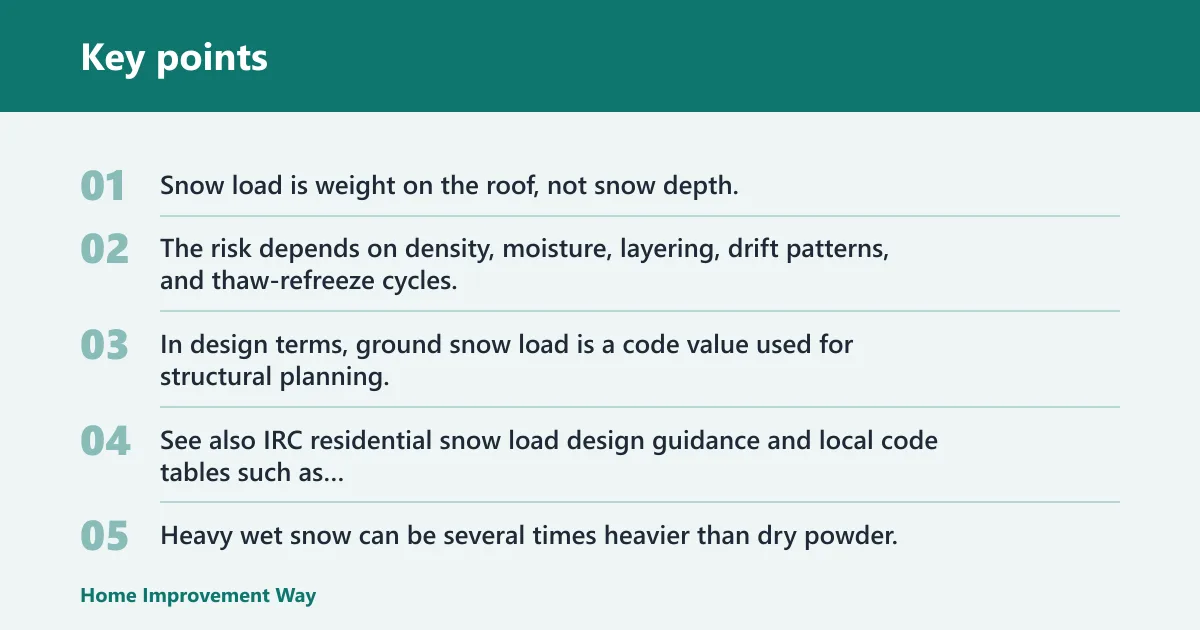


Snow load is weight on the roof, not snow depth. The risk depends on density, moisture, layering, drift patterns, and thaw-refreeze cycles. In design terms, ground snow load is a code value used for structural planning, not a homeowner trigger threshold; for example, the Michigan Residential Code lists Macomb County at 25 psf. See also IRC residential snow load design guidance and local code tables such as Michigan’s residential snow load table.
Heavy wet snow can be several times heavier than dry powder. It can also gain weight after it lands if rain falls on it, or if melting water soaks into the snow and later refreezes. That is why depth alone is a weak guide. Ready.gov’s winter safety guidance also emphasizes that wet snow and changing weather can create heavier, more dangerous conditions than depth alone suggests.
Why wet snow raises the risk
Wet snow adds more roof load per inch than fluffy snow. If the roof already has old snow underneath, the total load can build over multiple storms and thaws instead of dropping between storms. That stacking effect matters more on low-slope sections, additions, porches, and older framing. For a plain-language winter reference on snow weight and changing conditions, see Ready.gov winter weather guidance and Michigan State University Extension’s winter storm materials on snow and roof hazards.
How storms and thaws stack load
Snow accumulation adds weight to the roof deck. Repeated freeze-thaw cycles can also pry apart shingles, flashing, and seams, which creates openings for meltwater. A roof can look stable from the ground while the framing underneath is still taking stress, especially if the snow is wet or has drifted unevenly.
Roof snow load triage checklist
Use this checklist to sort what you are seeing from the ground. The goal is not to guess a safe depth. The goal is to separate an emergency from something urgent or something to monitor, using visible signs instead of guesswork.
| Level | Observable signs from the ground | Likely cause | Next action |
|---|---|---|---|
| Emergency | Visible sagging, a new dip or wave in the roofline, sudden new cracking inside, or a roofline that looks uneven compared with before | Roof framing or decking under excess stress; trusses or rafters may be bowing | Keep people out of rooms under the affected area, avoid the roof, and get professional help immediately |
| Urgent | Fresh stains, active leaks, peeling paint, ceiling cracks, heavy wet snow sitting for days, or ice dams and backed-up water at the eaves | Ice dams, water intrusion, or snow load that is increasing instead of settling | Arrange a professional inspection soon, and use a roof rake from the ground only if conditions are safe and the edge is reachable |
| Monitor | New or repeated creaking, popping, or cracking that tracks with accumulating snow; doors or windows beginning to stick; no visible sagging or leaks | Normal structural movement under changing load, or early stress before visible failure | Watch for change, clear accessible eaves from the ground if needed, and escalate if symptoms worsen |
Risk note: low-slope roof sections, additions, porches, older framing, and existing leaks lower your margin for error. Those features deserve a faster response because they can collect snow differently, show stress sooner, or fail with less warning than the main roof.
What signs mean your roof is overloaded?
The clearest structural signal is a sagging or uneven roofline. A visible dip, wave, or new curve can mean trusses, rafters, or decking are under stress. That is more serious than snow depth alone, because visible shape change suggests the structure is already responding to the load.
Roofline dips, waves, or a new curve
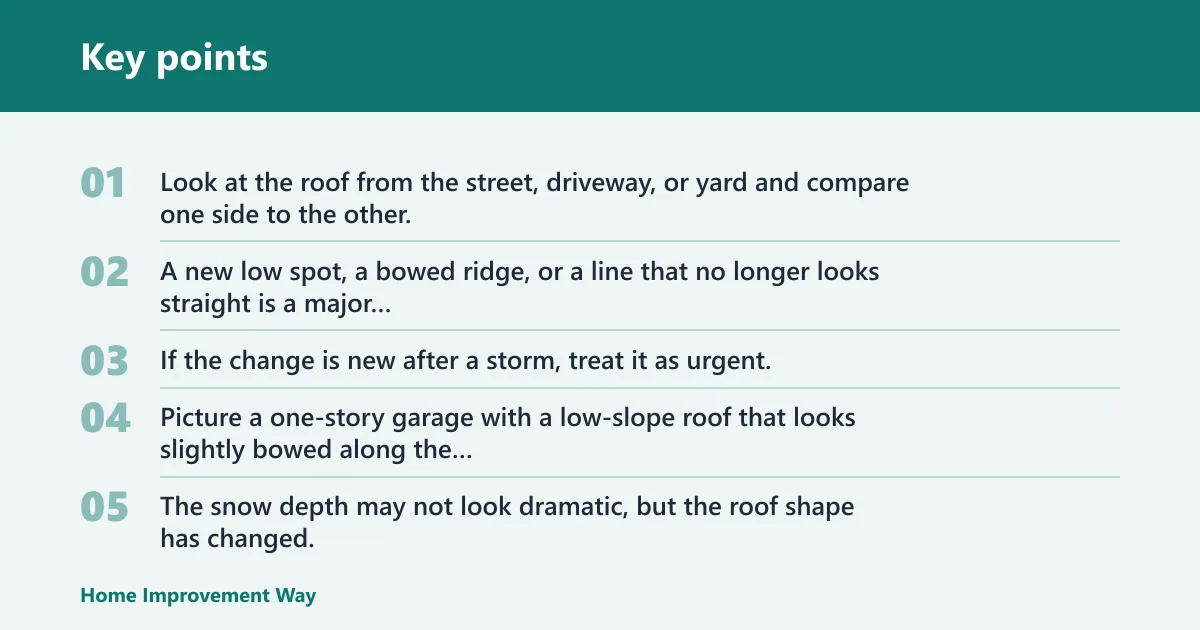
Look at the roof from the street, driveway, or yard and compare one side to the other. A new low spot, a bowed ridge, or a line that no longer looks straight is a major warning sign. If the change is new after a storm, treat it as urgent.
Picture a one-story garage with a low-slope roof that looks slightly bowed along the middle after two wet storms. The snow depth may not look dramatic, but the roof shape has changed. That matters more than the inches on top.
Interior cracks, peeling paint, and fresh stains
New ceiling cracks, peeling paint, or water stains can point to overload, ice dams, or both. Do not assume a stain means collapse is imminent. It does mean water has found a path where it should not be, and the roof system needs attention.
Creaking, popping, or doors that start sticking
New, repeated creaking that tracks with snow accumulating is a warning sign. So are doors or windows that suddenly start sticking, especially if that change shows up in rooms under the heaviest roof section. Those clues can mean the framing is shifting under load.
How do you tell ice dams from overload?
what causes ice dams on a roof is usually a heat-and-refreeze problem, not a framing problem. Ice dams often form at the eaves when attic heat melts rooftop snow and the meltwater refreezes at colder edges. They are common winter roof problems tied to insulation or ventilation issues, and they can force water under shingles even when the roof is not visibly sagging.
Eave ice and icicles
Ice at the eaves, thick ridges along the edge, and long icicles are classic ice-dam clues. They do not prove structural overload by themselves. They do point to heat loss from the attic and refreezing at the roof edge.
Backed-up meltwater and ceiling stains
If stains appear near exterior walls or upper ceilings after a thaw, ice dams are a likely cause. Clogged gutters can trap melting snow and ice, which can add to the backup problem. But a stain plus a sagging roofline should be treated as more than a gutter issue.
Attic heat, ventilation, and insulation clues
Attic ventilation matters because heat buildup can contribute to ice dams and winter roof problems. Poor ventilation and weak insulation let warmth reach the underside of the roof deck, which starts the melt-and-refreeze cycle. If the same house keeps forming ice dams in the same spots, that is a clue to inspect attic conditions, not just the gutters. Building-science guidance from sources such as the U.S. Department of Energy and state extension programs consistently points to balanced attic ventilation and air-sealing as part of ice-dam prevention.
Suppose a ranch home develops thick ice along the front eaves after a warm day and a cold night. The ceiling below stays dry, but the icicles keep growing. That points more toward an ice-dam problem than a structural overload problem, though the two can overlap if the snow stays heavy and wet.
How to estimate roof snow-load risk from the ground
You cannot determine roof safety from depth alone, but you can make a practical estimate from the ground. Start with snow depth, then adjust for snow type, recent rain or thaw, drifting, and roof history. A small amount of wet snow can matter more than a deeper layer of dry powder, especially on older or low-slope roofs.
Use depth as a starting point, not a verdict
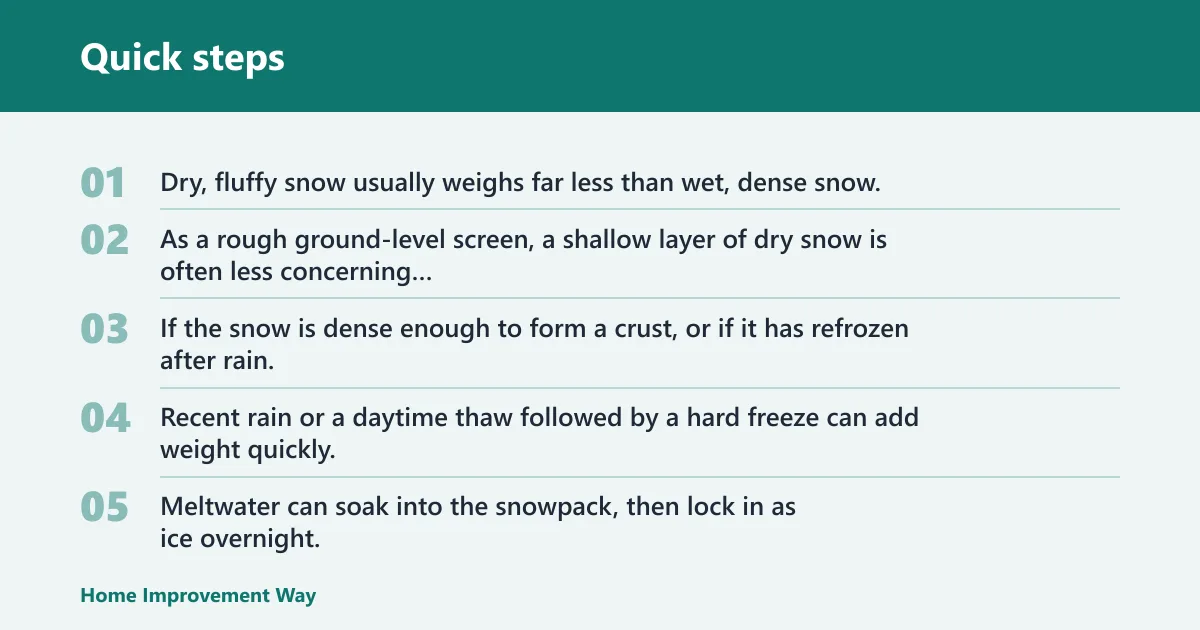
Dry, fluffy snow usually weighs far less than wet, dense snow. As a rough ground-level screen, a shallow layer of dry snow is often less concerning than a compacted or wet layer that has sat through a thaw. If the snow is dense enough to form a crust, or if it has refrozen after rain, treat the risk as higher than depth alone suggests.
Account for rain, thaw, and refreeze
Recent rain or a daytime thaw followed by a hard freeze can add weight quickly. Meltwater can soak into the snowpack, then lock in as ice overnight. That can turn an ordinary-looking roof into a heavier, more dangerous one without much visual change from the ground.
Watch for drifting and uneven loading
Wind can pile snow into drifts along valleys, roof intersections, parapets, and lower sections of a roof. Those drifts create localized load that is not obvious from street level. If one section looks much deeper than the rest, assume the load is uneven and more concerning than average depth suggests.
Remember why roof load differs from ground snow load
Ground snow load is a regional structural design number; it is not a direct roof-reading tool. Roof shape, slope, heat loss, drifting, and previous damage can all change the load pattern. That is why a roof can be stressed even when the snow on the ground does not look extreme, and why local code values like Macomb County’s 25 psf should not be used as a simple household go/no-go threshold.
When should you clear snow from the roof?
Clear roof snow when there are warning signs, when a low-slope section is holding heavy wet snow, or when multiple storms have stacked load on top of old snow. Use a roof rake from the ground. Do not climb onto the roof during snow or ice.
Use a roof rake from the ground
A roof rake lets you relieve load near the eaves while you stay on the ground. That is the preferred approach for homeowners. It can reduce stress where ice dams often start and where meltwater backs up first.
Leave the roof alone if it is icy or steep
Do not go onto the roof during snow or ice. Slippery surfaces, hidden weak spots, and edge drop-offs create fall risk, and the roof itself may be under stress. If the roof is steep, icy, or hard to reach, the safer choice is to stay off it and call a professional.
Why additions, porches, and low-slope sections need faster action
Low-slope roof areas, additions, and porches often collect snow differently than the main roof. Older framing may also have less margin for new loading, especially if there are past leaks or repairs. Those sections deserve faster attention because they can show stress sooner.
Roof snow load triage process
This step-by-step process is designed for quick ground-level decisions after a storm. It turns the warning signs into a simple path: identify the roofline, look for leaks, listen for movement, check the eaves, and escalate only when the signs line up.
- Look at the roofline from the ground.
- Check for fresh stains, cracks, or peeling paint inside.
- Listen for new creaking, popping, or cracking as snow builds.
- Check eaves for ice dams, heavy icicles, or backed-up meltwater.
- Use a roof rake only from the ground if the roof edge is reachable.
- Call a professional if multiple warning signs appear.
Frequently asked questions
How much snow is too much on a roof?
There is no universal inch number that fits every roof. Density, moisture, layering, roof slope, framing, and prior damage all matter. A smaller amount of wet snow can be more concerning than a deeper layer of dry powder, especially if the roof is already showing creaks, stains, or sagging.
How do I figure snow load on a roof?
From the ground, focus on risk signs rather than a depth estimate. Check for roofline changes, ice dams, leaks, new interior cracks, and doors that stick. Snow load is weight, so a roof with wet, layered snow and visible stress deserves more concern than a roof with light powder and no symptoms.
What are the warning signs my roof is overloaded with snow?
The strongest warning signs are a sagging or uneven roofline, new ceiling cracks, and repeated creaking or popping as snow accumulates. Fresh leaks, stains, or peeling paint matter too. If several signs appear together, treat the roof as overloaded and get professional help quickly.
When should I worry about wet snow on the roof?
You should worry when wet snow sits on the roof for days, when it follows a thaw or rain event, or when it stacks on top of older snow. Wet snow can be several times heavier than dry powder, and it can gain more weight after landing if meltwater or rain soaks into it.
Can snow on the roof cause sagging?
Yes. Snow accumulation adds weight to the roof deck, and that load can bend trusses, rafters, or decking if it becomes excessive. A visible dip, wave, or new curve in the roofline is the clearest structural signal and should be treated as urgent, not cosmetic.
Should I remove snow from my roof myself?
Only from the ground, and only with a roof rake if conditions are safe. Do not climb onto the roof during snow or ice. If the roof is steep, icy, or already showing sagging, leaks, or multiple warning signs, it is safer to leave the roof alone and call a professional.
Sponsored / affiliate links. As an Amazon Associate I earn from qualifying purchases. I may earn additional commission from eligible campaigns.
 Extendable Roof Snow Rake for Snow Removal, Telescopic Handle Up to 236 Inch Reach, Reinforced 3-Point Connection, Thickened Hardware, Anti-Slip Lock Grip, Snow Remover for Roof
 197 Inch Extendable Snow Rake for Roofs, Lightweight Aluminum Snow Removal Tool with Anti-Slip Grip and Large Shovel Head, Perfect for Clearing Heavy Snow from House