How to Secure a Rental Door Without Permanent Changes
Use the strongest non-permanent option your lease allows: a floor brace and wedge for inward-swinging doors, or a hinge-side bar for outward-swinging doors, plus a portable alarm if the lock feels weak. A poor fit can leave the door easy to pry or trigger lease issues and fees. This guide matches temporary door security devices to door swing, door type, and threat level, so you can choose without drilling or swapping hardware.
What renter-safe door security means

Renter-safe door security means the device goes on and comes off without drilling, glue, or other permanent changes. It should leave the door, frame, and hardware usable after removal, and it should fit the lease rules you already agreed to.
That usually means you are choosing between removable inside devices, pressure-fit braces, wedges, and approval-based hardware changes. The best choice depends on the door’s swing, the lock style, and whether you want to stop casual entry, slow a kick-in, or add noise if someone tries the door.
No-drill and reversible basics
The starting point is simple: choose devices you can remove cleanly. Portable door locks are made for renters and travelers who cannot install permanent solutions, and door security bars, wedges, and alarms can all be taken off when you move. Bob Vila notes that doorstops help secure inward-opening doors by physically preventing opening, while portable door locks are less effective on outward-opening doors.
Lease compliance and landlord approval
Your lease decides what counts as a modification. Screw-in changes, new holes, or any change to the strike area should usually be treated as approval-only unless your landlord allows them in writing. Prepared 2 Protect frames its apartment-door guidance around permanent changes, and it warns that the advice is not legal advice.
What changes are approval-only
Deadbolt strike plate upgrades fall into that category. They reinforce the latch area and interface with the deadbolt hardware, but they often require permission because they are screw-in changes. If the landlord will not approve hardware changes, stay with reversible devices and ask for repair or replacement of the existing lock instead.
Which door type do you have?
The door’s swing matters as much as the lock. A device that works well on an inward-opening bedroom door can fail on an outward-opening entry door, even if both look similar from across the hall. Check the swing, the latch depth, the sweep gap under the door, and the clearance at the floor before buying anything.
Inward-opening doors
Inward-opening doors are the easiest fit for temporary security. Door security bars, portable door locks, door stop alarms, and wedges all make more sense here because the door closes toward the room and many devices can brace against the floor or frame. The same source says security bars can help against kicking or shoulder-force entry.
Outward-opening doors
Outward-opening doors are the hard case. The same source notes that doorstops do not work on outward-opening doors, security bars are not effective on outward-opening doors, and portable door locks are less effective on outward-opening doors. That means indoor devices often lose their grip or no longer block the swing path.
Sliding doors and patio doors
Sliding doors need a different approach. A security bar for a sliding door works by bracing the track and blocking panel movement from inside, which makes it a related renter concern for patio and balcony sliders. It does not replace a deadbolt, but it can stop the panel from opening along the track.
Rental door security decision table
Use this table to match the device to the door instead of buying by label alone. The “failure risk” column tells you what usually goes wrong when the fit, swing, or floor contact is wrong. The 30-second test is the fastest way to see whether the device is actually doing its job.
| Door swing | Door material | Lease restriction | Primary threat | Best no-drill option | Failure risk | 30-second installation test |
|---|---|---|---|---|---|---|
| Inward-opening | Solid-core or hollow-core | No drilling, no hardware swap | Opportunistic entry | Portable door lock | Low on inward doors; weak fit on outward doors | Close the door, engage the lock, then pull the knob and push the door from inside. It should stop before the latch area moves. |
| Inward-opening | Any interior material | No tools allowed | Kick-in force | Door security bar | Needs solid floor contact and correct handle height | Set the bar, lean into the door, and watch for slipping at the floor. If it skates, the brace is not set. |
| Inward-opening | Any interior material | No tools allowed | Noise deterrence | Door stop alarm | Works only when the wedge grips the floor | Place the wedge, open the door gently, and confirm the siren sounds immediately. |
| Outward-opening | Solid-core preferred | No permanent change | Shoulder-force entry | Hinge-side bar or approved hardware | Many indoor braces lose pressure on outward swing | Close the door, set the brace, and tug the handle outward. If it shifts, the geometry is wrong. |
| Sliding patio door | Glass and frame panel | No drilling in track or frame | Panel movement | Track-bracing security bar | Poor fit if the bar is too short or too long | Seat the bar in the track, then try to slide the panel an inch. It should not move. |
| Bedroom or bathroom | Light interior door | No mark left behind | Privacy and delay | Rubber wedge | Low floor grip on smooth tile or gaps under the door | Wedge the door and press on it from outside. If it slides, the floor grip is too weak. |
How to read the table
If the door opens inward, you have more choices. If it opens outward, the device must work around the swing path instead of against it. If the lease forbids holes, avoid screw-in changes unless you get approval. If the threat is only casual entry, a wedge or portable lock may be enough; if the concern is kick-in force, use a bar or barricade-style device.
Say your apartment entry door opens inward, has a half-inch sweep gap, and the deadbolt feels loose. A portable door lock can help if it fits the existing strike plate or latch, but a door security bar gives better resistance if the floor is level and the handle height matches the bar.
What is the best temporary lock for a rental door?
A portable door lock is often a good temporary option when you have an inward-opening door and a standard latch or strike plate. It is indoor use only, removable, and made for renters who cannot add permanent hardware. If the door opens outward, its usefulness drops fast, so a different device may be a better fit.
Portable door lock
A portable door lock typically fits at the existing strike plate or latch and adds a second inside barrier without drilling. It is most useful on inward-opening doors in apartments, hotel stays, short-term rentals, campus housing, bedrooms, and bathroom doors. The main limitation is geometry: if the door opens outward or the latch area is unusual, the lock may not seat correctly.
Door security bar
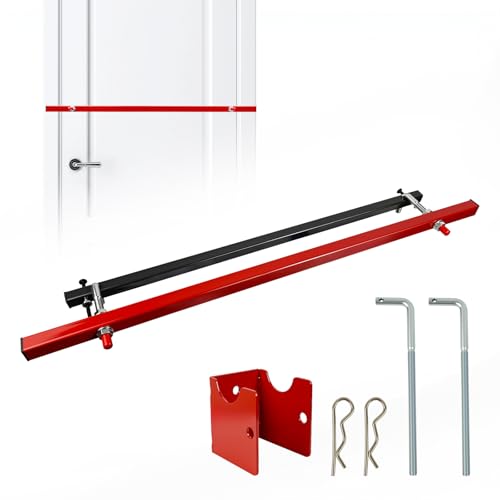
A door security bar is a floor-to-handle brace that resists kick-in force by pushing against the floor and handle area. It can be pressure-mounted or wedged, and it folds for storage. TremShield describes it as the single biggest upgrade per dollar for a renter. The catch is fit: it works best for inswing doors and needs steady contact with the floor.
Door jammer or barricade bracket
A door jammer or barricade bracket is a secondary inside barrier. Portable and semi-portable versions exist, but they depend on floor and handle geometry, so reversible setup does not mean universal fit. These devices can work well when the door, floor, and handle line up, but they fail quickly if the angle is off.
Can a door stop alarm help too?
Yes. A door stop alarm works best as a second layer, especially on inward-opening doors where you want both a physical block and an audible warning. It is not the strongest barrier by itself, but it is useful when you want a cheap, tool-free option that may startle an intruder and alert you at the same time.
When a wedge alarm fits best
A door stop alarm uses a wedge shape, needs no tools, and is best for inward-opening doors. The same source says its siren reaches 120dB. That makes it a dual-purpose option: it blocks the door at the floor and adds a loud alert if the door moves.
How the siren deters entry
The value is speed. The alarm goes off as soon as pressure shifts the wedge, which can stop a casual attempt before the door opens farther. For a bedroom, bathroom, or a weak interior entry door, that noise can be enough to turn a try into a retreat.
Where it falls short
It falls short when the floor is slick, the gap under the door is too large, or the door opens outward. It also should not be treated as a stand-alone fix for a loose frame or a weak deadbolt. If the door can still move around the wedge, the alarm is only part of the answer.
How do you secure an outward-opening rental door?
Outward-opening doors are harder to secure with renter-friendly devices because many indoor braces depend on the door pushing into the room. In that case, you usually need a hinge-side solution, a device approved by the landlord, or a hardware repair that makes the lock area stronger. The usual inward-door tricks often do not fit.
Why many indoor devices do not fit
Portable locks, doorstops, wedges, and many bars are commonly designed for doors that swing inward. The same source says doorstops do not work on outward-opening doors, portable door locks are less effective on outward-opening doors, and security bars are not effective on outward-opening doors. That is a geometry problem, not a product problem.
What still works without drilling
A hinge-side bar or a reversible barricade may work if the floor and handle geometry line up, but it still has to be checked carefully. The safest no-drill choice is the one that stays inside the room, does not block your own exit, and can be removed in seconds. If it does not seat cleanly, skip it.
Suppose a front door opens outward into a hallway and the lease bans holes in the frame. A door bar made for inswing doors will not help much, while a reversible inside barrier or a landlord-approved hardware change may be the only workable path.
When landlord-approved hardware is the only fit
If the door has a weak strike area, loose screws, or a latch that barely catches, a landlord-approved deadbolt strike plate upgrade may be the real fix. It reinforces the latch area and can make the existing lock hold better under force. Without approval, keep the change list to reversible devices only.
Sliding door security for renters
Sliding doors need inside placement and track-bracing use. A security bar for a sliding door helps block panel movement on patio or balcony sliders, which can be useful when the lock itself is light-duty. Keep the setup on the inside so you can remove it quickly and still get out in an emergency.
Track-bracing options
Look for a bar that fits between the frame and the moving panel or one that braces in the track itself. The point is to prevent the panel from sliding, not to replace the factory lock. If the panel has extra play, add the bar first and then check whether the lock still lines up cleanly.
Panel movement limits
Track security depends on tight contact. If the bar is too short, the panel can move. If it is too long, it will not seat. Test by trying to slide the panel an inch after the bar is in place. Any movement means the device needs a better fit or a different length.
What can fail even with a good device?
Good hardware can still fail when the door assembly is weak. Loose strike plates and weak screws let the latch area flex. Frame movement and hinge issues reduce the benefit of a brace. Hollow-core doors can flex more than solid-core doors. Poor floor contact can make a bar or wedge slide out of position.
Loose strike plates and weak screws
If the strike plate shifts when the door closes, the lock is already starting from a weak point. That matters for portable locks, deadbolt upgrades, and any device that depends on the latch area. A screw-in upgrade may help, but only if the landlord approves it.
Frame movement and hinge issues
A rigid bar cannot solve a frame that moves or hinges that sag. If the door scrapes, binds, or sits crooked, the device may look secure while the frame still gives way. Fix the hardware alignment first when you can, because the brace only works as well as the door behind it.
Hollow-core doors and poor floor contact
Hollow-core interior doors can flex under force, which makes light wedges and alarms easier to bypass. Floor contact matters just as much. If the brace or wedge rocks, slides, or lands on carpet pile instead of the floor, the device is underperforming.
- Close the door fully and check the swing direction.
- Measure the sweep gap and note any floor clearance issue.
- Confirm whether the latch sits cleanly in the strike plate.
- Set the device according to the door type, not the packaging headline.
- Push or pull the door from inside for 30 seconds.
- Open the door again to make sure you can exit without fighting the device.
Frequently asked questions
How can I secure a rental door without drilling holes?
Use a reversible device that matches the swing direction: a portable door lock for inward-opening doors, a door security bar for inswing entry doors, or a door stop alarm if you want added noise. Check the lease first, because approval is still wise before any screw-in change.
Are portable door locks safe for apartment doors?
They can be safe when they match the door geometry and do not block your own exit. The main risk is a poor fit on outward-opening doors or an odd latch setup. Test the lock before relying on it, and make sure it removes cleanly without damage.
How do I make a rental door harder to kick in without permanent changes?
Use a door security bar or a jammer-style brace if the door opens inward, then add a door stop alarm for alerting. These devices help against kicking or shoulder-force entry, but only if the floor contact is solid and the geometry lines up.
Can I use a security bar on a rental door?
Yes, if the door opens inward and the bar fits the handle height and floor space. The same source says security bars can help against kicking or shoulder-force entry. Bob Vila also says they are not effective on outward-opening doors, so check the swing before you buy.
What can I do if my landlord won’t change the locks?
Focus on no-drill devices that leave no marks: portable door locks, door security bars, door stop alarms, and wedges where the swing allows them. If the existing lock is weak, ask for repair or replacement, but do not assume you need approval for every reversible device.
Sponsored / affiliate links. As an Amazon Associate I earn from qualifying purchases. I may earn additional commission from eligible campaigns.
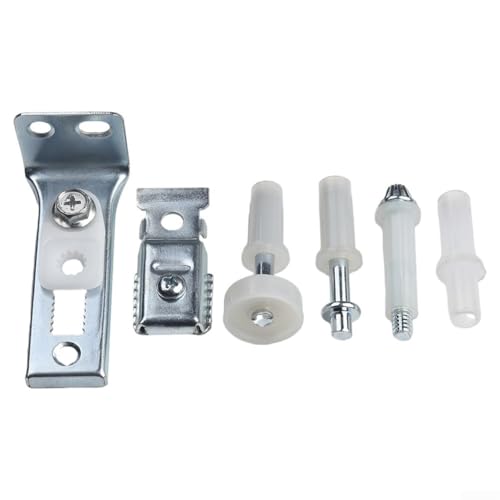 Bi-Fold Door Hardware Repair Kit, Fits 1" to 1-3/8" Thick Closet or Room Doors, Includes Top and Bottom Brackets, Pivots, Guide Wheel for Smooth Operation and Easy Installation
 Bypass Sliding Door Hardware Kit for Closet Doors - Pocket Door Track and Rollers, Double Box Rail Barn Door Hardware for Cabinets