Why Is My Furnace Exhaust Pipe Frozen?
A furnace exhaust pipe freezes when condensate cannot drain, flue gases cool at the termination, or the intake is blocked. Check the termination, the intake, the condensate drain, and vent slope first. Ice left alone can shut the furnace down, send water into the cabinet, or point to a venting fault that needs repair. This article shows how to identify the exact freeze point and what to do next, safely.
Freeze point first
Start with the place the ice forms, not the ice itself. A condensing furnace, typically a 90%+ AFUE system, uses PVC venting and makes condensate, so ice often shows up at the intake or exhaust termination. A non-condensing furnace, often around 80% AFUE, usually uses metal flue venting and has less condensate in the vent path, but it can still have moisture-related vent problems.
The visible pattern tells you a lot. Ice on the outdoor cap points to termination freezing. Ice at the intake opening can point to a combustion-air problem. Water near elbows, loose fittings, or below the unit points to condensate or slope trouble. A blocked venting path is also a carbon monoxide risk, so treat a suspected blockage as a shut-it-down situation.
Exhaust termination vs intake opening
The exhaust outlet can freeze shut when flue moisture meets freezing temperatures at the cap. The intake can ice over in snow or freezing rain and may starve the furnace of combustion air. Those are different failures, so they need different fixes. Clearing one side does not solve the other.
Condensate line vs vent pitch
Condensation is expected in high-efficiency furnace venting. If a blocked condensate drain causes backed-up water in the vent path, or if a frozen drain line is involved, moisture can collect where it should not. Incorrect vent slope can make moisture gather inside the pipe, while proper slope should help moisture drain away.
What the visible ice pattern tells you
Look for dripping at elbows, loose joints, rust, gurgling, and water pooling below the unit. A vent leak may show up as dripping at elbows. Water pooling below the unit is a warning sign. Those clues help separate a termination problem from a drain problem or a loose PVC joint.
Say your high-efficiency furnace shuts off after a night of freezing rain, and you see a white crust on the intake cap but none on the exhaust. That points to intake blockage first, not exhaust icing. Different symptom, different freeze point.
Why does my furnace intake keep freezing?
The intake keeps freezing when snow, drifting snow, or freezing rain blocks the combustion-air opening. That can starve the furnace of air and trigger shutdowns. If the intake is short, placed where drifting piles up, or pointed into the weather, it can ice repeatedly during the same storm pattern.
Snow, drifting, and freezing rain
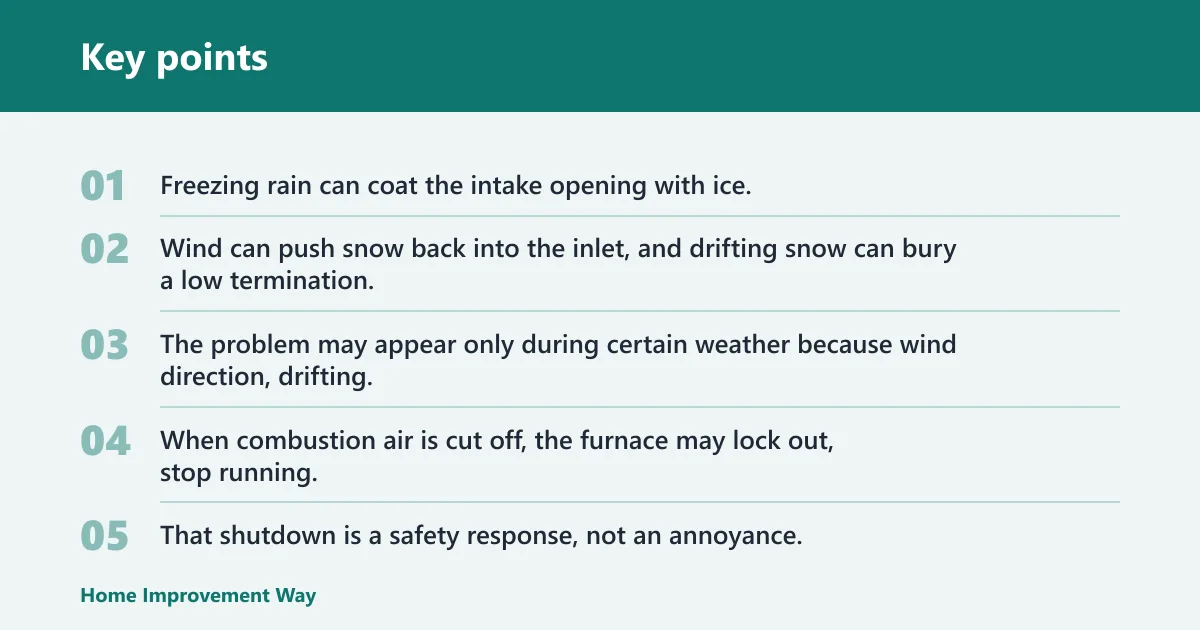
Freezing rain can coat the intake opening with ice. Wind can push snow back into the inlet, and drifting snow can bury a low termination. The problem may appear only during certain weather because wind direction, drifting, and thaw-refreeze cycles change where moisture lands and where it hardens.
How a blocked intake shuts the furnace down
When combustion air is cut off, the furnace may lock out, stop running, or restart and fail again. That shutdown is a safety response, not an annoyance. It keeps the system from running with an unsafe air supply or with venting that cannot support proper combustion.
Signs the intake is the problem
Look for ice on the intake screen or cap, no visible ice on the exhaust, repeated short cycling, or shutdowns after a storm. If the furnace starts again after you clear snow around the inlet and then fails when weather returns, intake icing is a strong suspect.
Why is my furnace exhaust freezing?
The exhaust freezes when warm, moisture-laden flue gas cools too fast at the termination cap and the condensate turns to ice. Short vent runs, poor outlet placement, or recirculation of flue moisture can make this happen. In freezing temperatures, the cap itself can freeze shut and stop venting.
Termination cap icing
The termination cap is exposed to wind-driven snow, freezing rain, and drifting buildup. If clearance from grade or snow accumulation is poor, the cap can freeze shut during storms. Outdoor vent pipes can freeze shut during freezing temperatures, especially when the outlet sits close to snow level.
Flue moisture recirculation
If the exhaust outlet is too close to the intake, or if the outlet placement lets flue moisture drift back toward the termination, the furnace can inhale its own damp exhaust path. That can create recurring icing at the cap and may also affect combustion air.
Short vent and poor outlet placement
Short vents and poor outlet placement can leave the termination in a cold, windy pocket where moisture freezes quickly. A vent that vents into a recirculation zone may ice more often than one in open airflow. That is a layout problem, not a simple thawing problem.
Suppose a PVC exhaust cap is 18 inches above grade and the snow line rises after a storm. The cap may freeze even though the furnace itself is fine. Clearing the area may help once, but the low placement still leaves the system vulnerable.
What causes pipes to freeze in winter?
In furnace venting, winter freeze problems usually come from condensate backup, poor slope, loose fittings, snow loading, or thaw-refreeze cycles. In older non-condensing systems, moisture can also collect in a chimney liner or metal flue. The material and furnace type matter.
Condensate backup and drain freeze
A blocked condensate drain can cause backed-up water in the vent path. A frozen drain line is another listed cause of furnace exhaust water problems. Either one can send water where it does not belong, then let that water freeze at the termination or in the piping.
Improper PVC slope or loose fittings
PVC vent pipe must be installed with proper slope so moisture drains away. If the pipe sags, slopes the wrong way, or loosens at fittings, condensate can pool and leak. That may show up as dripping around elbows, wet joints, or water below the unit.
Wind-driven snow and thaw-refreeze cycles
Wind-driven snow can cover a termination that looked clear earlier in the day. Then a short thaw followed by a freeze can lock that moisture in place. That is why the same furnace may run normally one morning and trip the next night.
Older vented systems
Non-condensing furnaces often around 80% AFUE usually use metal flue venting and create less condensate in the vent path, but moisture can still collect in cold sections. A blocked chimney liner can trap moisture in older vented systems and create freezing or corrosion problems.
Frozen vent decision table
Use the symptom first. Then match it to the most likely freeze point, the probable cause, and the safest next step. If you suspect blocked venting or carbon monoxide risk, shut the system down and call for professional inspection.
| Symptom | Likely freeze location | Probable cause | Safe homeowner action | Professional-only fix |
|---|---|---|---|---|
| Ice on the outdoor cap; furnace stops in a storm | Exhaust termination cap | Wind-driven snow, freezing rain, or poor clearance from grade | Shut the furnace down if venting is blocked; clear nearby snow only if the cap is visible and reachable without climbing | Reset termination height or location; replace a cap that encourages freeze shut conditions |
| No ice at exhaust, but the unit shuts off after snowfall | Intake pipe | Snow or freezing rain blocking combustion air | Remove snow around the inlet if it is safe to reach; stop if the intake is buried or the unit keeps faulting | Relocate or extend the intake; correct placement that traps drifting snow |
| Water at the furnace, gurgling, or damp PVC | Condensate drain or vent path | Blocked condensate drain or frozen drain line | Turn the system off if water is pooling; do not open the cabinet | Clear the drain, check the trap, and repair the drainage route |
| Dripping at elbows or moisture at joints | PVC vent pipe | Improper vent slope or loose fittings letting condensate pool or leak | Note the locations of wet joints and stop if the vent is visibly disconnected | Reslope or refit the vent so moisture drains away |
| Problem returns during wind or drifting snow only | Termination area | Snow-drift recirculation or poor outlet placement | Clear snow from around the outside terminations if safe; watch for repeat shutdowns | Change termination placement, spacing, or outlet design |
How do you prevent vent icing?
Keep terminations clear of snow, check that the vent slope lets moisture drain away, and make sure joints stay secure. If icing repeats, the layout likely needs professional attention. A recurring freeze is usually a venting or drainage problem, not a one-time weather fluke.
Keep terminations clear of snow
Clear snow from around the intake and exhaust only when the cap is accessible and you can do it without ladders or roof work. If the system keeps shutting down or the cap freezes again after a short time, stop and call for service. Repeated blockage can mean the outlet needs redesign.
Check for proper vent slope and secure joints
On PVC vent pipe, slope should help moisture drain away. Loose fittings can let condensate leak or pool, so wet elbows and discolored joints deserve attention. Do not open the furnace cabinet or alter the vent yourself.
Schedule service when icing repeats
Repeated icing can point to short vents, poor outlet placement, recirculation of flue moisture, or a condensate system that may not be draining as intended. A professional can inspect the vent path, drain line, cap placement, and combustion air setup without guesswork.
Frequently asked questions
Why does a furnace freeze up?
A furnace freeze-up usually starts at a blocked intake, frozen exhaust termination, or condensate problem in a high-efficiency system. The furnace may shut down to protect itself. If the vent is blocked, treat it as a safety issue and stop the system until the cause is found.
What causes hvac to freeze up
In heating equipment, freeze-up usually means moisture cannot drain, the vent intake is blocked, or the termination is icing over in winter weather. With a condensing furnace, condensation is expected, but it should move out of the system. If it does not, water can freeze where airflow is weakest.
What if my pipes freeze?
If furnace vent pipes freeze, turn the system off and clear only what is safe and visible outside. Do not use an open flame to thaw pipes. If the blockage is inside the vent, if the unit keeps shutting down, or if you see water damage, call for professional inspection.
Why do pipes freeze in winter?
Pipes freeze in winter when cold air, wind, and moisture meet a surface that holds water long enough to freeze. In furnace venting, that can happen at the intake, exhaust cap, or in a low spot where condensate pools. Wind, drifting snow, and thaw-refreeze cycles make it worse.
What causes frozen pipes to burst
When water freezes, it expands and can split weak pipe sections, loose fittings, or trapped drains. That risk is one reason blocked furnace venting needs prompt attention. If water has already backed up into the system, shut it down before more damage or a worse blockage develops.
Sponsored / affiliate links. As an Amazon Associate I earn from qualifying purchases. I may earn additional commission from eligible campaigns.