
Are Heavy Drapes Better Than Blinds for Warmth?
Heavy drapes usually keep a room warmer than blinds, but blinds can be the better pick when you need daily light control, a view, or a tighter fit around the window. Pick the wrong covering and you may still lose heat through drafts and cold glass, while paying for a treatment that does little to fix the problem. This guide compares warmth, fit, and everyday use so you can choose the right window covering for winter.
How covering type and fit drive comfort and heat retention


Yes, usually. Heavy, floor-length drapes with a thermal lining do the best job among common interior window coverings because they cover more of the opening and cut radiant loss to cold glass. Even so, the gain is often modest compared with air sealing or better glazing, so the main payoff is comfort rather than a large drop in heating load.
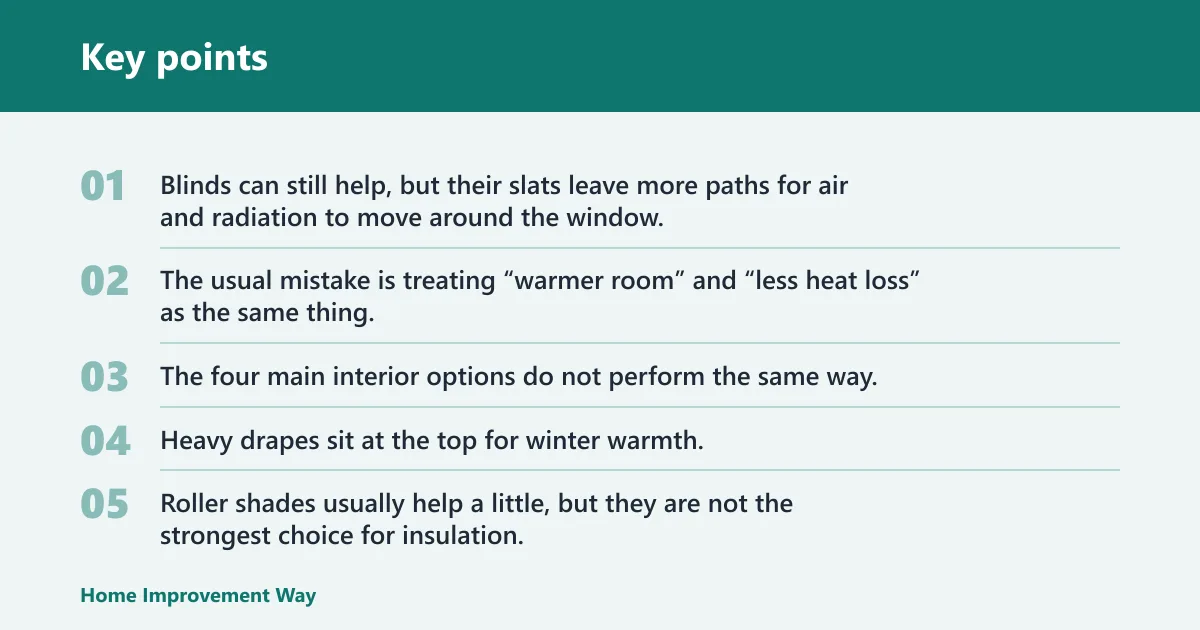
What matters most is not the fabric alone. Full coverage, control of side gaps, and whether the drapes stay closed at night matter more than a slightly thicker weave. Blinds can still help, but their slats leave more paths for air and radiation to move around the window.
What the question really asks: comfort feel versus heat loss
The usual mistake is treating “warmer room” and “less heat loss” as the same thing. A room can feel warmer because the glass surface feels less cold, even if the indoor air temperature changes very little. That is why window coverings often improve comfort more than they cut the heating bill.
Cold windows lower mean radiant temperature. In plain terms, your body loses more heat to a cold surface than to a warmer one, so the room feels draftier than the thermostat suggests. When you close a covering at night, you create a warmer surface between the room and the glass, which reduces that chill.
How drapes, blinds, curtains, and shades compare
The four main interior options do not perform the same way. Heavy drapes sit at the top for winter warmth. Blinds give better adjustability. Curtains sit closer to the middle. Roller shades usually help a little, but they are not the strongest choice for insulation.
| Covering | Winter warmth | Comfort feel | Light control | View | Side-gap risk | Best window types |
|---|---|---|---|---|---|---|
| Heavy drapes | Best among conventional interior treatments | Strong, if fully closed | Low to moderate | Poor when closed | High if short or poorly mounted | Single-pane windows, large windows, patio doors |
| Blinds | Modest | Moderate | High | Good to excellent | Moderate | Tighter windows, rooms needing daily adjustment |
| Curtains | Lower than heavy drapes | Moderate | Moderate | Poor to moderate | Moderate to high | Bedrooms, living spaces, general privacy use |
| Roller shades | Modest | Light to moderate | Moderate | Good when raised | Moderate | Inside-mount openings, simpler window frames |
Heavy drapes
Floor-length, thermally lined drapes are often a strong choice because they cover more of the opening and can help keep cold air and radiant loss away from the room. The floor-length part matters. If the panel stops short of the sill, warm room air can spill around the bottom edge and cold glass still steals comfort.
Thermal fabric helps, but coverage matters more than thickness alone. A well-fitted pair that closes across the whole window can beat a heavier set that hangs too short or leaves large side gaps.
Blinds
Venetian and other horizontal blinds are easier to tune during the day. They can be tilted almost vertically to block most sunlight or left fully open with slats parallel to the floor. That makes them better for glare control and view than drapes, but their thermal benefit is usually smaller.
Blinds can trap a small amount of air between the slats and the glass, so they are not useless in winter. Still, that air layer is modest compared with the coverage a drape gives when it fully closes the opening.
Curtains
Curtains are usually lighter and more decorative than heavy drapes. They still help with privacy and can cut winter chill when closed, but they generally give up some thermal performance because the fabric is thinner and the fit is less complete.
They can still reduce solar heat gain when closed in warm weather, which matters in south-facing rooms. For winter, though, they sit below floor-length thermally lined drapes and above many basic shades in comfort gain.
Roller shades
Roller shades fit inside the window casing and come in many fabrics and weaves. They provide modest energy benefits by adding a small amount of insulation, but they insulate less than fabric curtains.
That inside mount can help with a cleaner look and less fabric bulk. It can also leave more exposed frame area than a full drape, which limits winter warmth.
Why drapes usually feel warmer
Drapes usually feel warmer because they cover more of the glass, reduce the cold surface you sense near the window, and cut more of the radiant exchange that makes a room feel chilly. When they are floor-length, thermally lined, and fully deployed, they give the strongest comfort gain of the common interior options.
Floor-length coverage and side-gap control
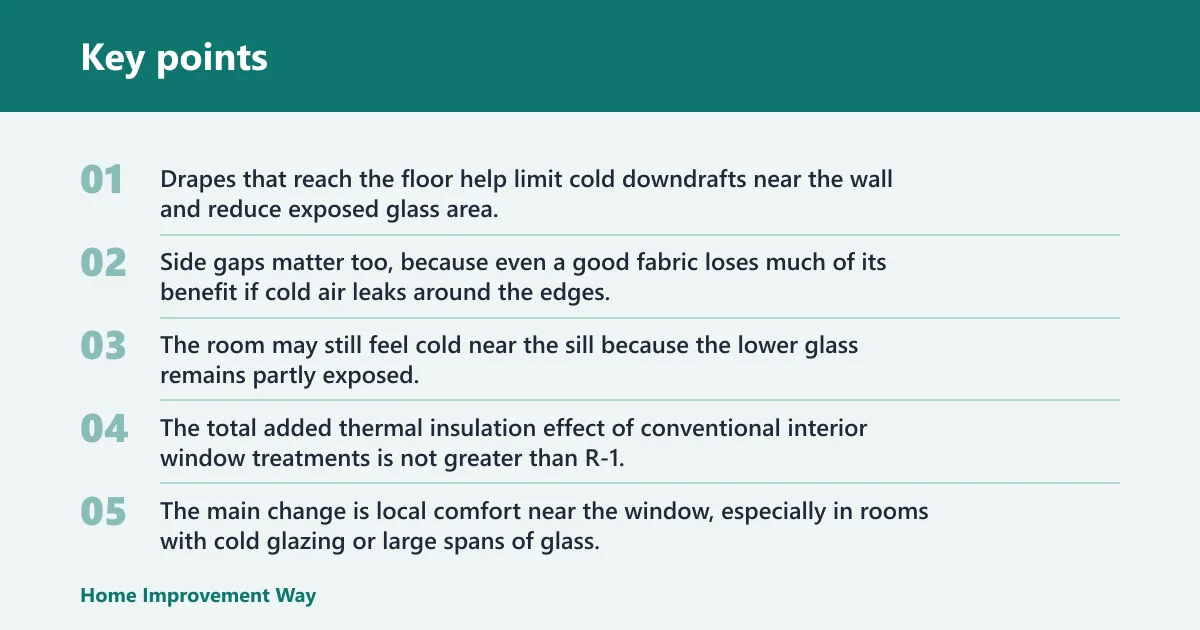
The bottom edge matters. Drapes that reach the floor help limit cold downdrafts near the wall and reduce exposed glass area. Side gaps matter too, because even a good fabric loses much of its benefit if cold air leaks around the edges.
For example, a 72-inch-tall window with drapes that stop about 4 inches above the floor may still feel cold near the sill. The room may still feel cold near the sill because the lower glass remains partly exposed. If the same drapes hang to the floor and overlap beyond the frame, the comfort gain is usually better without changing the fabric at all.
Thermally lined fabric and trapped air
Thermally lined drapes work partly because the lining adds resistance and partly because the fabric can trap a thin layer of air. That trapped air is a small buffer, not a full insulation upgrade. The total added thermal insulation effect of conventional interior window treatments is not greater than R-1.
That is why claims of dramatic heat savings are usually too strong. The main change is local comfort near the window, especially in rooms with cold glazing or large spans of glass.
Why fully closed drapes matter at night
Closed drapes help most when they stay fully shut during the coldest hours. If they are left open at night, or pulled loosely to the sides, the glass keeps radiating cold into the room. The comfort gain drops fast when the treatment is not deployed.
A common first-timer mistake is buying a thick panel, then leaving a wide stack of exposed glass at both sides. The fabric looks substantial, but the room still feels chilly because the coverage is incomplete.
Can blinds still help in winter?
Yes. Blinds can give small insulation because they slow air movement and trap a little air near the glass, and they are often better than drapes when you need frequent light control, a view, or less bulk around the window. Their winter warmth is modest, but their flexibility is real.
How blinds trap a small air layer
When blinds are closed, the slats and cords create pockets that slow direct heat exchange. That effect is limited, but it is enough to make closed blinds feel better than bare glass. The improvement is smaller than what you get from full drapes, especially on very cold nights.
Interior blinds, curtains, and drapes can each be adjusted for energy benefit. The difference is how fully they cover the opening and how well they manage gaps, not whether they have any effect at all.
When view and glare control matter more than warmth
Blinds can win when a room needs daylight management all day. Venetian blinds can be tilted to cut glare while still keeping some view, and they can be opened quickly for a bright room. That makes them a better fit for offices, kitchens, and living rooms where the window is used often.
They are also useful on terrace or sliding-glass doors, where vertical blinds are common. Full drapes can work there too, but they may interfere with frequent traffic and daily use.
Why fit quality can narrow the gap
Blinds that fit tightly inside the casing reduce the exposed edges and can perform better than a sloppy drape installation. The payoff still stays modest, but a good fit narrows the warmth gap more than many homeowners expect.
That said, a precise fit does not turn blinds into heavy drapes. It just removes some of the avoidable loss from side gaps and mounting mistakes.
What low-e and single-pane windows change
Window type changes the decision. Single-glazed windows are cold to the touch and make a room feel chilly much faster than better glazing. Low-e windows change the payoff in the other direction because they already reduce heat flow and solar gain, so coverings matter more for comfort than for big energy cuts.
Single-glazed windows and cold-surface discomfort
Single-pane glass is often one of the clearest cases for heavy drapes. Cold glass lowers mean radiant temperature, and drafty frames make the problem worse. Interior coverings matter more here because they can create a warmer inner surface between you and the window.
Do heavy drapes help with single-pane windows in winter? Yes, more than with better glazing. They are one of the few indoor changes that can make the room feel less harsh without opening the wall or replacing the window.
How low-e glass changes the payoff
Low-e windows already limit solar gain reaching the interior side, so there is less heat for coverings to block. That does not make drapes pointless. It just means the main benefit shifts toward comfort near the glass instead of a large energy cut.
In a low-e room, a shade or blind may be enough if you mainly want glare control and privacy. Heavy drapes still help at night, but the difference from blinds may be smaller than it would be on a weak old window.
Large windows and sliding doors
Large glass areas magnify both the problem and the benefit. The larger the window, the more a cold surface can pull down comfort. Heavy drapes are often the better winter choice for picture windows and patio doors because they cover more area and reduce the chill more effectively.
Vertical blinds are common on terrace or sliding-glass doors because they move easily out of the way. That convenience matters. If the door is opened often, a drape that blocks access may be a poor fit even if it is warmer when closed.
Decision table for winter window coverings
Use the table below when the choice is not obvious. The rule is simple: pick the covering that matches how you use the window, not the one that sounds warmest in a product listing.
| Window type or use | Choose drapes if… | Choose blinds if… |
|---|---|---|
| Single-pane window | You want the best comfort gain and can keep the panels fully closed at night | You need daily daylight changes and only want a modest thermal boost |
| Double-pane window | The room still feels cold near the glass and you can cover the whole opening | You want better view and glare control with less fabric bulk |
| Low-e window | You care more about night comfort than daytime view | You mostly want control over light, privacy, and sightlines |
| Large window or patio door | The opening is used less often and you can manage side gaps well | The window is a traffic path or needs frequent opening and closing |
| Room with frequent sun and glare | You can close the drapes after sunset and do not need a view | You need quick tilt changes through the day |
Choose drapes
-
Match the coldest windows. Use drapes first on single-pane windows, drafty rooms, and large spans of glass where cold-surface discomfort is the main complaint. Those openings benefit more from full coverage than from fine light control.
-
Cover the full opening. Choose floor-length panels that extend past the frame and reduce side gaps. Close them at night and during the coldest part of the day, because partial deployment leaves too much glass exposed.
-
Prioritize comfort over view. Pick drapes when the room is used more for sleeping or evening use than for daytime sightlines. The tradeoff is simple: more warmth, less view.
Choose blinds
-
Need frequent light control. Choose venetian or horizontal blinds when you want to tilt between bright, shaded, and private settings through the day. That adjustment range is where blinds beat drapes in real use.
-
Keep the view open. Use blinds when the window matters as a view or when you want a cleaner fit inside the casing. Their thermal benefit is smaller, but their day-to-day usefulness can be higher.
-
Handle a used doorway. Pick vertical blinds for sliding doors or terrace doors that are opened often. A drape may insulate better when closed, but frequent use can make that choice impractical.
Frequently asked questions
Are heavy drapes better than blinds for keeping a room warm?
Usually yes. Heavy, floor-length drapes with thermal lining give the best winter warmth among conventional interior coverings because they cover more of the opening and reduce cold-surface discomfort better than blinds. The difference is mostly about comfort near the window, not a dramatic change in room temperature.
Do thermal curtains actually keep heat in?
They help, but the gain is modest. Thermal curtains can reduce the chill from cold glass and slow heat loss when closed, yet the added insulation from conventional interior window treatments is not greater than R-1. Fit, coverage, and nighttime use matter as much as the fabric.
How much warmer do drapes make a room?
They can make the room feel warmer near the window by raising the surface between you and the glass, which improves mean radiant temperature. That comfort gain is often more noticeable than the effect on the thermostat reading. The actual air temperature change is usually small.
Are blinds or curtains better for drafty windows?
Heavy drapes are usually better for drafty windows because they cover more of the frame and give you a better chance of blocking side gaps. Blinds can still help a little, but they are more about adjustability and view. If the window leaks air, sealing it matters first.
Do heavy drapes help with single-pane windows in winter?
Yes, this is where they matter most. Single-glazed windows stay cold and lower comfort quickly, so a floor-length, thermally lined drape can make the room feel less harsh. Close it fully at night for the best result, and keep the side gaps as small as possible.
Should drapes reach the floor for better insulation?
Yes. Floor-length drapes perform better because they reduce exposed glass and limit the escape path for cold air around the bottom edge. Short panels leave more of the window uncovered and reduce the thermal benefit. Good length matters as much as fabric weight.
Do blinds provide any insulation at all?
Yes, but only a small amount. Closed blinds can trap a little air and reduce direct heat exchange with the glass, so they are better than bare windows. Their main advantage is still light control, glare control, and view, not winter insulation.
When should I choose blinds instead of drapes for winter comfort?
Choose blinds when you need frequent daytime adjustment, want to keep the view, or have a window that is opened and used often. On low-e or double-pane windows, the comfort gap from drapes is smaller, so blinds may be the more practical choice even in winter.
Sponsored / affiliate links. As an Amazon Associate I earn from qualifying purchases. I may earn additional commission from eligible campaigns.