How Much Glue Should You Apply for the Strongest Bond?
This article is about cyanoacrylate, or super glue. Use the smallest amount that leaves a continuous, thin film across the joint. With super glue, that usually means one drop at a time, not a flood. A thin bond line wets both surfaces and keeps the parts seated; extra adhesive can trap a soft layer where the joint should close. Reputable adhesive guidance also emphasizes that cyanoacrylate bonds are strongest in a tight fit, with thin bond lines preferred over thick fills.
What amount of glue is strongest?


Glue amount decision table
| Repair scenario | Recommended application pattern | Risk of too much glue | Pressure level | When to switch adhesives |
|---|---|---|---|---|
| Tight wood joint | Use a very thin, continuous film on the mating faces. For a close-fitting wood joint, aim for full wetting without visible puddling. | Glue squeeze-out can starve the bond line and leave a weak joint. Excess adhesive can also haze nearby finish and slow handling. | Light pressure only; enough to close the joint, not crush it. | Switch if the joint has a visible gap wider than a hairline, if the parts spring back open after light hand pressure, or if the fit needs fill rather than wetting. |
| Tiny gap | Use a controlled bead, placed only where the gap needs fill. For very small gaps, keep the adhesive confined to the joint line rather than the surrounding surface. | A bead that is too large can leave a soft or messy bond line and can make alignment harder while curing. | Moderate hold, just enough to keep alignment. | Switch if the gap is more than a narrow hairline, if the joint still shifts under light finger pressure, or if you need working time to position the parts. |
| Porous surface | Expect absorption; size the glue to wet the fibers, then add only as needed. On porous wood, the first drop may sink in, so the goal is a thin film at the interface rather than a surface puddle. | Too little glue can disappear into the pores and leave dry spots. Too much can over-saturate fibers and weaken the near-surface layer. | Light to moderate pressure, depending on the material. | Switch if the surface keeps drinking in glue and still will not form a film, or if the joint needs gap fill after the first wetting pass. |
| Small non-porous repair | Apply drop by drop to one surface only. Use just enough to wet the contacting area and avoid flooding the edges. | Flooding can run, haze nearby areas, and weaken the bond line. On smooth plastics, excess can also make the repair slippery before grab. | Light pressure only. | Switch if the parts need fill, alignment correction, a flexible bond, or a bond line thicker than a thin film. |
| Visible structural gap | Do not build up cyanoacrylate in layers. Use a shim, filler, or a different adhesive designed for gap filling. | A thick glue mass cures less reliably and can become brittle or weak under load. | Do not force-clamp; first correct the fit. | Switch immediately if the gap is more than a narrow hairline or if the pieces do not meet without force. |
The strongest setup is a thin, continuous glue line that still wets both sides. Tight parts need very little adhesive. If the gap is wider than a hairline, stop adding cyanoacrylate and change the repair plan, often to a shim or a different adhesive. Thin bond lines are generally preferred because cyanoacrylate is designed to work best in close fits rather than as a gap filler.
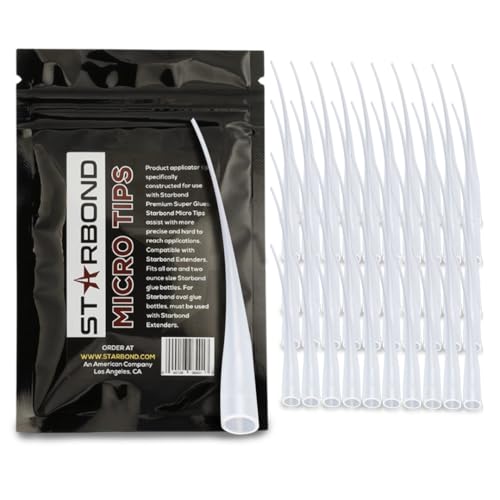
For super glue, the practical rule is drop by drop. One drop can cover a small area, but coverage varies by surface porosity, viscosity, and surface energy, so the right amount is usually smaller than you expect.
Should you put glue on one surface or both?
For cyanoacrylate adhesive, start with one surface only unless the product label or the substrate calls for a different approach. That makes the dose easier to control and cuts down on squeeze-out. Two-sided application fits other adhesive types better, especially when the label calls for it or when a porous material drinks up the first coat.
When one surface is enough
Super glue cures by reacting with moisture in the air and trace moisture on the substrate. It does not need a heavy wet coat on both parts. On clean, close-fitting pieces, one surface is often enough, and you can bring the parts together quickly with light pressure.
When both surfaces or a different adhesive makes sense
Both surfaces matter for some adhesives that are meant to be spread on each side, such as certain contact adhesives. If a joint has a visible gap, a structural adhesive is usually the wrong choice for cyanoacrylate. For a real void, use a gap-filling adhesive, epoxy, or a shim instead of asking cyanoacrylate to fill space it cannot manage.
How surface porosity changes the pattern
Porous wood, drywall, and unfinished edges can soak up part of the adhesive. That does not mean you should add a lot more. It means the first pass may sink into the fibers, so the amount should be enough to wet the surface and leave a thin film at the interface. Porous substrates also change surface energy behavior by exposing higher-energy fiber surfaces and increasing liquid uptake, which is why the same drop can behave differently on sealed and unsealed materials.
Think of a small chair repair on a sealed metal bracket. A single small drop on one side is enough if the fit is tight. On raw end grain, that same drop may soak in, and a second controlled drop may be needed to leave a film on top.
Is a thicker glue layer stronger than a thin one?
No. For super glue, a thicker layer is usually weaker, not stronger. Too much adhesive can cut bond strength, and squeeze-out can leave the parts poorly seated. The goal is a thin bond line that touches both surfaces without a blob trapped between them. Cyanoacrylate manufacturers and materials references consistently note that close-fitting joints outperform thick fills because the adhesive is intended to polymerize in a narrow bond line.
Why excess glue weakens the bond line
When too much adhesive sits between the parts, direct surface contact drops off. That leaves a soft middle layer instead of a tight joint. In small repairs, the best result usually comes from pressure that closes the parts, not from extra adhesive that fills space.
How squeeze-out can starve the joint
Heavy pressure can push glue out of the bond area instead of keeping it where it belongs. That leaves a starved joint: the parts touch in spots, but the adhesive film is too thin or broken. The edge may look neat and still fail under load.
When a gap-filling adhesive is the better choice
If the joint has a real gap, stop trying to solve it by adding more cyanoacrylate. A gap-filling adhesive is the better choice when the parts cannot meet closely. More glue is not a substitute for fit, and it will not fix a badly sized joint.
Suppose a cabinet trim piece has a narrow crack that closes when pressed by hand. A thin film is right. If the same piece has a gap that stays open after light finger pressure, more super glue will not make it stronger. It will only make the repair messier.
If you are dealing with a similar loose-fit repair, related guidance on loose wood joints can help with fit-first troubleshooting, and furniture repair glue choices can help you decide when to move away from cyanoacrylate.
How much pressure should you use?
Use light pressure. For super glue, you want enough force to seat the parts and keep them lined up, but not so much that adhesive gets pushed out of the joint. Clamp force should stay gentle, especially on small repairs where the bond line should remain thin. Recommended clamping is usually light hand pressure or a light clamp, not a forceful squeeze that can leave the bond underfilled.
Use light pressure to seat the parts
Press the parts together with light pressure. The goal is contact, not compression. If the parts slide out of line or glue squeezes out as a wet bead, the pressure is too high. For small repairs, finger pressure is often enough for the first grab.
Clamp only as much as the material needs
Clamp pressure matters more on larger or more complex projects, where the pieces need help staying aligned while the bond starts. Even then, the clamp should hold the parts in place rather than crush the joint. A good clamp supports the fit; it does not force adhesive out.
How long to hold parts together
Initial adhesion happens quickly, but that is not the same as full cure. Hold time depends on the substrate and the environment. Full cure still needs more time, and handling before cure can still weaken the joint.
Answer: hold parts together until they no longer shift under light pressure, then leave them undisturbed for full cure. For many small cyanoacrylate repairs, that means a few seconds of alignment hold and then waiting longer before stressing the joint; the exact timing depends on the material and humidity.
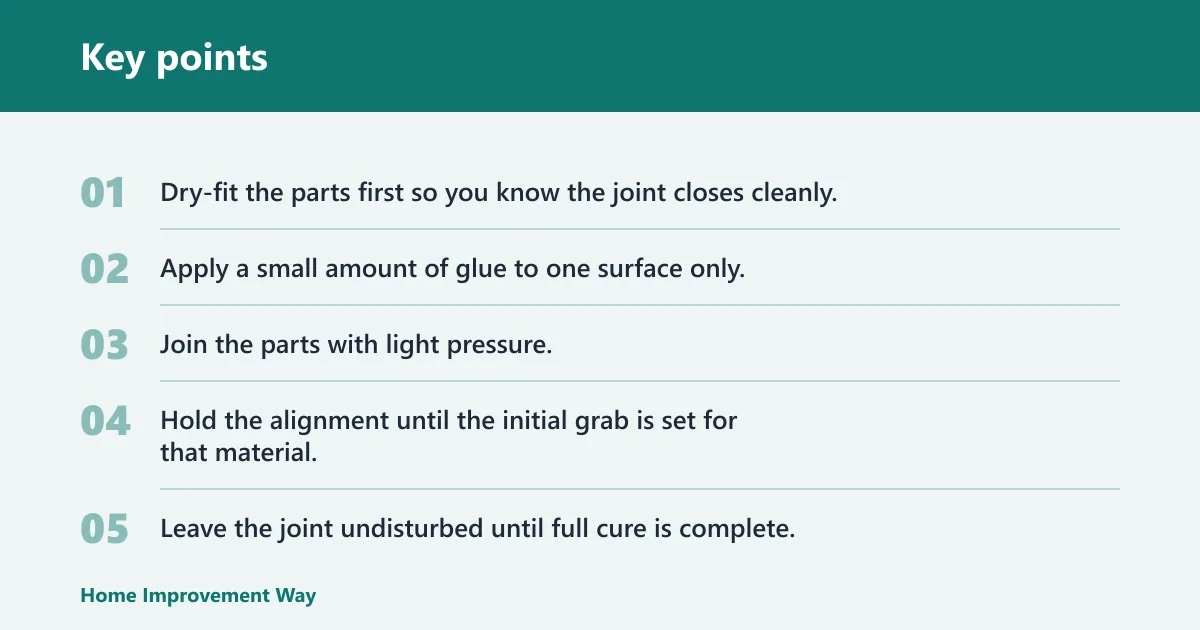
- Dry-fit the parts first so you know the joint closes cleanly.
- Apply a small amount of glue to one surface only.
- Join the parts with light pressure.
- Hold the alignment until the initial grab is set for that material.
- Leave the joint undisturbed until full cure is complete.
A common first-timer mistake is pushing harder because the joint feels loose. That usually makes the bond worse. The better fix is better fit, less glue, or a different adhesive type.
How temperature and humidity change glue strength
Humidity and temperature change how cyanoacrylate behaves. Higher humidity speeds cure time because the adhesive reacts with moisture in the air. Higher temperatures lower viscosity and make glue runnier. Lower temperatures raise viscosity and make glue thicker, which can slow spreading and change hold behavior. Manufacturer guidance also notes that cure speed is influenced by available moisture and substrate conditions, so the same glue can set differently across seasons and rooms.
Why humidity speeds cyanoacrylate cure
Cyanoacrylate adhesives cure by reacting with moisture in the air and on the surface. In higher humidity, that reaction usually moves faster. In lower humidity, the set can slow down. That means the same repair may grab quickly on a damp day and more slowly in dry indoor air.
How temperature changes working behavior
At warmer temperatures, the glue becomes runnier and can flow farther than expected. At cooler temperatures, it thickens and may spread less easily. The practical result is that temperature changes both how the glue leaves the bottle and how it sits on the surface.
How surface energy and pH affect the bond
Bond speed also depends on the substrate. Surface energy varies by material, and that changes how readily the adhesive wets the surface. Low-surface-energy plastics such as polyethylene and polypropylene are notoriously difficult to bond without surface treatment because the adhesive does not wet them well. pH can matter too: basic surfaces may bond faster, while acidic surfaces may slow or inhibit polymerization. That is one reason the same glue can act differently on different materials.
If a repair on metal grabs quickly but the same glue on a smooth plastic edge stays slick longer, the difference is not just the amount used. The surface itself is changing the bond behavior.
Can super glue work better if I add more of it?
No. Adding more super glue rarely improves strength. In most repairs, more adhesive makes the bond line thicker, increases squeeze-out, and can reduce the amount of direct contact between the parts. If the joint feels weak, the usual fix is better fit, cleaner surfaces, or a different adhesive—not a larger dose.
How long should I hold parts together before moving them?
Hold them only until the initial grab is set for that material. That can be seconds, not minutes, on close-fitting cyanoacrylate joints, but the exact hold time varies with substrate, temperature, and humidity. After that, avoid stressing the repair until full cure is complete.
Frequently asked questions
How much glue should I use for the strongest bond?
Use just enough to make a continuous thin film across the joint. For super glue, that usually means drop by drop rather than a large bead. More glue will not increase bond strength, and excess glue may reduce bond strength by weakening the bond line.
Do I need to apply glue to one surface or both surfaces?
For cyanoacrylate, apply glue to one surface only unless the label or the material calls for a different method. That gives you better control over the amount and helps avoid squeeze-out. Both surfaces make more sense with other adhesive types that are designed for that method or when the material is porous and needs extra wetting.
What happens if I use too much glue?
Too much glue can squeeze out of the joint, leave a starved bond line, and reduce strength. It can also make the repair messy and harder to align. If the parts need a thick fill, that is a sign to change adhesive type rather than add more cyanoacrylate.
How much pressure should I use when joining glued parts?
Use light pressure only. Press enough to seat the parts and hold alignment, but not hard enough to force glue out of the joint. For small repairs, light finger pressure is often enough. For larger pieces, use only the clamp force needed to keep the fit true.
Should I clamp glued pieces while they cure?
Clamp only when the parts need help staying aligned. A clamp should hold the bond in position, not crush it. For cyanoacrylate repairs, light pressure is usually enough at the start, and clamping too hard can push adhesive out and weaken the joint.
How do temperature and humidity affect glue strength?
Higher humidity can speed cyanoacrylate cure because the adhesive reacts with moisture in the air. Higher temperature makes the glue runnier, while lower temperature makes it thicker. Those changes affect working time, spread, and the way the bond line forms on the surface.
What is the best way to avoid glue squeeze-out?
Use less glue, apply it drop by drop, and stop pressing as soon as the parts seat. Clean, close-fitting parts need only a thin film. If the joint still pushes glue out, the fit is too tight, the pressure is too high, or the adhesive is the wrong type for the gap.
Safety: gloves, ventilation, and skin contact
Use protective gloves when handling super glue, but choose gloves that fit well and avoid loose sleeves or loose gloves near spinning tools. Cyanoacrylate can bond skin quickly, so keep fingers clear of the joint line, work in a ventilated area, and follow the product label for safe handling and first aid.
Do not wear loose gloves near drills, sanders, routers, or other spinning tools where fabric can catch. If glue gets on skin, do not pull bonded skin apart forcefully; soak and separate gently according to the label or seek medical advice if needed.
Sponsored / affiliate links. As an Amazon Associate I earn from qualifying purchases. I may earn additional commission from eligible campaigns.