How to Clean the Furnace Condensate Drain Line
Clear the furnace condensate drain line with a wet/dry vac, warm water, or a mild vinegar flush, then check the trap, pan, and float switch before you blame the drain alone. A blocked drain can trip the safety switch, stop heat, or send water onto the floor and into the furnace cabinet. This guide shows how to clean the line and verify whether the fault is the drain, condensate trap, drain pan, or float switch.
This guide is part of our Furnace Troubleshooting: Fix Common Winter Heating Problems series.
What you need before you start
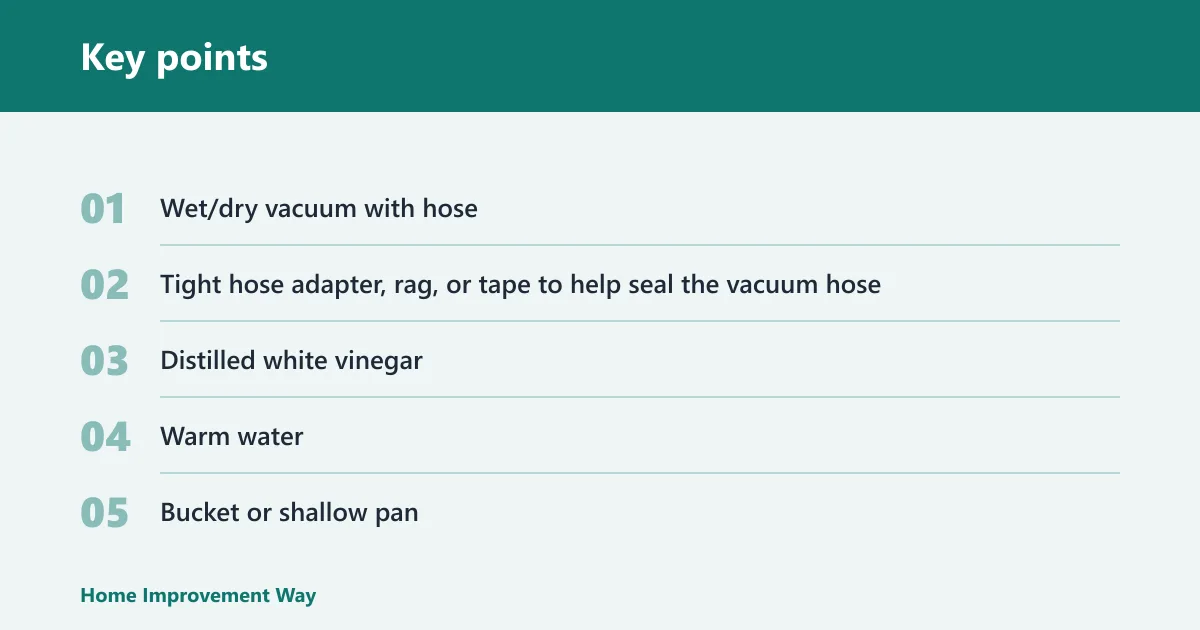


Gather the drain tools first. Start with a wet/dry vacuum, then use a simple flush, then inspect the indoor pan and outdoor outlet so you do not mistake a cracked part for a clog.
- Wet/dry vacuum with hose
- Tight hose adapter, rag, or tape to help seal the vacuum hose
- Distilled white vinegar
- Warm water
- Bucket or shallow pan
- Flashlight
- Towels or rags
- Screwdriver for the access panel if needed
Find the shutoff and cleanout
Turn off the thermostat first, then cut power at the service switch or breaker before opening the cabinet. That keeps the furnace or air handler from starting while your hands are near the evaporator coil, drain pan, or float switch.
Where is the condensate drain?
The condensate drain usually starts at the drain pan under the evaporator coil and runs through white PVC pipe to an exterior outlet or another drain path. On many residential systems, that pipe is 3/4-inch PVC. The cleanout tee is often a vertical capped opening near the indoor unit.
Find the pan under the coil
Look below the evaporator coil section, not at the burner area. In attic, closet, horizontal, and downflow layouts, the pan may sit above or beside the furnace cabinet, and a float switch may be mounted near the pan or line.
Locate the cleanout tee
Many systems have a vertical tee with a removable cap. That cap is the easiest place to add vinegar or water after vacuuming, and it also helps you check whether the line is actually open.
Check the outdoor outlet
Find the PVC outlet where the line exits the house or drains near the condenser. If the system is draining, you should see water leaving there after cleaning. A dry outlet by itself does not prove a clog, but it is a useful clue.
How do you clear the line?
Use suction first. A clogged condensate drain is one of the most common HVAC failures, and a wet/dry vac is the standard first step. Run the vacuum in suction mode only, not blower mode, because forcing air into the PVC line can push debris deeper or pop a loose fitting.
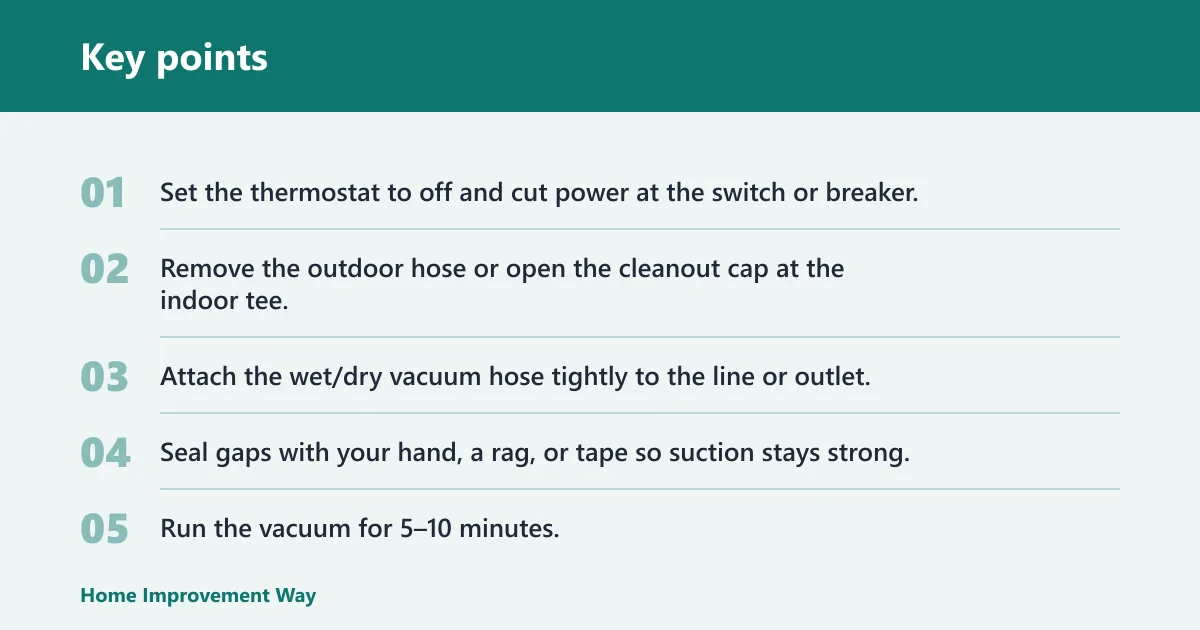
- Set the thermostat to off and cut power at the switch or breaker.
- Remove the outdoor hose or open the cleanout cap at the indoor tee.
- Attach the wet/dry vacuum hose tightly to the line or outlet.
- Seal gaps with your hand, a rag, or tape so suction stays strong.
- Run the vacuum for 5–10 minutes.
- Pour about one cup of distilled white vinegar into the cleanout tee.
- Wait about 30 minutes, then flush with warm water.
- Restore power and check that water drains at the outdoor outlet.
If the line runs outdoors and you hear the vacuum pull slugs of water through the hose, that usually points to a blockage in the drain path, not a cracked pan. If the vacuum never pulls anything and the pan still fills, inspect the pan, trap, and fittings next.
Should you use vinegar, water, bleach, or air?
Distilled white vinegar is a mild flush after vacuuming. It can help loosen slime, algae, and dust, but it is not a substitute for clearing a heavy blockage. Avoid high-pressure air, a plumbing snake, and a garden hose in the PVC line. Bleach is a poor routine choice because it can be hard on parts and does not fix a blocked path better than suction.
What if the pan already has water?
Standing water in the drain pan can mean the system is not moving condensate properly. That can come from a blocked line, a bad drain slope, a loose fitting, a cracked pan, or a float switch that shut the equipment down before overflow.
Look for overflow signs
Check the pan for rust, cracks, and water marks. If the pan is only about 1 inch deep, even a small backup can reach the float switch quickly and may stop cooling before water spills onto the floor.
Check the trap and slope
Make sure the trap is filled and the pipe slopes toward the outlet. A trap that is dry, misaligned, or partially blocked can act like a clog even after the line is cleaned. A disconnected fitting will also leak at the cabinet base.
A common first-timer mistake is cleaning the outdoor end, seeing no water outside, and assuming the line is clear. If the cabinet still has water, the problem may be upstream at the pan, the trap, or a loose joint, not at the exit point.
How to tell a clog from a damaged part
Do not stop at the first clear hose. The leak diagnosis matters. Water at the furnace base can come from the line, but it can also come from a cracked drain pan, a split PVC elbow, poor slope, or a float switch that already reacted to a backup.
Common symptoms and what they mean
- Standing water in the pan: likely blockage, bad slope, or a trapped fitting.
- Water at the furnace base: possible pan crack, loose joint, or overflow.
- Repeated float-switch trips: line may still be restricted or the switch may be mounted incorrectly.
- Dry outdoor outlet: may point to a clog, disconnected line, or no condensate flow.
- Leak returns after cleaning: often a cracked pan, bad slope, or recurring biofilm buildup.
Condensate drain troubleshooting matrix
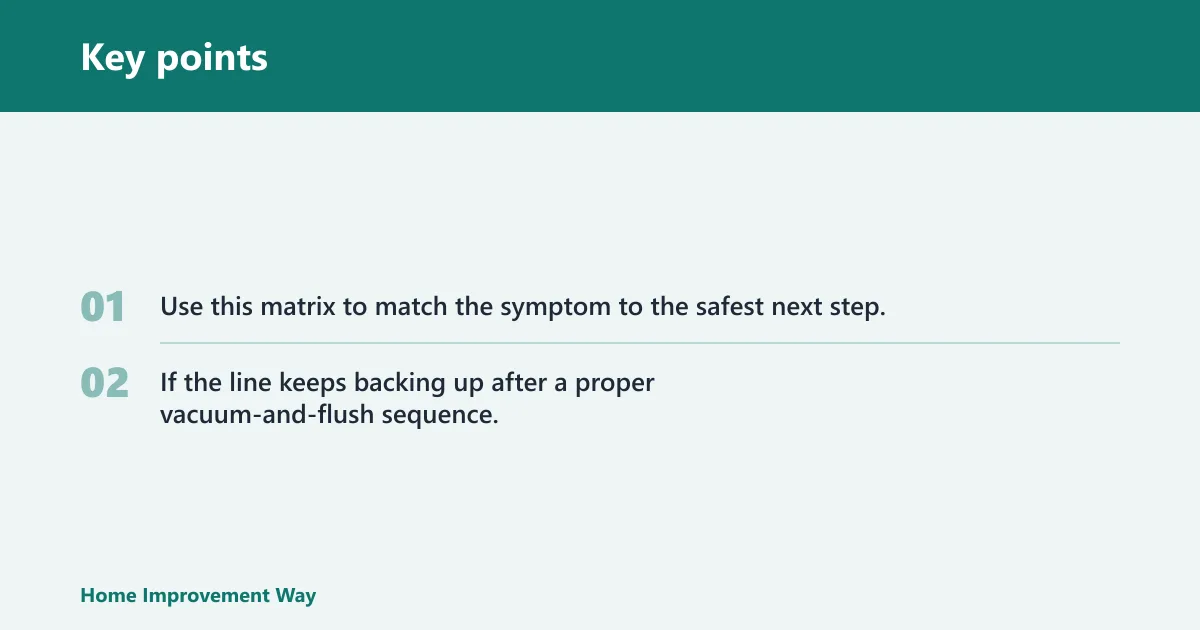
Use this matrix to match the symptom to the safest next step. If the line keeps backing up after a proper vacuum-and-flush sequence, stop treating it like a simple cleaning job.
| Symptom | Likely cause | Safe homeowner action | Stop-and-call pro guidance |
|---|---|---|---|
| Standing water in the pan | Blocked line, bad slope, or pan overflow | Shut off power, vacuum the line, then check the trap and outlet | Call if the pan stays wet after cleaning or shows rust or cracks |
| Water at the furnace base | Loose fitting, cracked pan, or overflow from the pan | Dry the area and inspect visible joints and the pan edge | Call if water reappears after the line is cleared |
| Repeated float-switch trips | Persistent restriction or switch problem | Do not bypass the switch; clear the line and retest | Call if the unit still shuts down with a clear drain |
| Dry outdoor outlet | Clog, disconnected pipe, or no flow from the pan | Check suction at the outlet, then flush through the cleanout tee | Call if the outlet stays dry and the pan still holds water |
| Leak returns after cleaning | Cracked pan, bad slope, or recurring buildup | Inspect for visible damage and recheck all fittings | Call if the same leak comes back within one cycle or two |
When should you stop and call a technician?
Call for service if the blockage returns after vacuuming and flushing, the pan is damaged, the PVC drain is cracked, or the unit still trips after the line is clear. A float switch should not be bypassed. If the system shuts off because of rising water, that shutdown is doing its job.
If your furnace shuts down twice in one afternoon and the pan refills after each restart, the issue is more than surface debris in the line. It often means the trap, drain pitch, or pan itself needs repair, not another flush.
If that did not work, try this next
- Recheck the cleanout tee and vacuum seal.
- Inspect the trap for standing water and the pipe for kinks or bad slope.
- Look for hairline cracks in the pan and around PVC joints.
- Leave the system off until the drain path is repaired.
Prevention is simple: keep the outdoor outlet open, check the pan at the start of cooling season, and clean the line before the float switch has to stop the equipment.
Frequently asked questions
How do you clean a furnace condensate drain line?
Turn off the thermostat and power, vacuum the outdoor outlet or cleanout tee in suction mode, then pour about one cup of distilled white vinegar into the cleanout and wait about 30 minutes before flushing with warm water. Confirm that water exits outdoors.
How do you clean HVAC condensate drain line?
Use the same method on an air handler or furnace tied to a condensate drain: shut off power, clear the line with a wet/dry vac, then flush through the vertical tee if the system has one. Do not use high-pressure air or a garden hose.
Where is the condensate drain on my furnace?
Look near the evaporator coil and drain pan, then trace the white PVC pipe to a cleanout tee or outdoor outlet. On horizontal, attic, and downflow setups, the visible route changes, but the drain still leaves the coil section first.
Should I use a wet/dry vacuum or vinegar to clear the line?
Use the wet/dry vacuum first. Vinegar is a follow-up flush, not the main clearing method. If suction does not pull water or debris, the blockage may be deeper, or the leak may be coming from the pan or a fitting instead.
What should I do if the drain pan already has standing water?
Cut power, then check the line, trap, and visible joints before restarting the unit. Standing water can mean a clog, a bad slope, or a cracked pan. If the pan stays wet after clearing the line, call for repair.
When is a clogged condensate line a sign I need a technician?
Get service if the leak comes back after cleaning, the pan is cracked or rusted, the PVC line is damaged, or the float switch keeps shutting the system down. Those are signs the problem is beyond routine cleaning and needs parts inspection.
Sponsored / affiliate links. As an Amazon Associate I earn from qualifying purchases. I may earn additional commission from eligible campaigns.