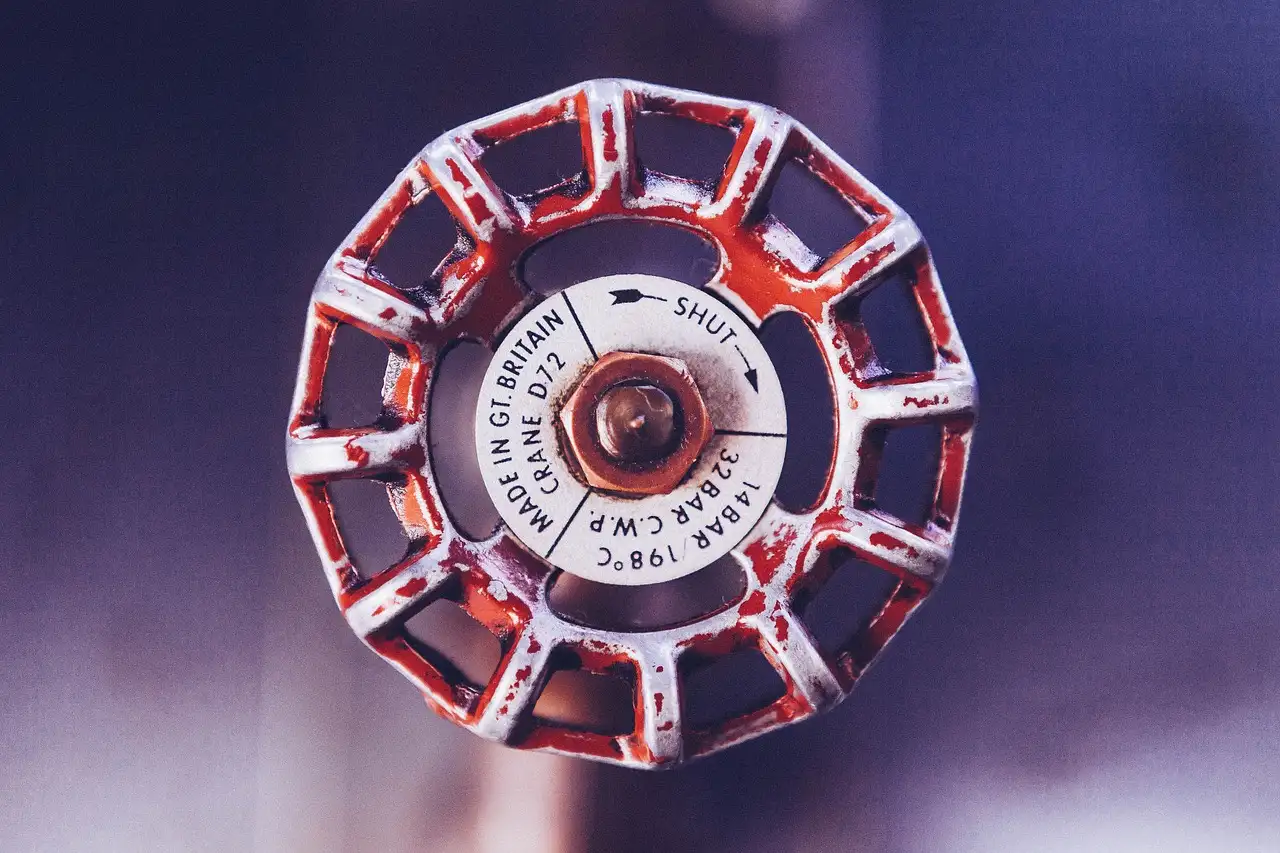
How to Identify a Toilet Shutoff Valve Before Repair
If you need to identify the toilet shutoff valve, start by tracing the toilet’s supply line from the tank to the wall or floor behind the fixture. If there is no local valve, use the home’s main shutoff before starting. Miss the right valve, and you can flood the floor, trap water in the tank, or turn a simple repair into an emergency. This guide shows how to identify the valve by location, handle style, connection type, and signs it may fail.
What you’ll need
- Flashlight
- Towel or small tray
- Adjustable wrench
- Gloves
Where is the toilet shutoff valve?
Most modern toilets have a shut off valve for easy toilet repairs, and the toilet’s shutoff valve is usually behind the fixture. Start by tracing the supply line from the tank to the wall or floor. Look for the valve at the point where that line ends, and compare it with any nearby sink or branch shutoffs so you do not grab the wrong one. The valve is often behind the toilet, but cramped installs can hide it behind tubing or trim. (Wikihow)
Trace the supply line first
Follow the braided or flexible toilet supply line from the tank down to the shutoff. The line ends at the valve, so this is the fastest way to separate the toilet’s valve from nearby pipes. If the line disappears into a floor opening or behind a baseboard, look at the point where the line changes direction.
Check the wall and floor behind the toilet
Look for a small round knob, oval handle, or lever-style handle on the wall or near the floor. The valve may sit close to the toilet bowl, partly blocked by the tank, or tucked behind supply tubing. A flashlight helps when the angle is tight.
In older bathrooms, the valve can be partly hidden by corrosion, a low-profile escutcheon, or a supply line that crosses in front of it. If you can see the line but not the handle, move the towel and check the connection point before touching anything. Do not force a hidden part you cannot identify.
Is it quarter-turn or multi-turn?
There are currently 2 types of toilet shut off valves that are most common. A quarter-turn ball valve closes with about a 90-degree turn, while a multi-turn valve needs several clockwise turns to close. Handle shape, travel, and the closed position tell you which style you have.
Handle shape and travel
Quarter-turn valves usually have a lever handle. When the handle is parallel with the pipe, the valve is generally open. When the handle is perpendicular to the pipe, it is closed. Multi-turn valves usually have a round or oval knob that turns again and again instead of moving through one short arc.
How to tell a ball valve from a stem valve
Newer ball valves only require a quarter-turn to shut off the water. Older gate-style valves require several turns, and Multi-turn Water Stop Valve is more common in older homes. If the handle keeps rotating without a fixed stop after one short swing, you are probably looking at a multi-turn style.
What the closed position should look like
A quarter-turn valve is turned 90 degrees to close. A multi-turn valve usually ends after several clockwise turns when the knob stops moving easily. Turn the shut-off knob clockwise until it stops, then stop turning.
What connection type does it have?
The valve body matters as much as the handle. A compression fitting uses a nut and ferrule, and it is common on many valve replacements. A push-to-connect fitting is tool-free, but it depends on properly prepared pipe and the right pipe material. You may also encounter sweat/soldered or threaded valves, depending on the plumbing. The pipe condition helps decide whether replacement is practical.
Compression fitting clues
A compression valve is secured around the pipe with a nut and ferrule. You will usually see a hex nut where the valve meets the pipe. This type often needs tools for installation, and the pipe must be in decent shape so the ferrule can seal correctly. Dents, pitting, or heavy corrosion can make a replacement harder.
Push-to-connect fitting clues
Push-to-connect valves usually slide onto the pipe without a compression nut. They are often used when the pipe end is cut cleanly and prepared correctly. This style can simplify replacement, but only if the pipe material and size match the fitting. Poorly cut or damaged pipe can lead to leaks.
What pipe condition means replacement may be needed
Look at the exposed pipe behind the toilet. Heavy rust, green corrosion, brittleness, or a bent pipe end can make a new seal unreliable. If the valve is attached to a badly worn supply line, replacement of the toilet supply line may be the safer move before any repair starts.
How do you know it will hold?
Test the shutoff gently before you open the tank or disconnect anything. Close the valve, wait a moment, then check whether the tank stops refilling. If the handle feels loose, leaks at the stem, or the water still moves through, treat the valve as suspect and plan the next step carefully.
Test the shutoff gently
- Turn the shut-off knob clockwise until it stops.
- Flush the toilet once to use the remaining water in the tank.
- Watch the tank for refill and listen for continued flow.
- If water keeps entering, shut off the main water and stop there.
Check for leaks at the stem and connections
Look at the handle area, the nut or ferrule, and the supply line connection after you close the valve. A drip at the handle area points to the packing nut or stem area on some valves. A leak at the connection can mean the supply line or fitting is failing.
Use it, test carefully, or stop and replace
Use it if the valve closes fully and stays dry. Test it carefully if the handle feels stiff but the valve still shuts off and does not leak. Stop and replace, or call a plumber, if the valve will not close, the body is cracked, or the stem leak keeps returning after a small adjustment.
Shutoff valve checklist
Use this checklist before you start a toilet repair. Match what you see and feel to the right action. The goal is to identify the valve, confirm it works, and decide whether it is safe to keep going.
| Location clues | Handle type | Connection type | Failure signs |
|---|---|---|---|
| Behind toilet on wall or floor; supply line runs from tank to valve; usually back left side | Lever handle; one short 90-degree turn; parallel open, perpendicular closed | Compression nut and ferrule, or push-to-connect body with prepared pipe | No drip, handle stops cleanly, tank stops refilling |
| Valve partly hidden by tubing or trim; older home; cramped access | Round or oval knob; several clockwise turns; may feel older and slower to close | Compression fitting with visible nut; pipe shows no severe corrosion | Slow seep at stem, stiff handle, light corrosion but still closes |
| Valve missing or not found after tracing the line | No local shutoff handle present | Unknown or inaccessible | Use the main water shutoff; stop repair until water is controlled |
| Visible rust, bent pipe, or brittle supply line | Handle turns but does not seal well | Any fitting with worn pipe condition | Replace now or call a plumber before opening the toilet line |
Common mistakes
People often treat every shutoff the same. That leads to trouble. Separate the valve type, the connection type, and the failure signs before you touch the toilet.
- Forcing a stuck valve. If it resists hard, stop and use the main water shutoff instead.
- Ignoring a leaking stem. A packing nut may stop a small stem leak, but it does not fix a failed valve body.
- Missing the supply line. If you do not trace the line from tank to valve, you may grab the wrong shutoff.
- Assuming a handle position proves the valve sealed. Always flush and watch for refill after closing it.
- Overlooking the backup. If the fixture valve is missing or failed, the main water shutoff is the correct emergency option.
Say your toilet is in a cramped half bath and the shutoff handle is half-hidden behind a braided line. Trace the supply line first, then use a flashlight to check whether the handle is a lever or a knob. That small step keeps you from forcing the wrong part.
Suppose the valve closes, but a drop forms at the stem after you turn it. Tightening the packing nut may stop a small seep on some valves. If the drip keeps returning, treat the valve body as worn and plan replacement before the repair continues.
Frequently asked questions
Where is the toilet shutoff valve usually located?
It is usually behind the toilet, often where the supply line reaches the wall or floor. Trace the line from the tank first. If the valve is hidden by tubing or trim, a flashlight and a hand mirror can help you spot the handle.
How do I tell if my toilet valve is quarter-turn or multi-turn?
Look at the handle and how far it moves. A quarter-turn valve uses one short 90-degree swing and usually has a lever. A multi-turn valve has a round or oval knob that takes several clockwise turns. The handle position should stop clearly when it is closed.
What should I do if I can’t find the toilet shutoff valve?
Shut off the home’s main water supply before starting the repair. The main shutoff may be in a basement, utility room, or meter box. After the water is off, trace the toilet supply line again so you can plan a local valve replacement later if needed.
How do I know if a toilet shutoff valve is actually closed?
Close the valve, flush once, and watch the tank. If the tank does not refill and the line stays quiet, the valve is likely closed. If the tank refills anyway, or if the handle keeps moving without stopping, use the main shutoff and stop the repair.
What if the toilet shutoff valve is stuck or won’t turn?
Do not force it. A stuck valve can break the stem or start a leak at the packing area. If a gentle clockwise turn does not work, use the main water shutoff and replace the fixture valve before continuing with the toilet repair.
Can I shut off water to just the toilet without stopping the whole house?
Yes, if the fixture valve is present and works. That is the normal setup for most modern toilets. If the valve is missing, failed, or leaking badly, the main water shutoff becomes the safe backup until the toilet valve is repaired or replaced.
Sponsored / affiliate links. As an Amazon Associate I earn from qualifying purchases. I may earn additional commission from eligible campaigns.