Why Are Direct Vent Heaters More Expensive Than Vent Free?
Direct vent heaters are more expensive than vent free models due to their sealed combustion system, complex installation, and stricter safety features. This article breaks down the cost differences and helps you decide which type fits your home and budget.
Simply put, direct vent heaters cost more because they pull outside air for combustion and vent exhaust outdoors, requiring additional pipes, seals, and professional labor. Vent free heaters operate with indoor air and no vent pipe, making them cheaper but raising indoor air quality concerns.
Key Takeaways
- Direct vent heaters use a sealed, dual-pipe system that adds manufacturing and installation costs.
- Vent free heaters cost less upfront but may lead to moisture, odor, or carbon monoxide risks in tightly sealed homes.
- Installation of a direct vent heater typically requires a certified professional and local permits, increasing total price.
- Direct vent models offer higher safety compliance and better performance in energy-efficient homes.
- The price difference between the two types can range from $200 to $800 or more, depending on unit BTU and venting complexity.
How Direct Vent Heaters Work
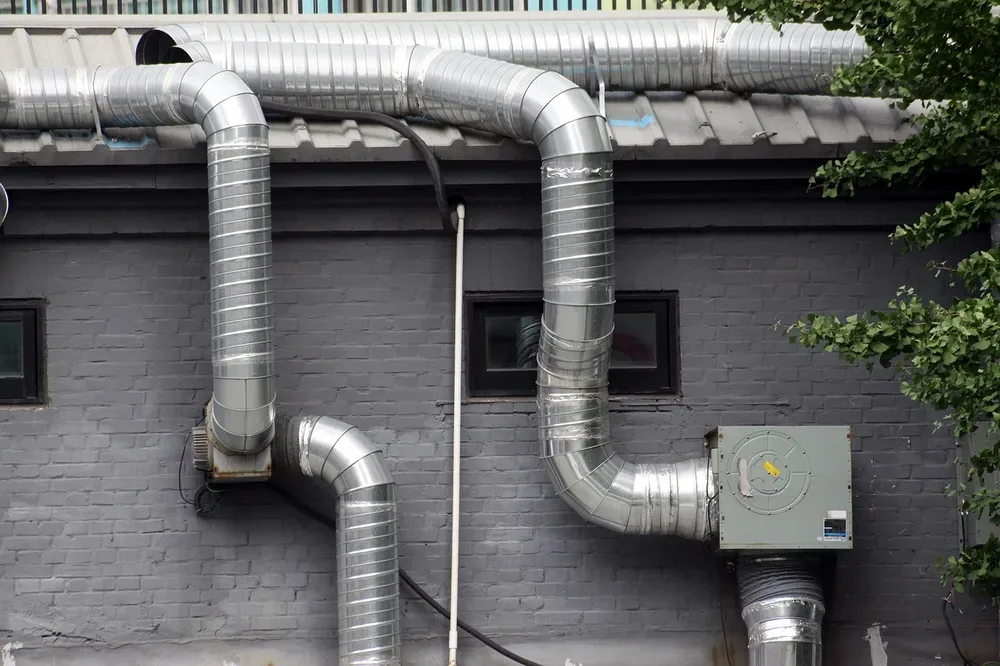
Direct vent heaters draw combustion air from outside the home through one pipe and exhaust flue gases outside through a separate pipe. Both pipes pass through the same wall opening, keeping the system sealed from indoor air. This design prevents drafts and ensures indoor air quality remains unaffected.
Because the entire combustion process is isolated, direct vent heaters can be installed in bedrooms, bathrooms, and other living spaces where vent free units are often restricted by building codes. The sealed system also reduces heat loss through the vent, making these heaters suitable for tightly sealed modern homes.
- Outer pipe brings in fresh outdoor air.
- Inner pipe carries exhaust gases safely away.
- No indoor air is used for combustion – eliminates backdrafting.
- Typical AFUE ratings range from 70% to 82%.
- Requires a wall thimble or roof termination cap.
- Common in gas fireplaces, wall furnaces, and boilers.
Why Direct Vent Heaters Cost More to Manufacture
Building a direct vent heater requires more materials and tighter quality control than a vent free unit. The dual-pipe system alone adds significant raw material expenses – stainless steel or aluminum for the inner pipe, plus galvanized or painted steel for the outer pipe. Seals and gaskets must withstand high temperatures and repeated thermal expansion.
Manufacturers also invest in more precise welding and assembly processes to ensure a leak-free seal. Each unit undergoes pressure testing and certification by agencies like CSA International or ANSI, adding overhead. In contrast, vent free heaters have a simple single-burner design with fewer parts and less stringent testing – the burner just needs to produce low CO levels.
| Component | Direct Vent | Vent Free |
|---|---|---|
| Venting pipes | Two pipes (intake + exhaust) | None |
| Seals and gaskets | High-temperature gaskets (multiple) | Minimal seals |
| Burner assembly | Pre-mix burner for sealed chamber | Simple open burner |
| Control system | Electronic ignition + pressure switches | Manual piezo or millivolt |
| Price increase | +$150 – $500 per unit | Base cost |
The table shows that the extra components in a direct vent heater easily add several hundred dollars to the retail price before installation.
Tip: If you’re comparing prices, always factor in the required vent kit – direct vent units often sell without pipes, adding another $80–$150 to the total.
Installation Costs: Direct Vent vs. Vent Free
Installation labor is a major cost driver for direct vent heaters. Since the venting must penetrate an exterior wall or roof, a hole 3–6 inches in diameter needs to be cut, correctly sealed, and flashed against weather. Many local building codes require a licensed HVAC or gas fitter to perform this work, and permits often cost $50–$200.
Vent free heaters, by contrast, can be installed by any competent DIYer. They simply connect to a gas line and plug into an electrical outlet (if needed). No wall cutting, no vent assembly.
This can save $300 to $800 in installation fees. According to the Hearth, Patio & Barbecue Association (HPBA), about 70% of vent free heaters are installed by homeowners themselves.
-
Direct vent installation steps:
- Choose vent location away from windows and doors.
- Cut hole through wall using a core drill.
- Install vent thimble and seal with high-temp silicone.
- Mount heater securely, connect gas line.
- Assemble concentric vent pipe and attach to appliance.
- Test for leaks and proper combustion flow.
- Obtain final inspection (required in most jurisdictions).
-
Vent free installation:
- Position heater on floor or wall.
- Connect gas supply line (flexible connector usually).
- Verify gas-tight connections with soap test.
- Light burner and check flame appearance.
Warning: Never modify a vent free heater to add external venting – doing so creates a risk of carbon monoxide poisoning. These units are designed to be vent free only.
Safety Standards and Certification Expenses
Direct vent heaters must meet stricter safety standards from ANSI Z21.88 and CSA 2.33, covering flame roll-out protection, high-temperature limits, and sealed combustion integrity. Vent free heaters, regulated under ANSI Z21.11.2, focus mainly on low carbon monoxide output but allow open combustion indoors.
The U.S. Consumer Product Safety Commission (CPSC) has periodically considered restricting vent free heaters due to indoor air quality risks. This regulatory pressure forces vent free manufacturers to use advanced catalytic burners and oxygen depletion sensors (ODS), which add cost – but still far less than the engineering of a sealed system.
A direct vent heater’s certification process includes:
- Leak testing of all joints at pressures above normal operation.
- Wind endurance tests to prevent flame disruption.
- Thermal cycling from room temperature to full heat and back.
- Burner stability tests with variations in gas pressure.
- Electromagnetic compatibility tests for electronic controls.
According to HPBA, certification costs for a new direct vent model can exceed $50,000, compared to about $20,000 for a vent free model – a cost passed on to consumers.
Efficiency and Performance Trade-Offs
Many buyers assume more expensive heaters are automatically more efficient, but that’s not the full story. Vent free heaters achieve up to 99% AFUE because no heat escapes through a flue. Direct vent models typically rate between 70% and 82%.
However, that “lost” heat in direct vent models is offset by improved indoor air quality and reduced humidity.
In a tightly sealed home, vent free heaters can cause condensation, mold growth, and a stuffy feeling. The U.S. Department of Energy notes that a 30,000 BTU vent free heater can release over 1 gallon of moisture per hour of operation.
Direct vent heaters exhaust moisture outside, preserving comfort and building integrity.
Important: Even with lower AFUE, a direct vent heater often provides better overall comfort in modern homes because it doesn’t create drafts or moisture problems. The “wasted” heat from the vent is minimal compared to the cost of repairing water damage.
Comparative Analysis: Direct Vent vs. Vent Free
To summarize the key differences, here’s a side-by-side comparison across important factors:
| Factor | Direct Vent | Vent Free |
|---|---|---|
| Upfront cost (unit only) | $600 – $2,500 | $300 – $1,200 |
| Installation cost | $400 – $1,200 | $50 – $200 (often DIY) |
| Efficiency (AFUE) | 70% – 82% | 99%+ |
| Indoor air quality impact | None (sealed) | Reduces oxygen, adds moisture |
| Allowed in bedrooms | Yes (many codes) | Often restricted |
| Lifespan | 15–20 years | 10–15 years |
| Resale value contribution | Moderate positive | Minimal to negative |
As shown, the higher upfront expense of direct vent is partially offset by longer lifespan, better safety, and greater code compliance.
Common Misconceptions About Vent Free Heaters
Many consumers assume vent free heaters are simply a cheaper alternative with no downsides. In reality, they come with important caveats. One misconception is that vent free units are safe in all rooms.
The National Fire Protection Association (NFPA) recommends against using vent free heaters in bedrooms, bathrooms, or small enclosed spaces because they can deplete oxygen and produce toxic gases.
Another myth is that vent free heaters are maintenance-free. While they lack a vent to clean, their burners and ODS sensors need annual inspection. A dirty burner can produce yellow flames and elevated carbon monoxide.
- Myth: “Vent free heaters are as safe as direct vent.” – Fact: CFSC reports indicate higher complaint rates for odor and soot with vent free units.
- Myth: “High AFUE means lower energy bills.” – Fact: The lost heat from direct vent is a small trade-off for moisture control.
- Myth: “All vent free models are legal everywhere.” – Fact: California and some Canadian provinces restrict or ban them entirely.
Is the Higher Cost of Direct Vent Worth It?
If you live in a tightly sealed, modern home with energy-efficient windows and insulation, a direct vent heater is almost certainly the better choice. The added cost of $500–$1,500 upfront pays for peace of mind, healthier indoor air, and code compliance. For older drafty homes where air exchange is high, a vent free heater might be acceptable as a supplemental heat source.
Consider the total cost of ownership over 15 years:
- Direct vent: $1,200 (unit) + $800 (install) + $200 (annual maintenance over 15 years) = $3,200 total.
- Vent free: $600 (unit) + $100 (install) + $400 (annual maintenance over 15 years, including replacement of ODS) = $1,100 total.
Direct vent costs about three times more over the long run, but eliminates the risk of mold remediation, carbon monoxide scares, and resale hassles. Many home inspectors flag vent free installations, which can delay a home sale.
Frequently Asked Questions
Are direct vent heaters safer than vent free heaters?
Yes. Direct vent heaters draw combustion air from outside and exhaust all flue gases outdoors, eliminating indoor air pollution. Vent free heaters release combustion byproducts into the home, including carbon monoxide, nitrogen dioxide, and water vapor.
Can I convert a vent free heater to direct vent?
No. Vent free heaters are not designed to be connected to a vent. Attempting to modify them violates safety standards and will likely create dangerous backdrafting or incomplete combustion.
Do direct vent heaters require electricity?
Most do. Direct vent models often use electronic ignition, fans, and controls that need 120V power. Some have millivolt systems that work without electricity, but they are rarer and more expensive.
Can I install a direct vent heater myself to save money?
It is not recommended unless you are a licensed gas fitter. Improper venting can lead to carbon monoxide buildup. Many manufacturers void warranties if installation is not done by a certified professional.
Why are vent free heaters banned in some states?
States like California and Vermont have strict building codes that prohibit vent free heaters due to indoor air quality concerns. The moisture and emissions can worsen respiratory conditions and damage building materials.
Final Thoughts
Direct vent heaters cost more because they deliver cleaner, safer, and more code-friendly operation. Vent free heaters offer a budget-friendly alternative but come with real trade-offs in air quality and installation flexibility. If your budget allows, the extra investment in a direct vent system protects your home and health over the long term.
Sponsored / affiliate links. As an Amazon Associate I earn from qualifying purchases. I may earn additional commission from eligible campaigns.