Why Is My Furnace Making a Loud Banging Noise When It Starts?
A loud bang at furnace startup often points to delayed ignition, expanding ducts, or a loose blower or combustion part; if the sound repeats, is sharp, or comes with a gas smell or shutdown, switch the unit off and call for service. Leaving it on can waste fuel, damage the heat exchanger or ductwork, and create a safety risk. This guide explains the most likely causes, what sounds are normal, and what you should check before calling an HVAC technician.
Why does a furnace bang at startup?
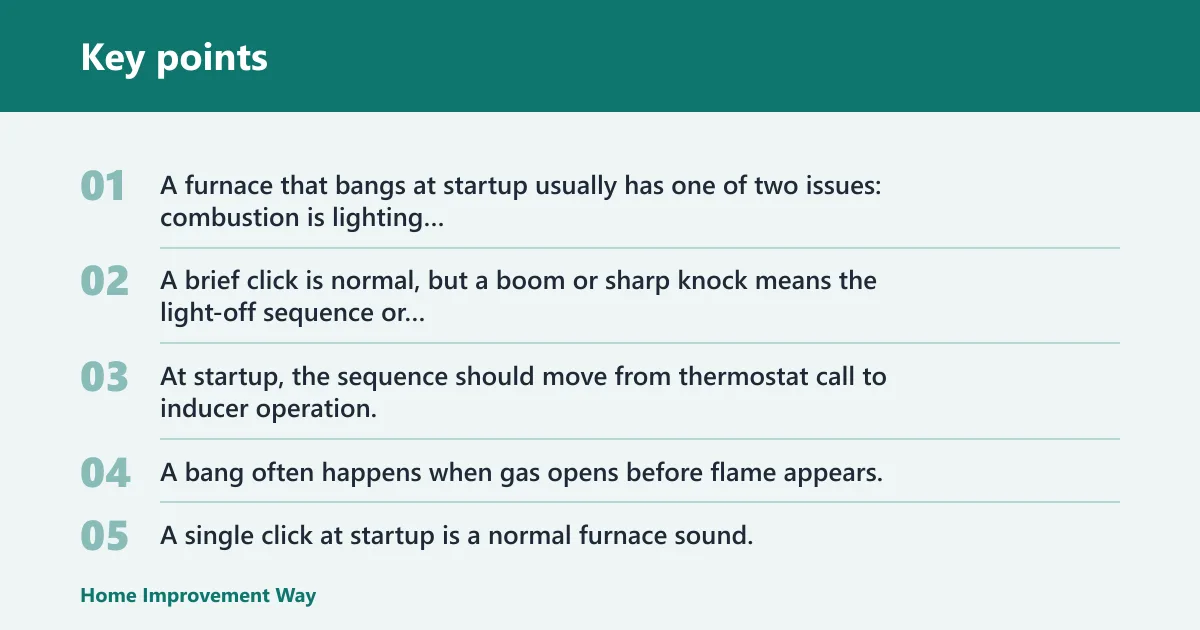

A furnace that bangs at startup usually has one of two issues: combustion is lighting late, or a metal part is shifting hard under heat and airflow. A brief click is normal, but a boom or sharp knock means the light-off sequence or nearby hardware deserves attention, especially if the noise repeats.
At startup, the sequence should move from thermostat call to inducer operation, then ignition, gas flow, burner light-off, blower delay, and finally shutdown when the call ends. A bang often happens when gas opens before flame appears, or when a component moves abruptly during that sequence.
What a normal startup sound
A single click at startup is a normal furnace sound. It often comes from the gas valve and ignition sequence as the furnace prepares to light. Light popping as ducts warm up can also be normal, especially if the sound is brief and does not repeat with force.
Normal startup noise should be short and predictable. It should not sound like a boom, a gunshot, or a hard metal strike. If the sound is loud enough to startle you every cycle, treat it as a diagnosis problem rather than ordinary operation.
How timing helps narrow the cause
Listen for when the sound begins. A bang at the moment the burner lights points toward ignition trouble. A bang after the burners shut off points more toward duct movement or a part relaxing as the cabinet cools. A rattle during the first seconds of the blower can point to a loose component.
Say your furnace gives one click, pauses, then makes a loud boom on the first cold morning of the season. That sequence fits delayed ignition more than duct expansion, because the sound happens at the burner’s first light-up, not during warm-up or shutoff.
What happens during the startup sequence
The thermostat calls for heat, the inducer clears the heat exchanger, and the igniter prepares the burners. Then the gas valve opens, the burners should light quickly, the blower starts after a delay, and the furnace shuts down when the thermostat is satisfied. A bang usually occurs right at burner light-off or when parts shift during warm-up.
If you understand where the noise lands in that sequence, it becomes easier to separate combustion trouble from airflow noise. A boom before flame appears is more concerning than a light pop after shutdown, and a clank that starts with the blower points in a different direction than ignition.
Is a banging furnace dangerous?
Yes, it can be. A loud bang at ignition can signal a dangerous gas buildup. If the furnace makes repeated loud bangs, smells like gas, or shuts down after the noise, switch it off and do not keep cycling it. Those signs need prompt professional attention.
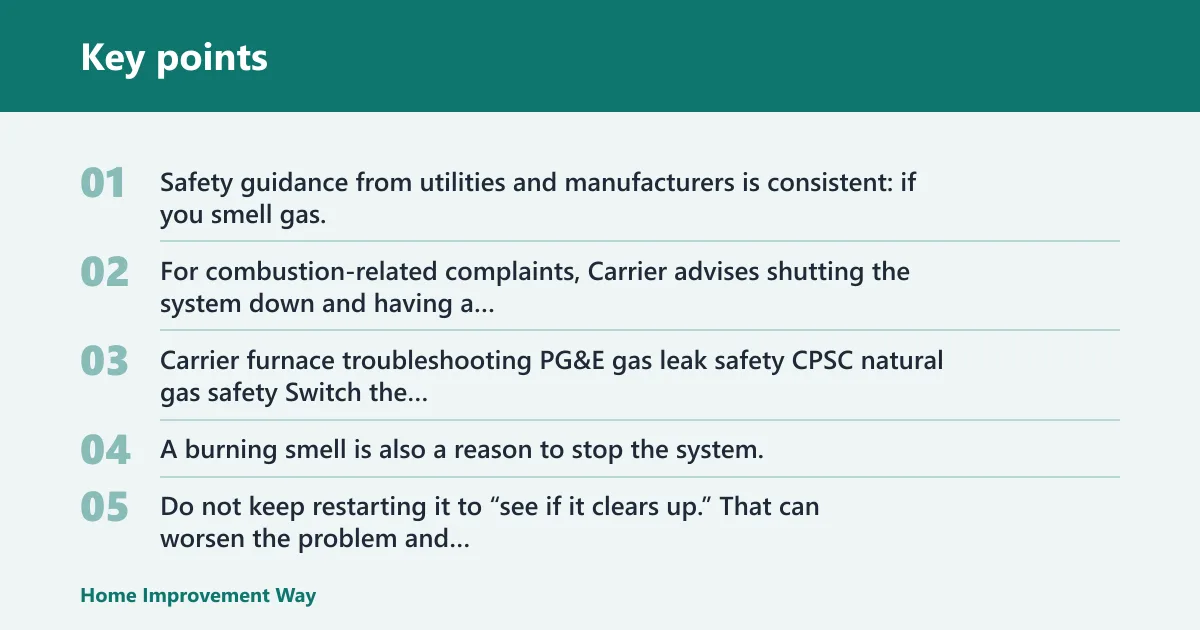
Safety guidance from utilities and manufacturers is consistent: if you smell gas, leave the equipment off and do not keep trying to restart it. For combustion-related complaints, Carrier advises shutting the system down and having a qualified technician inspect it, and federal safety guidance for natural gas emphasizes avoiding ignition sources and getting fresh air if a strong odor is present. Carrier furnace troubleshooting PG&E gas leak safety CPSC natural gas safety
When to shut the system off
Switch the furnace off right away if the bang repeats, hits hard, or comes with a gas smell. A burning smell is also a reason to stop the system. Do not keep restarting it to “see if it clears up.” That can worsen the problem and raise the risk of damage.
Gas smell and other urgent warning signs
A gas smell with furnace noise is treated as an emergency. Leave the furnace off, avoid creating sparks, and contact the proper emergency or gas utility response if the smell is strong or spreading. Noise plus a burning smell also needs an immediate stop, since that can point to overheating or electrical trouble.
Noise alone is not always an emergency, but a repeated boom at startup is not a harmless quirk. It can damage the heat exchanger, strain the ignition system, and signal that fuel is lighting after it should have already burned cleanly. Goodman’s installation literature also warns that improper ignition or delayed flame can create unsafe furnace operation. Goodman furnace installation manual
Why repeated booms need service
Repeated startup booms often mean the ignition timing or burner condition is not stable. That can keep sending a burst of fuel into the burner area before flame appears. Over time, that extra stress can harm the heat exchanger and make the furnace less safe to run.
Frequent noise at startup also makes troubleshooting harder. A one-time pop from duct metal is a different problem from a boom that happens every cycle. Repetition is a clue that the burner, ignition parts, or gas valve timing needs inspection.
Can delayed ignition or dirty burners cause banging?
Yes. Delayed ignition is one of the main reasons a furnace makes a loud bang at startup. Gas collects before the burner lights, then ignites all at once. Dirty burners are a common cause because dust, soot, or rust can slow ignition and keep flame from spreading normally. AHRI furnace maintenance
How gas buildup makes a boom
When the gas valve opens before the burner lights, a normal furnace should ignite quickly. If that flame is delayed, gas builds up in the burner area. When ignition finally happens, the accumulated gas can light in one burst and create the loud bang or boom people notice.
This is the startup pattern that deserves the most caution. A loud boom at the first ignition is not the same thing as a short duct pop. It points to combustion-time trouble, and that is why a frequent boom can damage the heat exchanger.
How dirty burners slow ignition
Dust, soot, or rust on the burners can interfere with the flame pattern and slow the start of combustion. That delay gives gas more time to collect before the furnace lights. Dirty burners are common after long stretches without service, or when airflow and combustion conditions have not been checked.
Cleaning burners is not a homeowner repair job on a gas furnace. If dirty burners are suspected, the right next step is service. The goal is to restore proper ignition before the problem spreads to the heat exchanger or ignition parts. Trane’s homeowner guidance also stresses that burners and ignition components should be kept clean and inspected as part of routine maintenance. Trane furnace maintenance tips
Why heat exchanger damage matters
The heat exchanger is a safety-critical furnace component tied to combustion and exhaust. Delayed ignition can damage it because the furnace is lighting under abnormal conditions. Once that part is stressed or cracked, the risk rises enough that inspection is advised if banging is frequent.
A damaged heat exchanger is not a noise issue alone. It can affect how the furnace contains combustion gases. That is why repeated startup banging should not be treated as “just loud” if it keeps happening. Federal furnace safety guidance and manufacturer manuals both treat heat-exchanger problems as a stop-and-inspect issue rather than a nuisance. DOE furnaces and boilers
Is a banging sound ever just duct expansion?
Yes. Duct expansion and contraction can cause pops, ticks, or brief booms, especially as sheet metal expands when heated and contracts on shutdown. Light popping as ducts warm up is normal. The key is that the sound is brief, light, and usually tied to temperature change.
When duct pops are normal
Normal duct movement tends to sound like a short tick or a light pop, not a hard bang from the burner area. It often happens as warm air first moves through cold sheet metal, or after the furnace shuts off and the metal cools. The sound should fade quickly.
If the sound is only a brief pop on warm-up and the furnace otherwise lights cleanly, duct movement is a plausible explanation. If the noise is a strong boom at ignition, or it repeats during the burn cycle, look beyond the ducts.
How blower wheels and panels can rattle
A blower wheel can come loose or become out of balance. That can make it knock against the casing and create clanking or banging. Loose screws or panels can also rattle when the blower starts and vibration spreads through the cabinet.
These noises often sound mechanical rather than explosive. A loose panel may buzz, chatter, or knock. A blower wheel problem is more likely to produce repeated contact sounds than a single combustion boom.
How blower strain can add noise
A buzzing or humming furnace is often electrical or blower-related. A clogged air filter can make the blower motor strain, and that strain can add hum, rattle, or vibration. A failing capacitor can create a constant electrical buzz, while an older fan belt can screech if it is frayed.
The blower motor is not usually the cause of a true ignition boom, but it can make the system louder and harder to diagnose. If the bang is mixed with hum or rattle, the furnace may have both a startup issue and an airflow problem.
What should I check before calling a technician?
Before calling for service, focus on safe checks only. Look at the air filter, the access panels, and the timing of the sound. These clues can help separate a burner problem from a duct or blower issue. Do not open sealed combustion parts or try to adjust gas components.
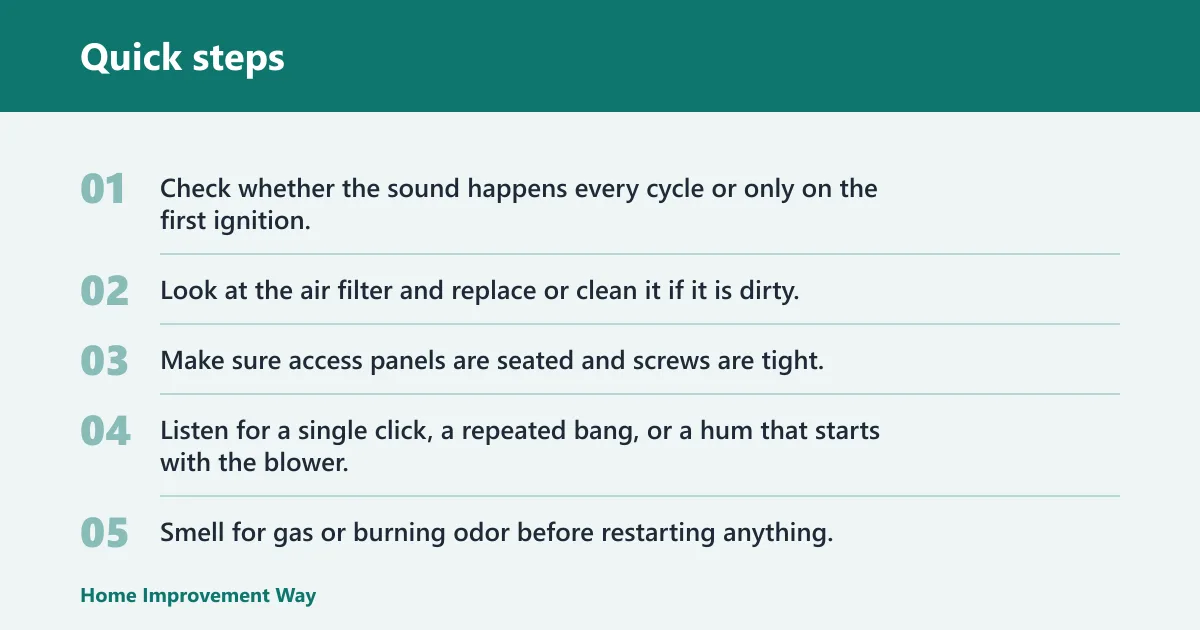
- Check whether the sound happens every cycle or only on the first ignition.
- Look at the air filter and replace or clean it if it is dirty.
- Make sure access panels are seated and screws are tight.
- Listen for a single click, a repeated bang, or a hum that starts with the blower.
- Smell for gas or burning odor before restarting anything.
Check the air filter first
The air filter is a homeowner-checkable maintenance item. A clogged filter increases blower strain and can contribute to humming or airflow noise. If the filter looks dirty, replace or clean it as directed by the furnace and filter type.
Filter problems do not usually cause a combustion boom by themselves, but they can add noise and make the furnace work harder. That makes them worth checking before you call for service, especially if the sound is more of a hum or rattle than a bang.
Look for loose screws and panels
Loose screws, panels, or parts can let vibration turn into a knock or clank. Check that the front access panel is seated properly and that visible screws are secure. If a panel is loose, it may only be a noise source, but it can still make the furnace sound worse than it should.
Do not reach into the cabinet beyond what you can safely see from the outside. If a panel is tight but the banging continues, the source is likely deeper in the ignition, burner, or blower assembly.
Track when the sound happens
Write down whether the noise happens at the first ignition, every cycle, only in cold weather, or after shutdown. That timing matters more than the volume alone. A single boom at startup points somewhere different than a pop after the blower stops.
Cold-weather first cycles can be useful clues too. If the sound appears only after the furnace has sat off for hours, that leans toward ignition delay, duct movement, or a part shifting as the furnace starts from a cold cabinet.
Furnace startup noise decision table
This table helps you separate ignition trouble from duct movement and loose parts. Use the timing of the sound first. Then match it to the most likely cause and the safest next step. If the noise is accompanied by gas smell, treat it as an emergency.
| Symptom timing | Most likely cause | Next step |
|---|---|---|
| Single bang at first ignition | Delayed ignition; gas buildup before the burner lights | Safety action: Turn the furnace off if the bang is loud or repeats. Homeowner: Note the timing and whether you smell gas. Technician: Inspect burners, ignition parts, and the heat exchanger. |
| Repeated bang every cycle | Dirty burners or a persistent ignition timing problem | Safety action: Stop restarting the furnace. Homeowner: Shut it down and schedule service. Technician: Check burner condition, ignition sequence, and gas valve operation. |
| Bang plus rumble | Delayed ignition with unstable combustion or burner flare-up | Safety action: Shut the furnace off immediately. Homeowner: Leave it off and report the sound pattern. Technician: Inspect for delayed ignition and possible heat exchanger damage. |
| Bang after shutdown | Duct expansion and contraction | Safety action: Monitor if it is brief and light. Homeowner: Check for loose panels or ducts that flex hard. Technician: Review duct support if the noise is loud or frequent. |
| Bang with gas smell | Gas buildup or a leak condition | Safety action: Shut the furnace off and treat it as an emergency. Homeowner: Do not restart the unit. Technician: Inspect immediately; gas smell with furnace noise is urgent. |
When should I call for furnace service?
Call for furnace service when the bang is frequent, loud, or tied to startup every time. You also need service if the furnace makes a boom and then runs roughly, if the blower sounds clanky, or if the heat exchanger, burners, or ignition parts need inspection.
Signs the burner or ignition system needs service
If the bang happens right as the burners light, delayed ignition is the concern. Dirty burners, weak ignition timing, or gas buildup can all point to burner service. A professional should inspect the ignition sequence rather than letting the furnace keep cycling with the same fault.
Frequent banging can justify inspection of the burners, ignition parts, and heat exchanger together. That combination matters because one problem can lead to another if the furnace keeps lighting under stress.
Signs the blower assembly needs attention
If the sound is more of a clank, knock, hum, or rattle after the burners light, the blower assembly may be involved. A blower wheel that comes loose or slips out of balance can strike the casing. A blower motor under strain can also add noise, especially with a clogged filter.
These faults are usually not fixed by tightening one visible screw. If the blower is the source, the repair often needs parts diagnosis and a technician’s inspection.
When the heat exchanger needs inspection
If the furnace has repeated delayed ignition, the heat exchanger should be inspected. That part is central to safe combustion and exhaust handling, and it can be damaged by startup boom conditions. Frequent banging is reason enough to take that possibility seriously.
Suppose a furnace makes a single loud bang on the first cold start of the season, then seems normal the rest of the day. That can still point to ignition trouble, but if it starts happening on every cycle, the case for service gets stronger fast.
Frequently asked questions
Why does my furnace make a loud bang when it starts?
The most likely cause is delayed ignition, which means gas has built up before the burner lights. Dirty burners can slow ignition and trigger the same boom. A loose blower or metal panel can also make a bang, but a loud startup boom should be treated as a warning sign.
Can dirty burners cause a banging noise at startup?
Yes. Dust, soot, or rust on the burners can slow ignition and let gas build up before the flame catches. That delay can create a loud bang at startup. Dirty burners are a common cause of this problem and usually need professional cleaning or service.
Could delayed ignition be making my furnace bang?
Very possibly. Delayed ignition is one of the main causes of a startup boom, because gas accumulates before the burner lights. The flame then ignites that gas all at once. If the bang is loud or repeated, the furnace should be inspected before it keeps running.
Why does my furnace bang only when it first turns on?
That pattern often points to ignition timing or a cold-start issue. The gas valve and ignition sequence should produce a quick light-up, but if the burners light late, you can get a boom only at startup. Light duct popping can also happen on the first warm-up, but it should stay brief.
What should I check before calling an HVAC technician?
Check the air filter, visible screws, and access panels. Note whether the sound happens at first ignition, every cycle, or after shutdown. Also check for gas smell or burning odor. If either smell is present, switch the furnace off and do not keep troubleshooting it yourself.
Sponsored / affiliate links. As an Amazon Associate I earn from qualifying purchases. I may earn additional commission from eligible campaigns.
 ROVSUN 18000 BTU Mini Split AC/Heating System with Inverter, 20 SEER2 Energy Saving 230V Ductless Split-System Air Conditioner with Pre-Charged Condenser, Heat Pump, Remote Control & Installation Kit
 Faryuan Bladeless Fan, 25inch Heating & Cooling & Filter Combo Tower Fan 80° Oscillating with Remote, 9H Timer, 8 Speeds, Portable Quiet for Indoor, Bedroom, Home Office Room(Grey & Red)