Why Is Water Dripping From the Gutters Onto the Porch in Winter?
Dripping at the porch edge usually means one of three winter faults: water spilling over the gutter from a clog, backing up behind a frozen downspout, or leaking from an ice dam above the fascia. Ignore it and you can rot the fascia, stain the porch, and push meltwater under shingles or trim. This guide shows how the drip pattern on the porch, gutters, fascia, and roof edge points to the right cause.
What the drip location tells you



Where the water lands tells you more than the fact that it is dripping. Porch-edge drips often point to overflow, while wet spots at the fascia or near the wall edge can point to a roof-edge leak or an ice dam. Start with the landing spot, then trace the water uphill.
Porch edge versus roof edge
If water drops off the outer porch edge or the front lip of the gutter, the gutter system may be overflowing, sloping wrong, or backing up at a downspout. If the drip shows up higher, near the roof edge or fascia board, suspect an ice dam or a leak at seams and fasteners near the eave.
Ice dams can form at the roof edge in winter. They trap meltwater at the eave, and that water can move under shingles or into the eave area. That pattern often shows up as stains, damp trim, or drips from the roof edge during thaw cycles.
Below a downspout
Water that falls directly below a downspout often points to a frozen downspout, a clogged outlet, or a disconnected extension. A downspout should drain away from the foundation, but it also has to stay open all the way to the discharge point.
If the gutter looks mostly dry except at the outlet, check for ice at elbows, compacted debris at the outlet, or a buried splash block or extension that is holding water near the home.
At the fascia or exterior wall
Wet fascia boards, soft spots, or repeated staining are a warning sign. Overflowing gutters can send water back toward the fascia boards, and an ice dam can also force water into the eave area. If the siding or wall below is stained but the porch edge is not the main drip point, look higher on the roof edge first.
Fascia board damage matters because the gutter hangs from it. Repeated wetting can lead to stains, rot, or loose fasteners that let the gutter sag and overflow even more.
Winter drip pattern diagnosis table
Use the first wet spot you see, then match it to the most likely failure. This table is not a final diagnosis, but it narrows the search fast.
| Drip location | Likely cause | First check |
|---|---|---|
| Porch edge | Gutter overflow from a clogged channel, corner, or outlet | Look for debris in the gutter and standing water in the run nearest the drip |
| Below downspout | Frozen downspout, blocked elbow, or disconnected extension | Check the outlet, elbows, and discharge point for ice or backed-up water |
| At fascia | Overflow at the gutter edge or an ice dam at the roof edge | Inspect for staining, wet fasteners, and ice buildup above the gutter line |
| Near exterior wall | Water running back under the edge from an ice dam or leaking seam | Check the roof edge, drip path under the shingles, and nearby seams |
| Only during thaws | Freeze-thaw cycle exposing a drainage problem or roof-edge meltback | Watch where meltwater starts after daytime warming and whether it refreezes at night |
Say your porch gets wet only along the front edge after a sunny winter afternoon, and the gutter is full of leaf bits near one corner. That points more toward overflow than a roof leak. If the same porch edge stays dry but the fascia above it darkens during a thaw, the roof edge deserves the first look.
Is my gutter overflow caused by an ice dam or a clog?
An ice dam and a clog can both send water where it should not go, but they leave different clues. A clog usually shows up as water spilling over the gutter lip, especially near a blocked channel, seam, corner, or downspout. An ice dam starts higher, at the roof edge, and often leaks into the eave area.
Signs pointing to an ice dam
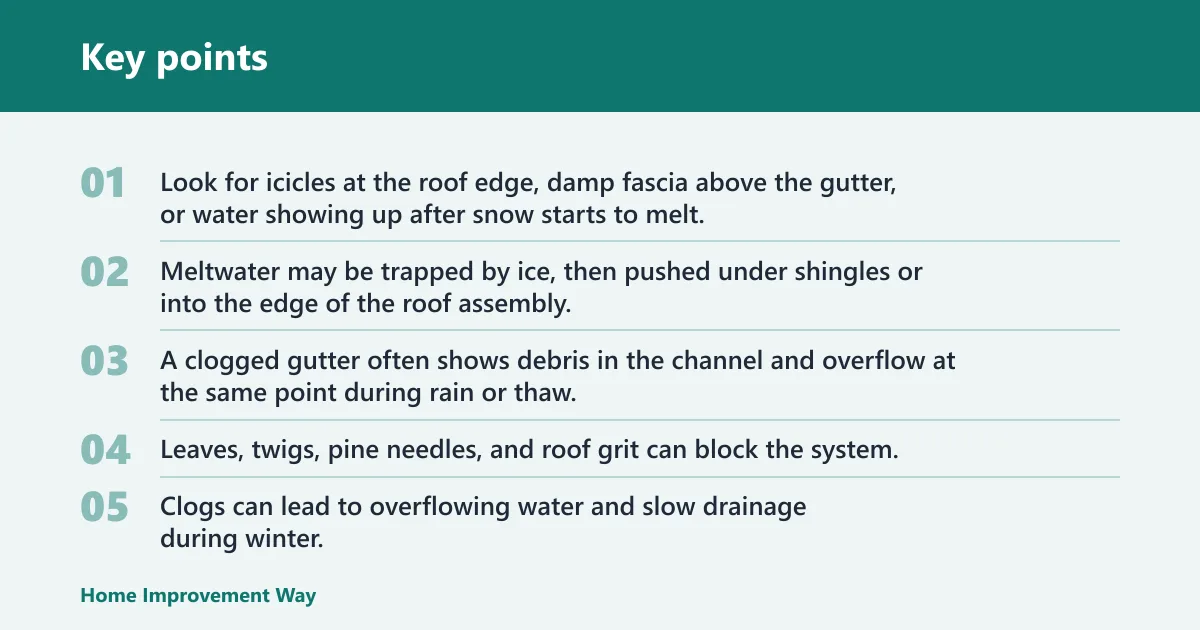
Look for icicles at the roof edge, damp fascia above the gutter, or water showing up after snow starts to melt. Ice dams form at the roof edge in winter, block meltwater from draining normally, and are often tied to heat loss and attic air leakage.
That means the problem is not only at the gutter. Meltwater may be trapped by ice, then pushed under shingles or into the edge of the roof assembly.
Signs pointing to a clogged gutter
A clogged gutter often shows debris in the channel and overflow at the same point during rain or thaw. Leaves, twigs, pine needles, and roof grit can block the system. Clogs can lead to overflowing water and slow drainage during winter.
If the gutter fills, sits full of water, or spills at a seam or corner, the blockage may be local rather than along the full run. Wet debris can become heavy and cause gutters to sag, which makes overflow more likely.
Where frozen downspouts fit
Frozen downspouts sit between those two patterns. Water may move through the gutter, then back up at the outlet or elbow until it spills over the gutter lip or leaks at a seam. In cold spells, the gutter can look clear while the downspout is the real choke point.
A frozen elbow often shows as one section of gutter overflowing while the rest stays quiet. If an extension is buried in snow or ice, the backup can return faster than you expect.
Picture a short porch run where the gutter over the entry overflows only near the downspout after sunset. By morning, the water is frozen on the porch steps. That pattern fits a downspout or elbow freeze more than a general gutter clog.
Why do gutters drip even when it is below freezing?
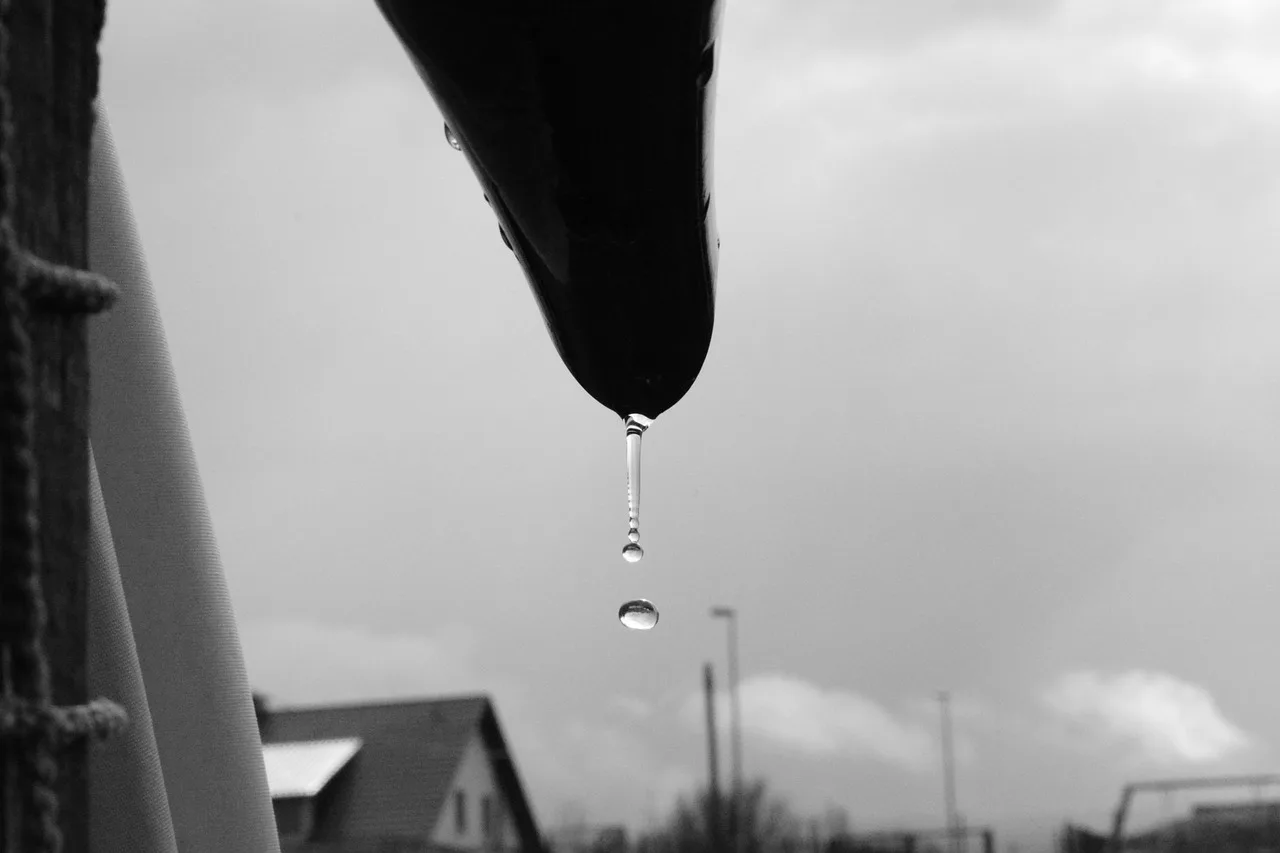
Below-freezing air does not stop dripping if the roof is warming from inside or the sun is melting snow. The winter freeze-thaw cycle can create intermittent dripping after daytime warming, then freeze the water again at night. That is why a problem may appear only for a few hours.
Meltwater can also move slowly through a partly blocked gutter, then refreeze at elbows or outlets. A gutter system should move water smoothly toward the downspouts, and any slowdown gives winter more time to turn runoff into ice.
Freeze-thaw timing
Watch when the dripping starts. Drips that begin late morning or early afternoon often point to thaw water from the roof or sun-warmed metal. Drips that stop after sunset may just be the same water refreezing, not a new leak.
Melting snow on the roof edge
Snowmelt at the roof edge can feed an ice dam or overwhelm a weak drainage path. If the roof edge is the first wet spot, the problem may be above the gutter rather than inside it. That difference matters because the fix may involve the roof edge, attic air leakage, or heat loss, not only debris removal.
Refreezing at elbows and outlets
Elbows and outlets are common refreeze points because they narrow the path and often hold residue. A partial freeze there can back water up into the gutter until it spills at the lip or at a seam. Check those spots first if the overflow is local and repeatable.
What to check on the gutter system first
Start with the parts that move water: channels, seams, corners, hangers, and downspouts. Winter storms can loosen gutters, downspouts, and fasteners, and wet debris can add enough weight to strain the system. A sagging gutter holds standing water, and standing water adds weight and can strain fasteners.
-
Clear the visible channel.
Remove leaves, twigs, pine needles, roof grit, and packed slush from the section above the drip. If the gutter is frozen solid, avoid forcing metal tools against seams or fasteners.
-
Check corners and seams.
Look for open joints, dripping corners, and water marks below the seam line. Corners collect debris and freeze first, so a small blockage there can create a large overflow at the porch.
-
Inspect hangers and pitch.
Look for visible sag between hangers or standing water that should have drained. If a run holds water after the thaw, the pitch may be wrong or the gutter may be bending under load.
-
Trace the downspout path.
Check the outlet, elbows, and extension for ice or backing water. A gutter that is clear at the top can still spill if the downspout cannot drain away from the foundation.
-
Look at the fascia.
Search for streaks, soft spots, peeling paint, or loose fasteners behind the gutter. Overflowing gutters can send water back toward the fascia boards, and repeated wetting can signal a leak or a gutter that no longer sits tight to the roof edge.
Do not ignore a gutter that sags under slush. Wet debris can become heavy and cause gutters to sag, and that sagging can turn a small clog into a full overflow onto the porch.
How do you keep porch water from freezing?
Keep porch water from freezing by moving runoff away from the walking surface and reducing the amount of water that reaches the porch in the first place. If water keeps landing on wood, concrete, or composite at the entry, it can freeze into a slip hazard after a thaw or a late-day drip.
Redirect runoff away from walking areas
Make sure the downspout drains away from the porch and not onto the landing or steps. If needed, add or reattach an extension so water discharges farther from the walking path. That is a simple fix when the issue is drainage, not roof leakage.
Reduce repeat overflow at the source
Clean the gutter, clear the outlet, and check for pitch problems before the next freeze. If the gutter keeps overflowing in the same spot, the issue is not the porch surface itself. It is usually upstream at the channel, outlet, or roof edge.
Limit slip risk on the porch surface
Salt or traction material can help on a frozen porch, but it is a short-term safety measure. The better fix is to stop the drip pattern that is feeding the ice. If the porch already shows repeated staining or thick ice patches, treat the water source as the main problem.
When should you call a gutter pro versus a roofer?
Call a gutter pro when the problem stays in the drainage path: clogged channels, frozen downspouts, loose hangers, bad pitch, seam leaks, or a blocked extension. Call a roofer when the wet spot starts at the roof edge, follows thaw cycles, or shows the signs of an ice dam or leak above the fascia.
Gutter and downspout problems
If water is spilling over the gutter lip, backing up at the outlet, or dripping from a sagging run, the gutter system needs attention. A pro can clear blockages, repair seams, reset pitch, and check whether the downspout drains away from the home.
Roof-edge leaks and ice dams
If the first sign is wet fascia, an icicle line at the eave, or water that appears only after snowmelt, the roof edge is the more likely source. Ice dams form at the roof edge in winter and can push water under shingles or into the eave area, which calls for roof-edge work rather than only gutter cleaning.
Signs the fascia or soffit may be involved
Stains on the fascia, soft wood, peeling paint, or damp soffit panels mean the drip has been repeating. That can come from gutter overflow, but it can also mean water is entering the roof edge or backing up behind the gutter. Either way, do not wait for rot to show before acting.
Frequently asked questions
Why is water dripping from my gutters onto the porch in winter?
Most winter porch drips come from gutter overflow, a frozen downspout, or an ice dam near the roof edge. The landing spot helps you sort them out. Water that spills at the gutter lip points to drainage trouble; water that starts higher near the fascia points more toward a roof-edge leak.
Can frozen downspouts make water spill over the porch edge?
Yes. A frozen downspout can back water up until it reaches the gutter lip, then spill onto the porch or walkway. Elbows and clogged outlets are common freeze points. If the gutter is clear but the outlet is iced over, the downspout is likely the blockage.
Should I clean gutters in winter if water is overflowing?
Yes, if the gutter is accessible and safely reachable. Clear debris, check the outlet, and look for ice at the downspout or corners. If the problem seems to start at the roof edge or the fascia is wet, cleaning alone may not fix it and roof work may be needed.
Can winter gutter problems damage the fascia or soffit?
Yes. Overflowing gutters can send water back toward the fascia boards, and repeated wetting can stain, soften, or rot the wood. If water keeps reaching the soffit area, the damage can spread beyond the gutter line. That is why the first wet spot matters so much.
Sponsored / affiliate links. As an Amazon Associate I earn from qualifying purchases. I may earn additional commission from eligible campaigns.