
Combination Detector vs Separate Units: Which Is Safer?
Separate smoke and carbon monoxide alarms are often the safer choice in many homes; combo detectors are best only where one location appears to meet both devices’ placement rules. Wrong placement can delay a warning or leave a hazard uncovered. This guide compares both layouts, explains placement rules, and helps you choose the safer setup for your home.
| Decision factor | Combination detector | Separate units | Winner |
|---|---|---|---|
| Placement fit | Works only where smoke and CO rules overlap | Each alarm can go where its hazard needs it | Separate units |
| Bedroom coverage | Can fit some bedroom-adjacent layouts, but not all bedroom needs | Smoke can go inside bedrooms while CO stays outside sleeping areas | Separate units |
| Hallway outside sleeping areas | Strong fit in shared hallway space | Also fits, but uses two devices | Combination detector |
| Flexibility in older homes | Helps reduce new device locations | Adapts better when existing coverage is mixed | Separate units |
| Replacement timing | Must come out when either sensor reaches end of life | Each alarm can be replaced on its own schedule | Separate units |
| Interconnection options | Can work in interconnected systems if the product family matches | Also works, often with broader room-by-room control | Tie |
One housing, two sensors
A combination smoke and carbon monoxide alarm houses two sensors in one body. That helps only when one spot can meet both smoke and CO rules at the same time. If the room cannot do that, fewer devices is not the safer choice.
Why placement rules decide safety
A smoke alarm detects smoke from fire, not carbon monoxide. A carbon monoxide detector warns about poisonous CO gas. Those are different hazards, and they do not always belong in the same place.
NFPA smoke guidance calls for alarms inside each bedroom, outside each sleeping area, and on every level. NFPA CO guidance calls for alarms in a central location outside sleeping areas and on every level. A combo unit has to meet both sets of placement rules, not only one.
When fewer units still work
Most homes need smoke alarms near bedrooms, hallways, living areas, and on every floor. The hallway outside bedrooms is shared territory for both alarm types, so it is often a practical overlap zone for a combo unit. In that location, one device can meet both sets of guidance.
Combination units can cut the number of new device locations needed in older homes. That helps when the hallway already gives both hazards a proper shared spot.
What each detector covers
Combination smoke and carbon monoxide alarm
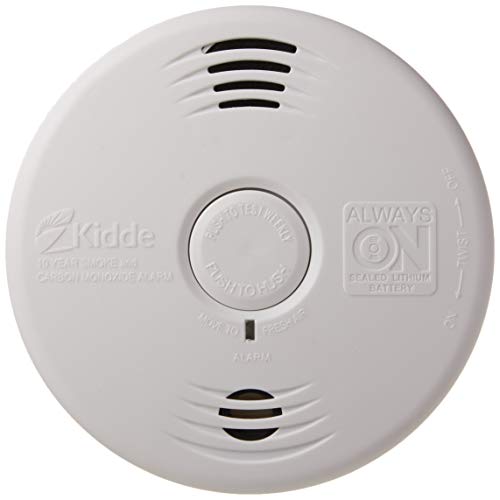
A combination unit detects smoke and CO in one housing. Some combination units use voice announcements to identify the hazard detected. That can help with response, but it does not change placement rules.
The replacement interval depends on the model, and a combo unit may need replacement when either sensor reaches its end of life. That matters because one aging sensor can force a full replacement even if the other part still works.
Separate smoke alarm
Separate smoke alarms cover smoke only. They are needed inside bedrooms and on every level, and they may be hardwired, battery-powered, or interconnected. That flexibility makes it easier to put smoke where the code or manufacturer guidance wants it.
Separate carbon monoxide alarm
Separate CO alarms cover CO only. They are especially important near sleeping areas, and often near fuel-burning appliances or attached garages, depending on the home layout and local rules. A separate CO alarm can go where smoke placement would be a poor fit.
Interconnection and hardwired compatibility
Interconnection lets one alarm trigger others, which matters in whole-home warning systems. Product-family compatibility matters because not every hardwired alarm can talk to every other model. In mixed homes, that detail often decides whether a combo unit helps or creates a dead end.
Where can one combo unit work?
A combo unit works best in a true overlap zone, where the same spot can meet both smoke and CO placement rules. The hallway outside bedrooms is the clearest example. A central shared location on a level can also work if it meets both requirements.
Picture a one-story home with bedrooms on one side of the hall and a living room on the other. One combo unit in the hallway may fit the smoke and CO rules better than two separate devices squeezed into the same short stretch of wall.
| Room type | Hazard priority | Code or placement constraint | Recommended device type |
|---|---|---|---|
| Hallway outside sleeping areas | Smoke and CO overlap | Shared placement zone for both alarm types | Combination detector |
| Inside bedrooms | Smoke first; CO only in some layouts | Smoke alarms belong inside each bedroom; CO usually stays outside sleeping areas | Separate units |
| Every level of the home | Smoke and CO both matter | One device may not cover all required locations | Separate units |
| Near fuel-burning appliances | CO | CO placement may need a different location than smoke placement | Separate units |
| Older home with partial coverage | Mixed | Existing hardwired and battery-powered devices may not match one family | Separate units |
| Hallway by bedrooms on a shared floor | Smoke and CO overlap | Central, outside sleeping areas, and on every level | Combination detector |
Is a combination detector safer?
Yes, but only in the right location. A combination detector is safer when one spot can meet both smoke and CO placement rules at once. It is less safe when it leaves a required bedroom, hallway, or floor location open.
A common first-timer mistake is putting one combo unit in a bedroom and assuming the CO side is handled. That can leave the required hallway outside sleeping areas uncovered for CO, even though the bedroom smoke side looks complete.
Safer in overlap zones
The hallway outside bedrooms is the strongest case for a combo unit because it is shared territory for both alarm types. It can also cut wall clutter in older homes that need new coverage without adding many new boxes.
Less safe when it leaves a required spot open
If a combo unit in one room prevents a smoke alarm from going inside each bedroom, or prevents a CO alarm from going in a central location outside sleeping areas, it is the wrong choice. Safer coverage comes from correct placement, not from fewer devices.
Do combination alarms replace separate units everywhere?
No. A combo alarm does not replace separate smoke and CO detectors everywhere because smoke and CO rules do not always line up. Bedrooms, every level of the home, and layouts with fuel-burning equipment often need separate placement decisions.
Bedrooms and sleeping areas
Inside bedrooms, smoke alarms are the primary need. CO alarms matter near sleeping areas, but that does not mean every bedroom should become the default combo location. In many homes, the hallway outside the sleeping area remains the proper CO spot.
Suppose a two-bedroom ranch has one hallway outside the rooms and a detached garage. Smoke alarms belong inside both bedrooms, while the hallway can carry the CO device. One combo in the hallway may help, but it does not remove the need for smoke alarms inside the bedrooms.
Every level of the home
Most homes need protection on every floor. A single combo unit cannot cover every level by default, because each level may need its own alarm location. Separate units make it easier to place one smoke alarm and one CO alarm where each level actually needs them.
Fuel-burning and attached-garage layouts
Homes with fuel-burning appliances or attached garages often need a more specific CO layout. Those spots can call for a CO alarm in a location that does not line up with smoke placement. When that happens, separate devices are the safer fit.
Tradeoffs between one combo unit and multiple separate alarms
Combo units cut down on device count, but separate units give you more placement control. That is the central tradeoff. Safer coverage usually favors the layout that puts each sensor where it belongs, even if that means more hardware.
One device, fewer locations
Combination alarms can reduce the number of new device locations needed in older homes. They also simplify the visible layout. That convenience matters only if the single location is valid for both hazards.
More control, more parts
Separate alarms let you place smoke inside bedrooms and CO outside sleeping areas without compromise. They also let you replace one device without forcing the other out of service. In mixed or older homes, that flexibility often matters more than a cleaner wall layout.
Replacement timing and end of life
Smoke alarms are advised to be replaced at 10 years old. CO alarm lifespan varies by model, so you need to check the manufacturer’s service life for each unit. With a combo detector, the whole unit may need replacement when either sensor reaches end of life.
Choose Combination detector if… / Choose separate units if…
Choose Combination detector if you have a hallway outside sleeping areas that works as a true shared placement zone, you want one device in a central location on a level, or your new alarm family can match your hardwired and interconnected system. It fits best when one housing can meet both placement rules.
Choose separate units if bedrooms need smoke alarms inside the rooms, your CO coverage needs a different location than your smoke coverage, or your home has mixed old and new hardware that will not interconnect cleanly. Separate devices are also the safer pick when one combo unit would leave a required spot open.

Frequently asked questions
Is a combination smoke and CO detector safer than separate alarms?
Separate smoke and carbon monoxide alarms are safer in most homes because they let each hazard use the right location. A combination detector is safer only when one spot can meet both placement rules. If it forces a compromise, the simpler setup is not the safer one.
Where should combination smoke and carbon monoxide detectors be placed?
The best place is usually the hallway outside sleeping areas, where smoke and CO guidance overlap. A central location on the level can also work if it meets both sets of rules. Bedrooms are usually a smoke-alarm location first, not the default combo location.
Do combination alarms replace separate smoke and CO detectors everywhere?
No. Combination alarms do not replace separate units everywhere because smoke and CO placement rules are different. Bedrooms, each level of the home, and some fuel-burning or attached-garage layouts still need separate placement decisions. A combo unit only works where both rules can be met together.
Are separate smoke and CO alarms better for bedrooms and hallways?
Separate units are often better for bedrooms because smoke alarms belong inside each bedroom, while CO alarms usually belong outside sleeping areas. Hallways outside bedrooms are the best shared zone for a combo detector. The room decides the safer layout, not the device label.
Can one combo detector cover every level of the house?
No, not by default. Most homes need smoke and CO protection on every level, and each floor may need its own alarm location. One combo detector may work on one level if the placement is right, but it cannot replace every required alarm in the house.
How long do combination smoke and CO detectors last?
Service life depends on the model. Smoke alarms are advised to be replaced at 10 years old, while CO alarm lifespan varies by model. A combo unit may need replacement when either sensor reaches end of life, so you need to check the manufacturer’s date and guidance.
Do combination alarms work with hardwired and interconnected systems?
Some do, but product-family compatibility matters. Hardwired and interconnected systems need alarms that can talk to each other correctly. In older homes with mixed coverage, separate units can be easier to fit into the existing system without forcing a full overhaul.
What are the tradeoffs between one combo unit and multiple separate alarms?
One combo unit uses fewer devices and can fit neatly in a shared hallway. Separate units give you better control over smoke-inside-bedroom and CO-outside-bedroom placement. The tradeoff is simple: combo units save space, while separate units usually give safer placement options.
Sponsored / affiliate links. As an Amazon Associate I earn from qualifying purchases. I may earn additional commission from eligible campaigns.