3 Best Detectors for Elderly Residents (2026): We Compared
The best home safety detectors for elderly residents match the risk: use voice- and light-alert detectors for hearing loss, large-button or monitored units for limited mobility, and connected alerts for people living alone. Miss the match, and a smoke, carbon monoxide, or fall emergency can go unnoticed until it is harder to fix. This guide explains which detector features fit each senior-care need and what to buy first.
Quick comparison
| Product | Badge | Best for | Price | ||
|---|---|---|---|---|---|
 |
ADT Medical Alert Plus – in-Home Emergency Response System,ADT | Our pick | In-home alert system · fall detection · 24/7 monitoring | $64.99
Price as of 17 Oct 2026
|
View |
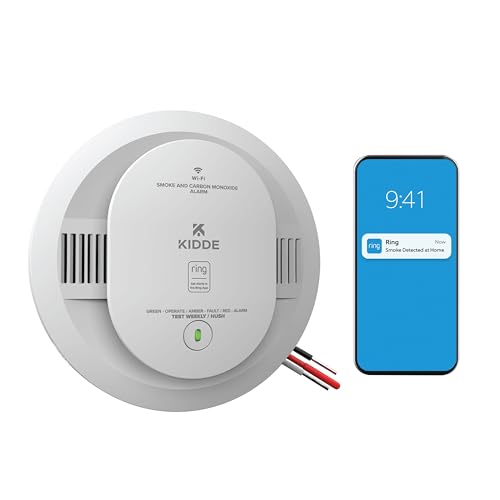 |
Kidde Smart Smoke & CO Detector with Ring, Hardwire & AAKidde | Also great | Smoke and CO alarm · Ring app alerts · hardwire/battery | $74.97
Price as of 17 Oct 2026
|
View |
 |
Bay Alarm Medical SOS Micro – 24/7 Medical Alert withBay Alarm Medical | Pair with it | Portable medical alert · optional fall detection · location tracking | $109.00
Price as of 17 Oct 2026
|
View |
 |
First Alert BRK Hardwire Combination Smoke & CarbonFirst Alert | Upgrade pick | Combination smoke and CO alarm · LED strobe · hardwire | $161.56
Price as of 17 Oct 2026
|
View |
 |
Connected Caregiver Safety+ 4G Medical Alert System forConnected Caregiver | Budget pick | Smart watch alert system · fall detection · WiFi locate | $38.99
Price as of 17 Oct 2026
|
View |
This quick view helps you separate smoke-only alarms, smoke-plus-CO alarms, monitored medical alert devices, and smart-connected options. The right choice depends less on brand and more on hearing, mobility, memory, and whether someone is usually alone.
How we chose
We compared the listed products by safety fit for older adults, alert method, power backup, interconnection options, and whether the system helps when no one is nearby. We also looked for practical tradeoffs, because a feature that sounds advanced can still be a poor fit if it depends on an app, steady Wi-Fi, or complex daily interaction.
Placement and maintenance matter too. A detector that is easy to hear but hard to reset can still fail in a real emergency, especially for someone with arthritis, low vision, or memory problems.
Best smoke alarm for hearing loss
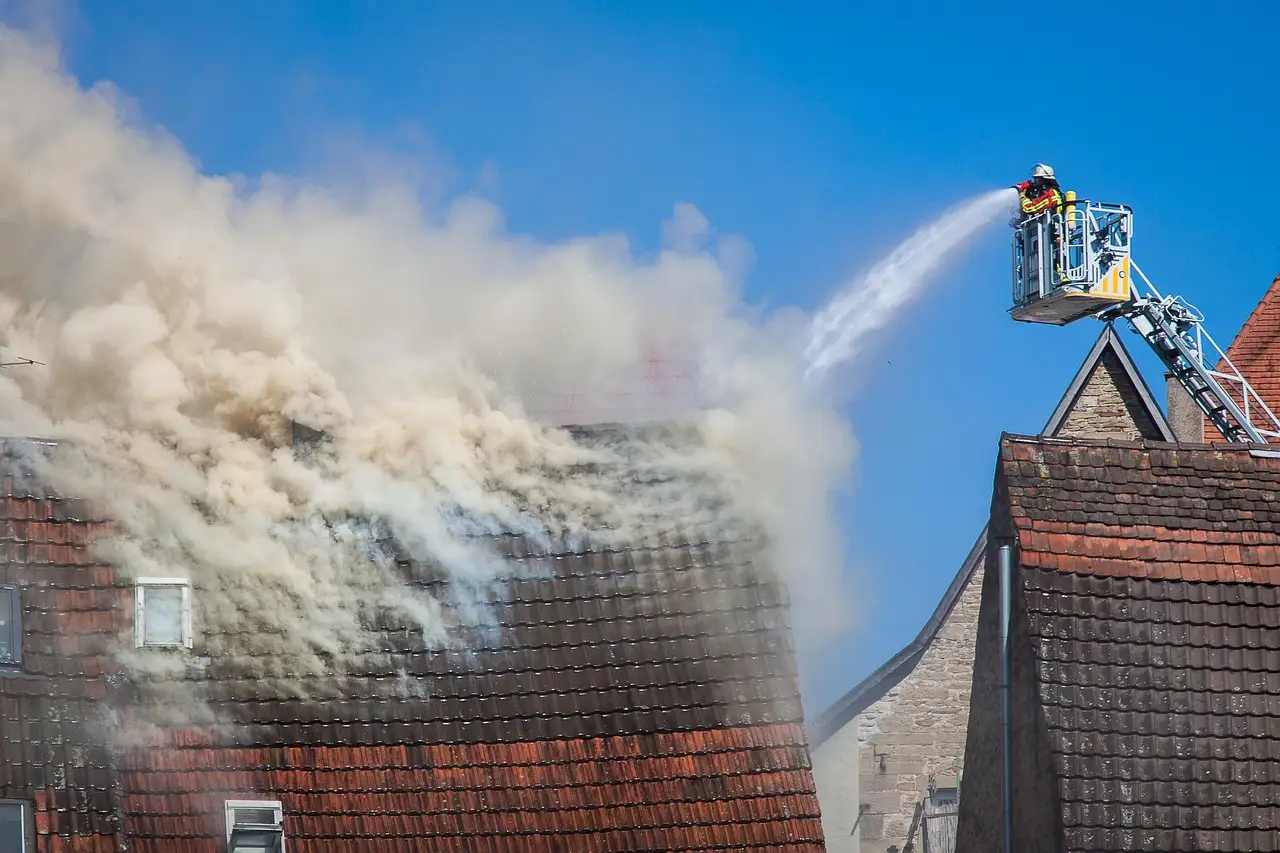
For hearing loss, the best smoke alarm is one with photoelectric sensing, loud audible output, and a voice or light-based alert option. A standard beep is often not enough. If the person sleeps through alarms, look for models that can also trigger strobe light accessories or connect to a caregiver system.
Why photoelectric sensing matters
Photoelectric smoke alarms are generally preferred in homes because they tend to respond well to smoldering fires, which can build smoke before flames become obvious. For older adults, that matters because early smoke warning gives more time to wake up, stand, and get out without rushing.
Smoke alarms should also have battery backup, even if they are hardwired. Power outages are exactly when a backup matters most.
What loudness and voice alerts can do
If hearing is reduced, choose the loudest alarm level the manufacturer lists and add voice alerts if possible. Voice prompts can reduce confusion by stating the danger more clearly than a single tone. For severe hearing loss, pair the alarm with strobe or light accessories when the model supports them.
Caregiver notifications can add a second layer of protection. A phone alert will not wake the person in the room, but it can wake someone else who can call, check in, or contact emergency help.
Where to place it in bedrooms and hallways
Put smoke alarms in bedrooms and in hallways outside sleeping areas. A common rule is to cover each sleeping area so smoke is detected before it cuts off escape. If the home has more than one level, each level should have coverage near the sleeping route.
Keep alarms away from kitchens, where cooking smoke can trigger false alarms and lead someone to disable the unit. Also avoid mounting too close to HVAC vents, because moving air can delay smoke entry or cause nuisance alarms. Ceiling mounting is common; wall mounting can work if the manufacturer allows it and the placement height is correct.
Do elderly residents need smart detectors?

Smart detectors help when the goal is remote awareness, not just local warning. They can send phone alerts, support remote monitoring, and sometimes provide voice alerts through a connected app. They are useful for aging parents who live alone or for adult children who want a second layer of notification.
Phone alerts and remote monitoring
Phone alerts can tell a caregiver that smoke, carbon monoxide, or another emergency has been detected even if no one answers the door. That can shorten response time when the resident is asleep, confused, or away from the room. Remote monitoring is especially helpful for people living alone.
A monitored setup can be the safer choice when the older adult may not reliably respond to alarms or to a phone call. That said, monitoring only helps if the system is active and the household knows who is receiving the alerts.
Wi-Fi and app dependency
Smart smoke detectors usually need Wi-Fi and an app. That is the main tradeoff. If the internet drops, the local alarm may still sound, but remote alerts can fail. App dependence can also be a problem if the resident does not use a smartphone, forgets passwords, or dislikes updating settings.
For a parent who already manages medications, appointments, and door codes, another app can be one task too many. In that case, a simpler alarm with a separate caregiver notification system is often easier to maintain.
When a basic alarm is the better fit
A basic hardwired or battery-powered alarm is often the better fit when the resident needs simple daily use, not remote features. If the person is mentally sharp, stays in one place, and has a helper who can test and replace batteries, basic alarms can be dependable and less confusing.
Say your parent lives in a small one-story home and can hear voice prompts but does not use a smartphone. A standard interconnected smoke alarm with battery backup may be a better match than a smart unit that needs app setup and login management.
ADT Medical Alert Plus: best for living alone
This monitored in-home system is for an older adult who lives alone and may need help even when no one is nearby. Its strongest point is 24/7 monitoring, plus automatic fall detection and home temperature monitoring for added awareness.
It stands out when the main risk is not smoke alone, but the broader problem of getting help quickly after a fall or medical emergency. The drawback is that it is a medical alert system, not a smoke or carbon monoxide detector, so it does not replace home fire protection.
Best setup for limited mobility
For limited mobility, the best setup is one that alerts the whole home at once and reduces the need to move quickly. Interconnected alarms are the main feature to look for, along with battery backup or hardwired power and caregiver notification when possible.
Interconnected alarms and whole-home coverage
Interconnected alarms generally sound together when one device detects smoke or carbon monoxide. That all-alarms-trigger behavior matters for limited mobility because it gives earlier notice no matter where the person is sitting or sleeping. Wired or wireless interconnect both work if the system is properly installed.
Whole-home coverage is more useful than one loud alarm in a single room. If mobility is limited, the person may not reach a distant alarm quickly, so the system should warn them everywhere at once.
Battery backup versus hardwired power
Hardwired alarms can be a strong choice when the home already supports them, because they do not depend only on disposable batteries. Still, hardwired units should have battery backup. Power loss should not silence a detector.
Battery-only alarms are easier to install in some older homes, but they demand more disciplined maintenance. For an older adult who has trouble climbing ladders, a caregiver may need to take over battery changes and testing.
Caregiver notification options
Caregiver notifications can help if the resident cannot move quickly or cannot hear the first alarm. Smart alerts, monitoring services, or connected medical alert devices can tell family members that something happened. That does not stop the smoke, but it can speed up help.
Picture a two-story home where the bedroom is upstairs and the resident has knee pain. If an alarm sounds on the first floor, interconnection and remote alerts reduce the chance that the emergency starts below and goes unnoticed above.
First Alert BRK hardwire combination smoke and carbon monoxide alarm: best for strobe alert support
This model fits a home that needs combined smoke and carbon monoxide detection with a visual alert option. Based on the manufacturer’s specs and published product details, the LED strobe is the feature that makes it more suitable for hearing-impaired residents than a standard beeping alarm.
Its main strength is that it handles two hazards in one unit and supports interconnection. The drawback is that a combined hardwired alarm can be more involved to install than a battery-only device, and it still may need additional accessories for severe hearing loss.
What detector helps with memory impairment?
For memory impairment, the best detectors are simple to test, simple to reset, and clear about what they are warning about. Voice prompts, straightforward controls, and fewer app steps reduce the chance that a resident disables the device after a false alarm and forgets to restore it.
Voice prompts and false-alarm reduction
Voice prompts help explain whether the alarm is for smoke or carbon monoxide, which is useful when a resident gets confused by tones alone. False-alarm reduction matters too, because repeated nuisance alarms often lead people to remove batteries or disconnect devices.
That failure case is common enough to plan for. A detector that is too sensitive in the wrong place can create more risk than protection if it trains the resident to ignore it.
Simple controls and repeatable testing
The best setup for memory impairment is one with a routine that is easy to repeat. Use the same test day each month, the same button, and the same response. If a caregiver is involved, write the steps where both people can see them.
- Press the test button once each month.
- Confirm the alarm sounds in the bedroom and hallway.
- Replace batteries on the schedule the manufacturer gives.
- Dust the cover with a soft cloth or vacuum brush.
- Replace the unit before the end-of-life date.
Why confusing features can create risk
Complicated settings, hidden app menus, and mixed alert types can create more confusion than safety for a person with dementia or memory loss. If the resident may silence alarms without understanding why they sounded, choose a simpler system and move monitoring duties to a caregiver.
A common mistake is installing a carbon monoxide detector in the kitchen and assuming one unit will protect the whole house without checking placement near sleeping areas. If the Wi-Fi fails or the phone is on silent, the person still needs a local alarm that is easy to hear and understand.
Connected Caregiver Safety+ 4G Medical Alert System: best for caregiver tracking
This wearable alert system is for an older adult who needs location tracking and caregiver awareness, especially when living alone or moving around the home without steady supervision. Its strengths are the lightweight wearable format, fall detection, and caregiver app support.
The drawback is that it is a medical alert device, not a smoke or carbon monoxide detector. It can support response after a fall, but it does not provide fire or CO detection for the home itself.
Bay Alarm Medical SOS Micro: best for portable emergency help
This compact medical alert device is suited to an older adult who needs portable help on a wrist or neck and may benefit from optional fall detection. It is useful when a caregiver wants location tracking and battery awareness in one small unit.
Its main strength is mobility. The drawback is the same one common to all medical alert systems: it supports emergency response, but it does not replace smoke alarms or carbon monoxide detectors in the home.
Senior safety detector decision matrix
This decision matrix translates the main risk profiles into practical detector choices. It is meant to help you match the system to the person, not to the broadest possible spec sheet.
| Risk profile | Best detector type | Must-have features | Installation priority | Common failure to avoid |
|---|---|---|---|---|
| Hearing loss | Smoke alarm with voice or light support | Photoelectric sensor, loud audible output, strobe or light accessory compatibility, battery backup | Bedrooms and hallways near sleeping areas | Relying on a standard beep that may not wake the resident |
| Mobility limitations | Interconnected alarm system | All-alarms-trigger behavior, wired or wireless interconnect, whole-home coverage, battery backup | Every level, especially sleeping routes and exits | Installing only one alarm in a distant room |
| Memory impairment | Simple smoke and CO alarms with caregiver support | Voice prompts, easy test button, clear labeling, low nuisance-alarm risk | Bedroom, hallway, and near any sleeping area | Choosing app-heavy devices that are hard to reset or maintain |
| Living alone | Smart or monitored alert system plus home alarms | Phone alerts, remote monitoring, caregiver notifications, backup power | Homewide coverage with extra attention to bedrooms | Assuming a phone alert works without Wi-Fi, power, or active subscriptions |
Which one should you buy?
Choose by budget first, then by risk profile. A basic smoke alarm with photoelectric sensing and battery backup is the minimum starting point. If the older adult has hearing loss, add voice alerts or strobe compatibility. If mobility is limited, prioritize interconnection. If the person lives alone, add remote alerts or monitoring.
If the home needs both smoke and CO coverage in one unit, a combination alarm can simplify placement. If the main concern is an older adult who may fall or miss a call for help, add a medical alert device, but do not treat it as a substitute for smoke or CO protection.
Should you choose battery, hardwired, or smart? Battery-only is simplest to place, hardwired is better when the home already supports it, and smart is best when remote alerts are truly needed. The wrong choice is the one that creates more maintenance than the caregiver can realistically handle.
Short lists help here:
- Best for hearing loss: photoelectric smoke alarm with voice and light support.
- Best for limited mobility: interconnected alarms with battery backup.
- Best for memory impairment: simple alarms with clear controls and caregiver-managed maintenance.
- Best for living alone: smart or monitored detector setup with remote alerts.
What are the best home safety detectors for elderly residents?
The best home safety detectors for elderly residents are smoke alarms, carbon monoxide detectors, and, in some homes, medical alert devices that support falls or remote help. The right mix depends on hearing, mobility, memory, and whether the person lives alone. Matching the features to the risk is more important than buying the most advanced model.
Frequently asked questions
What detector helps if a senior has trouble hearing smoke alarms?
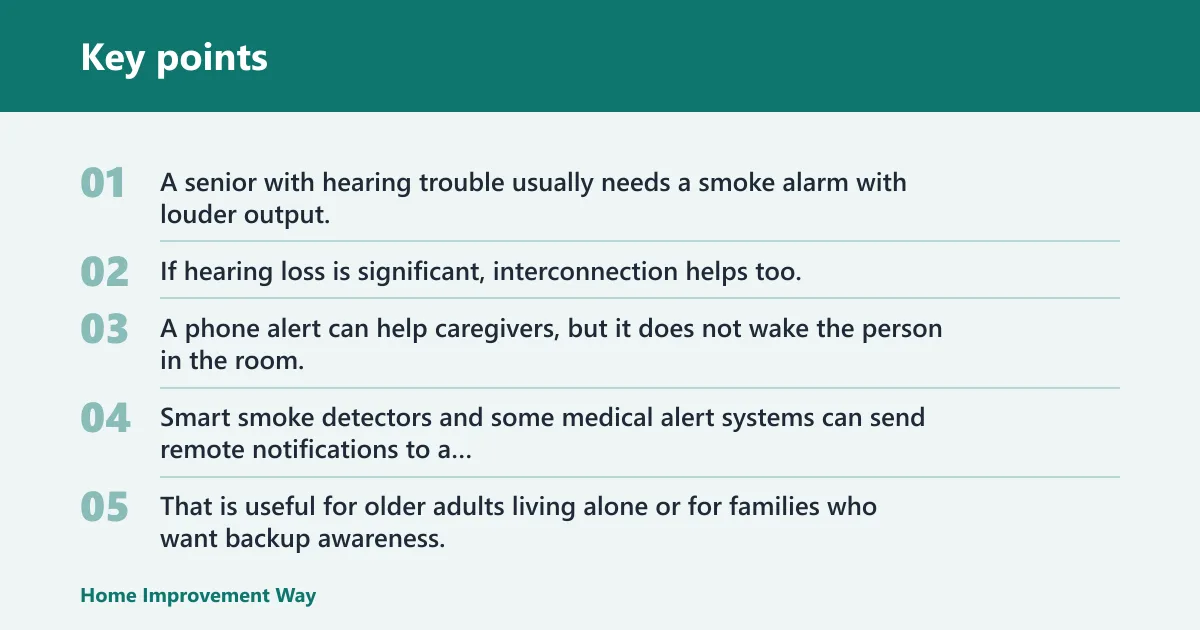
A senior with hearing trouble usually needs a smoke alarm with louder output, voice alerts, or strobe-light support. If hearing loss is significant, interconnection helps too, because every alarm in the home sounds at once. A phone alert can help caregivers, but it does not wake the person in the room.
Can a home safety detector system be monitored remotely for an older adult?
Yes. Smart smoke detectors and some medical alert systems can send remote notifications to a phone or monitoring center. That is useful for older adults living alone or for families who want backup awareness. Just confirm the system needs Wi-Fi, an app, or a subscription before relying on it.
What detectors should be in an older adult’s bedroom and hallway?
Bedrooms and hallways near sleeping areas should have smoke alarms, and sleeping routes should be covered on every level of the home. If carbon monoxide is a concern, add CO detection near sleeping areas as directed by the manufacturer. For the safest setup, keep alarms close enough to warn early but away from kitchens and HVAC vents.
Are interconnected smoke alarms better for seniors living alone?
Interconnected alarms are usually better because one detector sounding will trigger the others throughout the home. That helps a person living alone wake up faster and from farther away. They are not a substitute for remote monitoring, but they do improve whole-home notice when every minute matters.
Should I choose battery, hardwired, or smart detectors for an elderly parent?
Choose battery-only if installation simplicity matters most and someone can maintain it. Choose hardwired with battery backup if the home already supports it and you want steadier power. Choose smart detectors only when the parent, caregiver, or both will actually use the app and remote alerts. The best option is the one that will stay active.
Which smoke alarm is easiest for seniors to hear?
The easiest smoke alarm for seniors to hear is one with a loud audible signal plus voice alerts, and ideally a strobe or light accessory for hearing loss. Placement matters as much as volume. Bedrooms and hallway locations near sleeping areas are the places that make the biggest difference.
Sponsored / affiliate links. As an Amazon Associate I earn from qualifying purchases. I may earn additional commission from eligible campaigns.