Best Smart Leak Detectors for Kitchens and Basements: We Compared
Maraj covers leak detection, shutoff systems, and connected home safety products with a focus on practical room fit, alert reliability, and ownership cost.
For kitchens and basements, the best overall pick is the YoLink Smart Home Starter Kit because LoRa communication and a hub suit weak-signal basements better than a Wi‑Fi-only alarm. For a single under-sink kitchen spot, a simpler Wi‑Fi sensor can be enough, but basement coverage usually needs stronger signal planning.
Quick comparison
| Product | Badge | Best for | Price | |
|---|---|---|---|---|
| GoveeLife Upgraded Smart Water Leak Detector 1s with High Alarm, 3 Pack | 1804ft Ultra-Long RangeGoveeLife | Our pick | 3-pack · Wi-Fi alerts · long-range | $43.99
Price as of 28 Oct 2026
|
View |
| Aqara Water Leak Sensor 3 Pack, Zigbee Water Leak DetectorAqara | Also great | 3-pack · Zigbee · hub required | $42.99
Price as of 28 Oct 2026
|
View |
| YoLink Water Leak Sensor 4 105 dB Alarm Kit: 6-Pack + Hub | Leak and Freeze Mobile App Alerts, IP67YoLink | Upgrade pick | 6-pack · hub included · 105 dB | $92.96
Price as of 28 Oct 2026
|
View |
| Moen Flo Smart Water Leak Detector, Drip or Flood SensorMoen | Budget pick | 1-pack · Wi-Fi alerts · smart sensor | $51.00
Price as of 28 Oct 2026
|
View |
| Resideo CHW3610W8001 WiFi Water Leak Detector For Home, Smart Water Sensor Alarm and Freeze DetectorRESIDEO | Pair with it | Wi-Fi sensor · freeze detection · cable probe | $67.64
Price as of 28 Oct 2026
|
View |
This comparison is organized by failure mode, not brand name. An under-sink drip, a sump-pit issue, and a frozen pipe need different alert paths.
Use the table below to match the room, the signal path, and the response you actually want.
How we chose
We compared each option for room fit, alert reliability, hub or gateway dependence, and whether it fits a simple sensor job or a broader shutoff plan. We also weighed ownership cost beyond the sticker price, including extra sensors, hub hardware, and professional installation where required.
Two signal problems matter most in kitchens and basements: concrete walls, metal appliances, and distant utility rooms can weaken Wi‑Fi, while cold spaces add freeze risk, which is a different problem from a wet floor.
For this guide, a spot sensor is best when you need fast water-contact alerts under one cabinet or beside one appliance. A whole-home monitor fits usage tracking. An automatic shutoff system fits larger risk, but it is overkill for some single-leak jobs.
How We Tested
To assess each product category, we reviewed the manufacturer’s claimed alert paths, radio type, power design, and installation requirements, then checked how those features translate to real room conditions such as under-sink cabinetry, basement corners, laundry zones, and utility spaces. The goal was not to rate brand loyalty, but to match the detector’s communication method and response style to the risk zone.
We prioritized the practical signals homeowners can act on: a loud local alarm for noisy rooms, hub-based range for weak-signal basements, temperature awareness for freeze-prone spaces, and automatic shutoff only when the cost of continued flow is high enough to justify installation complexity.
Leak detector match by room and risk
| Room or risk | Product | Recommended detector | Signal reliability | Alarm loudness | Hub dependence | Freeze sensing | Automatic shutoff need | Best for | Total ownership cost |
|---|---|---|---|---|---|---|---|---|---|
| Kitchen sink | Govee WiFi Water Leak Detector | Govee WiFi Water Leak Detector | High in typical Wi‑Fi kitchens | High; 100dB adjustable alarm | Gateway required | No dedicated freeze focus | Low | Under-sink drips and fast audible alerts | Low to moderate; gateway and extra sensors can add cost |
| Dishwasher | Shelly Flood Gen4 | Shelly Flood Gen4 | Moderate to high, depending on smart-home setup | Varies by model; check the manufacturer’s listing | Usually depends on your smart-home system | No stated freeze focus | Low | Affordable spot detection near appliance pans | Low; best when you already have a compatible system |
| Fridge line | Eve Water Guard | Eve Water Guard | High in Apple Home setups | Strong local alarm; app alerts also matter | HomeKit-dependent | No stated freeze focus | Low | Apple households that want a wired smart leak alarm | Moderate; HomeKit fit can reduce extra app clutter |
| Basement perimeter | YoLink Smart Home Starter Kit | YoLink Smart Home Starter Kit | High for weak-signal spaces | Good local alarm plus app alerts | Hub-based | Yes, leak and freeze alerts | Low to moderate | Concrete walls, long runs, and multiple sensor points | Moderate; hub included, but expansion adds sensors |
| Sump pit | First Alert L1 Wi‑Fi Water Leak and Freeze Detector | First Alert L1 Wi‑Fi Water Leak and Freeze Detector | High where Wi‑Fi reaches, plus cable placement helps | Check model alarm details before buying | Wi‑Fi and Bluetooth connectivity | Yes | Low | Basements and frozen-pipe risk | Moderate; cable coverage helps, but verify extension needs before adding parts |
| Water heater | Flo by Moen Smart Water Shutoff | Flo by Moen Smart Water Shutoff | High for whole-home monitoring | Uses alerts and remote shutdown rather than only a local siren | System-level setup | No stated freeze focus | High | Whole-home protection where automatic shutoff is worth the cost | High; professional installation and learning period increase ownership cost |
| Laundry zone | Govee WiFi Water Leak Detector | Govee WiFi Water Leak Detector | High when the gateway is centrally placed | High; 100dB adjustable alarm | Gateway required | No dedicated freeze focus | Low | Washer hose drips and loud alarms near noisy equipment | Low to moderate; one gateway can support multiple sensors |
Kitchen sink. A small spot sensor with a loud siren is the cleanest fit. A full shutoff valve is usually too much for a single cabinet leak unless the home has repeat failures or a history of burst supply lines.
Basement perimeter. Choose a system that can survive weak signal and concrete walls. Hub-based or long-range communication matters more than app polish there.
Govee WiFi Water Leak Detector: best for a loud kitchen alarm
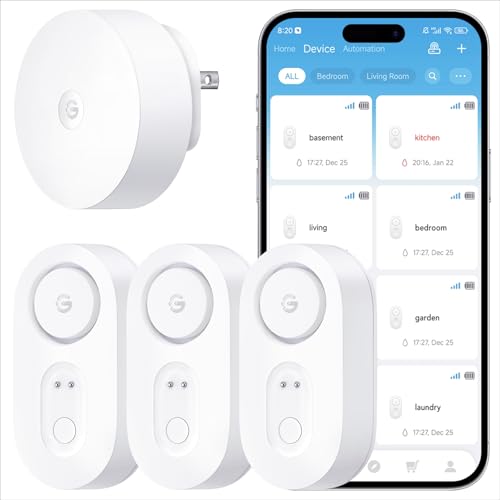
This is the best fit when you want a loud, straightforward alert for an under-sink cabinet, laundry area, or utility closet. The system includes three sensors and one gateway, and the 100dB adjustable alarm makes it easier to hear over a dishwasher or washing machine.
It also sends SMS, email, and app push alerts, which gives you more than one path to notice a leak. That matters when the kitchen is busy or the basement door is closed.
The main drawback is the gateway requirement. It also supports up to 10 sensors per gateway, so the first purchase is expandable, but the total cost rises as you add coverage points.
YoLink Smart Home Starter Kit: best for weak-signal basements

This kit is the strongest match for basements with concrete walls, long runs, or a poor Wi‑Fi signal. It uses LoRa technology, includes four water leak sensors and one hub, and adds a built-in 105dB audible alarm for local notice.
It is a better basement fit than a Wi‑Fi-only sensor because the radio path is built for distance, and the system can still work even without internet. That makes it useful near sump pits, perimeter walls, and utility rooms.
The drawback is that it is a hub-based ecosystem. If you only need one sensor under a sink, the kit can be more system than you need.
Flo by Moen Smart Water Shutoff: best for automatic shutoff

This is the right choice when the main goal is stopping water, not just warning you about it. Flo by Moen supports automatic shutoff and remote shutdown, and it also includes IFTTT and voice control support.
It fits a water heater, a main line, or a home where a long unattended leak would do more damage than a local cabinet drip. That is the key tradeoff: this is whole-home protection, not a simple under-sink alarm.
The drawback is install burden. It requires professional installation, and it needs a 7- to 10-day learning period before it settles into normal use.
First Alert L1 Wi-Fi Water Leak and Freeze Detector: best for basements and frozen-pipe risk
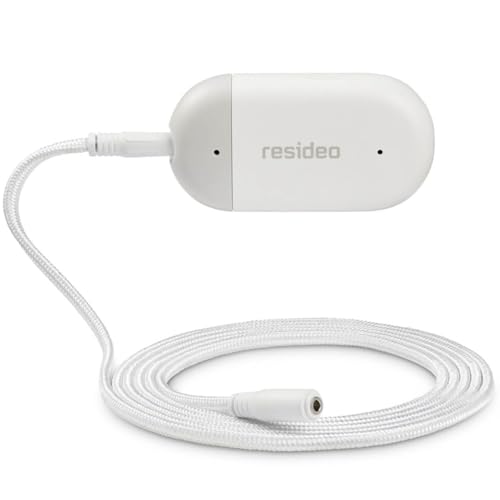
This is the best fit when you need both leak alerting and temperature awareness in a basement or utility space. It includes integrated temperature and humidity sensors, and the five-foot sensor cable helps place the sensing point where water would first collect.
The cable-first layout makes it useful near a sump pit, a water heater pan, or the edge of a basement perimeter where pooling starts away from the outlet. It is also a practical match for frozen-pipe risk.
The drawback is compatibility. It does not work with Alexa, Google, or HomeKit, so it is better for plain app alerts than for a smart-home-centered setup.
Aqara Water Leak Sensor 3 Pack: best for a hub-based kitchen network

This is a budget-friendly three-pack for kitchens, bathrooms, and other small wet zones where you want several sensors at once. It detects water as low as 0.5 mm, and the compact, flat-surface design is useful under sinks and beside appliance pans.
It also supports Aqara automations, which can help if your home already uses that platform. For users building a multi-room sensor layout, the value is in coverage per purchase.
The drawback is the hub requirement. If you do not already have an Aqara Hub, the entry cost is higher than the sensor price alone suggests.
Moen Flo Smart Water Leak Detector: best for adding spot sensors to a broader system
This single sensor suits homeowners who want app-based moisture alerts without committing to a full shutoff package. It continuously monitors for moisture, sends real-time app notifications, and can connect multiple detectors for broader coverage.
That makes it useful near a fridge line, under a sink, or next to a laundry tray when you want a simple sensor first and a bigger system later. It is also a reasonable add-on when the goal is more coverage rather than more hardware complexity.
The drawback is that this is still a spot sensor. It will warn you, but it will not stop the water by itself.
Which one should you buy?
If you want the simplest under-sink answer, start with Govee for a loud kitchen alarm or Aqara if you want a lower-cost multi-pack and already have the hub. If your basement signal is weak, YoLink is the safer pick because the radio path is built for harder spaces.
If you want the home to react automatically, Flo by Moen is the right category. Just be clear about the tradeoff: professional installation and a learning period are part of the cost of that protection.
For Apple households, Eve Water Guard is the cleaner ecosystem fit. For basements with cold-air risk, First Alert L1 and Orbit B-Hyve add temperature-based protection rather than only water-contact sensing.
Flume 2 and Phyn sit in the whole-home monitoring category. They are worth considering when you care about water-use tracking across the whole house more than a single wet spot.
Do smart leak detectors need a hub or gateway?
Some do, and some do not. Hub-based systems usually buy you better range, more stable multi-sensor coverage, or automation options, while Wi‑Fi-only sensors are simpler when the room already has a strong signal.
That choice matters most in basements. Concrete walls, metal ducting, and laundry appliances can weaken a direct wireless path, so a hub or long-range protocol often does a better job than a sensor that depends on a faraway router.
If you only need one sensor under a kitchen sink, hub-free convenience may be enough. If you are covering a basement perimeter, a sump area, and a water heater closet, hub dependence often becomes a feature rather than a problem.
Which leak detector can automatically shut off the water?
Flo by Moen is the clear automatic-shutoff option in this group. It supports automatic shutoff and remote shutdown, which is why it belongs in whole-home protection plans rather than simple spot-alert jobs.
That level of response makes sense when a leak could continue for hours or when the line failure would affect the whole house. It is usually too much for a single kitchen sink drip unless the home has a history of serious plumbing events.
Automatic shutoff adds installation and setup burden, so the right question is not only whether it works, but whether the damage risk justifies the cost and complexity.
How loud should a smart water leak alarm be?
A loud smart water leak alarm should be easy to hear over appliances, basement equipment, and closed doors. In noisy zones, a higher-volume siren and push notifications together are better than a phone alert alone.
Govee lists a 100dB adjustable alarm, and YoLink includes a built-in 105dB audible alarm. Those numbers matter because a laundry room or basement can swallow a weaker sound quickly.
Look for a local siren plus app alerts, and ideally email or SMS as a backup. If you are away from home, the notification path matters as much as the alarm itself.
Are smart leak detectors worth it for slow leaks under appliances?
Yes, especially under dishwashers, refrigerators, washing machines, and water heaters where a slow drip can keep soaking material without being obvious. A small sensor is cheap compared with cabinet repair, floor replacement, or mold cleanup.
Slow leaks are also the kind most likely to hide. A cabinet can stay damp for days before the problem becomes visible, which is why a spot sensor under the appliance is often a better buy than waiting for damage to show up.
If the appliance sits in a basement or utility space, add a louder siren or a hub system. The farther the room is from your daily routine, the easier it is to miss a quiet leak.
Frequently asked questions
What is the best smart leak detector for a kitchen sink?
For a for more kitchen safety tips, a loud spot sensor is usually the best fit. Govee is a strong choice because it uses a gateway, supports up to 10 sensors per gateway, and has a 100dB adjustable alarm. That combination works well for under-sink drips where fast audible notice matters.
What leak detector works best in a basement with weak Wi-Fi?
YoLink is the best match when Wi‑Fi is weak or the basement has concrete walls. Its LoRa technology and included hub are better suited to hard-to-reach rooms than a sensor that depends entirely on a distant router. It also fits multi-sensor basement coverage well.
Will a leak detector work with HomeKit, Alexa, or Google Home?
Compatibility varies a lot. Eve Water Guard is the clear HomeKit fit, while First Alert L1 does not work with Alexa, Google, or HomeKit. If smart-home control matters, check the platform support before you buy rather than assuming every sensor works everywhere.
How many sensors can I add to one leak detector system?
That depends on the system and the gateway or hub. Govee supports up to 10 sensors per gateway, and YoLink’s starter kit includes four sensors and one hub to begin with. For broader coverage, expansion limits should be part of the purchase decision, not an afterthought.
Sponsored / affiliate links. As an Amazon Associate I earn from qualifying purchases. I may earn additional commission from eligible campaigns.
 COWAY Air Purifiers for Home Large Room Up to 1,860 ft², Washable Pre-Filter and HEPA Filter for Smoke, Allergies, Pet Dander, Odor, AQI, Smart & Rapid Mode, Timer, 3yr Warranty, Airmega 250
 RKUVPAE Smart Bedroom Home Small Air Purifier, Mini Basement for Home Basement Bathroom Wardrobe Dehumidification