Best Safety Detectors for Kitchens and Garages: We Compared
For kitchens, choose a heat alarm, not a smoke alarm; for garages, use a heat alarm plus carbon monoxide protection, and add a combustible-gas detector only if fuel vapors or propane are a real risk. Wrong detector placement creates nuisance alarms in kitchens and can miss fire, CO, or fuel-gas hazards in garages. This guide sorts the alarm for each room, plus when combination units make sense.
Quick comparison
| Product | Badge | Best for | Price | ||
|---|---|---|---|---|---|
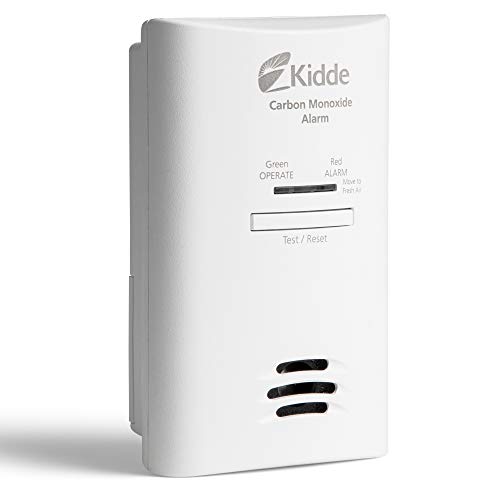 |
Kidde Carbon Monoxide Detector, Plug-in Carbon MonoxideKidde | Our pick | Plug-in · 85dB · Battery Backup | $29.99
Price as of 19 Oct 2026
|
View |
 |
Kidde Battery Dual Photoelectric and Ionization SensorKidde | Also great | 9V Battery · Dual Sensor · Photoelectric | $38.95
Price as of 19 Oct 2026
|
View |
 |
First Alert BRK 1039760 Explosive Gas/CO Alarm – Quantity 1First Alert | Budget pick | Explosive Gas/CO · AA Batteries · White/Gray | $59.99
Price as of 19 Oct 2026
|
View |
 |
Kidde Heat Detector, Hardwired with Battery Backup & 2Kidde | Upgrade pick | Hardwired · 135°F Heat · Interconnect | $42.97
Price as of 19 Oct 2026
|
View |
 |
PT520A Natural Gas Detector, Gas Leak Detector with 17-InchTOPTES | Pair with it | Gooseneck · Methane/Propane · Visual/Audible | $39.99
Price as of 19 Oct 2026
|
View |
This quick view matches the hazard to the room. That matters more than the room name alone. It also helps you decide whether you need one device, or a pair of dedicated alarms with different jobs.
How we chose
The pick list below follows four checks: the hazard the device actually detects, nuisance-alarm risk in that room, power source and maintenance burden, and whether the unit can fit into an interconnect system. That keeps a kitchen heat alarm from being treated like a garage gas monitor.
Placement matters, too. A detector can be the right type and still be a poor choice if it sits too close to a cooktop, in dead air, or beside a garage door that is constantly opening and closing.
Kidde heat detector: best for kitchens and garages
This is the cleanest fit for spaces where heat is the main warning signal. It uses 120V wired power with battery backup, alerts at temperatures above 135°F, and supports interconnect capability, which makes it a practical choice for attached garages and kitchens that need whole-home alerting.
It stands out because rate-of-rise and fixed-temperature heat sensing are the right tools when smoke detectors would nuisance-alarm on cooking, steam, or vehicle exhaust. WC Safety says kitchen heat alarms are the right category for that job, and notes a common 135°F fixed-temperature threshold.
The drawback is simple: a heat alarm does not replace a smoke alarm in living areas, bedrooms, or hallways. It also will not warn you about a slow, smoky fire as early as a smoke alarm placed in the right part of the home.
Kidde CO detector: best for carbon monoxide coverage
This unit fits the carbon monoxide job, not the kitchen-heat job. It plugs in, includes AA battery backup, and has a peak level memory feature, which makes it useful near attached garages, fuel-burning appliances, and rooms that share air with a garage.
CO alarms belong near fuel-burning equipment and in homes with attached garages because carbon monoxide can migrate into living space without smell or visible smoke. A plug-in model is convenient where an outlet is available, and battery backup keeps the alarm working during outages.
The drawback is that it detects carbon monoxide only. It does not detect combustible gas leaks, and it does not solve the false-alarm problem that makes smoke alarms a poor fit directly over a stove.
First Alert explosive gas/co alarm: best for combined leak checking
This is the convenience option when you want one device to watch for explosive gas and CO in the same general area. It uses AA batteries, includes a 9V battery, and is better suited to garages, utility spaces, or adjacent areas than to a kitchen ceiling right over cooking activity.
The key distinction is that it combines two different hazards, not one. CO and combustible gases are related only in the sense that both can be dangerous around garages and fuel-fired equipment; they are not the same gas, and they do not call for the same placement rules.
The drawback is the tradeoff that comes with combination devices: one unit can be convenient, but it is not as targeted as a dedicated CO alarm plus a separate heat alarm where cooking nuisance alarms are likely. It can also be less flexible if you need to place gas detection lower or nearer a likely leak source.
Battery dual-sensor smoke detector: best for living areas near kitchens
This battery-powered smoke alarm is better reserved for adjacent living space, hallways, or bedrooms that need smoke detection without the wiring burden. It uses dual photoelectric and ionization sensing, and the battery format makes it easy to place where hardwired power is not available.
It can make sense just outside a kitchen, especially in an open-plan layout where a heat alarm handles the cooking zone itself and a smoke alarm protects the rest of the floor. Photoelectric sensing is often favored for smoldering smoke, while ionization responds more quickly to flaming fires.
The drawback is that it is still a smoke alarm. Put it directly in a kitchen or garage and nuisance alarms become likely from steam, grease, exhaust, dust, and routine activity.
PT520A gas detector: best for combustible gas leaks
This handheld gas detector is aimed at leak finding, not at routine fixed-location alarm coverage. It detects methane, propane, and butane, includes a 17-inch gooseneck for hard-to-reach areas, and gives visual and audible alarms fast enough to help locate a suspected leak source.
It is the most specific tool here for garage and utility-space checks tied to fuel vapors, propane storage, or natural gas concerns. Walmart’s gas-detector category also notes combustible gas detectors for propane, methane, butane, and LPG, and some models measure concentration in %LEL.
The drawback is that a handheld detector is not a substitute for a mounted alarm. It helps you find a leak, but it does not provide continuous household alerting the way a fixed CO or heat alarm does.
What is the best detector for a kitchen?
A kitchen’s first-choice detector is a heat alarm. It avoids the nuisance alarms that standard smoke alarms trigger near cooking, steam, and grease, while still warning you about abnormal heat rise or a high fixed temperature. If the kitchen opens to a hallway or family room, add smoke protection nearby rather than directly over the cooking area.
Open-plan kitchens
In an open layout, place the heat alarm in the kitchen zone and keep a smoke alarm in the adjacent living area. That split gives you cooking tolerance where you need it, and smoke detection where you want earlier warning for the rest of the floor.
Say your 220-square-foot kitchen opens into a dining area, and a pan starts to smoke while the oven is preheating. A heat alarm over the kitchen can stay quiet through normal cooking, while a nearby smoke alarm in the hall can still alert the rest of the home if smoke spreads.
Kitchens with islands or peninsula cooktops
Island and peninsula cooktops need extra care because steam and smoke drift in more directions. Mount the heat alarm so it is not directly over the cooktop and not trapped in a dead-air pocket near cabinets or ceiling changes. The same source recommends at least 10 feet from the cooktop for a kitchen heat alarm.
If the island sits under a sloped ceiling, an exhaust fan, or a microwave hood, check for air currents that could push heat away from the sensor or carry cooking residue into a smoke alarm. That is where a heat alarm earns its place.
When to add a smoke alarm nearby
Add a smoke alarm in the nearest hallway, living area, or other adjoining room when the kitchen opens into the rest of the house. A dual-sensor smoke alarm can be useful there, but it is a poor substitute for a heat alarm in the cooking zone itself.
A combination smoke/CO alarm can help in nearby space if the home needs both alerts in one unit. It is less useful right over a stove, where smoke nuisance is common and the extra CO function does not solve cooking-related false alarms.
What detector should you use in a garage?
Use a heat alarm in the garage, and add carbon monoxide detection for attached garages or garages that connect to occupied space. Detached garages often need a different setup because they usually do not share indoor air with the house, though they still may need gas leak checks if you store fuel or use propane equipment.
Attached garages
Attached garages are the higher-risk case because vehicle exhaust can migrate into the house, especially if the door to the home opens often. Put CO detection near the door leading to the house or in an adjacent interior area, and use a heat alarm for fire warning in the garage itself.
Dust, exhaust, temperature swings, and power-tool debris can all create nuisance alarms, while some garage hazards are better covered by heat and CO devices than by smoke sensing.
Detached garages
Detached garages usually need a heat alarm if you want fixed protection, plus a combustible-gas detector only when gas cans, propane cylinders, or gas-powered equipment create a real leak risk. A CO alarm is less central here unless the garage has a fuel-burning appliance, a generator, or another combustion source.
A detached garage can still be a problem space. Stored fuel, lawn equipment, and winter-start exhaust create a different risk profile than a living room, and the detector choice should match that profile instead of copying the house plan.
Vehicle exhaust, tools, and fuel storage
Vehicle exhaust points toward CO detection, not combustible-gas detection. Propane, methane, butane, and LPG point toward a combustible-gas detector. Power tools and sawdust point toward dirty, nuisance-prone conditions where smoke alarms struggle and heat alarms usually fit better.
Walmart’s gas-detector listings include products for propane, methane, butane, and LPG, and one handheld model uses a 17-inch flexible gooseneck. That kind of tool is for leak location and verification, not for replacing a mounted household alarm.
Carbon monoxide alarms: best for fuel-burning risks
Use a CO alarm wherever carbon monoxide can build up: near fuel-burning appliances, near the door from an attached garage, and in any interior space that shares air with either one. CO alarms are not interchangeable with combustible-gas detectors, and they are not a kitchen smoke-alarm replacement.
Placement basics
Install CO alarms according to the home layout, not just the appliance list. Place them where people sleep or where air from the garage or utility area can move into living space, while keeping them away from obvious dead-air pockets and direct drafts from vents or fans.
Walmart also lists a CO detector with a temperature and humidity display, which shows how some models add environment reading without changing the core CO function. That feature can be convenient, but it does not change placement rules.
Battery, plug-in, and hardwired models
Battery-powered CO alarms are flexible and keep working during outages if the battery is fresh. Plug-in models are simple where outlets are available, and hardwired units with battery backup suit homes that already use a wired alarm network. The best choice depends on outlet access, renovation plans, and how much maintenance you want.
If you are building a broader alarm system, hardwired interconnect with battery backup is usually the most dependable way to get whole-home alerting. Wireless interconnect can work too when wiring is impractical.
Combustible gas detectors: best for leak checks
Use a combustible-gas detector when the concern is propane, methane, butane, or LPG. That is a different job from CO detection. A gas detector can find fuel leaks in garages, utility spaces, and near appliances, while a CO alarm warns about incomplete combustion and exhaust buildup.
Propane, methane, butane, and LPG
Walmart lists combustible gas detectors for propane, methane, butane, and LPG, and some gas detectors measure gas concentration in %LEL. That is useful when you need a direct leak-check reading instead of a simple alarm tone.
Handheld vs. plug-in
Choose a handheld detector when you need to locate the source of a suspected leak around a garage, RV bay, or appliance. Choose a plug-in detector when you want fixed monitoring in a kitchen or utility area and already have a suitable outlet nearby. Walmart also shows a plug-in natural gas detector for home kitchen use.
The drawback of a handheld unit is obvious: it depends on someone being there. The drawback of a plug-in unit is location lock-in; if the outlet is poorly placed, the detector may miss the leak path or sit too close to a fan.
When %LEL readings matter
%LEL readings matter when you want more than a simple audible warning. They help show how close a combustible-gas reading is to the lower explosive limit, which is useful for diagnosis, but you should still treat any alarm as a stop-and-ventilate event.
Walmart’s 4-in-1 gas monitor category includes a model that detects CO as well as combustible gases. That can be convenient in a garage, but it should not blur the difference between a leak detector and a CO alarm in a living space.
Home safety detector decision matrix
This matrix gives the room-by-room choice first, then the hazard, then the power and placement logic. Use it as a filter, not a shopping shortcut.
| Room type | Primary hazard | Best detector type | False-alarm risk | Power source | Placement notes |
|---|---|---|---|---|---|
| Kitchen with active cooking | Heat from cooking, not smoke | Heat alarm | High with smoke alarms; low with heat alarms | Hardwired with battery backup, or battery where wiring is not available | Keep at least 10 feet from the cooktop; avoid dead-air pockets and direct hood exhaust |
| Kitchen adjacent hall or dining area | Smoke spreading beyond the cooking zone | Smoke alarm, preferably photoelectric or dual-sensor | Moderate if too close to the kitchen | Battery, 10-year battery, or hardwired | Place outside the cooking zone, not over the stove or island |
| Attached garage | Vehicle exhaust, heat, fuel vapors | Heat alarm plus CO alarm | Smoke alarms are prone to nuisance alarms | Hardwired with battery backup when possible | Keep away from direct exhaust paths, open doors, and strong fan drafts |
| Detached garage | Heat, fuel storage, leak checks | Heat alarm; combustible-gas detector if fuel is stored | Lower for heat alarms; moderate for smoke alarms | Battery, plug-in, or hardwired depending on access | Use wall or ceiling placement that avoids vents and door drafts |
| Utility room shared with garage air | CO and possible gas leaks | CO alarm and, if needed, combustible-gas detector | Low if the correct hazard is matched | Plug-in or hardwired for CO; handheld or plug-in for gas checks | Keep clear of fans, vents, and appliance exhaust |
| Scenario | Correct detector choice | Why it fits |
|---|---|---|
| Gas cooktop in a kitchen island | Heat alarm in the kitchen, smoke alarm outside the cooking zone | Cooking steam and grease make smoke alarms nuisance-prone near the island |
| Attached garage with a car, lawn tools, and a door into the house | Heat alarm plus CO alarm | Exhaust and temperature swings call for CO and heat coverage, not a kitchen-style smoke alarm |
| Detached garage with propane heater and stored cylinders | Heat alarm plus combustible-gas detector | Fuel vapors are the main concern, and CO is only central if combustion equipment is present |
| Kitchen near a laundry or mudroom | Heat alarm in the kitchen, smoke alarm in the adjacent room | It limits nuisance alarms while keeping smoke coverage nearby |
| Garage suspected of a natural gas leak | Combustible-gas detector, ideally handheld for source finding | That hazard calls for gas detection, not CO-only sensing |
Which one should you buy?
For the tightest budget, buy the detector that matches the room’s actual hazard first: heat for kitchens and garages, CO for attached-garage or appliance exposure, and combustible gas only when a real leak risk exists. Do not spend less by buying the wrong category.
If you want the best fit for an attached garage, start with a hardwired heat alarm with battery backup and add a CO alarm near the home connection. That setup handles exhaust and heat without making the garage behave like a bedroom hallway.
For whole-home alerting, choose detectors that can interconnect. Hardwired interconnect is the most straightforward if the house is already wired for it; wireless interconnect is the fallback when you need coordination without rewiring. Hardwired units with battery backup are usually the lowest-maintenance path for a renovation or replacement cycle.
A common mistake is mounting a carbon monoxide detector beside the garage door because the spot looks easy to reach and seems like it would cover the whole space. A single pan of bacon grease or a burst of steam can trip it, and repeated false alarms train people to ignore the sound.
Suppose a detached garage stores a lawn mower, a propane cylinder, and paint thinner on one wall. In that case, a heat alarm still makes sense, but a combustible-gas detector becomes the better add-on than a CO alarm unless you also run fuel-burning equipment inside the garage.
Frequently asked questions
Can I use a smoke detector in a kitchen or garage?
You can, but it is usually the wrong first choice. Smoke alarms in kitchens and garages are prone to nuisance alarms from cooking, exhaust, dust, and temperature swings. A smoke alarm is better placed just outside those rooms, where it can cover nearby living space.
Should I get a heat alarm or a smoke alarm for the kitchen?
Choose a heat alarm for the kitchen. The same source notes that kitchens need heat alarms because standard smoke detectors are not suitable there, and that heat alarms use rate-of-rise and fixed-temperature sensing.
How far should a kitchen detector be from the stove?
For a kitchen heat alarm, WC Safety recommends mounting it at least 10 feet from the cooktop. That distance helps reduce nuisance alarms from cooking while keeping the sensor close enough to react to dangerous heat. Avoid dead-air spaces, vents, and direct hood airflow.
Should kitchen and garage detectors be hardwired or battery powered?
Hardwired with battery backup is usually the strongest option when you want reliability and interconnect capability. Battery models are easier to place and replace, and 10-year battery units reduce maintenance. Plug-in models work well for CO and some gas detectors where outlets are available.
Sponsored / affiliate links. As an Amazon Associate I earn from qualifying purchases. I may earn additional commission from eligible campaigns.
 SITERLINK Smoke Detectors 10 Year Battery Operated,UL217-9th Listed Smoke Alarm with Test-Silence Button,Photoelectric Sensor Fire Alarms Smoke Detectors with LED Lights for Home, GS525A (6 Pack)
 Charmline Smart Ozone Generator for Car 12V and Home 120V, 60,000mg/h Ozone Machine with Remote Control, Ionizer & Deodorizer for Car, RV, Home, Smoke, Pets, Basement & Commercial Use