
5 Best Detectors for Bedrooms and Hallways (2026): We Compared
For bedrooms and hallways, photoelectric smoke alarms are commonly recommended as a safe default for sleep areas. Use hardwired or battery-powered units with 10-year sealed batteries. Missing the right detector can delay warning at night, especially when doors are closed and sound is muted. This guide matches sensor type, power source, and alert style to bedroom and hallway conditions by sleep-risk profile.
Choosing the right detector based on layout and risk
The best fit for most bedrooms and adjoining hallways is a photoelectric alarm with a 10-year sealed battery, because it handles smoldering fires well and is less likely to nuisance alarm from light steam or dust. For homes with attached garages, gas appliances, or a shared whole-home setup, move up to an interconnected hardwired or smoke-and-CO model.
Photoelectric sensors are the best default for sleeping areas because they suit quiet rooms and closed doors. Hallways need the same core protection, but they also need loud, reliable coverage of bedroom exits, so the hallway unit often works best as the shared alert point while bedroom units handle closed-door sleeping risk.
Top pick for most sleeping areas
Choose a photoelectric, 10-year sealed battery alarm for a normal bedroom or a dry hallway. It keeps maintenance low, reduces late-night low-battery chirps, and fits rooms where steam exposure is limited.
Best fit for bathroom-adjacent rooms
If the bedroom or hallway sits close to a bathroom, pick photoelectric sensing and place the alarm farther from steam sources. Ionization sensors are more likely to nuisance alarm in humid layouts, so they are a weaker fit here.
Best choice for connected whole-home coverage
If bedroom doors stay closed and the home has multiple sleeping rooms or floors, choose an interconnected system. A hardwired, battery-backed model is the strongest all-home option, while wireless interconnect can work where wiring is not practical.
Quick comparison
| Product | Badge | Best for | Price | ||
|---|---|---|---|---|---|
 |
X-Sense Smoke Detector, 10-Year Battery, UL 217 Certified,X-Sense | Our pick | 10-Year Battery · 10-Pack · Photoelectric | $182.99
Price as of 18 Oct 2026
|
View |
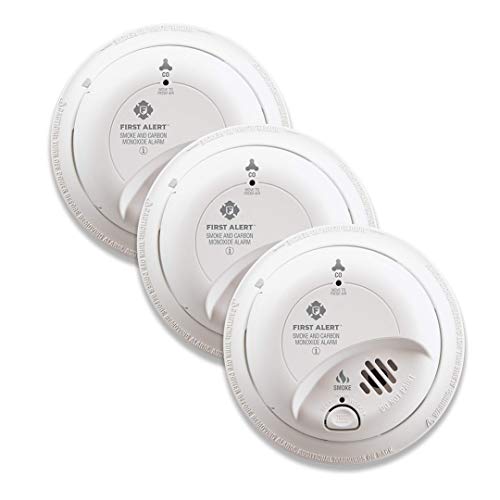 |
FIRST ALERT BRK SC9120B-3 Hardwired Smoke and CarbonFirst Alert | Upgrade pick | Hardwired · CO + Smoke · 3-Pack | $173.12
Price as of 18 Oct 2026
|
View |
 |
Kidde Compact Smoke Detector, AA Battery-Powered, 10SDR |Kidde | Budget pick | AA Battery · Compact · Single Unit | $18.97
Price as of 18 Oct 2026
|
View |
 |
X-Sense Interconnected Smoke and CO Detector, SC07-W,X-Sense | Also great | Interconnected · CO + Smoke · 6-Pack | $239.99
Price as of 18 Oct 2026
|
View |
 |
Heiman Smart Wireless Interconnected Smoke Detector, 6-PackHEIMAN | Pair with it | Smart Wi-Fi · 6-Pack · Gateway | $175.99
Price as of 18 Oct 2026
|
View |
This comparison is a room-fit guide, not a brand ranking. The right detector depends on steam, door position, hallway layout, and whether you need smoke-only or smoke-plus-CO coverage.
How we chose
The comparison below uses four decision points: fire signature, power source, alert reach, and maintenance burden. Those are the factors that matter most in bedrooms and hallways, where missed overnight alerts and nuisance chirps both cause real problems.
Sensor choice comes first. Photoelectric models fit sleep areas best, ionization models react faster to flaming fires but are less forgiving near bathrooms, and dual-sensor units make sense when one room has mixed risks.
Power source comes next. A sealed 10-year battery cuts upkeep, hardwired power with backup battery suits code-minded whole-home setups, and smart units add app alerts only when Wi-Fi and app dependence are acceptable.
Alert reach matters as much as detection. Interconnected alarms are valuable when bedroom doors are shut, because a hallway alarm alone can be muted by closed doors and distance. Hallway placement also matters because it can act as the shared warning point for several rooms.
Bedroom and hallway detector decision table
This table maps common room conditions to the detector type, power source, alarm style, and likely nuisance risk. Use it to match the unit to the room, not the other way around.
| Room type | Steam exposure | Door-closed sleeping risk | Recommended sensor | Recommended power source | Whether interconnection matters | What nuisance alarm to expect | Best fit / avoid |
|---|---|---|---|---|---|---|---|
| Primary bedroom far from bathroom | Low | High | Photoelectric smoke alarm | 10-year sealed battery or hardwired with backup | Useful, especially if hallway unit must wake the room | Low, usually from dust or low battery only | Best fit: quiet overnight warning. Avoid: ionization if you want fewer false alarms. |
| Bedroom next to bathroom | Medium to high | High | Photoelectric smoke alarm | 10-year sealed battery | Helpful if hallway carries the main alert | Steam-related chirps if placed too close to the bathroom door | Best fit: photoelectric with careful placement. Avoid: ionization near showers or humid vents. |
| Guest room with light use | Low | Medium | Photoelectric smoke alarm | 10-year sealed battery | Optional, but useful in multi-room homes | Low maintenance nuisance risk | Best fit: low-maintenance standby protection. Avoid: battery types that need frequent swaps. |
| Nursery | Low | High | Photoelectric smoke alarm | Hardwired with backup or 10-year sealed battery | Important if you want every alarm to wake the caregiver | Low, but hush-button misuse can leave the room unprotected if people silence real alerts | Best fit: photoelectric with interconnected coverage. Avoid: single isolated unit far from the hallway. |
| Hallway outside multiple bedrooms | Low to medium | Shared alert point | Photoelectric smoke alarm or dual-sensor if mixed risk exists | Hardwired with backup or 10-year sealed battery | Very important | Dust from HVAC returns or hallway traffic | Best fit: interconnection for shared warning. Avoid: ionization in steam-prone layouts. |
| Hallway near furnace room or attached garage entry | Low | Shared alert point | Smoke and carbon monoxide combination alarm | Hardwired with backup, or battery if wiring is not available | Important | Possible nuisance from dust if the space is unfinished | Best fit: smoke-plus-CO coverage. Avoid: smoke-only if CO risk is present nearby. |
| Hallway serving a finished bedroom wing | Low | Shared alert point | Photoelectric smoke alarm | Hardwired with backup or wireless interconnected battery model | Strongly recommended | Low, mostly low battery or dust | Best fit: hallway as central alert point. Avoid: relying on one bedroom unit only. |
| Bedroom near attached garage wall | Low | High | Smoke and carbon monoxide combination alarm | Hardwired with backup or smart battery model | Useful if hallway is the main audible path | CO alarm alerts if vehicle exhaust or appliance backdraft is present | Best fit: smoke and CO dual protection. Avoid: smoke-only units where CO risk exists. |
Photoelectric vs. ionization: which is better in bedrooms?
Photoelectric is usually the better bedroom choice because it handles smoldering fires well and is less likely to nuisance alarm from steam or light dust. Ionization reacts faster to flaming fires, but that speed is less useful than dependable overnight warning in most sleeping areas.
Why photoelectric is usually the safer default
Bedrooms and hallways often sit near bathrooms, laundry areas, or HVAC returns, so nuisance alarm resistance matters. Photoelectric alarms fit that setting better, especially when the room is expected to stay quiet at night and the detector must be trusted, not silenced.
Picture a hallway outside two bedrooms with a bathroom across the hall. A photoelectric alarm is the safer default because it is less likely to chirp from shower steam, and the hallway placement helps wake both rooms from one shared point.
Where ionization still makes sense
Ionization still has a place where the main concern is very fast flaming fire and the room is dry, simple, and far from steam. A storage-like bedroom or a dry hallway with little moisture can support it, but it is usually not the first choice for sleeping areas.
When a dual-sensor alarm is the better compromise
A dual-sensor alarm can make sense when one unit must cover both fast-flame and slow-smolder risks. That is useful in a hallway that serves a mixed-use area, or in a bedroom wing where the layout makes one detector carry more responsibility than usual.
10-year battery, hardwired, or smart?
Ten-year sealed battery alarms are the easiest low-maintenance choice for bedrooms and many hallways, while hardwired units are best for whole-home coverage and smart units are for people who want phone alerts. The right answer depends on how much maintenance you will tolerate and how important remote notification is.
Why 10-year sealed battery alarms reduce maintenance
A 10-year sealed battery unit removes annual battery swaps, which reduces the chance of a dead battery and the nuisance of late-night chirps. First Alert sells 10-year smoke alarms as a dedicated category, and a Kidde 10-year battery model is described as a no-annual-swap option.
How long do bedroom smoke detector batteries last? In sealed 10-year models, the battery is intended to last for the life of the unit. In replaceable-battery alarms, service life depends on battery type and use, so the better question is whether you want routine swaps or a sealed replacement cycle.
When hardwired alarms are worth the install
Hardwired alarms are the strongest choice for code-minded whole-home coverage because they provide permanent power with a backup battery. They are common in interconnected setups, and the First Alert BRK 9120B 6-pack is hardwired, battery-backed, and interconnects so every unit sounds simultaneously.
Should bedroom and hallway detectors be interconnected? In most multi-room or multi-level homes, yes. Interconnection matters when doors are closed, because a hallway alarm alone may not be enough to wake someone in a shut bedroom.
What smart alerts add in a bedroom or hallway
Smart smoke detectors add phone alerts and app-based notifications, which can help when you are away from home or in a room where hearing the alarm is difficult. The tradeoff is dependence on Wi-Fi or an app ecosystem, and smart features should never replace a loud local alarm.
The Google Nest Protect combines smoke and carbon monoxide detection, uses a split spectrum sensor for fast and slow burning fires, and offers phone alerts through Wi-Fi connectivity. That mix is useful, but it also means the unit depends on network setup and app support.
Suppose a guest room sits on the far side of a closed door and a hallway alarm sounds while the homeowner is downstairs. A smart alarm can add a phone alert, but the hallway unit still needs to be loud enough to warn anyone asleep in the room itself.
Best bedroom and hallway detectors from this group
For most bedrooms, the best fit is the X-Sense 10-year battery photoelectric alarm because it aligns with sleep-area needs: fewer nuisance alarms, no wiring, and sealed battery convenience. For whole-home coverage, the First Alert hardwired smoke and CO model is stronger because it adds interconnection and backup power. For app-based notification, the HEIMAN smart wireless model is the premium choice.
X-Sense 10-Year Battery Smoke Detector: best for low-maintenance bedrooms
This model is a strong match for bedrooms, guest rooms, and dry hallways where you want photoelectric sensing and a sealed 10-year battery. The manufacturer details point to easier ownership because there is no wiring, Wi-Fi, or app to manage, and photoelectric sensing is the better fit for smoldering smoke and fewer cooking nuisance alarms.
The main drawback is that it is standalone, so it does not solve whole-home alerting by itself. If bedroom doors are closed at night, a single unit may not be enough unless it is paired with a hallway alarm or an interconnected system.
First Alert BRK SC9120B-3: best for hardwired smoke and CO coverage
This is the better choice when a hallway or sleeping wing needs smoke and carbon monoxide protection in one hardwired unit. It is battery-backed and interconnectable, which makes it a practical option for code-minded homes with multiple alarms that need to sound together.
The drawback is installation complexity. Hardwired units usually require more effort than a battery model, so they are not the easiest fit for a simple bedroom upgrade where no wiring is available.
Kidde Compact Smoke Detector: best for a basic budget bedroom
This compact AA battery model suits a small bedroom, a spare room, or a lower-cost hallway install when you want a simple smoke alarm with LED status lights. Based on the published details, it is a practical pick where cost matters more than long-term maintenance reduction.
The drawback is obvious: AA batteries need attention, so it does not remove the replacement burden the way a sealed 10-year battery model does. It is also standalone, so it is not the first pick for closed-door bedrooms in a larger home.
X-Sense Interconnected Smoke and CO Detector: best for wireless whole-home coverage
This model fits homes that want interconnected smoke and CO coverage without hardwiring. The wireless interconnect sends all alarms simultaneously, the sealed 10-year battery reduces upkeep, and the smoke-plus-CO setup is useful for hallway placement near garage access or appliance areas.
The drawback is cost and system complexity. A six-pack is more than a single-room fix, and the interconnection only helps if the whole set is installed and maintained as intended.
HEIMAN smart wireless Interconnected Smoke detector: best for app alerts
This is the premium choice for households that want Wi-Fi alerts, wireless interconnection, and a 10-year battery in one setup. It is a fit for bedrooms and hallways where app-based warning adds value, especially if someone may be away from the sleeping area when a detector trips.
The drawback is the same one that applies to most smart devices: it depends on a gateway, Wi-Fi, and the app ecosystem. If those systems are down or not configured well, the extra alert path becomes less useful.
Which one should you buy?
If you want the best default for a bedroom or a dry hallway, buy a photoelectric alarm with a 10-year sealed battery. If the hallway needs smoke and carbon monoxide coverage near an attached garage or fuel-burning appliance, choose a smoke-and-CO combination unit there instead of inside an ordinary bedroom.
For budget-conscious buyers, the simple battery model can work in a small room, but it carries more upkeep. For most homeowners, the maintenance burden is lower with a sealed battery or hardwired unit, and the safest layout is usually hallway plus bedroom coverage rather than one detector in only one place.
For whole-home coverage, start with hardwired and interconnected alarms if wiring is already in place. If not, a wireless interconnected battery system is the next best route. First Alert sells interconnected alarms and wireless interconnected smoke and carbon monoxide alarms, and Kidde’s wire-free interconnectivity is designed for bedroom installations without hardwiring.
Do not put an ionization detector in a steam-prone bedroom just because it is cheaper. Do not rely on hush buttons as a long-term fix either; hush is for nuisance silencing, not for solving placement or maintenance problems. A dead backup battery can make a hardwired unit less dependable than it should be, so testing and replacement still matter.
- Pick photoelectric for bedrooms unless a mixed-risk room justifies dual sensing.
- Use a hallway alarm as the shared alert point for closed-door sleeping areas.
- Add smoke and CO only where carbon monoxide risk exists.
- Choose sealed 10-year battery, hardwired, or smart alerts based on maintenance tolerance.
- Test the alarms and replace units when the manufacturer says to, because they do not last forever.
Frequently asked questions
What is the best smoke detector for a bedroom and hallway?
For most homes, the best choice is a photoelectric alarm with a 10-year sealed battery in the bedroom and a similar unit in the hallway. That pairing gives dependable overnight warning, lowers nuisance alarm risk, and keeps maintenance light unless your layout requires hardwired interconnection.
Should I use a photoelectric or ionization smoke detector in bedrooms?
Use photoelectric in bedrooms unless you have a very specific flaming-fire concern and a dry, steam-free room. Photoelectric is usually better for sleeping areas because it reacts well to smoldering fires and is less likely to nuisance alarm near bathrooms or humid hallways.
Are 10-year battery smoke detectors worth it for hallways?
Yes, especially in hallways outside bedrooms where a late-night chirp is a real problem. A 10-year sealed battery cuts routine maintenance and reduces the chance that the hallway unit is ignored because someone forgot to replace a conventional battery.
How close should a bedroom smoke detector be to a bathroom?
Keep it far enough from shower steam that you do not trigger nuisance alarms. If a bedroom door opens near the bathroom, photoelectric sensing is the safer choice, and placement should avoid the direct path of steam from the bath or shower.
Should bedroom and hallway detectors be interconnected?
Yes, in most multi-room homes. Interconnection matters because bedroom doors are often closed at night, and a hallway alarm alone may not wake every sleeper in time. Wired and wireless interconnected systems both solve that problem, depending on the home’s setup.
Do I need a smoke and carbon monoxide detector in the hallway?
Use a smoke-and-CO alarm in the hallway if the area is near an attached garage, furnace room, gas appliance, or another carbon monoxide source. In a typical bedroom hallway with no CO risk, a smoke-only photoelectric alarm is usually enough.
Sponsored / affiliate links. As an Amazon Associate I earn from qualifying purchases. I may earn additional commission from eligible campaigns.
 SITERLINK Smoke Detectors 10 Year Battery Operated,UL217-9th Listed Smoke Alarm with Test-Silence Button,Photoelectric Sensor Fire Alarms Smoke Detectors with LED Lights for Home, GS525A (6 Pack)
 RKUVPAE Smart Bedroom Home Small Air Purifier, Mini Basement for Home Basement Bathroom Wardrobe Dehumidification