Do Door Draft Stoppers Actually Work?
Door draft stoppers are generally most effective for gaps of about 1/2 inch or less, as long as the door closes freely and the stopper matches the floor type. Use the wrong style, and you can still lose heat, admit dust, or make the door hard to open. This guide shows how to measure the gap, choose the right stopper, and avoid common fit problems.
This guide is part of our Winter Weatherproofing: How to Draft-Proof Your Home series.
What draft stoppers seal and where they fall short
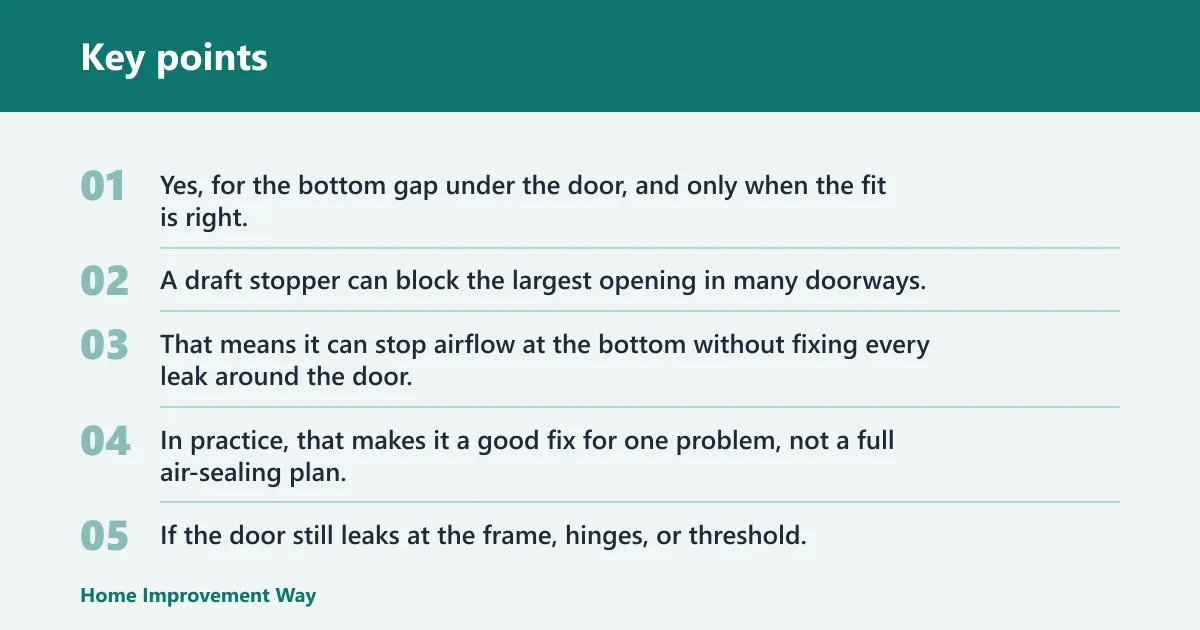


Yes, for the bottom gap under the door, and only when the fit is right. A draft stopper can block the largest opening in many doorways, but it does not seal the sides or top of the frame. That means it can stop airflow at the bottom without fixing every leak around the door.
In practice, that makes it a good fix for one problem, not a full air-sealing plan. If the door still leaks at the frame, hinges, or threshold, the stopper may help a little and still leave the room cold.
How a draft stopper works
A fabric slide-on draft stopper moves with the door. That makes it a good renter-friendly draft fix for interior doors and other low-traffic openings. Utility Explained says this style fits standard doors up to 38 inches and can cover gaps up to about 1.4 inches.
An adhesive door sweep works differently. It attaches to the door, so it stays in place when the door opens and closes. Utility Explained identifies that style as the exterior-door workhorse. It is usually fixed with screws or adhesive and needs a compatible gap clearance to seal well.
Bob Vila tested five draft stoppers from a researched set of nine products and named the Maxtid Adjustable Door Draft Stopper its best overall pick. Bob Vila says draft stoppers can keep out noise, light, dust, and odors, and rated the Maxtid product 5/5 for fit and effectiveness. That helps with comfort, but only if the door setup matches the product.
Where bottom sealing fits in the bigger picture
Bottom sealing is only one part of the job. BetterDoor says draft stoppers provide immediate relief but are not a full substitute for weathersealing. If air still leaks through the sides or top, you usually need weatherstripping there too.
For example, a laundry room door may have about a 3/8-inch gap at the bottom and still feel drafty at the latch side. A stopper may reduce floor-level airflow, but side weatherstripping would address the remaining leak.
Door draft stopper decision table

This table gives a fast match between door setup and fix. Start with the gap, then check the floor and how often the door opens. If the choice is wrong, the stopper may drag, ride up, or leave the leak untouched.
| Door type | Gap size | Flooring | Traffic level | Best fix |
|---|---|---|---|---|
| Interior door to a spare room | Up to about 1/2 inch | Flat hard floor | Low | Fabric slide-on draft stopper |
| Interior door with a larger under-door gap | About 1/2 inch to 1.4 inches | Flat hard floor | Low | Fabric slide-on draft stopper, if the door still closes freely |
| Exterior door | Small to moderate gap | Flat hard floor | Medium to high | Adhesive door sweep |
| Exterior door with a gap that is too large for a sweep | Large gap or uneven clearance | Hard floor or worn threshold | Medium to high | Threshold adjustment, often with weatherstripping |
| Door still leaks around the frame after bottom sealing | Any bottom gap already handled | Any floor type | Any | Weatherstripping on the sides and top |
| High-traffic exterior door | Small to moderate gap | Flat hard floor | High | Door sweep plus weatherstripping if needed |
| Door over thick carpet | Any gap you can feel | Thick carpet | Low to medium | Usually a sweep, threshold change, or another frame fix instead of a loose stopper |
What the table means in plain terms
A fabric stopper is usually the best renter-friendly option when the door sits over a flat floor and does not get opened constantly. An adhesive sweep is better when the door is outside or used often, because it stays on the door bottom instead of moving around with a loose sleeve.
If the gap is too large, the floor is uneven, or the door already has a worn threshold, you may need a threshold adjustment before any stopper works well. That is the point where a stopper becomes a symptom-fixer rather than the real repair.
How do you measure the gap first?
Measure the under-door gap before you buy anything. The same source recommends measuring the under-door gap before buying, and that step matters because the wrong size can drag on the floor or miss the opening entirely. Check the gap at more than one point, since many doors are not perfectly even.
- Close the door fully.
- Measure the gap at the left side, center, and right side under the door.
- Write down the largest number.
- Check the floor type: flat hard floor, low-pile carpet, or thick carpet.
- Note how often the door opens each day.
- Decide whether you need a loose stopper, a fixed sweep, or a threshold fix.
Suppose the center gap is 3/8 inch, but one corner opens to 5/8 inch because the door sags. A stopper sized for the smaller number may seem fine at first and still leak at the loose corner. That is why one measurement is usually not enough.
Signs the gap is the real problem
If you can see daylight under the door, hear whistling at the bottom, or feel a cold strip right at the threshold, the under-door gap is the first place to check. If the frame also leaks, the bottom fix alone will not solve it.
Do door draft stoppers work on carpet?
Sometimes, but carpet changes the fit a lot. A draft stopper that works on a smooth floor can ride up on carpet instead of sealing, especially on thick pile. Draft & Door says a draft stopper does not work well on thick carpet, and that warning matters more than most product listings admit.
Low-pile carpet is a better match than thick pile because the door bottom can stay closer to the surface. Even then, the stopper has to stay centered as the door moves. On thicker carpet, the seal often becomes weak or uneven.
Low-pile versus thick pile
Low-pile carpet may allow a slide-on stopper to work if the gap is modest and the door closes without drag. Thick pile often lifts the fabric, which opens a path for air to move underneath. That is why the same stopper can feel effective on one room door and fail on another.
If the door is exterior and the carpet is thick, a sweep that attaches to the door may still need a compatible clearance, or you may need a threshold change instead. The floor material changes the answer as much as the gap size does.
When is a door sweep better than a draft stopper?
A door sweep is better when the door is used often, sits outside, or needs a more fixed seal. Utility Explained identifies an adhesive door sweep as the exterior-door workhorse, and that makes sense because it stays with the door bottom instead of shifting on the floor. It is usually the stronger choice for traffic and weather exposure.
Draft stoppers are looser by design. That makes them easier to install and remove, but also easier to bump out of place. If you want a more permanent or semi-permanent seal, a sweep usually wins.
Exterior doors and higher traffic
For exterior doors, a loose fabric sleeve is often the wrong first choice. It can work on the bottom gap, but it is more likely to move, wear, or catch when the door opens. A sweep better fits the job because it stays attached and can reduce airflow at the door bottom more reliably.
High-traffic doors also need a fix that does not require constant repositioning. If the door opens many times a day, a slide-on stopper can become annoying fast. A sweep, threshold adjustment, or weatherstripping is usually the better long-term answer.
When a threshold or frame fix is the real answer
If the gap is too large for a sweep to bridge, the threshold may need attention. A door threshold works with bigger gaps and is often part of a permanent weather-sealing fix. If the door still leaks after the bottom is handled, weatherstripping on the sides and top usually finishes the job.
A common first-timer mistake is buying a thicker stopper when the real issue is a bad hinge or a worn threshold. That can lead to a dragging door and the same draft. Fix the door geometry first when the gap is uneven or obviously too large.
What should you use for renters and interior doors?
For renters and interior doors, a non-destructive draft fix is usually the easiest place to start. A fabric slide-on stopper moves with the door, needs no permanent change in most cases, and is easy to remove when the lease ends. That makes it a clean short-term option for a spare room, office, or seldom-used bedroom.
Interior doors also tend to be lower traffic, which fits a loose stopper better. If the door is on a flat floor and the gap is modest, a simple sleeve is often enough. If the room still leaks around the frame, add weatherstripping.
Renter-friendly versus owner-installed
Use a renter-friendly draft fix when you need no tools or permission and the door only needs bottom sealing. Choose an owner-installed fix when the door is exterior, the gap is large, or the threshold and frame need repair. A temporary stopper is fine for one problem; a permanent door setup needs a more fixed solution.
How do you use a door draft stopper?
You use the right style for the door, then place it so it seals the under-door gap without dragging. A fabric slide-on stopper usually slips onto the bottom of the door and stays aligned as the door moves. An adhesive sweep sticks or screws to the door bottom and should match the measured clearance.
Check the door after installation. If it rubs hard, the fit is too tight. If you still feel airflow, the seal is too loose or the wrong part of the door is leaking.
Simple use check
- Confirm the gap size before buying.
- Match the product to the floor and traffic level.
- Install the stopper or sweep so it sits straight across the bottom.
- Open and close the door several times.
- Check for dragging, bunching, or a visible air path.
Where can you buy a door draft stopper?
You can buy them online or in home improvement stores. That is the easy part. The harder part is choosing the right style before you spend money, since not every listing makes the gap range or floor fit clear enough.
If you are shopping in person, bring the gap measurement with you. That helps you avoid oversized fabric sleeves and sweeps that need more clearance than your door has.
Do door draft stoppers help with noise?
They can help with light noise, but the effect is limited. The same source says draft stoppers can keep out noise, light, dust, and odors, which is fair for a bottom-gap seal. They are better at reducing airflow and small openings than at blocking stronger sound through the whole door.
The limit matters. If the sound is mostly coming through the bottom gap, a stopper can make a noticeable difference. If the door itself is thin or the frame leaks, the improvement is usually modest.
What noise reduction can and cannot do
A draft stopper may soften hallway noise, foot traffic, or a drafty whistling sound. It will not turn a hollow interior door into a soundproof barrier. For better sound control, you usually need bottom sealing plus side and top weatherstripping, and sometimes a thicker door or additional panel treatment.
Frequently asked questions
Do door draft stoppers really work?
Yes, if the problem is the bottom gap and the product fits the door. They work best on closed, low-traffic doors with a flat floor. They are less effective when the gap is large, the floor is carpeted, or the frame itself leaks air.
Do draft stoppers work on exterior doors?
They can, but an adhesive door sweep is usually a better fit for exterior doors. It stays attached to the door and handles repeated opening better than a loose fabric blocker. If the gap is large or the threshold is worn, you may need a threshold fix too.
Do draft stoppers help with noise?
They can reduce some noise by blocking the bottom opening, especially light hallway sound and whistling airflow. The effect is limited, though. If you want more sound reduction, seal the sides and top of the frame as well.
Which type of draft stopper works best for my door?
For renter-friendly interior use, a fabric slide-on stopper is usually the best starting point. For exterior doors, an adhesive sweep is usually better. If the gap is too large or the threshold is worn, a threshold adjustment or weatherstripping may solve the real problem better than a stopper.
Sponsored / affiliate links. As an Amazon Associate I earn from qualifying purchases. I may earn additional commission from eligible campaigns.
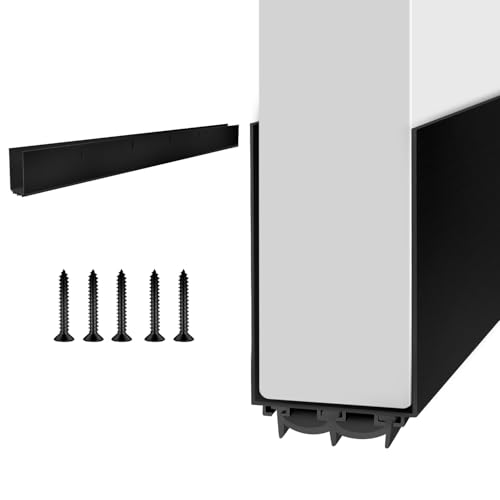 Door Draft Stoppers for Door, 39” Length Weather Stripping Door Seal, Strong Adhesive Door Sweep for Exterior and Interior Doors(Black)
 Door Draft Blocker 32 Inches Door Sweep for Interior Doors Wind Blocker Door Bottom Seal Weather Stripping Black Door Draft Stoppers for Bottom of Door 32 Inch Block Cold Air Noise Smoke Stopper