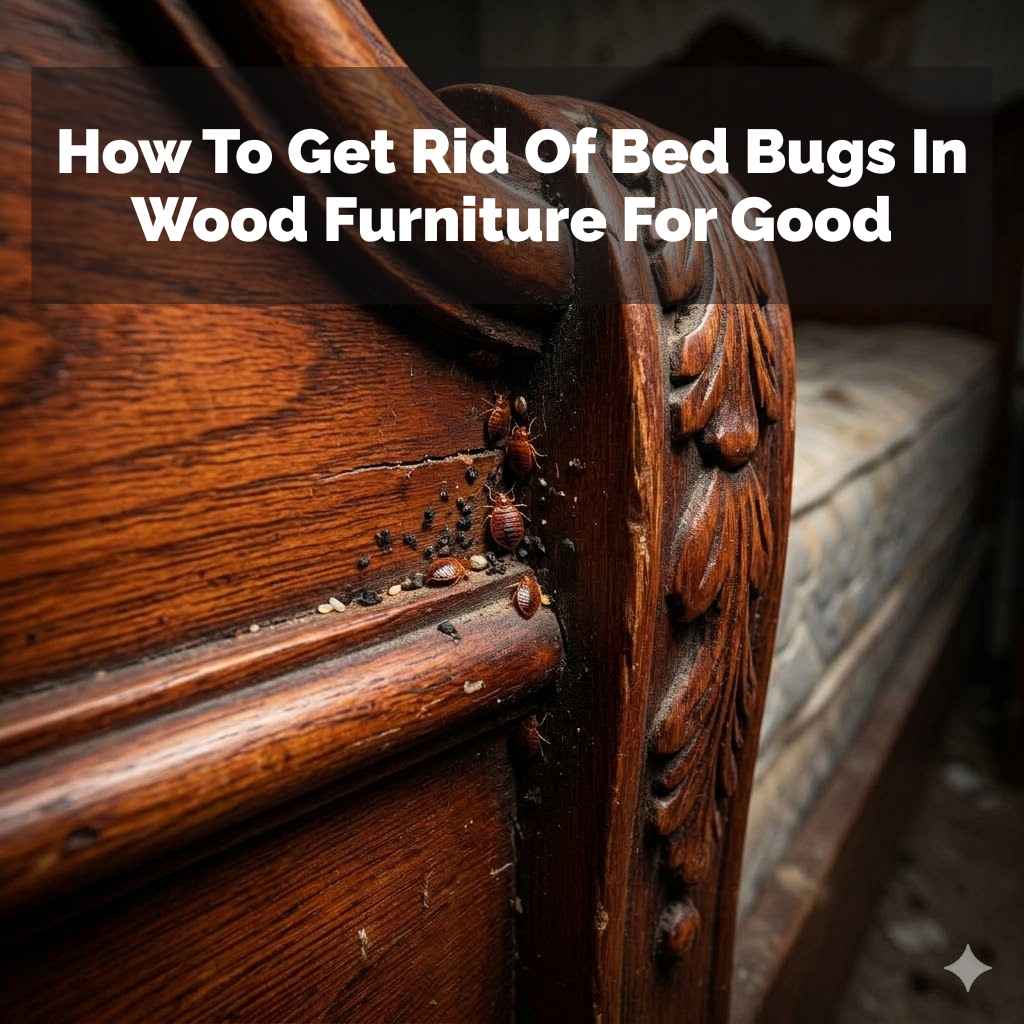
How To Get Rid Of Bed Bugs In Wood Furniture For Good
Bed bugs can hide in the tiny cracks and crevices of wood furniture. They are masters of disguise. Getting rid of them takes time and effort. This guide offers clear steps to help you reclaim your home. You’ll learn how to spot them and make sure they don’t come back.
Understanding the Bed Bug Problem in Wood Furniture
Bed bugs are small, oval-shaped insects. They are reddish-brown in color. Adults are about the size of an apple seed.
They like to live close to where people sleep or rest. This is because they feed on blood. They can hide in many places.
Wood furniture is a prime spot for them.
Why do they like wood? Wood has many small cracks. These are perfect hiding places.
Bed bugs can squeeze into these tiny spaces. They feel safe there. They also like the warmth that wood furniture can hold.
They can live for months without a meal. This makes them tough to get rid of.
The life cycle of a bed bug is also a factor. They lay tiny eggs. These eggs are hard to see.
They hatch into young bed bugs called nymphs. Nymphs are smaller. They are often a pale color.
They need to feed to grow. They shed their skin several times. These shed skins are another sign of an infestation.
Finding bed bugs in wood furniture can cause stress. It’s a common problem many people face. But with the right knowledge, you can win this fight.
We will walk through the steps together. This will help you feel more in control. Your goal is a pest-free home.
My Own Bed Bug Battle in the Bedroom
I remember it clearly. It was a cold Tuesday night. I was trying to relax.
I felt a tiny itch on my arm. I brushed it off. Then I felt another.
My heart started to race a little. I looked around my bedroom. Nothing seemed out of place.
I got up and walked to my bed. I pulled back the sheets. And there it was.
A tiny, dark speck. Then another. It looked like a small beetle.
But I knew. I had a sinking feeling in my stomach. It was a bed bug.
Panic started to set in. I felt a wave of nausea.
My mind raced. Where did they come from? How long have they been here?
I looked at my bedside table. It was old wood. It had lots of nooks and crannies.
I remembered a trip we took last month. We stayed at a hotel. Could we have brought them back?
The thought was terrifying. I felt a deep sense of helplessness wash over me.
Signs of Bed Bugs in Wood Furniture
Tiny Reddish-Brown Bugs: Small, oval bugs you might see. They are about the size of an apple seed.
Dark Spots: These are bed bug droppings. They look like small dots of ink.
Shed Skins: As nymphs grow, they shed their outer skin. These look like empty husks.
Tiny Eggs: Pearly white eggs, very small. Often found in cracks.
Blood Stains: Small reddish stains on sheets or furniture. From crushed bugs or bites.
The next few days were a blur. I felt a constant urge to check everything. I tore apart my bedroom.
I found more bugs. And those dark spots. Especially in the seams of my mattress.
And on my wooden bed frame. They were hiding well.
This experience taught me a lot. It showed me how sneaky bed bugs can be. It also showed me that you need a plan.
You can’t just ignore them. You have to be thorough. And you have to be persistent.
It’s a tough fight, but you can win.
How Bed Bugs Choose Your Wood Furniture
Bed bugs are attracted to a few key things. One is heat. They can sense body heat.
This helps them find you. They also smell carbon dioxide. This is what you breathe out.
So, they know when you are near.
Wood furniture offers many hiding spots. Think about an old wooden dresser. It has drawers.
It has seams. It has little gaps where the wood pieces join. Bed bugs can crawl into these.
They can stay there during the day. They only come out at night to feed.
Another reason wood is appealing is its texture. The rough surface of wood gives them grip. They can hold on easily.
This helps them crawl around. It also helps them hide. They can cling to the underside of shelves.
Or deep inside drawers.
Consider the construction of the furniture. If it has many joints and seams, it’s a good target. Upholstered furniture is also a problem.
But solid wood with many details can be just as bad. Bed bugs love to explore these tiny spaces.
They don’t just stay in one place. If an area gets too crowded. Or if they are disturbed, they will move.
They can travel to other pieces of furniture. Or even to other rooms. This is why it’s important to treat all potentially infested areas.
Where to Look for Bed Bugs on Wood Furniture
Seams and Crevices: Look in any tight spaces where wood meets wood.
Drawer Slides: The tracks where drawers move can hide them.
Undersides: Check the bottom surfaces of shelves and tables.
Legs and Joints: The points where legs attach to the main body are common spots.
Headboards and Footboards: If your bed frame is wood, these are key areas.
Cracks in the Wood: Even tiny splits in the wood can be a home.
Your goal is to make your furniture less inviting. You want to seal up the hiding spots. And remove any bugs or eggs that are there.
This takes a detailed approach. You need to be very observant. Don’t miss any small details.
Step-by-Step Guide to Eliminating Bed Bugs from Wood
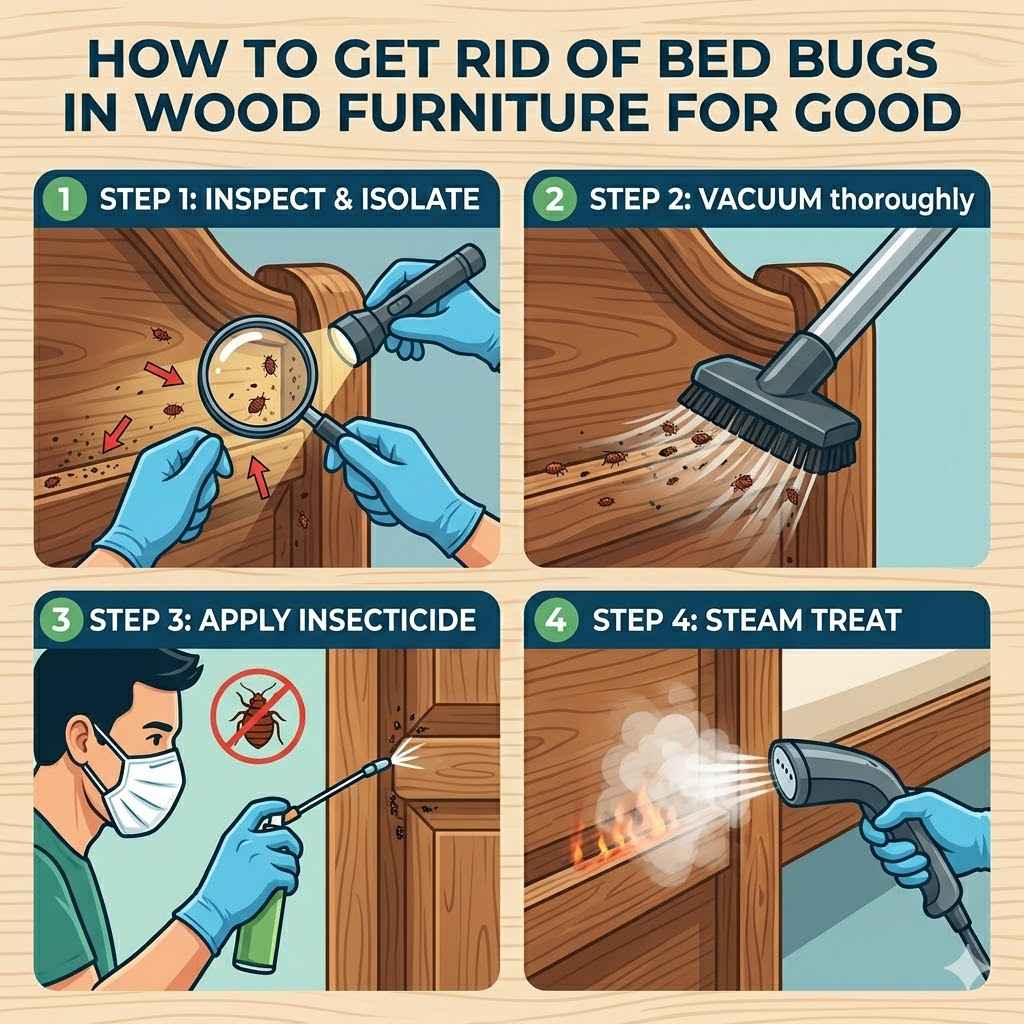
Getting rid of bed bugs from wood furniture is a process. It requires patience and thoroughness. Here’s a step-by-step approach.
1. Inspect Thoroughly
This is the most important step. You need to find where they are hiding. Use a bright flashlight.
Get down low. Look at every inch of the furniture. Check seams, joints, and any tiny cracks.
Look for the signs we talked about. The bugs themselves, droppings, or shed skins. Pay close attention to the areas around where you sleep or sit.
If the furniture is near a bed or sofa, it’s a higher risk.
2. Clean and Vacuum
Once you find them, you need to clean. Vacuum all surfaces of the wood furniture. Use the crevice tool.
This will help suck up bugs and eggs from small spaces.
Immediately after vacuuming, empty the vacuum bag or canister. Do this outside your home. Seal the bag in plastic.
This prevents any bugs from escaping back into your house.
Wipe down the furniture with a damp cloth. You can use a mild soap and water solution. This helps remove any remaining bugs or eggs.
Make sure to dry the wood thoroughly. Moisture can damage wood.
Vacuuming Tips for Bed Bugs
Use a Crevice Tool: Essential for getting into tiny spaces.
Vacuum Slowly: Give the vacuum time to pull bugs out.
Empty Outdoors: Seal the bag in plastic immediately after use.
Clean the Vacuum: If possible, clean the vacuum itself afterward.
3. Treat Infested Areas
For visible bugs or eggs, you can use a direct treatment. Diatomaceous earth (food grade) is a good option. It’s a natural powder.
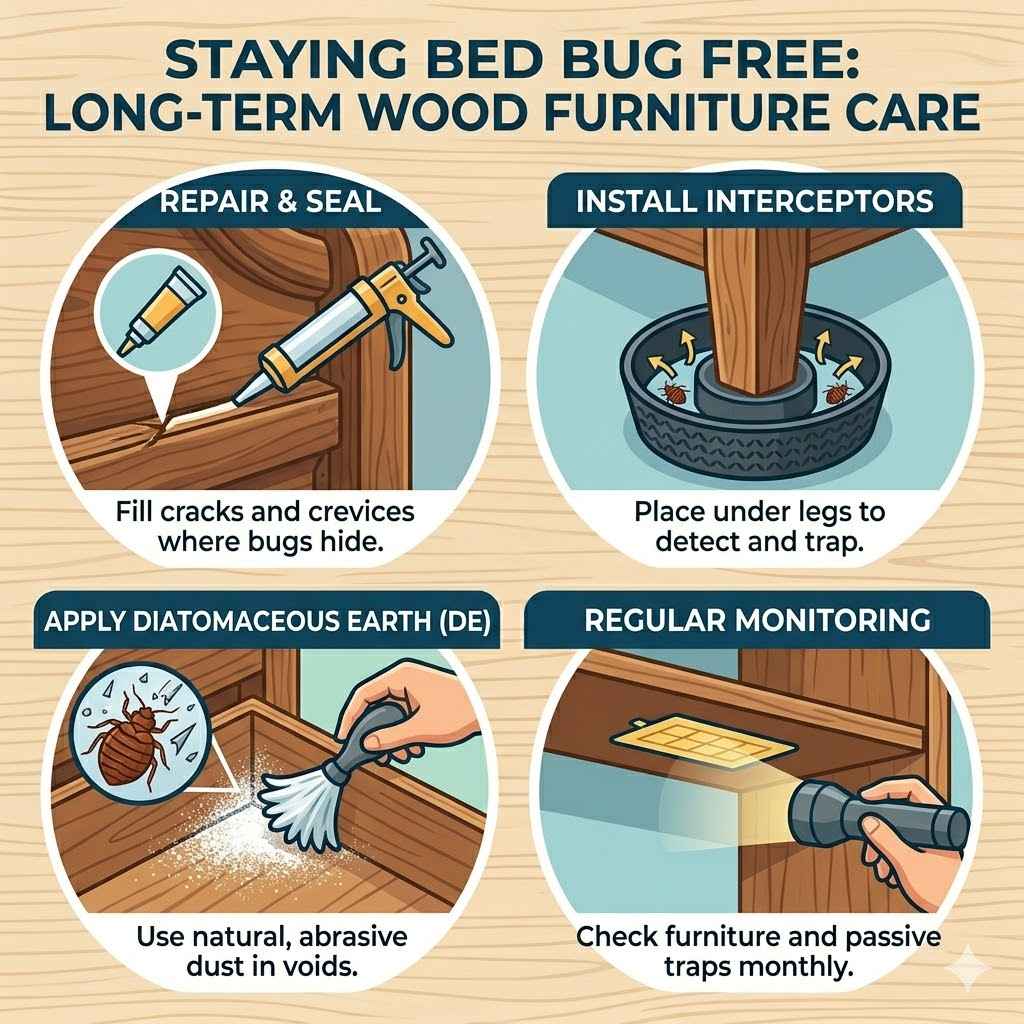
It dries out insects. Sprinkle a thin layer in cracks and crevices.
Be careful not to use too much. You don’t want it to be obvious. Bed bugs will walk through it.
It will then cut their outer layer. This causes them to dehydrate.
Steam cleaning can also be effective for wood furniture. The high heat kills bed bugs and their eggs on contact. Make sure the steam cleaner is set to a high temperature.
Move it slowly over the surfaces. Be cautious not to over-wet the wood.
4. Seal and Repair
After cleaning and treating, it’s time to seal. Use a wood filler or caulk. Fill in any cracks or holes.
This makes it harder for bed bugs to hide in the future.
This step is crucial for long-term prevention. It makes your furniture less hospitable. It takes time, but it’s worth it.
A smooth, sealed surface offers fewer hiding spots.
5. Monitor and Repeat
Bed bug eradication is rarely a one-time job. You need to keep checking. Monitor the furniture regularly.
Look for any new signs of infestation.
If you see more bugs, repeat the cleaning and treatment steps. You may need to try different methods. Or try them more often.
Persistence is key. You might also need to treat other areas of your home.
It’s important to understand that this is a process. You might not see results overnight. But by being diligent and thorough, you can get rid of them.
Using Heat and Cold Treatments
Heat and cold can be powerful weapons against bed bugs. They are often used by pest control professionals. But you can use some methods at home.
Heat Treatment
High heat kills bed bugs and their eggs. You can use steam cleaners as mentioned. Another method is specialized heat tents.
You place infested furniture inside. A generator then heats the tent to around 120-150°F (49-66°C).
This process can take several hours. It needs to be done carefully. Too much heat can damage the wood finish.
Or warp the wood itself. Always test a small, inconspicuous area first.
The U.S. Environmental Protection Agency (EPA) notes that temperatures above 113°F (45°C) can kill bed bugs. This is why professional heat treatments are so effective.
They ensure the entire piece of furniture reaches a lethal temperature.
Cold Treatment
Extreme cold can also kill bed bugs. If you have smaller wood items, you can place them in a freezer.
The items should be sealed in plastic bags. Then place them in a freezer set to 0°F (-18°C) or lower. Leave them in the freezer for at least three to four days.
This ensures the cold penetrates all parts of the furniture.
Like heat, cold can affect some finishes. So, it’s wise to test a small area first. This method is best for items that can fit entirely in a standard freezer.
Heat vs. Cold: Which is Better?
Heat: Generally faster. Kills bugs and eggs effectively. Can be risky for wood finishes.
Professional methods are more reliable but costly.
Cold: Slower. Requires prolonged freezing. Safer for most wood finishes.
Best for smaller items. Can be a good DIY option.
These methods are useful for treating individual pieces of furniture. They are often part of a larger strategy. They target the bugs directly.
But you must also address where they come from and how they spread.
When to Call a Professional
Sometimes, the infestation is too large. Or you’ve tried everything. And you’re still seeing bugs.
This is when it’s time to call in the experts. Professional pest control services have special tools and knowledge.
They can identify the extent of the infestation. They use methods that are often more powerful than what you can buy in a store. This includes professional-grade insecticides.
They also have advanced heat or cold treatment options.
Professionals understand bed bug behavior. They know where to look. And they know how to treat effectively.
They can also offer advice on prevention. This can save you a lot of headaches down the road.
The cost of professional help can seem high. But it can be worth it. If you don’t get rid of them completely, they will come back.
This can end up costing you more time and money. It also causes more stress.
Signs You Need Professional Help
Widespread Infestation: Bugs found in multiple rooms or on many pieces of furniture.
Failed DIY Attempts: You’ve tried home methods, but the bugs persist.
Severe Reaction: You or your family are having strong allergic reactions to bites.
Large Furniture Pieces: Very large or complex wood furniture pieces that are hard to treat yourself.
Lack of Time/Resources: You don’t have the time or energy for a thorough DIY treatment.
Don’t feel ashamed if you need professional help. Bed bugs are a tough pest. Many people face this problem.
Calling a professional is a sign of smart problem-solving. It’s about getting your home back to normal.
Preventing Future Bed Bug Infestations
Once you’ve gotten rid of bed bugs, the goal is to keep them away. Prevention is key. A few smart habits can make a big difference.
Be Cautious with Used Furniture
This is a big one. If you bring used furniture into your home, inspect it very carefully. Check it outside before bringing it in.
Look for all the signs of bed bugs. If you can, steam clean or treat it before it enters your home.
This applies to everything: chairs, dressers, beds, even small decorative items. A good deal on used furniture isn’t worth the bed bug trouble.
Travel Smart
Bed bugs are often spread through travel. When you stay in hotels, inspect your room. Look at the mattress seams and headboard.
Keep your luggage off the floor and the bed. When you get home, unpack your bags outside. Wash your clothes immediately in hot water.
Seal Your Home
Inspect your home regularly. Seal cracks and crevices in walls and around baseboards. This gives bed bugs fewer places to hide.
Use mattress and box spring encasements. These are zippered covers. They trap any bed bugs inside.
And they prevent new ones from getting in. Make sure they are specifically made for bed bugs.
Your Bed Bug Prevention Checklist
Inspect Used Items: Always check before bringing them home.
Hotel Inspections: Look for bugs in hotel rooms.
Luggage Storage: Keep bags off the floor when traveling.
Laundry Routine: Wash travel clothes in hot water upon return.
Seal Cracks: Keep your home sealed tight.
Use Encasements: Protect your mattress and box spring.
These steps might seem like a lot. But they become habits. They help protect your home.
It’s about being aware. And taking proactive measures. This is the best way to avoid future problems.
What This Means for Your Wood Furniture
Bed bugs can damage your wood furniture. Not directly, but the treatments can. Harsh chemicals can stain wood.
Excessive moisture can cause warping. Even heat treatments, if not done correctly, can affect the finish.
However, the alternative is worse. Leaving bed bugs in your furniture means they will spread. They will continue to bite you and your family.
The stress and discomfort are significant.
So, when treating wood furniture, always consider the material. Use methods that are safe for wood. Test in a hidden spot first.
If you are unsure, consult a professional.
The good news is that most wood furniture can be treated successfully. It might require multiple attempts. But the outcome is worth it.
You get to keep your furniture. And your home will be pest-free.
Think of it as giving your furniture a deep clean. A very, very deep clean. You are removing unwanted guests.
And making it safe for you again. It’s an investment in your home and your comfort.
Common Questions About Bed Bugs and Wood Furniture
Can bed bugs live in painted wood furniture?
Yes, bed bugs can live in painted wood furniture. While they prefer cracks and crevices, they can still infest painted surfaces. They might hide in any tiny imperfections or gaps in the paint.
How long does it take to get rid of bed bugs from wood furniture?
It varies greatly. A small infestation might be gone in a week or two with thorough DIY treatment. Larger infestations, or those requiring professional help, can take several weeks to fully eradicate.
Persistence is key.
Can I use essential oils to get rid of bed bugs in my furniture?
Some essential oils, like peppermint or lavender, are thought to repel bed bugs. However, they are generally not effective for killing an existing infestation. They might offer some minor deterrent effect but won’t solve the problem on their own.
Will bed bugs infest new, unfinished wood furniture?
Yes, new, unfinished wood furniture can still be infested. Bed bugs are not picky about whether the wood is finished or not. The presence of cracks, crevices, and proximity to humans are more important factors for them.
How do I know if my wood furniture is infested or just has dirt?
Look for specific signs. Bed bug droppings are small, dark, inky spots. Shed skins are tiny, translucent casings.
Live bugs are reddish-brown and oval. Dirt is usually just dust or grime. If you see these specific signs, it’s likely bed bugs.
Can bed bugs survive in wood furniture that is outdoors?
Bed bugs prefer to live near humans. So, they are less likely to thrive outdoors long-term. However, they can survive temporarily, especially if the weather is mild.
Bringing outdoor wood furniture inside without inspection can introduce them to your home.
Final Thoughts on Reclaiming Your Space
Dealing with bed bugs in wood furniture is a challenge. It demands attention to detail. And a willingness to be thorough.
But it is a battle you can win. Remember to inspect carefully. Clean thoroughly.
Treat effectively. And prevent future problems.
Your home should be a place of comfort. Not a place of worry. By following these steps, you can achieve that.
Be patient with the process. And don’t give up. You’ve got this.
Reclaim your peace of mind.
Sponsored / affiliate links. As an Amazon Associate I earn from qualifying purchases. I may earn additional commission from eligible campaigns.