LED Flush Mount vs Recessed Lighting: Which Fits Your Room?
Choose Recessed Lighting for 8-foot-plus ceilings when you want even ambient light and have access for wiring; choose LED Flush Mount for 8-foot ceilings, low ceilings, or limited attic access. Pick wrong and you can end up with glare, weak light spread, higher labor costs, or a fixture that crowds the room. This guide compares room fit by ceiling height, room function, and installation limits so you can choose the right option before buying or scheduling work.
| Decision factor | LED Flush Mount | Recessed Lighting | Winner |
|---|---|---|---|
| Headroom and ceiling fit | Mounts directly to the ceiling surface and works well where clearance is tight. | Needs ceiling cavity depth and a compatible housing above the drywall line. | LED Flush Mount |
| Light spread | Broad, diffused ambient light from a visible fixture body. | More directional downlight with controlled beam placement. | Recessed Lighting |
| Retrofit feasibility | Often connects to an existing ceiling junction box. | May require cutting, housing space, insulation planning, and access around joists or ducts. | LED Flush Mount |
| Task lighting control | Can work as general light, but placement control is limited. | Better for aiming light onto counters, sinks, and work zones. | Recessed Lighting |
| Bathroom moisture fit | Useful as general light, but not the usual choice for focused shower or vanity placement. | Can work well if the fixture is rated for damp or wet locations as required. | Recessed Lighting |
How installation and light spread shape your choice
The trade-off is direct: LED Flush Mount keeps the fixture on the ceiling and is easier to fit into an existing room, while Recessed Lighting gives you tighter control over where light lands. If the room needs broad ambient light with less ceiling work, flush mount usually wins. If the room needs aimed light and the ceiling can support it, recessed usually does better.
Headroom, light spread, and install limits
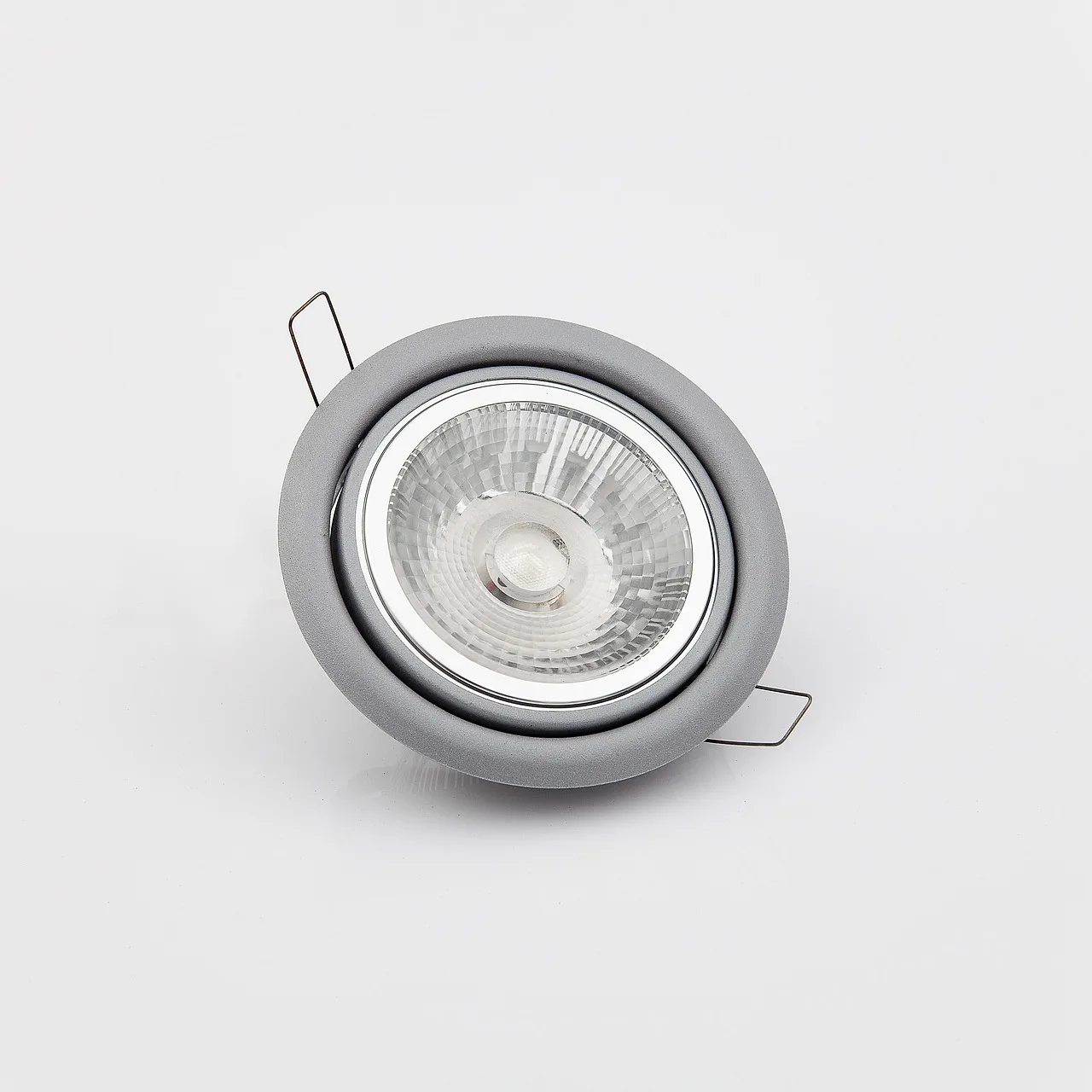
Flush mount fixtures attach directly to the ceiling without leaving a noticeable gap. Recessed lights hide the housing above the drywall line, so the visible part is mostly the trim ring and light source. That single difference drives most of the choice.
Beam spread matters as much as appearance. Recessed fixtures are more directional, which helps over counters and sinks, but poor spacing can leave dark edges. Flush mounts cast broader ambient light, which works well in bedrooms, hallways, and other rooms that need general coverage instead of aimable downlight.
How install paths differ
Flush mounts typically connect to a ceiling junction box, so replacement is often straightforward when the wiring point already exists. Recessed lighting needs a compatible ceiling cavity and proper housing. In finished homes, that can run into joists, ducts, plumbing, insulation, or slab construction before the fixture is even installed.
That is why recessed lights are not just a style swap. They are a ceiling assembly choice.
Flush mount vs recessed lighting at a glance
Use LED Flush Mount when you need a surface-mounted fixture that works with an existing ceiling junction box and gives you broad ambient light. Use Recessed Lighting when the ceiling has enough cavity depth for housing and you want more controlled, directional light. The better choice is the one your room can physically support without glare, shadows, or extra labor.
| Factor | LED Flush Mount | Recessed Lighting | Winner |
|---|---|---|---|
| Mounting position | Sits on the ceiling surface. | Sits inside the ceiling assembly. | Depends on ceiling structure |
| Ceiling space needed | Works without cavity depth. | Needs housing space and a compatible assembly. | LED Flush Mount |
| Light character | Broad ambient light. | Directional downlight. | Depends on room function |
| Retrofit complexity | Usually simpler when a ceiling junction box already exists. | More complex in finished ceilings. | LED Flush Mount |
Which fits your ceiling height?
LED Flush Mount is usually the safer choice when headroom is tight or the ceiling has no usable cavity depth. Recessed Lighting makes sense when you have enough ceiling depth for housing and enough room size for multiple fixtures to spread light evenly. A semi-flush mount sits between the two, hanging slightly below the ceiling on a short stem, so it adds more visual depth than a flush mount without going full pendant.
Low ceilings and head clearance
For an 8-foot ceiling, a flush mount often makes the room feel less crowded. In a small bedroom or hallway, that matters more than a cleaner ceiling plane. A semi-flush mount can work too, but it is still more visible than a true flush mount, so it is a middle ground rather than the default answer.
Say your entry hall is 5 feet wide with an 8-foot ceiling and a single wiring point in the center. A flush mount can light the space without hanging into the path of movement. Recessed lighting would need enough ceiling depth and probably more than one fixture to avoid a dim center and dark corners.
Ceilings with no cavity depth
Slab ceilings and tight joist bays are where recessed plans often stop. If the ceiling is concrete or the joist space is blocked by ducts, plumbing, or insulation, recessed housing may not fit without major work. In that case, a flush mount gives you a practical lighting upgrade without opening the ceiling assembly.
If the room already has an accessible ceiling junction box, the flush mount path is usually simpler. That does not make it prettier or less pretty. It makes it workable.
When a semi-flush mount is the middle ground
A semi-flush mount is worth considering when you want a little more depth than a flush mount but do not want the ceiling work of recessed lighting. It is useful in bedrooms, small dining areas, and entry spaces where the fixture can hang slightly below the ceiling without getting in the way. It is not a substitute for recessed task lighting.
Room fit decision matrix
This is the section that should drive the purchase. Match the room’s function first, then check ceiling height and ceiling structure. Style comes after that.
| Room type | Ceiling height / constraint | Best fixture choice | Why |
|---|---|---|---|
| Bedroom | 8 feet or lower; standard drywall ceiling with junction box | LED Flush Mount | Broad ambient light, low visual bulk, and easy replacement. |
| Hallway | Low or narrow ceiling space | LED Flush Mount | Even general light without eating headroom. |
| Kitchen | Ceiling cavity depth available and counters need task light | Recessed Lighting | Directional placement helps over prep zones, islands, and sink areas. |
| Bathroom | Moisture-prone area with enough ceiling depth | Recessed Lighting | Can provide controlled downlight if fixtures are damp-rated or wet-rated as required. |
| Basement | Open joist access or lowered ceiling; task areas mixed with general use | Recessed Lighting | Works well when you need distributed light across a larger plane. |
| Closet | Limited height and shallow cavity | LED Flush Mount | Simple coverage with minimal installation depth. |
| Open-concept living area | Ceiling depth available and layout needs layered lighting | Recessed Lighting | Multiple placements help avoid shadows across a larger room. |
Common failure cases
| Failure case | Problem | Better choice |
|---|---|---|
| Low-ceiling kitchen with one ceiling point | Flush mount alone can leave prep areas underlit, but recessed may not fit or may need too many fixtures to work well. | Layered plan with task lighting; if ceiling depth is available, use recessed over work zones. |
| Slab ceiling | There is no practical cavity for recessed housing. | LED Flush Mount |
| Bathroom without damp-rated recessed fixtures | Dry-location trim is not enough in moisture-prone areas. | LED Flush Mount or damp-rated Recessed Lighting |
A common first-timer mistake is choosing recessed lights for a finished kitchen with low clearance, then finding the ceiling cannot accept the housings without major demolition. The room may look right on paper, but the install costs and shadowing problems show up fast. In that case, a flush mount plus separate task lights is often the cleaner solution.
When recessed lighting works better
Recessed Lighting works better when the room needs controlled downlight, the ceiling has room for housing, and you can place several fixtures where the light is needed. It is especially useful in kitchens and bathrooms, where the beam needs to land on counters, sinks, vanities, and walking paths instead of washing the whole ceiling.
Kitchens that need task lighting
Kitchens are one of the strongest cases for recessed lights. You can place them over prep zones, islands, and sinks to cut shadowing where you actually work. That is hard to do with a single flush mount, because it spreads light more broadly and less precisely.
Recessed fixtures often need multiple placements across a room to achieve even ambient light. That is not a flaw. It is how they solve the spacing problem in a kitchen that needs both general light and task light.
Bathrooms that need controlled downlight
Bathrooms also benefit from recessed lighting when the layout needs controlled placement over a vanity or shower. The catch is rating. Bathroom recessed lights should be rated for damp or wet locations as required. A dry-location trim may be acceptable in a closet, but it is generally not the right choice for a moisture-prone room.
Beam spread matters here too. A directional fixture can keep light on the mirror and sink instead of scattering it into the room. That makes the space feel brighter without needing as many lumens at one point.
Rooms with enough ceiling cavity depth
If the ceiling cavity depth is available and the housing fits around joists, ducts, plumbing, and insulation, recessed lighting becomes much easier to justify. It is also a common fit for open-concept homes, living rooms, and finished basements where a cleaner ceiling line and planned fixture spacing make sense.
When flush mount lighting is the better pick
LED Flush Mount is the better pick when headroom is tight, the room needs broad ambient light, or the ceiling already has a junction box and little else. It is also the better replacement choice when you want to avoid cutting into insulation, framing, or slab construction. In other words, it wins when the ceiling is the limiting factor.
Rooms with tight headroom
Bedrooms, closets, laundry rooms, apartments, condominiums, and hallways often benefit from flush mounts because the fixture stays close to the ceiling. That keeps sightlines cleaner and reduces the chance of the light feeling too dominant in a compact room. It also makes the room easier to furnish beneath the fixture.
Existing ceiling junction box replacements
If you already have a ceiling junction box, a flush mount is usually the simpler replacement. That makes it practical for upgrading an old fixture without opening the ceiling or reworking the structure above it. The visible fixture body can still be decorative, with glass, metal, fabric, or alabaster finishes.
Spaces that need broad ambient light
Flush mounts are useful when you want the room to feel evenly lit instead of broken into multiple points of downlight. That makes them a strong choice for bedrooms, entryways, and general-purpose rooms where you are not aiming light at a work surface. They also avoid the pinhole effect that can make recessed lighting feel stark if spacing is off.
LED, beam spread, and dimming
LED downlights are common in both categories because they are energy efficient, run cooler than older lamp types, and can offer long service life. Many LED fixtures are dimmable, but dimming depends on the fixture, the driver, and the switch setup. The LED part does not decide the room fit by itself.
Directional vs diffused light
Recessed lighting is more directional, so it is better for task lighting and focused illumination. Flush mount lighting is more diffused, which makes it better for ambient light in smaller rooms or spaces with low ceilings. That difference affects glare and shadowing more than most buyers expect.
Suppose a 10-foot kitchen has an island and two prep counters. Recessed lights can be placed to land light on each surface and reduce shadows from your body. In the same room, a single flush mount would light the center well but leave the edges less controlled.
Where dimming matters most
Dimming is most useful in rooms that switch between utility and relaxation. Kitchens, living rooms, and bedrooms often need both full output and softer evening light. In bathrooms, dimming can help with general light, but the fixture still has to be properly rated if moisture is present.
Choose LED Flush Mount if… / Choose Recessed Lighting if…
Choose LED Flush Mount if your ceiling is low, your ceiling has no usable cavity depth, your wiring point is already in a ceiling junction box, or you want broad ambient light with less install work. It is also the better default for bedrooms, hallways, closets, and many retrofit projects where headroom is the constraint.
Choose Recessed Lighting if your ceiling has the depth for housing, the room needs task lighting or controlled downlight, and you can place multiple fixtures to avoid shadows. It is the stronger choice for kitchens, bathrooms with proper moisture ratings, open-concept rooms, and finished spaces where you can support the install without major ceiling changes.


Frequently asked questions
Which is better for a low ceiling: flush mount or recessed lighting?
For a low ceiling, LED Flush Mount is usually the safer choice because it sits directly against the ceiling and preserves headroom. Recessed lighting can work only if the ceiling has enough cavity depth and the room still needs controlled downlight rather than simple general coverage.
Can I install recessed lights in an existing ceiling?
Yes, but only if the ceiling assembly can accept the housing and there is enough cavity depth above the drywall. Finished ceilings with joists, ducts, plumbing, insulation, or slab construction can make the job difficult or impractical. That is why many retrofits end up with flush mounts instead.
What is the difference between flush mount, semi-flush mount, and recessed lighting?
A flush mount sits directly on the ceiling surface. A semi-flush mount hangs slightly below the ceiling on a short stem. A recessed light sits inside the ceiling assembly, with the trim ring and light source visible while the housing stays hidden above the drywall line.
Do recessed lights or flush mounts give better ambient light?
For broad ambient light in one fixture, LED Flush Mount usually wins because it spreads light more evenly across the room. Recessed lighting can create good ambient light too, but it often needs multiple fixtures and careful placement to avoid dark zones and uneven coverage.
Which option is better for kitchens and bathrooms?
Recessed Lighting is usually better in kitchens and bathrooms when you need controlled placement over work areas. In bathrooms, use fixtures rated for damp or wet locations as required. If the ceiling cannot support recessed housing, a flush mount may be the practical fallback, paired with task lighting.
Which is cheaper to install: flush mount or recessed lighting?
LED Flush Mount is usually cheaper to install because it often ties into an existing ceiling junction box and avoids major ceiling work. Recessed lighting can cost more because it may require cutting the ceiling, fitting housings, and working around framing or other obstructions in the cavity.
Sponsored / affiliate links. As an Amazon Associate I earn from qualifying purchases. I may earn additional commission from eligible campaigns.