What Does a Yellow or Orange Furnace Flame Mean?
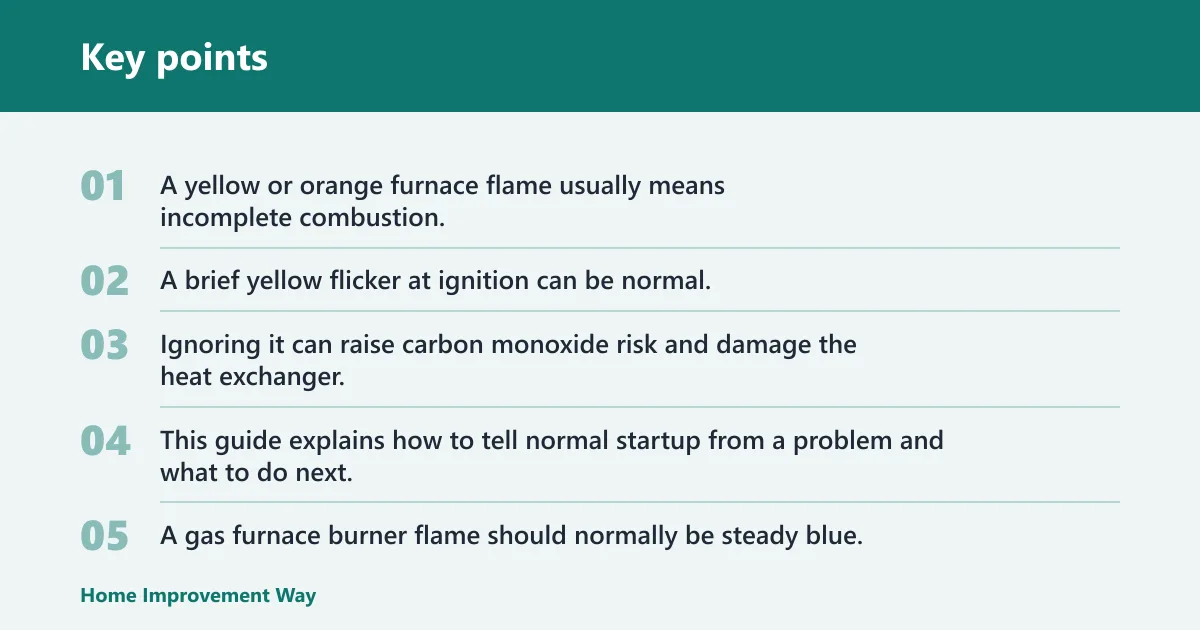
A yellow or orange furnace flame usually means incomplete combustion. A brief yellow flicker at ignition can be normal, but a steady yellow or orange flame needs attention. Ignoring it can raise carbon monoxide risk and damage the heat exchanger. This guide explains how to tell normal startup from a problem and what to do next.
A gas furnace burner flame should normally be steady blue. A yellow or orange flame can mean the fuel and air are not mixing correctly, so color matters. Flame color is a warning sign, but it is not a carbon monoxide test.
Quick answer

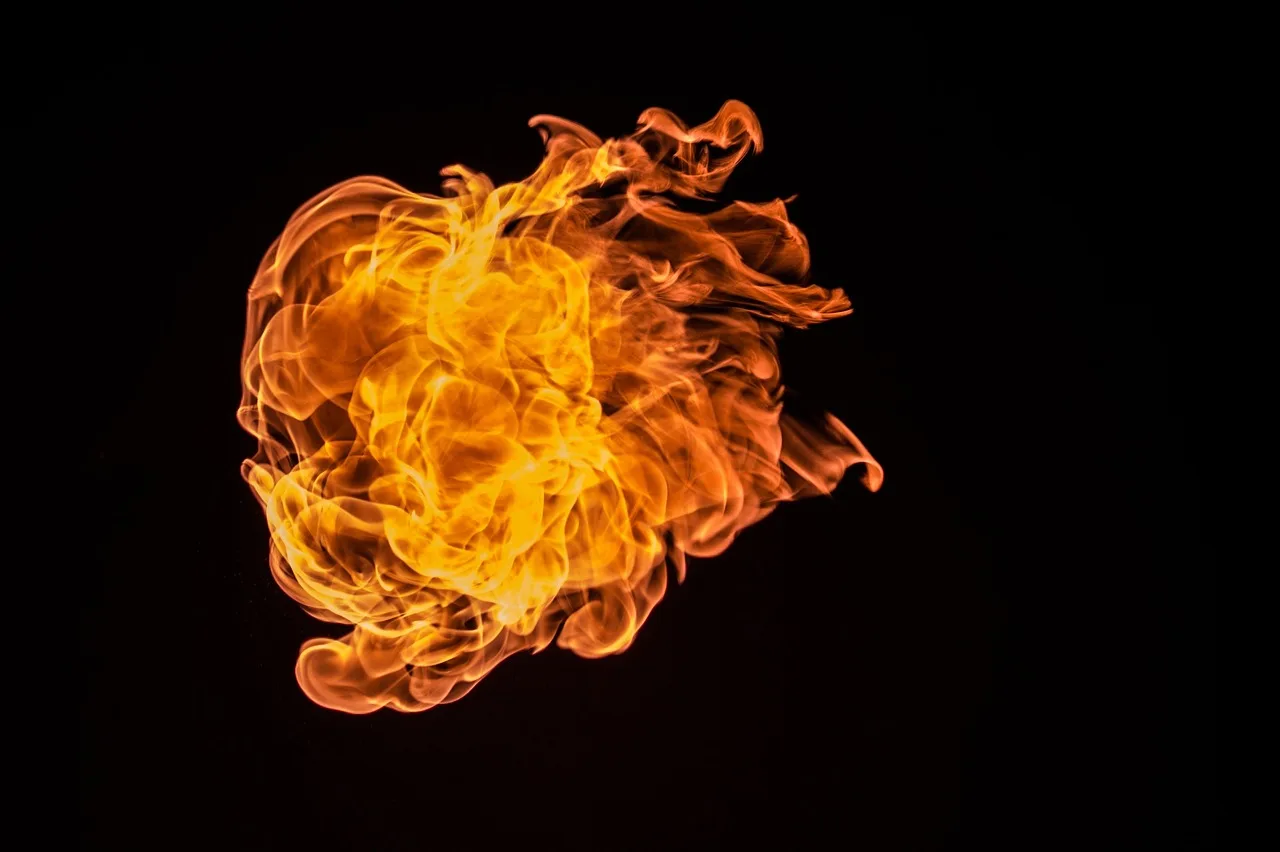
A brief color change right as the burners light is different from a flame that stays yellow after the furnace settles into a run cycle. That difference is the main triage point. Startup flicker can be dust burning off; a persistent color change points to a combustion problem.
What should a furnace flame look like?
A healthy furnace flame is usually steady blue, with even, stable burner flames. That color is generally tied to more complete combustion. If the flame is blue at startup and stays blue during the cycle, the burner is usually behaving as expected.
Some furnaces show a quick yellow-orange flicker for a second or two as dust burns off after months of sitting idle. That is not the same as a flame that turns yellow every time the furnace runs or stays yellow after ignition. The key is whether the color change disappears quickly.
Watch for flame behavior, not just flame color. A lazy, wavering, or lifting flame is more concerning than a brief flash of color. If the burner flame stays yellow or orange run after run, treat it as a service issue.
Flame triage table
Use this table to match the flame pattern to the safest next step. If your furnace has a viewing port, observe there only. Do not open panels just to check the flame.
| Flame pattern | Likely meaning | Safe homeowner checks | When to shut the furnace off |
|---|---|---|---|
| Steady yellow | Often a sign of incomplete combustion | Check whether the flame stays yellow after startup and note any soot or odor | Shut it off if the yellow color persists after ignition |
| Lazy or wavering flame | Air-gas mixing may be off, or combustion air may be restricted | Look for blocked vents, closed doors to the furnace area, or stored items near the unit | Shut it off if the flame remains unstable during the run cycle |
| Brief orange flicker at startup | Dust burning off after idle time can cause a short color change | See whether the flame returns to steady blue within a moment or two | Do not shut it off unless the color change does not clear quickly or other warning signs appear |
| Soot present | Combustion may be dirty, and a heat exchanger problem is possible | Note where soot appears and whether the flame is yellow, wavering, or both | Shut it off and call for service if soot is forming |
| CO alarm sounding | Possible carbon monoxide in the home | Do not stay to investigate the furnace | Shut it off only if you can do so on the way out; then evacuate immediately |
| Rotten-egg smell | Possible gas leak | Leave immediately and avoid switches, lights, and phones indoors | Do not operate anything inside; get out first |
What causes a yellow or orange flame?
Common causes include dust-caked burners, a misaligned burner assembly, and a blocked combustion air supply. Gas pressure or manifold pressure outside the manufacturer’s specification can also affect flame color. A cracked heat exchanger is another serious possibility because it can change airflow and alter how the burner burns.
Dirty burners or burner ports
Burners and burner ports can collect dust, pet hair, lint, or other debris. That buildup can disturb air-gas mixing and push a normal blue flame toward yellow or orange. Cleaning may be needed, but burner disassembly is not a homeowner task if it requires opening up the gas train or burner assembly.
Blocked combustion air supply
Combustion air supply must stay open and unobstructed. Stored boxes, paint cans, laundry, or a closed vent path can reduce the air the furnace needs for complete combustion. If air is short, the flame can turn lazy, wavering, or yellow.
On sealed-combustion furnaces, the air path is more contained, but it still matters. On older open-burner furnaces, the room around the unit matters even more because the furnace draws from the surrounding space. Different designs fail in different ways, but both need clear air paths.
Gas pressure or manifold pressure problems
Gas pressure and manifold pressure must match the manufacturer’s specification. If pressure is out of range, the flame can turn yellow, lift, or become unstable. Elevation can change the calibration a furnace needs, so a furnace that was set correctly at one location may need adjustment at another.
Pressure correction is not a guesswork job. It requires the right gauge, the right specifications, and a technician who can verify combustion settings without creating a larger safety issue.
Heat exchanger problems
A cracked heat exchanger is serious. It can change combustion airflow, create soot, and raise safety risk. A steady yellow flame, soot around the burners, or an unusual odor can all be clues that the furnace needs professional inspection.
Do not treat a heat exchanger concern as a cosmetic issue. If the flame is abnormal and soot is present, the furnace should be shut down until a technician checks it.
Is a yellow furnace flame dangerous?
A yellow furnace flame can be dangerous, but the level of urgency depends on the symptom pattern. A brief startup flicker is not the same as a flame that stays yellow or orange during normal operation. Persistent yellow flame, soot, unstable flame, gas odor, or a CO alarm are all reasons to act.
Carbon monoxide is colorless and odorless, so flame color alone cannot confirm or rule it out. A yellow or unstable flame cannot confirm carbon monoxide levels. A silent alarm does not make soot or an unstable flame safe. (EPA)
Suppose your furnace lights blue for a moment, then turns yellow and leaves a light soot mark near the burner door after a full cycle. That is not a harmless flicker. It points to a combustion problem that needs service, even if no alarm sounds.
What soot changes mean
Soot changes the decision fast. Soot means the fuel is not burning cleanly enough, and that can point to airflow trouble, burner trouble, or a heat exchanger issue. If soot appears, turn the furnace off and arrange service.
A furnace can make soot before a CO alarm ever sounds. That is why the absence of an alarm does not clear the furnace.
When should you shut the furnace off?
Shut the furnace off when the flame stays yellow or orange after startup, the flame is unstable, soot appears, the carbon monoxide alarm sounds, or you smell gas. The goal is simple: stop the equipment from running when the symptom points to a real safety or combustion problem.
- Turn the furnace off if the flame stays yellow or orange after it should have settled.
- Evacuate immediately if the CO alarm sounds, taking pets with you.
- Leave immediately if you smell gas or a rotten-egg odor.
- Do not use switches, lights, or phones indoors during a gas-leak smell.
- Call for service after you are in fresh air, or call 911 if the CO alarm is sounding and you are outside.
A common first-timer mistake is to wait for the next cycle and hope the flame “corrects itself.” If the flame is still yellow on the next run, that pattern is no longer a startup quirk. It is a problem to document and report.
What can you check safely before calling for service?
Safe checks are limited. Use the viewing port only, check vents and nearby obstructions, confirm the CO alarm is working, and record what the flame does. Do not open furnace panels just to inspect the burner, and do not adjust gas pressure or clean burners that need disassembly.
Use the viewing port only
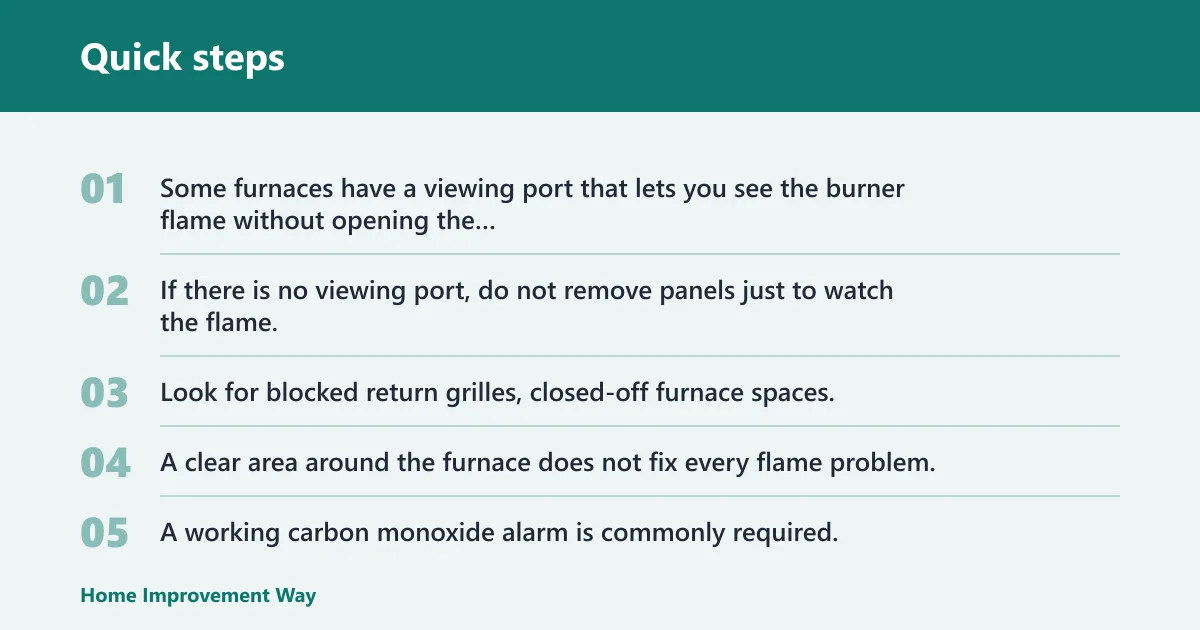
Some furnaces have a viewing port that lets you see the burner flame without opening the cabinet. That is the right place to look. If there is no viewing port, do not remove panels just to watch the flame.
Check vents and nearby obstructions
Look for blocked return grilles, closed-off furnace spaces, or items stored too close to the unit. Combustion air supply must remain open. A clear area around the furnace does not fix every flame problem, but it removes one obvious cause.
Confirm the CO alarm is working
A working carbon monoxide alarm is commonly required. Follow the manufacturer’s placement and battery instructions so the alarm can do its job. If the alarm sounds, move everyone, including pets, into fresh air.
Do not use flame color as a substitute for the alarm. The alarm and the flame are related clues, not interchangeable ones.
Record what the flame does
Before service, write down whether the flame is steady yellow, wavering, or only briefly orange at startup. Note whether soot is present, whether the furnace is sealed-combustion or open-burner, and whether the smell changed. That information helps a technician narrow the cause faster.
Picture a sealed-combustion furnace that flashes orange for two seconds on ignition, then settles into a steady blue flame and leaves no soot. That pattern is different from an older open-burner unit that stays yellow, wavers, and leaves dark residue after every cycle. Same symptom family, different urgency.
Frequently asked questions
What color should my furnace flame be?
A normal gas furnace burner flame should be steady blue. Blue is generally associated with more complete combustion. If the flame is yellow, orange, lazy, or wavering after startup, that pattern deserves attention.
What does a yellow furnace flame mean?
A yellow furnace flame usually points to incomplete combustion. Dust on burners, blocked combustion air, or gas pressure outside specification are common causes. If the color stays yellow after ignition, the furnace needs service.
Can a yellow furnace flame cause carbon monoxide?
It can be associated with carbon monoxide, but flame color alone cannot confirm levels. Carbon monoxide is colorless and odorless, so you need a working alarm and a technician’s diagnosis. A yellow flame is a warning, not proof.
What should I do if my furnace flame is yellow?
Check whether the yellow color is only a brief startup flicker or a persistent condition. If it stays yellow, soot appears, or the flame wavers, shut the furnace off and call for service. If the CO alarm sounds or you smell gas, leave immediately.
Can dust or debris make a furnace flame turn yellow?
Yes. Dust, pet hair, lint, or debris on burners and burner ports can disrupt air-gas mixing and change flame color. A short flicker after months of sitting idle can happen, but repeated yellow flame means the issue is bigger than surface dust alone.
Sponsored / affiliate links. As an Amazon Associate I earn from qualifying purchases. I may earn additional commission from eligible campaigns.