Convection vs Radiant Heaters: Which One Is Right for You?
Choosing between convection vs radiant heaters can feel confusing when you’re trying to warm up a specific room or your entire home. Each heating technology works differently, which means one is often a better fit for your space, budget, and comfort needs than the other. This post breaks down how they operate, their pros and cons, and exactly which scenarios suit each type so you can make a confident purchase.
Simply put, convection heaters warm the air in a room through natural or fan-driven circulation, while radiant heaters emit infrared rays that heat objects and people directly. If you want whole-room warmth that lingers, go convection. If you need instant heat for a person or small area, radiant is your best bet.
Key Takeaways
- Convection vs radiant heaters differ mainly in how they transfer heat: air circulation vs direct infrared emission.
- Convection models are quieter and better for steady, whole-room comfort but take longer to reach temperature.
- Radiant heaters provide nearly instant warmth and are ideal for spot heating, but they cool down quickly once turned off.
- Your choice should hinge on room size, usage pattern, ceiling height, and whether you want silence or speed.
- Energy efficiency varies by scenario — radiant often wins for short sessions, convection for prolonged use.
Quick Comparison: Convection vs Radiant Heaters
Before diving into the details, here is a side-by-side snapshot of how these two heater types stack up against each other. This table covers the key factors most buyers care about, from heat delivery to noise levels.
| Feature | Convection Heater | Radiant Heater |
|---|---|---|
| Heat delivery | Heats air, then circulates | Direct infrared to objects/people |
| Warm-up time | 15–30 minutes | 1–5 seconds |
| Noise level | Very quiet (fan models faint hum) | Silent (no fan needed) |
| Best for | Whole rooms, long sessions | Spot heating, personal use |
| Ceiling height | Works best under 10 ft | Unaffected by height |
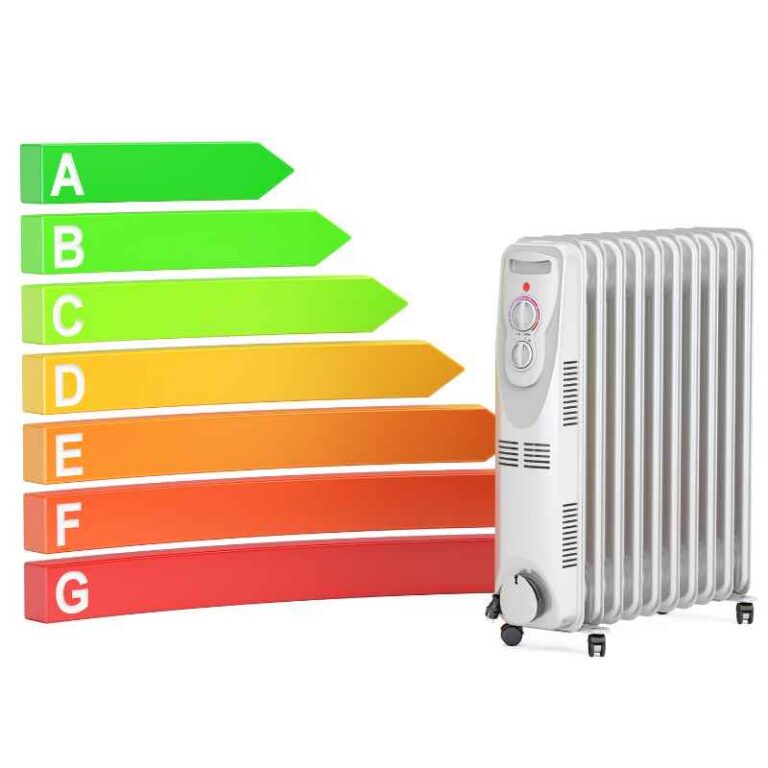
| Energy efficiency | Better for long runs | Better for short bursts |
| Safety | Cooler surface, safer touch | Very hot surface, burn risk |
As you can see, the main trade-off is speed versus sustained comfort. Radiant heaters excel the moment you flip the switch, while convection models reward patience with a more even, lasting warmth.
How Convection Heaters Work
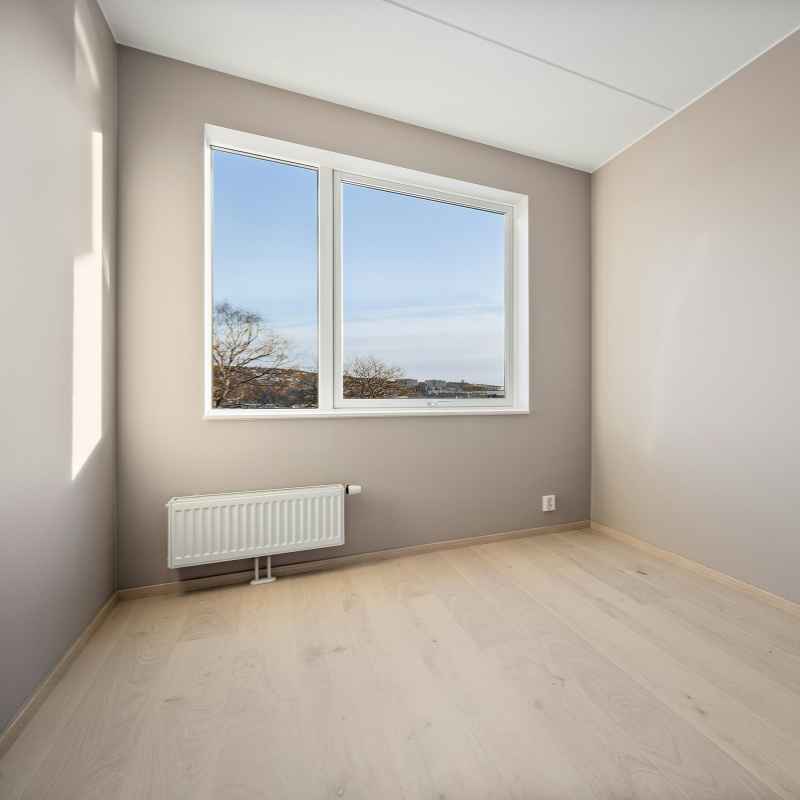
Convection heaters rely on a simple principle: warm air rises, cool air sinks, and the cycle repeats until the room reaches your desired temperature. Inside the unit, a heating element warms the air around it. That air becomes less dense and floats upward, while cooler air gets drawn in from below.
Many modern convection heaters use a fan to speed up this natural circulation.
The result is a gentle, draft-free heat that fills the entire room over time. Because the heater warms the air itself, the temperature stays relatively uniform from floor to ceiling, especially in rooms with standard ceiling heights. This makes convection models a popular choice for living rooms, bedrooms, and home offices where you plan to stay put for a while.
- Natural convection: No fan, completely silent, ideal for bedrooms and nurseries
- Fan-forced convection: Faster air movement, slightly louder, better for larger spaces
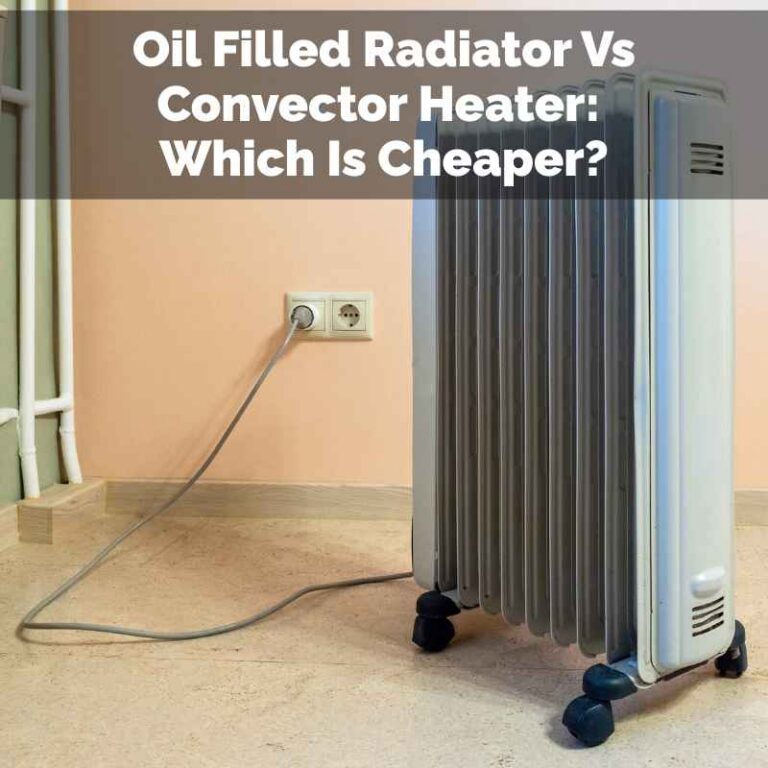
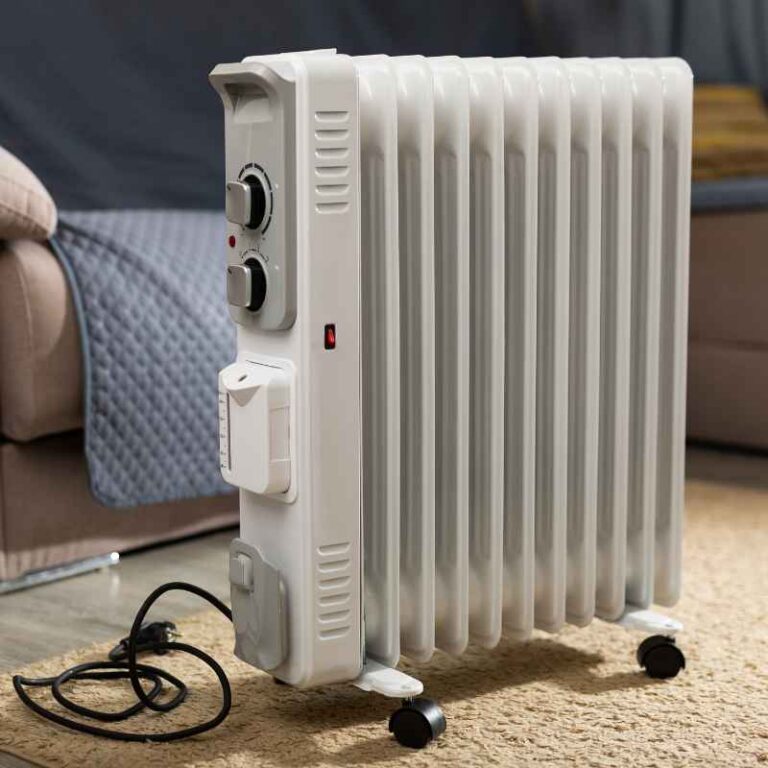
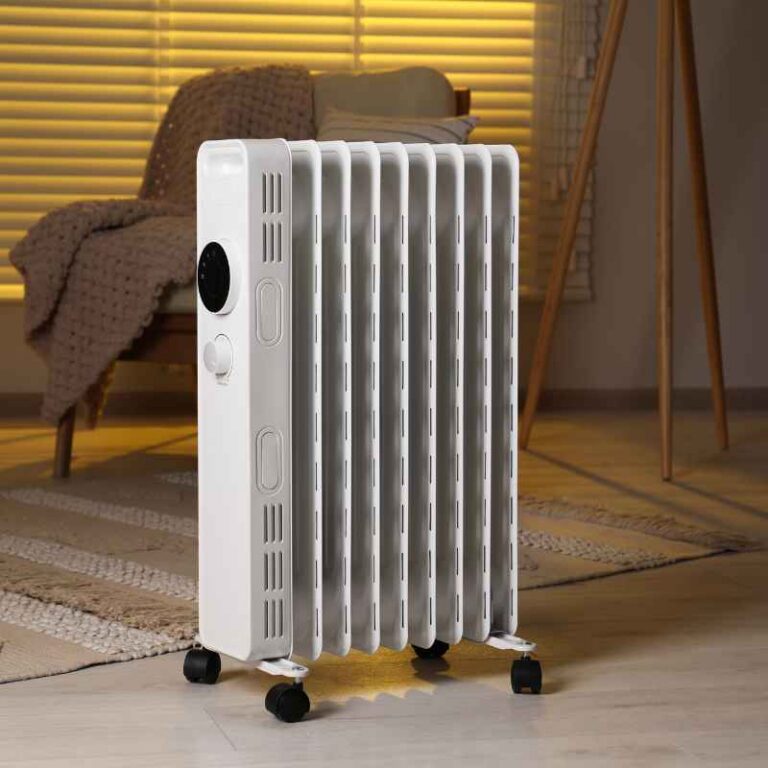
- Oil-filled radiators: A subtype that uses oil as a heat reservoir for long-lasting warmth
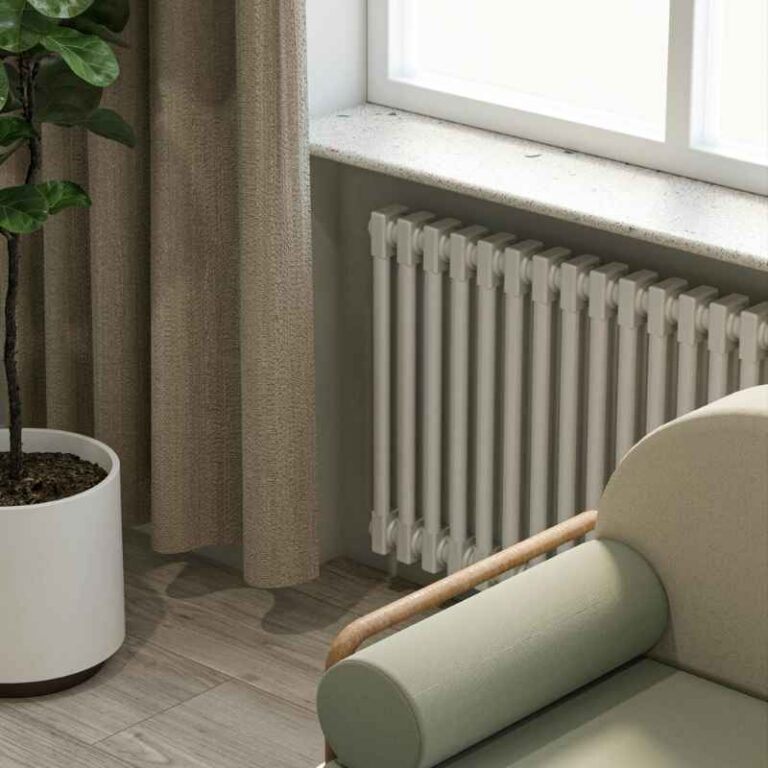
- Baseboard heaters: Fixed installation, common in homes without ductwork
- Wall panel heaters: Slim design, mount directly on walls, save floor space
Tip: For best results with a convection heater, place it on an interior wall and keep furniture at least 3 feet away. Blocking airflow reduces efficiency by up to 30 percent.
The U.S. Department of Energy notes that convection heating is most effective in spaces with good insulation and standard 8–9 foot ceilings. In rooms with vaulted ceilings, the warm air can stratify near the roof, leaving the floor chilly.
A ceiling fan running in reverse mode at low speed can help redistribute that trapped heat downward.
How Radiant Heaters Work
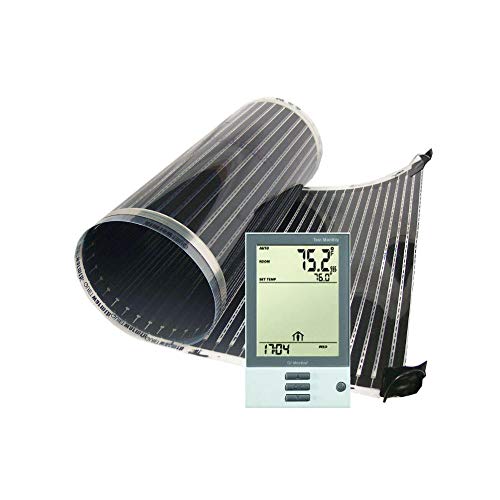
Radiant heaters operate on a completely different principle. Instead of warming the air, they emit infrared radiation that travels in straight lines until it hits a solid object — your body, a chair, a wall — and converts into heat. You feel the warmth almost immediately because the energy reaches you directly, not after heating the surrounding air first.
This is why you can stand in front of a radiant heater on a cold day and feel toasty while the air around you remains cool. The effect is similar to sunlight streaming through a window on a winter morning. Infrared heaters come in several forms, including quartz, carbon fiber, and halogen elements, each with slight differences in beam angle and heat intensity.
- Instant warmth: You feel the heat within 1–5 seconds of turning the unit on
- No air movement: No fan means zero dust circulation, great for allergy sufferers
- Directional control: Many models have reflectors to aim heat exactly where you need it
- Unaffected by drafts: Works well in drafty rooms or partially open spaces
- Cool down fast: The heating element stops glowing almost immediately after shut-off
Important: Radiant heaters only warm what is in their direct line of sight. If you move out of the beam, you stop feeling the heat. Position them to face your seating or desk area for maximum benefit.
The American Society of Heating, Refrigerating and Air-Conditioning Engineers (ASHRAE) reports that infrared heating can reduce energy consumption in warehouse and workshop settings by 20–50 percent compared to forced-air systems because it heats people and surfaces directly instead of wasting energy on air volume. For home use, the savings are smaller but still noticeable when you only heat occupied zones.
Convection vs Radiant Heaters: Energy Efficiency Compared
Energy efficiency is not a fixed number — it depends heavily on how and where you use the heater. Both convection and radiant models convert nearly 100 percent of their electricity into heat at the point of use. The real difference lies in how that heat is distributed and retained in your space.
Convection heaters have an advantage in sealed, well-insulated rooms because the warm air stays put and continues to provide comfort even after the thermostat cycles off. Radiant heaters, on the other hand, stop providing warmth the instant they turn off because they haven’t heated the air — only the surfaces in front of them. That makes radiant heaters less efficient for whole-room heating over long periods.
| Usage Scenario | Convection Efficiency | Radiant Efficiency |
|---|---|---|
| 2 hours in a closed bedroom | Good — consistent temperature | Moderate — only warm in beam |
| 15 minutes at a desk | Poor — takes too long to warm up | Excellent — instant comfort |
| Drafty garage or workshop | Poor — air leaks waste heat | Good — heats body directly |
| Large living room all evening | Very good — even distribution | Poor — only heats a zone |
| Very high ceiling (over 12 ft) | Poor — heat stratifies | Excellent — unaffected by height |
According to Energy Star, space heating accounts for about 30 percent of a typical home’s energy bill, so choosing the right heater for each room makes a real difference. If you plan to heat a room for more than an hour, convection usually delivers better overall efficiency. For quick warm-ups under 30 minutes, radiant uses less total energy because it provides comfort almost instantly.
When to Choose a Convection Heater
Convection heaters shine in situations where you need steady, even warmth for an extended period. If you work from home, spend long evenings in the living room, or want to maintain a stable bedroom temperature overnight, a convection model is your best bet.
These heaters also work well in homes with children or pets because the exterior surfaces stay much cooler than radiant models. Most convection heaters have built-in thermostats and timers that let you set a schedule, so the room is warm when you wake up or come home without running all day. The quiet operation makes them a favorite for nurseries and spaces where noise is a concern.
- You need whole-room heating for more than 2 hours at a time
- Your room has standard 8–9 foot ceilings with good insulation
- You want a heater that can run overnight safely
- Noise sensitivity is a concern — natural convection models are silent
- You have a consistent schedule and can use a programmable thermostat
Warning: Never cover a convection heater with furniture, curtains, or laundry. The blocked airflow can cause the unit to overheat and create a fire risk. Always maintain the clearance recommended in the manual.
Oil-filled radiator heaters are a particularly popular convection subtype because they retain heat even after the element cycles off. The oil inside acts as a thermal battery, slowly releasing warmth for 20–30 minutes after the heater stops drawing power. This can reduce overall electricity use by 10–15 percent in rooms that need consistent temperature maintenance.
When to Choose a Radiant Heater
Radiant heaters are the right choice for scenarios where speed and targeted heating matter more than ambient comfort. If you sit at a desk all day and only want to keep your feet and legs warm, a small radiant heater under your desk uses far less energy than heating the entire room.
These heaters also excel in spaces that are hard to heat with convection: drafty garages, basements with cold concrete floors, workshops, and rooms with vaulted or cathedral ceilings. Because infrared doesn’t warm the air, drafts and air leaks don’t reduce its effectiveness. You feel warm even when the air around you is cool.
- Personal spot heating: Aim the beam at your body for instant comfort
- Drafty or open spaces: Heat stays on you, not lost through air leaks
- High ceilings: No heat stratification — works at any height
- Quick sessions: Turn on for 10–20 minutes and feel warm immediately
- Allergy sufferers: No fan means no stirred-up dust or allergens
The Asthma and Allergy Foundation of America advises that people with respiratory sensitivities consider radiant heaters because they don’t circulate airborne particles. This is a significant advantage over fan-forced convection models, which can blow dust and pet dander around the room. If you or a family member has asthma, radiant heating may be the healthier option.
What Are the Safety Differences Between Convection and Radiant Heaters?
Safety is one of the most important factors when choosing between convection vs radiant heaters, especially if you have kids, pets, or plan to run the unit unattended. The two types present different risks, and understanding them helps you pick the safer option for your home.
Convection heaters generally operate at lower surface temperatures because the heat is transferred to the air rather than radiated outward. Many models stay cool enough to touch without burning skin, though you should still avoid direct contact with the heating element vents. Most convection heaters include tip-over switches and overheat protection as standard safety features.
- Convection: Exterior stays cooler, lower burn risk, safer near children
- Radiant: Front surface reaches 400–700°F, serious burn hazard
- Tip-over shutoff: Required on both types by UL safety standards
- Overheat sensor: Common on modern units, cuts power if internal temp rises too high
- Placement: Radiant units need more clearance from flammable materials (3 feet minimum)
Warning: Radiant heaters can ignite curtains, bedding, or paper that comes within 12 inches of the front grill. Never use them in a child’s bedroom or leave them on when you leave the house.
The Consumer Product Safety Commission (CPSC) reports that space heaters are involved in about 25,000 residential fires annually in the United States, with the majority caused by units placed too close to combustible materials. Regardless of which type you choose, always plug the heater directly into a wall outlet — never use an extension cord, which can overheat and start a fire.
Noise Levels: Convection vs Radiant Heaters Compared
Noise is another deciding factor when comparing convection vs radiant heaters for bedrooms, nurseries, or quiet work environments. The difference can be dramatic, with radiant models having a clear advantage for silence seekers.
Radiant heaters produce zero operational noise because they have no moving parts. The only sound you might hear is a faint clicking from the thermostat relay or the slight expansion of metal elements as they heat up, which is barely noticeable. This makes them ideal for meditation rooms, recording studios, or any space where silence matters.
Convection heaters vary widely in noise output. Natural convection models (no fan) are essentially silent, just like radiant units. Fan-forced convection models produce a low hum — typically 40–50 decibels, similar to a quiet conversation or soft background music.
Oil-filled radiators and baseboard heaters fall in the silent category since they rely purely on natural air circulation.
| Heater Type | Noise Level (dB) | Audible Description |
|---|---|---|
| Radiant (all types) | 0 dB | Completely silent |
| Natural convection (no fan) | 0 dB | Completely silent |
| Oil-filled radiator | 0 dB | Completely silent |
| Fan-forced convection | 40–50 dB | Soft hum, noticeable at night |
If you need a heater for a bedroom where a partner sleeps lightly, stick with radiant, natural convection, or oil-filled models. Fan-forced units, while faster at warming a room, can be disruptive during sleep — though some people find the white noise soothing. Read product reviews for specific noise comments before buying.
Cost Comparison: Upfront Price and Operating Costs
When comparing convection vs radiant heaters, budget matters at two levels: the purchase price and the ongoing electricity cost. Both types are available across a wide price range, but there are typical patterns worth knowing.
Radiant heaters tend to be cheaper upfront, especially small personal units that cost as little as $20–$50. Larger infrared panels or high-end carbon-fiber models can reach $200–$400. Convection heaters span a similar range, with basic fan-forced units starting around $30 and premium oil-filled radiators or smart Wi-Fi models costing $150–$300.
- Entry-level radiant: $20–$60, perfect for desk or small area use
- Entry-level convection: $30–$80, includes basic fan-forced models
- Mid-range convection: $80–$150, oil-filled or smart controls
- Mid-range radiant: $60–$150, quartz or halogen with wider beam
- Premium models: $150–$400, both types with advanced features
Tip: For operating cost, a 1500W heater running 8 hours per day at $0.12/kWh costs about $1.44 per day. The type of heater doesn’t change this much — what matters is how long you run it and whether you heat the whole room or just yourself.
One hidden cost with convection heaters is that they may cause your central thermostat to cycle less frequently, potentially affecting your overall HVAC energy use. Radiant heaters, by contrast, have almost no effect on the ambient room temperature so your central system continues to operate normally. In practice, the operating cost difference between the two types is usually less than 10–15 percent for the same heating duration.
Frequently Asked Questions
What is the main difference between convection and radiant heaters?
The main difference is that convection heaters warm the air in a room, which then circulates to heat objects and people, while radiant heaters emit infrared rays that directly heat solid objects and people without warming the air first. Convection provides whole-room heat, radiant provides targeted personal heat.
Which type of heater is more energy efficient?
Both types convert nearly 100 percent of electricity into heat, but efficiency depends on usage. Radiant heaters are more efficient for short sessions because they provide instant warmth. Convection heaters are more efficient for long periods because the warmed air retains heat after the unit cycles off, reducing total run time.
Are radiant heaters safe to leave on overnight?
Most manufacturers do not recommend leaving radiant heaters on unattended or overnight due to the high surface temperature and fire risk. Convection heaters with cool-touch exteriors, tip-over switches, and overheat protection are generally considered safer for overnight use in a well-ventilated room.
Can you use a convection heater in a room with high ceilings?
Convection heaters struggle in rooms with ceilings over 10 feet because warm air rises and stratifies near the ceiling, leaving the floor cold. Radiant heaters are a better choice for high ceilings since they direct heat at people and objects without relying on air circulation.
Do radiant heaters work better than convection heaters for drafty rooms?
Yes, radiant heaters work better in drafty rooms because they heat people and objects directly without depending on the air temperature. Convection heaters lose much of their effectiveness in drafty spaces because the warm air escapes through gaps and leaks before it can accumulate.
Final Thoughts
Choosing between convection and radiant heaters comes down to how you use the space. Convection heaters deliver steady, quiet, whole-room warmth that is ideal for long sessions in bedrooms, living rooms, and offices. Radiant heaters provide instant, targeted heat that works well in drafty areas, high-ceiling rooms, and personal workspaces.
Match the heater type to your specific needs rather than looking for a one-size-fits-all solution, and you will stay comfortable without wasting energy.
Sponsored / affiliate links. As an Amazon Associate I earn from qualifying purchases. I may earn additional commission from eligible campaigns.