How Much Does It Cost to Repair a Burst Pipe?
This guide uses repair-only pricing, restoration pricing, and emergency-fee ranges compiled from national plumbing and restoration cost references, insurer loss data, and trade labor benchmarks. The goal is to separate what is fixed, what is opened up, and what is restored so quotes can be compared line by line.
This guide is part of our Frozen Pipes: How to Prevent, Thaw and Fix Them series.
A burst pipe repair often costs around $500 to $3,000 or more for the full job, while a repair-only plumbing fix can start closer to $150 to $850 nationally ([HomeAdvisor/Angi cost guides]). The total bill is commonly split between access, plumbing repairs, and water-damage restoration. If the leak is hidden or cleanup is delayed, drywall, flooring, and mold work can push the total far higher. Use this breakdown to judge whether a quote is fair before anyone starts work. For related guidance, see slab leak repair, water damage restoration, emergency plumber costs, repiping, and homeowner insurance claim guidance.
| Fair quote checklist | What a good estimate should show |
|---|---|
| Scope | Whether the number covers only the pipe, only access, or full restoration |
| Access | Wall opening, ceiling opening, crawlspace access, trenching, or slab cutting |
| Materials | Pipe type, fittings, couplings, and any replacement length |
| Labor | Hourly labor, minimum service fee, and any emergency surcharge |
| Restoration | Drywall, paint, insulation, flooring, drying, and mold-related work |
Typical cost range
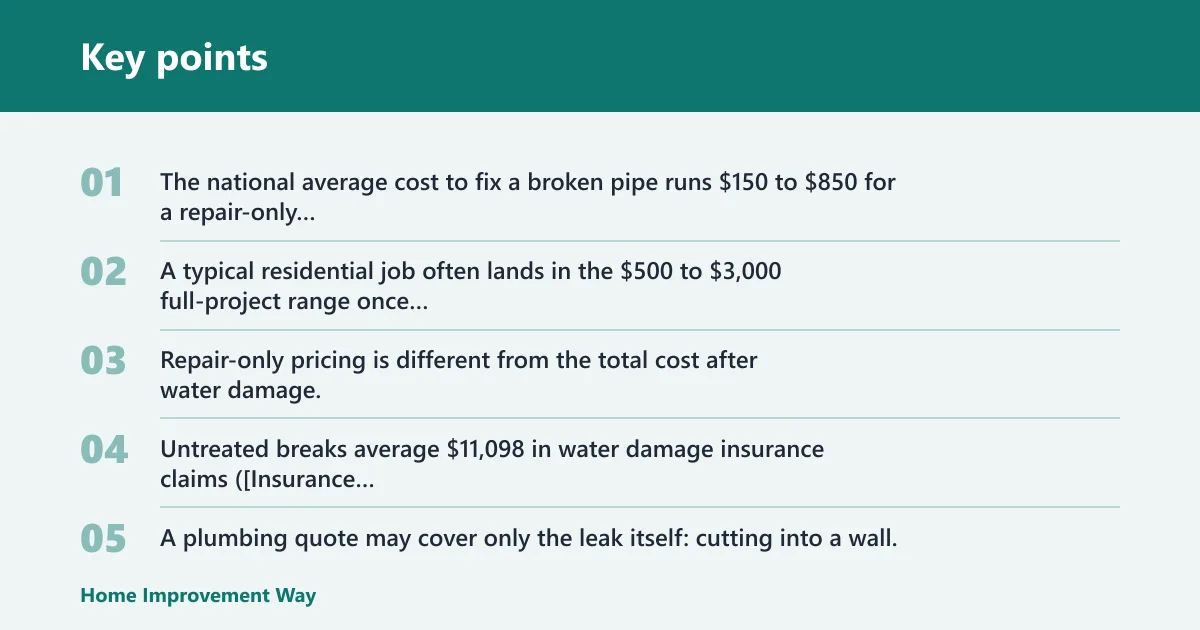


The national average cost to fix a broken pipe runs $150 to $850 for a repair-only plumbing visit, and most homeowners pay around $500 for a straightforward repair ([HomeAdvisor/Angi cost guides]). A typical residential job often lands in the $500 to $3,000 full-project range once opening, drying, and surface repairs are included; major leak or burst repairs can reach $2,000 to $10,000+ when access is difficult or restoration is extensive ([Bob Vila cost guides; restoration industry estimates]).
Repair-only pricing is different from the total cost after water damage. Untreated breaks average $11,098 in water damage insurance claims ([Insurance Information Institute / insurer claim data summaries]), so a low plumbing quote can still become an expensive project if the leak soaked drywall, framing, flooring, or insulation.
Repair-only cost versus water damage cost
A plumbing quote may cover only the leak itself: cutting into a wall, replacing a damaged section, and pressurizing the line again. That does not include drying, demolition repair, paint, flooring, mold treatment, or cleanup labor. Those restoration items are often the larger line items.
For homeowners, the real question is whether the invoice covers the pipe or the whole aftermath. A fair estimate should separate plumbing labor from remediation, so you can compare it with other bids line by line.
Why labor usually outweighs materials
Plumbers charge $45 to $150 per hour in the U.S. ([HomeAdvisor/Angi plumbing labor rates]), and labor is usually the biggest part of the bill. Materials are often modest by comparison. PVC materials run $0.50–$8 per linear foot, while copper ranges from $2–$15 per foot ([trade supply cost guides]).
Access drives labor up fast. Plumbers charge $150 to $250 per linear foot for repair work in difficult-access scenarios ([plumbing cost guides]), and that figure reflects cutting, fitting, testing, and sometimes demolition or excavation. A short exposed fix is one thing; a buried, concealed, or slab repair is another.
What drives the quote up or down?
The quote changes with three main variables: how easy it is to reach the pipe, what the pipe is made of, and whether the call is scheduled or emergency service. Hidden pipes cost more because the plumber must open walls, ceilings, floors, or soil before the actual repair starts.
Accessibility and demolition
Exposed pipe repairs typically cost $150 to $300 ([HomeAdvisor/Angi repair guides]) because the pipe is already visible and reachable. A pipe inside a wall can cost $500 to $5,000 because the job often includes drywall cutting, removal, patching, and repainting ([Bob Vila cost guides; restoration estimates]). Ceiling access usually adds more cleanup, especially if insulation or finished surfaces are involved.
Pipe material and replacement needs
Material matters because some pipes are quicker to repair and some are better replaced in longer runs. PVC and PEX are usually simpler to cut out and reconnect. Copper can take more labor, especially if the damaged section sits behind finishes or near other services. Cast iron and galvanized steel often push the quote higher when the line is old, brittle, or corroded.
Emergency timing and minimum charges
Emergency plumbing fees can add up fast. Service or minimum call-out fees commonly range from $50 to $200 ([emergency plumbing cost guides]), and after-hours, weekend, or holiday calls often cost more than a scheduled visit. If the plumber must stop another job and arrive immediately, expect a higher labor total even before any restoration work starts.
Burst pipe quote decoder
Use this table to compare quotes before you sign. The point is seeing whether the estimate includes access, replacement parts, cleanup, and any extra line items that should be separate. In most cases, replacement beats repair when the pipe is corroded, the same line has failed repeatedly, or the access cost is nearly as high as rerouting the line.
| Repair scope | Access method | Likely add-ons | What is usually included | When replacement beats repair | Red flags |
|---|---|---|---|---|---|
| Exposed pipe repair | Open wall, crawlspace, basement, utility area | Shutoff, cut-out, coupling, pressure test | Diagnosis, short pipe section replacement, fittings, test run | When the pipe is old, brittle, or multiple nearby sections are failing | Vague “miscellaneous labor” with no part list |
| Wall repair | Drywall cut and patch | Drywall replacement, paint, trim reset | Opening the wall, pipe repair, patching allowance, basic finish repair | When repeated wall openings would be needed for the same line | No separation between plumbing and patching |
| Ceiling repair | Ceiling opening below the leak | Drying, insulation removal, ceiling repair | Leak location, controlled opening, drying access, repair of the ceiling surface | When the line above is aging and the ceiling would need recurring access | Missing drying or mold inspection line items |
| Underground repair | Yard or trench excavation | Digging, backfill, compaction, surface repair | Locate the break, excavation, pipe replacement or splice, backfill, testing | When the run is long, corroded, or easier to replace than repeatedly dig up | No note on excavation depth or restore scope |
| Slab repair | Jackhammering through concrete | Concrete repair, reroute, specialized equipment | Leak location, slab opening, pipe access, repair or reroute, slab patch | When rerouting avoids a second concrete opening or the slab line is deteriorated | Single lump sum with no slab restoration detail |
What exposed pipe quotes usually include
An exposed repair usually covers arrival, diagnosis, shutoff, a small section of pipe replacement, fittings, sealing, and a pressure test. For a simple fix, that is often the clearest quote to review because access is straightforward and demolition is limited.
If a quote for exposed work still looks high, check whether it includes a service fee, emergency surcharge, or extra linear footage. Those add-ons can be fair, but they should be stated plainly.
What wall, ceiling, and slab quotes should include
Quotes for hidden pipes should spell out the opening method, the size of the access area, and whether patching is included. Wall jobs should note drywall repair. Ceiling jobs should note ceiling patching, drying, and insulation removal if needed. Slab jobs should show concrete cutting or jackhammering, pipe replacement, and concrete repair.
Picture a burst line inside a kitchen wall behind a sink. If the plumber quotes only the pipe replacement, that misses drywall, paint, and possibly cabinet trim. A fair quote should show which part is plumbing and which part is restoration.
Red flags in add-ons and vague line items
Watch for estimates that bundle unrelated work into one number without itemization. Missing line items make it hard to compare bids. Ask for a written estimate that separates labor, parts, access work, and restoration allowances.
A common first-timer mistake is comparing the lowest plumbing total without checking whether it includes reopening the wall or only fixing the pipe. That can make a “cheap” quote more expensive once patching starts.
How much does location change the cost?
Location is one of the biggest price drivers because it determines how much demolition, excavation, or drying work is needed. An exposed pipe may be repaired quickly, while a concealed pipe can trigger wall repair, ceiling repair, or concrete removal before the leak is even reached.
Exposed pipe and open-access repairs
Exposed pipe repairs typically cost $150 to $300 ([HomeAdvisor/Angi repair guides]). These are usually the simplest jobs because the pipe is visible and reachable. The plumber can replace the damaged section without opening finished surfaces or digging into soil.
If the pipe is in a basement, crawlspace, or utility room, the cost often stays closer to the lower end because access is open and cleanup is limited.
Inside wall and ceiling repairs
Pipe inside a wall can cost $500 to $5,000 ([Bob Vila cost guides]), and a leaking pipe in a ceiling is listed at $700 to $2,500 ([restoration and plumbing cost guides]). Those ranges reflect more than the pipe itself. The job may require cutting drywall, controlling debris, drying the cavity, and repairing the finished surface afterward.
Suppose a second-floor bathroom supply line bursts and stains the dining room ceiling below. The pipe fix may be relatively small, but ceiling repair and drying can dominate the total.
Underground and slab repairs
Underground repairs often require trenching, locating the break, and restoring the yard or driveway after the line is fixed. Water main break work can be more expensive still if the damage extends to the yard or street and needs excavation. That puts it in a different cost class from a simple indoor pipe replacement.
Slab leaks average $2,280 to repair ([slab leak cost guides]), and the bill can rise because crews may need specialized equipment, jackhammering, and concrete repair. These are among the highest-cost burst pipe scenarios because the pipe sits under finished structure, not behind an open wall.
How much does pipe material matter?
Pipe material affects both repair labor and whether replacement makes more sense. Some materials are easy to splice. Others are prone to repeat leaks or corrosion, which can push the project toward replacement instead of a small patch.
PVC and PEX
PVC is usually cheaper to material-replace than metal pipe, and PVC materials run $0.50–$8 per linear foot ([trade supply cost guides]). PEX is often treated similarly for many repair jobs because it is flexible and relatively fast to fit in open-access areas. That usually keeps labor lower than a difficult metal repair.
For short, accessible failures, these materials often support a targeted fix rather than a full reroute.
Copper and cast iron
Copper ranges from $2–$15 per foot ([trade supply cost guides]), so the material itself costs more than PVC. Copper repairs may still be manageable, but the total depends on access and how much of the line needs replacement. Cast iron can be costlier in practice because aged sections may be brittle or tied into larger drainage systems that are harder to isolate.
Galvanized steel and full replacement cases
Galvanized steel is often a replacement candidate when corrosion is widespread. If the line has repeated failures, a small repair may buy little time. In those cases, replacement can be the better call because patching one weak section does not solve the next one.
That is especially true if the quote shows several nearby sections with rust, mineral buildup, or past repairs. Multiple repairs in the same run often point to a system-wide problem, not a one-off break.
When does repair become replacement?
Repair makes sense when the damage is isolated and the surrounding pipe is sound. Replacement becomes the smarter option when the line is corroded, brittle, or failing in more than one place. The decision should be based on the condition of the full run, not only the hole you can see.
Repeat failures and corrosion
If the same branch line has failed more than once, replacement often saves money over time. Repeated leaks mean the surrounding pipe is probably near the end of its useful life. A patch may work now, but it may not prevent another failure soon.
Frozen-pipe damage and weak sections
Frozen-pipe failures deserve special attention because a burst section may signal stress elsewhere in the line. If freezing split one area, the pipe may also be weakened in nearby joints or bends. In those cases, a plumber may recommend replacing a longer stretch instead of only the visible break.
When epoxy lining fits
Epoxy pipe lining can be a non-dig repair option for aging concealed pipes when the pipe can still be structurally prepared for lining. It is best suited to hidden lines where digging or opening finishes would be costly, and it can be an alternative to full replacement in some cases. It is not the right answer for every burst pipe, especially if the line has collapsed or is too badly damaged.
Water damage, insurance, and emergency fees
Water damage can cost more than the pipe repair itself. Drywall repair, flooring repair, and mold remediation all add time and labor. If cleanup is delayed, the cost can rise sharply, and the insurance claim may become more complicated.
Drywall, flooring, and mold work
Drywall replacement is common after a wall or ceiling burst. Flooring repair may be needed if water reached wood, laminate, tile underlayment, or carpet pad. Mold remediation may enter the bill if moisture sits long enough to support growth. These are restoration costs, not plumbing costs, but they are part of the real total.
What to document for a claim
Collect photos of the leak source, the damaged area, standing water, and any wet personal property. Save receipts for emergency service, drying equipment, and temporary repairs. Keep the plumber’s notes, including where the break was found, what part was replaced, and whether the failure looked sudden or long-term. That paperwork helps if the insurer asks for proof of loss and scope.
After-hours, weekend, and holiday pricing
Emergency plumbing fees are usually higher outside normal business hours. That can include an after-hours surcharge, weekend pricing, or holiday call fees. A scheduled visit is almost always cheaper than a panic call at night, but only if the leak can safely wait.
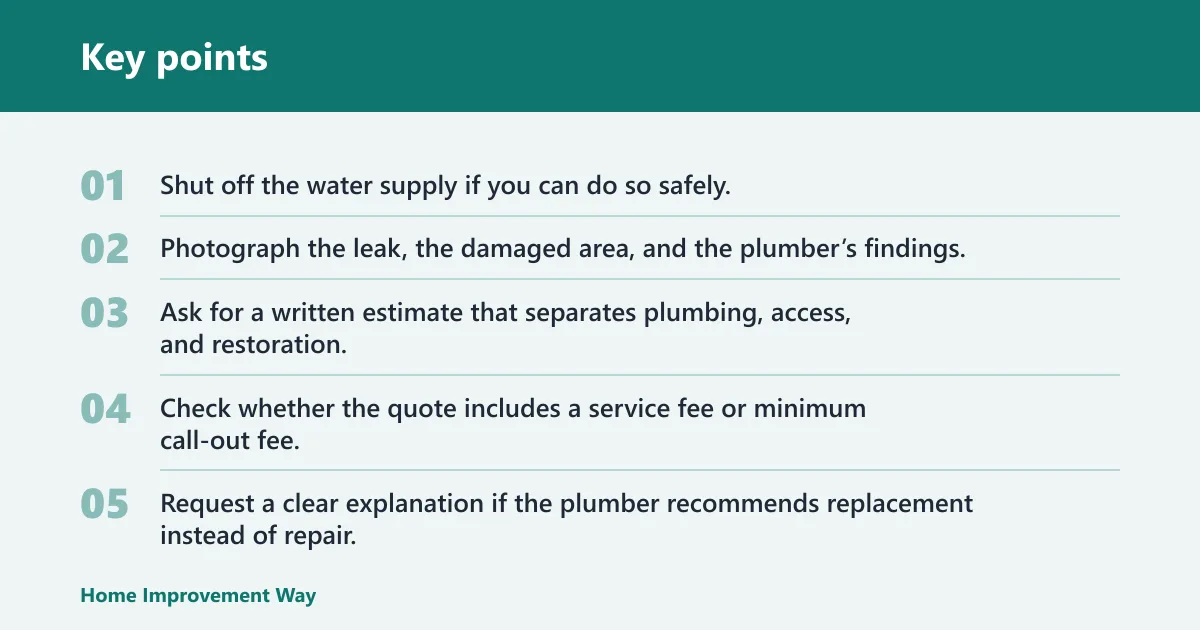
- Shut off the water supply if you can do so safely.
- Photograph the leak, the damaged area, and the plumber’s findings.
- Ask for a written estimate that separates plumbing, access, and restoration.
- Check whether the quote includes a service fee or minimum call-out fee.
- Request a clear explanation if the plumber recommends replacement instead of repair.
Say your upstairs bathroom supply line bursts behind a wall and soaks one side of the hallway. The plumbing repair may be modest, but drywall removal, insulation drying, and repainting can become the larger share of the bill. The quote should show those items separately.
Frequently asked questions
How much does it cost to repair a burst pipe?
A hidden line, emergency call, or restoration work can push the total much higher, especially when drywall, flooring, or mold cleanup is involved.
How much does it cost to replace a burst pipe?
Replacement cost depends on how much pipe must be changed and where it sits. A small accessible section may stay near the lower end of repair pricing, but a larger reroute, wall opening, or slab job can climb into the high hundreds or several thousand dollars. If a quote approaches the cost of rerouting or repiping a failing section, replacement is often the better long-term value.
How much does it cost to repair a leaking pipe in the wall?
A leaking pipe in a wall can cost $500 to $5,000 ([Bob Vila cost guides]) because access is the main expense. The total often includes drywall cutting, the actual pipe repair, patching, and sometimes paint or trim work. If the leak damaged insulation or framing, the bill rises further.
How much does it cost to fix a burst pipe underground?
An underground burst pipe usually costs more than an exposed indoor repair because excavation is required. The price depends on depth, yard restoration, and whether the pipe can be repaired in place or must be replaced. Yard or street excavation can move the job into a much higher band, especially if the contractor must restore hardscape afterward.
How much does it cost to fix a leaking pipe in the ceiling?
A leaking pipe in a ceiling is listed at $700 to $2,500 ([restoration and plumbing cost guides]). That range reflects access from below, water damage cleanup, and ceiling patching after the plumbing work is finished. If insulation or nearby finishes are affected, the total can rise beyond that range.
How much does it cost to repair a burst water pipe?
Hidden locations, emergency timing, and water damage restoration are what usually move the bill higher, not the pipe itself.
Sources
Primary pricing framework compiled from national plumbing cost guides, restoration cost guides, and insurer claim summaries, including HomeAdvisor/Angi, Bob Vila cost references, plumbing supply pricing references, and insurer water-damage claim data summaries. Emergency-fee and hourly labor ranges are drawn from trade cost guides and service-market benchmarks. Slab-leak averages are drawn from slab leak repair cost guides and restoration pricing references.
Sponsored / affiliate links. As an Amazon Associate I earn from qualifying purchases. I may earn additional commission from eligible campaigns.