How to Keep Snow From Blocking Furnace and Dryer Vents
Keep furnace and dryer vents clear by opening the snow drift zone around each termination, moving snow-removal paths away from the hood, and, if a vent keeps icing over, relocating or extending it to a safer spot. Blocked vents can shut down heat, trigger dryer faults, and push exhaust gases, including carbon monoxide, back toward the house; that’s why manufacturer instructions and local code come first on any winter vent fix. This guide shows how to spot drift-prone locations, protect sidewall and roof terminations, and decide when shoveling is not enough.
How freeze and thaw crust vent openings shut


Snow does not block vents at random. Wind drops it where walls, corners, rooflines, and fence lines slow the flow. Then thaw and refreeze can crust the opening shut. A vent that clears one storm can fail in the next if the termination sits in the same drift zone.
Furnace exhaust and dryer exhaust fail differently in winter. A blocked furnace vent can create a carbon monoxide and backdraft risk, while a blocked dryer vent usually slows first, then throws a fault or leaves damp clothes and a warm, linty outlet area. Two-pipe direct-vent furnaces need both the exhaust outlet and the combustion air intake checked after drifting snow or roof runoff.
How drift zones form
Pay attention to the side of the house that takes the prevailing wind. Snow often builds deeper beside corners, under roof valleys, below upper-story overhangs, and near stairs or decks that create a snow pocket. Roof runoff can also freeze at a wall cap and build a ridge around it.
Picture a sidewall dryer cap that sits just above a shoveled walkway. A moderate storm may still leave it open, but a second storm that drifts from the same wind direction can bury it even if the path below stays clear.
What freeze-thaw does
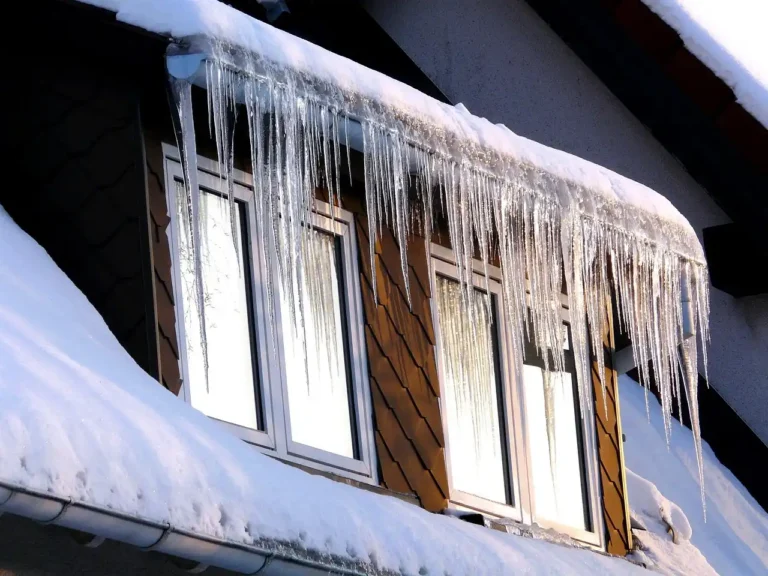
Wet snow can pack into the hood and then harden overnight. That crust can hold the damper flap shut or narrow the opening enough to choke airflow. Do not chip at a frozen flap with a screwdriver or pry bar; many caps break at the hinge or bend the damper out of alignment.
What you’ll need
- Work gloves
- Safety glasses
- Roof rake with a long handle
- Snow shovel
- Flashlight
- Binoculars, for safe ground inspection
- Carbon monoxide alarm with working batteries
- Owner’s manual or manufacturer listing for the furnace or dryer model
- Phone number for an HVAC or dryer vent pro
Check the vent type first
Start by identifying whether the vent is a furnace exhaust, a furnace air intake, or a dryer termination. Standard-efficiency metal furnace vents usually need a clear exhaust path; high-efficiency direct-vent furnaces need both exhaust and intake kept open. Dryer vents must exhaust outdoors only; attic discharge is not an acceptable workaround because it creates a lint hazard and can send warm, moist air into the building.
How vent caps differ in winter
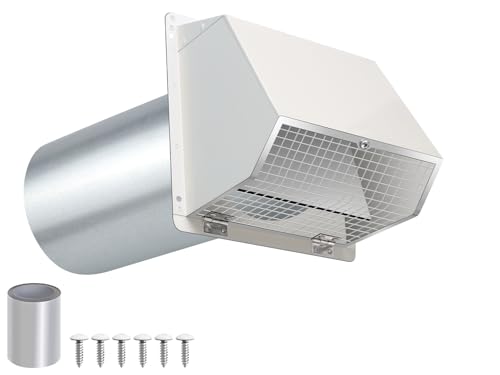
Roof venting is acceptable only when the appliance and the termination are designed for it and the installation follows the manufacturer’s instructions and local code. Dryer terminations should not use insect screening because it can trap lint and restrict airflow. For dryers, flex ducts add more resistance than smooth metal vent pipe, and screws in dryer vent pipe are a mistake.
A common first-timer mistake is assuming every cap behaves the same. A furnace exhaust cap may be a simple termination, while a dryer hood depends on an opening that can move freely during airflow and close when the dryer is off.
How do I safely clear a vent hood myself?
You can clear light snow from a vent hood from firm ground if you can reach it without climbing, stretching, or stepping onto ice. Use a roof rake safely or long-handled shovel to remove snow around the hood, then inspect the cap from the ground. Stop if the hood is on a roof, a slippery deck, or a ladder reach you cannot hold safely.
- Shut off the appliance. Stop the dryer or let the furnace cycle normally, then work from outside only. If a carbon monoxide alarm sounds, occupants should leave immediately.
- Clear the drift around it. Clear snow in about a 12- to 18-inch radius around the hood from firm ground. Keep the pile downhill and away from the termination so meltwater does not refreeze at the opening.
- Check the cap only by sight. Look for a damper flap that is frozen shut, bent, or buried. Do not force the flap open or chip ice from the inside of the hood.
If that did not work, move to a deeper check: inspect for repeated refreezing after the next dry cycle, then compare the termination location against the checklist below. Persistent icing usually points to placement, not just snow depth.
Winter vent-risk checklist
| Vent type | Termination location | Snow-drift exposure | Visible warning signs | Immediate fix | Call a pro now if… | Relocate? |
|---|---|---|---|---|---|---|
| Dryer wall cap | Low sidewall, near a corner or walkway | High | Laundry takes longer; hood rim crusted with ice | Clear 12–18 inches around the cap from firm ground | It freezes again after more than one storm or the hood cannot be reached safely | Yes |
| Dryer roof cap | Roof slope or upper wall | High if hard to reach | Out of sight, heavy frost, damp laundry room | Do not climb on ice; arrange safe service | The outlet is inaccessible or you suspect deep blockage | Yes |
| Direct-vent furnace exhaust | Sidewall in a snow pocket | High | Furnace fault, cycling off, or visible drift against both ports | Clear exhaust and combustion air intake from ground | Any backdraft concern, carbon monoxide alarm, or repeated shutdown | Yes |
| Standard furnace vent | Wall or roof termination with room to breathe | Low to moderate | Little or no crusting; normal operation | Keep snow paths and roof runoff away | Blocked cap or damaged hood | No |
Yes/no scoring system: mark one point for each “yes” below. If three or more checklist items are yes, the location likely needs relocation or a pro-level rework.
- Does snow collect at the hood after normal storms?
- Does freeze-thaw crust the opening shut more than once a winter?
- Is the hood hard to reach safely from firm ground?
- Is the termination in a corner, under a roof valley, or beside a snow pocket?
- Does the appliance show faults, long dry times, or backdraft concerns after snow?
How do I keep snow from blocking my furnace vent?
Keep both the furnace exhaust and, on direct-vent models, the combustion air intake clear, then reduce the snow load around the termination before the next storm. If the vent sits where drifting repeats, clearing alone will not solve it for long. That is when relocation or a different termination height becomes the better fix.
- Map the drift line. Look at where snow piles after wind from the most common storm direction. Mark the pocket beside corners, downspouts, and roof edges, since those spots collect drifts first.
- Open the area early. Shovel or rake snow away before it reaches the hood. Keep a clear zone around the furnace vent and the air intake so one buried opening does not starve the other.
- Check for backdraft signs. Watch for the furnace shutting down, smell changes, or repeated cold starts after a storm. A blocked exhaust can send exhaust gases back toward the house.
If a direct-vent furnace has separate exhaust and intake ports and snow piles up against both, both openings can be affected. Clearing only the exhaust port can leave the intake blocked, so the unit may still fail. Both openings need the same winter clearance.
How high above the ground should an exterior vent be?
There is no universal number that works for every appliance and every yard. The correct height is the one that keeps the termination above the expected snow line and drift depth for that location, while still matching the appliance manufacturer’s instructions and local code. In a sheltered wall area, that may be only a modest clearance above grade; in a drift zone beside a corner, deck, or roof valley, the termination may need to be much higher or moved entirely. The practical test is simple: when the next storm hits, the hood should stay above the snow you reasonably expect to pile there, not just above normal ground level.
For winter placement, think in terms of exposure rather than a single measurement. A vent that sits low in an open yard may be fine, while the same height beside a snow pocket can fail repeatedly. If the termination is already close to the ground, the safer correction is usually a new location or a manufacturer-approved reconfiguration rather than trying to “guess higher.”
How do I keep snow from blocking my dryer vent?
Keep the hood clear, keep the path to it clear, and keep the lint path clean. Clean the lint filter before or after each load; it helps airflow but does not replace duct cleaning. If the cap freezes repeatedly, or if you cannot reach it safely from the ground, a professional dryer vent cleaning is the right next step.
- Clean the lint filter. Remove lint before or after each load. Better airflow lowers pressure at the hood and helps the damper open more easily.
- Inspect the hood from below. Look for snow packed into the outlet, a stuck flap, or frost around the hood edge. If the cap is roof-mounted or above a slippery deck, do not climb to check it.
- Schedule a deeper cleaning. If the vent still runs hot, leaves damp loads, or freezes again after clearing, book professional dryer vent cleaning. The blockage may be deeper than the hood.
When should a vent be relocated?
Relocate or reconfigure a vent when the same drift pattern keeps burying it, not when one storm simply drops more snow than usual. A location is high-risk if it needs clearing after ordinary storms, freezes after thaw cycles, or sits where you cannot inspect it safely from firm ground.
- Count repeat failures. If the same hood blocks two times in one winter, treat that as a placement problem, not a cleaning problem.
- Compare height and exposure. A vent that sits low on a wall near a roof valley or snow pocket is more likely to drift over than one in open air. Check the manufacturer listing for your model and local code before changing height or termination style.
- Choose the right correction. A longer or higher termination, a different hood, or a new route may solve the drift issue. For dryers, the allowable vent length depends on the appliance listing, the number of elbows, and the hood design, so there is no universal length that fits every installation. Use the manufacturer’s maximum equivalent length and local code together instead of relying on a single rule of thumb.
Prevention: Before the next storm, rake snow away from the wall section below the hood and keep roof runoff from freezing above it. That small habit reduces repeat icing without waiting for the vent to fail.
Common mistakes
Do not treat furnace and dryer vents as the same problem. A furnace blockage can affect heat and exhaust safety, while a dryer blockage usually shows up as weak airflow, long dry times, or a hot hood.
Do not force a frozen damper flap open. If it will not move freely with airflow, leave it alone and clear snow around the cap instead. Forcing it can crack the flap or distort the hinge.
Do not inspect from icy ladders, slippery decks, or roofs. Safe ground access is the limit. If the hood cannot be reached safely, call a pro.
Do not assume a lint filter solves the venting problem. It helps, but it does not remove lint buildup in the duct or fix a bad termination location.
Frequently asked questions
Can I safely clear snow from a vent hood myself?
Yes, if you can reach it from firm ground with a roof rake or long shovel. Do not climb on ice, do not chip at the damper, and stop if the hood is roof-mounted or too high to inspect safely.
What happens if a dryer vent gets buried in snow?
Airflow drops, the dryer runs longer, and moisture can stay in the duct and laundry room. The hood can also freeze shut, which means the appliance may overheat or shut down until the blockage is cleared.
Should I keep using the dryer if the vent is iced over?
No. Stop the dryer, clear the outlet only if it is safe from the ground, and check the lint filter before the next cycle. If the hood still will not open freely, the vent needs service rather than another load.
Can snow blocking a gas furnace vent cause carbon monoxide risk?
Yes. A blocked furnace exhaust can cause exhaust gases to backdraft toward the house. If a carbon monoxide alarm sounds, occupants should leave immediately and get the appliance checked before using it again.
What kind of vent cap is best for winter snow?
The best cap is the one approved for the appliance, installed to the manufacturer’s instructions, and suited to the site’s drift pattern. For winter, the key is not a single cap style but whether the termination stays clear and can be inspected safely from the ground.
Sponsored / affiliate links. As an Amazon Associate I earn from qualifying purchases. I may earn additional commission from eligible campaigns.