Toilet Fill Valve vs Flush Valve: What Each Part Does
If the toilet keeps refilling or runs nonstop, suspect the Fill Valve. If the tank will not refill after a flush, or water pours straight into the bowl, suspect the Flush Valve. A wrong diagnosis burns time and often leaves the leak in place. This guide shows the symptoms, the part each valve controls, and how to choose the right replacement.
| Decision factor | Fill Valve | Flush Valve | Winner |
|---|---|---|---|
| Water direction | Adds fresh water from the water supply line into the toilet tank and shuts off at the set water level. | Releases tank water into the bowl through the fixed opening at the bottom of the tank. | Fill Valve for refill; Flush Valve for emptying |
| Common failure symptoms | Slow refill, hiss, whistling, constant running water, or a noisy shutoff are commonly reported signs of a fill valve problem. | Weak flush, incomplete flush, or a leak between the tank and bowl are commonly reported signs of a flush valve problem. | Tie |
| Replacement scope | Often a single-valve swap; many are adjustable and described as universal. | Often tied to the flapper, seal, overflow tube, and sometimes the tank-to-bowl gasket. | Fill Valve |
| Compatibility risk | Lower, but check the inlet style and float mechanism. | Higher, because size and tank design matter; most toilets use a standard 2-inch flush valve, but some use a 3-inch flush valve. | Fill Valve |
| Best first check | Water supply line, shutoff at the float mechanism, and fill-valve height. | Flapper or seal condition, chain adjustment, and the flush outlet area at the center of the tank. | Tie |
What the fill valve does
The fill valve controls water entering the toilet tank. It connects to the water supply line and shuts off when the float mechanism reaches the set water level. On many toilets, the float is a cup style, but some use a ball style.
That shutoff job matters because a bad fill valve can keep water moving after the tank should be full. It can also make noise without changing the refill level much, so sound alone does not prove the tank is overfilling.
What the flush valve does
The flush valve controls water leaving the tank. It sits in the center of the toilet tank and opens the fixed outlet at the bottom when you flush. On a conventional gravity toilet, the flapper closes that opening between flushes.
The overflow tube is part of the flush-valve assembly. If the fill valve fails and water rises too high, the overflow tube routes excess water into the bowl instead of letting the tank spill over.
How water moves through the tank
A flush starts when the flapper or seal lifts, tank water drops into the bowl, and the flush valve closes again as the tank empties. Then the fill valve opens, fresh water comes in through the supply line, and the float mechanism tells the valve when to stop.
That is why these parts get mixed up. One handles water in, the other handles water out. The toilet tank usually holds both, so you often need to remove the lid before you can see which side is acting up.
Which part is failing?
Start with the symptom, not the part name. A running toilet can point to the fill valve, but it can also come from the flapper or another flush-valve seal area. A weak flush can come from the flush valve, yet rim-jet blockage, a partial clog, low supply pressure, or chain adjustment may be the real issue.
Conventional flapper toilets
On a standard gravity toilet, the flapper is the hinge-mounted seal over the flush outlet. If it no longer closes well, the tank leaks into the bowl and the fill valve keeps replacing that lost water. That is the classic “running toilet” trap.
Canister-seal toilets
Canister-seal toilets use a different seal at the flush outlet, but the diagnosis is the same: look for leak-down after the flush, not just noise at the tank. A seal problem here can mimic a fill-valve shutoff problem because the tank level keeps falling.
Pressure-assisted and concealed systems
Pressure-assisted and concealed systems do not always follow the same visible layout as a basic tank toilet. Check the model number before buying parts, and treat unusual tank parts or hidden access panels as a separate case. If the system uses a cartridge or internal module, do not assume a standard flapper kit will fit.
Toilet symptom matrix
| Symptom | Likely failing part | What to inspect first | What the symptom does not prove | Fix type |
|---|---|---|---|---|
| Tank keeps refilling or runs constantly | Fill Valve, or a flush-valve seal leak | Lift the lid, watch the water level, and check whether water is leaking past the flapper or seal into the bowl | It does not prove the fill valve is bad by itself | Valve or seal |
| Slow refill | Fill Valve | Check the water supply line, inlet side, and the fill-valve opening for debris or restricted flow | It does not prove the flush valve is damaged | Valve |
| Hiss or whistling from the tank | Fill Valve | Listen near the fill-valve body and watch whether the float stops the water cleanly at the set level | It does not prove the tank is leaking into the bowl | Valve |
| Weak flush or incomplete flush | Flush Valve, flapper, or seal | Check the flapper, chain, seal surface, and tank water level before replacing the assembly | It does not prove the flush valve is the only cause | Seal or valve |
| Water drops from tank to bowl after flushing | Flapper or flush-valve seal | Inspect the seal surface and the flapper edges for warping, mineral buildup, or poor seating | It does not prove a bowl siphon, venting issue, or trapway problem | Seal |
Running toilet
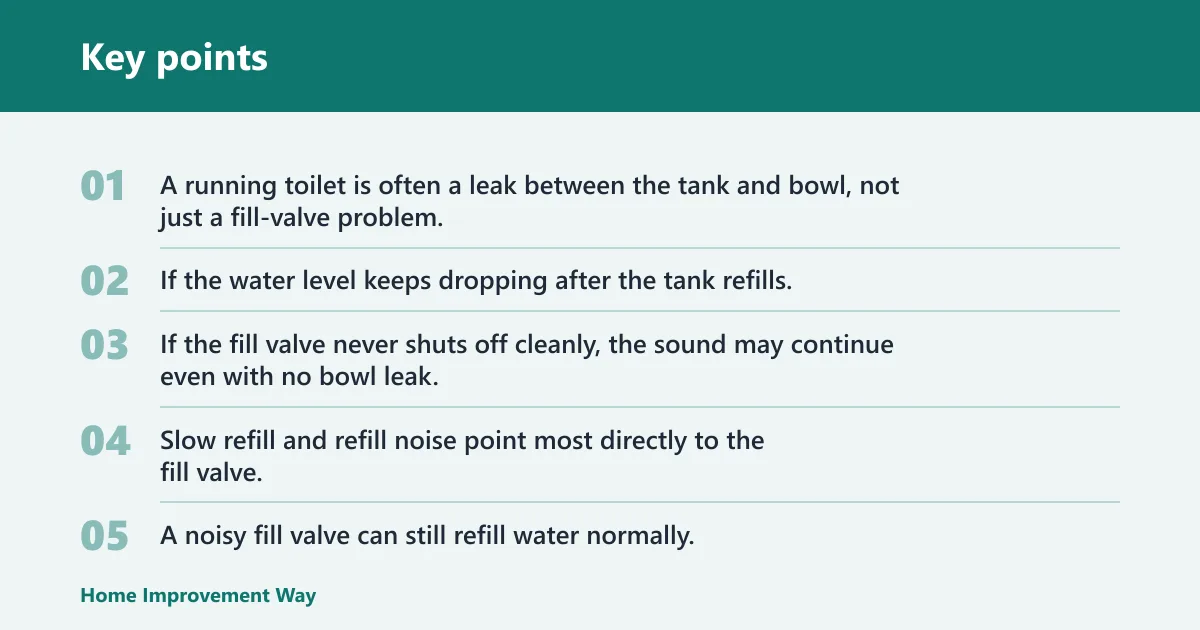
A running toilet is often a leak between the tank and bowl, not just a fill-valve problem. If the water level keeps dropping after the tank refills, the flapper or flush-valve seal is often the first place to inspect. If the fill valve never shuts off cleanly, the sound may continue even with no bowl leak.
Slow refill or noisy refill
Slow refill and refill noise point most directly to the fill valve. A noisy fill valve can still refill water normally, so the sound alone does not prove the toilet is underfilling. Check the supply line, then the float mechanism, then the valve body.
Weak flush or incomplete flush
A weak flush does not automatically mean the flush valve is bad. Chain adjustment, a clogged rim jet, partial drain blockage, low supply pressure, or a seal that opens too little can all reduce flush power. If the tank drains too slowly or leaks into the bowl between flushes, the flush-valve side moves higher on the list.
Bowl water changes and what they do not prove
Do not use bowl water level changes alone to diagnose the fill valve. Bowl level shifts can come from siphoning, venting, or trapway problems, especially if the toilet has drainage issues. Focus on what the tank is doing during and after the flush.
What to inspect first
Start with the easiest visible clues inside the toilet tank. Remove the lid, look at the water line, and follow the path from the water supply line to the fill valve, then to the flush outlet in the center of the tank. That order catches the most common failures fast.
Water supply line and inlet side checks
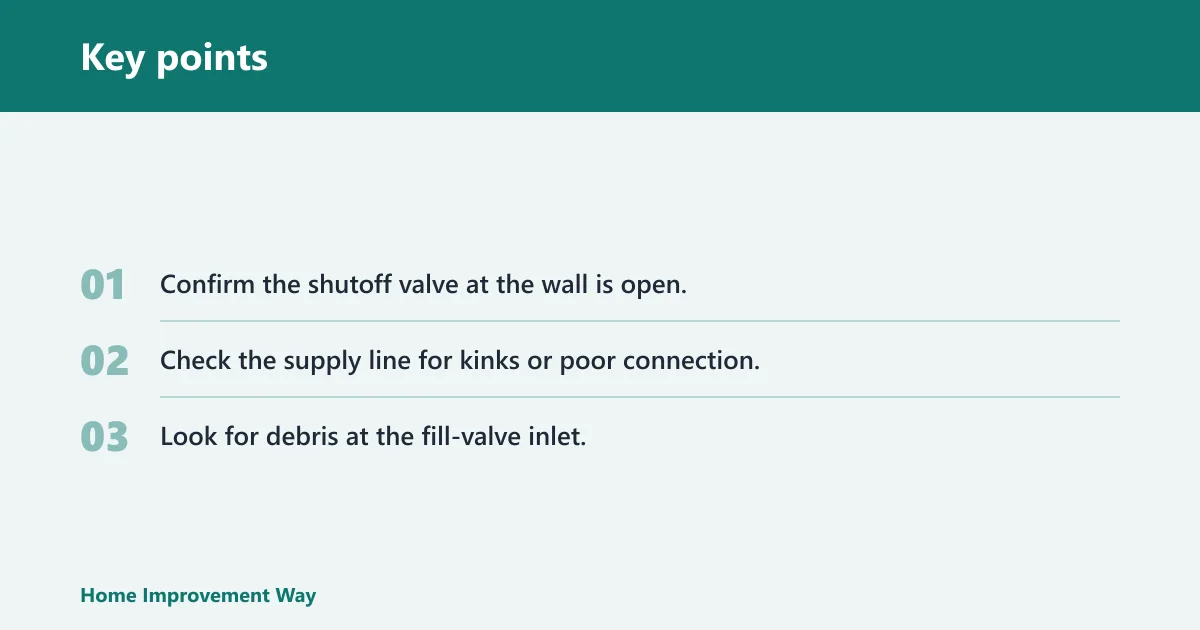
- Confirm the shutoff valve at the wall is open.
- Check the supply line for kinks or poor connection.
- Look for debris at the fill-valve inlet.
Float mechanism and shutoff checks
Many fill valves are adjustable. If the float cup or ball is set too high, the tank may overfill and keep running into the overflow tube. If it is stuck, the valve may chatter, hiss, or stop short of the proper level.
Flapper, seal, and flush outlet checks
On a conventional toilet, watch the flapper close after the flush. If it hangs open, warps, or does not seat cleanly, the tank will leak down. On a canister-seal toilet, inspect the seal face and the lift action instead of looking for a flapper hinge.
Overflow tube and refill tube placement
Make sure the refill tube is routed into the overflow tube on a standard toilet. That tube returns water to the bowl after a flush. It should not be left loose, and it should not be mistaken for the source of a tank leak.
Say your toilet starts whistling after refilling, but the bowl water stays normal. That pattern points first to the fill valve, not the flush valve, because the noise comes during refill and the tank still reaches its set level.
Suppose the toilet flushes weakly after a flapper replacement, and the tank still holds water between flushes. That points away from a leaky seal and toward chain length, rim-jet blockage, or a partial clog before you swap the flush-valve assembly.
Can you replace the flapper only?
Yes, if the problem is only the seal. On a conventional toilet, a worn flapper is often the simplest repair because it closes the flush outlet between flushes and lifts during the flush to release tank water. If the flush-valve body, overflow tube, or tank-to-bowl gasket is also worn, a larger repair may make more sense.
When a seal swap is enough
If the tank leaks slowly into the bowl and the rest of the flush-valve assembly is intact, a new flapper or seal may fix it. That is especially true when the hinge, chain, and seating surface are still in good shape.
When the whole flush-valve assembly is a better fix
If the tank-to-bowl gasket is leaking, the outlet body is cracked, or the seat is pitted, a full flush-valve replacement is more practical. Many replacement kits include the seal, overflow tube parts, and the tank-to-bowl gasket, which can simplify a repair that started as a “just the flapper” job.
What size flush valve do you need?
Size matters because flush valves are not universal. Most toilets use a standard 2-inch flush valve, and some toilets use a 3-inch flush valve. Before you buy, confirm the tank model number or measure the opening at the flush outlet.
2-inch flush valve basics
A 2-inch flush valve is the common standard on many toilets. It works with a large share of replacement flappers and repair kits, but the tank shape and mounting details still matter. Do not buy by size alone if the toilet has a unique flush tower or concealed hardware.
3-inch flush valve basics
A 3-inch flush valve is less common and may use a larger seal opening. Because the flush-valve size affects compatibility and flush behavior, do not assume a 3-inch part will fit a toilet built for a 2-inch assembly.
How to measure before buying
- Remove the tank lid and find the center flush outlet.
- Check the toilet model number inside the tank or on the porcelain.
- Measure the opening only if the model number is missing or unclear.
- Match the replacement kit to the valve style, not just the nominal size.
Choose Fill Valve if… / Choose Flush Valve if…
Choose Fill Valve if the toilet refills slowly, hisses, whistles, or keeps running after the tank should be full. Choose it if the float mechanism is sticking, the water line connection is the issue, or the valve is old but the flapper or seal is still holding water.
Choose Flush Valve if water leaks from the tank into the bowl, the flapper or seal no longer seats, or the flush outlet assembly is cracked or worn. Choose it if the tank-to-bowl gasket is also part of the leak, or if the toilet needs a size-specific replacement and the model number confirms the match.


Frequently asked questions
What does a toilet fill valve do?
The fill valve brings fresh water into the toilet tank after each flush. It connects to the water supply line and shuts off at the set water level using the float mechanism. If it does not shut off correctly, the toilet may run, hiss, whistle, or refill too slowly.
What does a toilet flush valve do?
The flush valve releases tank water into the bowl when you flush. It sits at the bottom center of the tank and works with the flapper or seal to hold water between flushes. If it leaks, the tank can drain down and the toilet may keep running.
How do I know if my toilet problem is the fill valve or flush valve?
Start by watching what happens after the flush. If the tank refills slowly or makes noise while filling, suspect the fill valve. If the tank loses water into the bowl, leaks between flushes, or gives a weak flush with a bad seal, inspect the flush valve area first.
Is a running toilet caused by the fill valve or flush valve?
Either one can be involved. A fill valve that does not shut off can keep water moving, but a leaking flapper or flush-valve seal can also make the tank keep refilling because water is escaping into the bowl. Check both sides before replacing parts.
Can I replace just the flapper instead of the whole flush valve?
Yes, if the flapper is the only worn part on a conventional toilet. If the seat is damaged, the overflow tube is cracked, or the tank-to-bowl gasket is leaking, a full flush-valve kit is the better fix. Canister-seal toilets usually need a different seal style.
Are fill valves universal for most toilets?
Many fill valves are described as universal and fit most toilets, and some products claim to fit 99% of toilets. Even so, you should still check the inlet style, float type, and height adjustment range before buying. A quick model-number check saves a return.
Do I need to remove the tank to replace a flush valve?
Usually yes for a full flush-valve replacement, because the tank must come off to reach the mounting nut and tank-to-bowl gasket. A simple flapper swap does not require tank removal. If the toilet uses a concealed or pressure-assisted system, follow the model-specific access method.
Why does my toilet refill slowly or keep making noise?
That pattern points most directly to the fill valve. A restricted supply line, debris at the inlet, or a float mechanism that is not shutting off cleanly can slow the refill and cause hiss or whistle noise. The toilet can still reach the right water level and still have a bad valve.
What size flush valve do I need, 2-inch or 3-inch?
Most toilets use a standard 2-inch flush valve, but some use a 3-inch flush valve. Check the model number first, then measure the opening if needed. The wrong size will not match the tank hardware, and it can affect flush performance and sealing.
Sponsored / affiliate links. As an Amazon Associate I earn from qualifying purchases. I may earn additional commission from eligible campaigns.