Why Is Snow Blowing Into My Attic Through the Vents?
Snow blowing into attic vents usually means wind is pressurizing the opening and the vent design is too exposed, too open, or missing a proper baffle or cap. Left alone, that moisture can soak insulation, stain drywall, and drive up heat loss and repair costs. This guide shows how to identify the likely entry path, which vent type is usually at fault, and the next repair step.
Wind-driven snow is the main mechanism. During a blizzard, wind can press against the roof and the vent opening, forcing fine snow through a vent that would stay dry in calmer weather. The problem is usually exposure plus airflow, not just “too much snow.”
Vent location matters because different vents face different pressures. A vent on the windward side of a roof, or one sitting in a path where drifting snow swirls upward, is more likely to take in snow than a vent tucked behind a roof profile or protected by the right cap or baffle.
That is why this problem is not solved by a generic “more ventilation” answer. Ventilation must be sized and placed correctly, and it must still shed water, snow, and dust in the weather your roof actually sees.
Which vent type is letting snow in?
Snow entry usually points to one vent type first, because each vent sits in a different place and has a different job. Soffit vents bring air in at the eaves. Ridge vents exhaust air at the peak. Static roof vents sit higher on the slope as exhaust points. Gable vents move air through the attic sidewalls and can act as intake or exhaust depending on the setup.
Soffit vents
Soffit vents are intake ventilation at the eaves. They should stay open to outdoor air, but they also must remain unobstructed by insulation so the attic can draw air in and balance the exhaust side. If snow appears near the eaves, check whether wind is pushing snow through open soffit slots or whether insulation is blocking the air path and forcing odd airflow patterns.
Ridge vents
Ridge vents run continuously at the roof peak and depend on a compatible ridge cap shingle system and a slot cut into the roof deck. When installed correctly, they exhaust warm air along the ridge and usually handle weather better than small exposed openings. Snow entry at a ridge vent can point to an installation mismatch, a missing baffle, or a roof opening that is not matched to the vent system.
Static roof vents
Static roof vents are box-style exhaust vents placed higher on the roof. They are common, but they can be vulnerable to wind-driven snow because the opening is exposed on a slope instead of protected at the peak. If snow is showing up below one of these vents, the vent itself may be the weak point, especially in open, high-wind areas.
Gable vents
Gable vents sit in the sidewall and can change cross-ventilation patterns. In some roofs they work as intake, in others as exhaust, and in some homes they create a short-circuit path that weakens balanced attic ventilation. If snow is entering near a gable, look at wind exposure, vent size, and whether the attic airflow is being influenced by pressure differences across the side opening.
Balanced attic ventilation means you need both intake and exhaust, with intake at the eaves and exhaust near the roof peak. That balance helps airflow and moisture control, and some shingle warranties require it. IKO says balanced attic ventilation is required for full shingle warranty coverage, and IKO also says local building codes often require proper attic ventilation.
For attic sizing, the common rule of thumb is 1:150 net free vent area, or 1:300 in some code-approved balanced setups. That sizing rule is about total net free vent area, not a reason to open a single vent more than it can safely handle. It means the attic should have enough airflow capacity in the right locations without creating an opening that invites snow.
If the intake is weak, blocked, or missing, the exhaust side can pull air in from the wrong places. That can draw in snow, raise attic humidity, and keep the roof deck colder or wetter than intended.
Suppose a 1,200-square-foot attic has ridge venting but the soffit bays are packed with insulation. The ridge may still exhaust air, but the attic has poor intake. In a storm, the system can pull from gaps, chases, or leaky vent openings instead of a clear eave path.
A common first-timer mistake is closing the attic vents because snow appeared near one opening. That can reduce ventilation but leave the real defect in place. The attic then keeps moisture longer, which can create a second problem after the storm passes.
Vent snow triage table
| Vent type | Likely snow-entry mechanism | Visible attic signs | Urgency | Best next step |
|---|---|---|---|---|
| Soffit vent | Wind pushes snow through open soffit slots during a blizzard, or insulation blocks the intake and distorts airflow. | Snow dust near the eaves, damp insulation along the outer wall, uneven air movement at the soffit bay. | Medium | Clear insulation back from the soffit and verify the baffle path before changing anything else. |
| Ridge vent | Wind-driven snow enters through a mismatched ridge cap, a poorly cut slot, or a vent system not built for the roof assembly. | Snow streaks at the peak, wet roof deck near the ridge, stains along the ridge line. | High | Have a roofer check the ridge opening, cap compatibility, and flashing details. |
| Static roof vent | Blizzard wind forces snow through the vent body or around a poor seal at the roof opening. | Snow directly below one vent, wet sheathing around a box vent, insulation damp only in one roof bay. | High | Inspect the seal and surrounding roofing; replace or reposition the vent if the design is too exposed. |
| Gable vent | Cross-wind drives snow through the side opening, or the vent is acting as the wrong airflow path for the attic. | Snow on the gable-side attic floor, localized wetting near the end wall, strong draft at the side vent. | Medium to high | Check whether the attic needs a different intake/exhaust balance or a different vent strategy. |
If the snow shows up in one narrow strip, the vent opening is the first suspect. If the attic is wet across several bays, the issue may be broader: airflow imbalance, missing baffles, roof defects, or a leak that looks like snow intrusion but is really water intrusion from another path.
Is snow in the attic from roof vents a sign of a bigger problem?
Sometimes yes, sometimes no. A short burst of wind-driven snow through an exposed vent can be a localized weather event. But recurring intrusion, wet insulation, staining, or snow in several attic bays points to a bigger issue with vent design, vent placement, roof detailing, or the way the attic is balanced.
Wet insulation is the first warning sign to check. If insulation is damp in a small area from a one-time event, it may dry once the source is fixed and the attic is ventilated properly. If the insulation stays wet, is soaked through, smells musty, or has been repeatedly wet, it should be removed and replaced rather than just dried. Fiberglass loses performance fast when wet, and cellulose can mat down or stain. Look for dark sheathing, frost that melts unevenly, water marks on trusses, and damp drywall corners below the affected area.
Ice dams can overlap with this problem. Poor attic ventilation does not cause every ice dam, but blocked intake, uneven exhaust, and heat loss can all keep the roof surface colder in some areas and warmer in others. That mix can make snow melt and refreeze in ways that worsen both moisture and snow entry.
Picture a roof with a single static vent on the leeward side and a blocked soffit on the windward side. One storm may send snow through the vent, while the rest of the attic stays dry. That is a venting problem first, not proof that the whole roof is failing.
What to do next
The right fix depends on where the snow entered and how often it happens. Start with the simplest checks, then move to roofing repairs only when the signs point there. Do not seal vents blindly; the goal is to keep the attic dry while preserving the airflow path the roof needs.
- Clear the soffits. Pull insulation back from soffit vents so the intake path stays open. Soffit vents are meant to stay unobstructed, and a blocked eave can create poor airflow that worsens moisture problems.
- Inspect the vent opening. Look for torn screening, open seams, missing caps, or a poorly matched ridge vent or box vent. If the snow appears in one roof bay, that vent or the surrounding flashing is the likely entry point.
- Check the attic surface. Look for damp insulation, frost, dark sheathing, or stains on drywall and framing. These signs tell you whether the event was brief or whether moisture is already accumulating.
- Call a roofer for repeat intrusion. Recurring snow entry, especially from a ridge vent or static roof vent, often means the roof opening, flashing, or vent type needs correction. A roofing repair is the right move when the same spot fails in more than one storm.
Do not rush to close all vents for the season. That can trap moisture in the attic and make the next cold spell worse. It is usually better to correct the vent, restore balanced airflow, and verify that the attic is dry.
How attic vents should be installed in snowy climates
In snowy climates, the installation details matter as much as the vent style. Ridge vents need a compatible ridge cap shingle system and a clean roof slot. Static vents need good sealing at the roof deck. Gable vents need to fit the intended airflow pattern instead of fighting it. The goal is a vent system that moves air without inviting snow.
For roof penetrations, IKO recommends a three-foot-by-three-foot section of ice and water protector over the vent hole, but local code, manufacturer instructions, and the specific vent model can call for different details. IKO also says the roof vent hole should be the same size as the vent hole, which means the cutout should match the vent opening the roof assembly expects. Those details matter because sloppy sizing or skipped membrane work can leave a weak point where snow and water enter.
SNOWVENTCO says its vent is a Type B 50 sq. in. flow static box vent, reports simulated blizzard testing up to 110 mph, says it keeps out over 99% of snow in blizzard conditions, reports 99.9% effectiveness against driven snow in testing, 99.8% effectiveness against driven rain in testing, says it passed ICC-ES AC132 dust clogging testing, and says it has a 30 year warranty. Those are product claims and should be weighed against the roof’s exposure, installation quality, and how standard vent options are performing in similar conditions.
How to know if attic vents are installed correctly
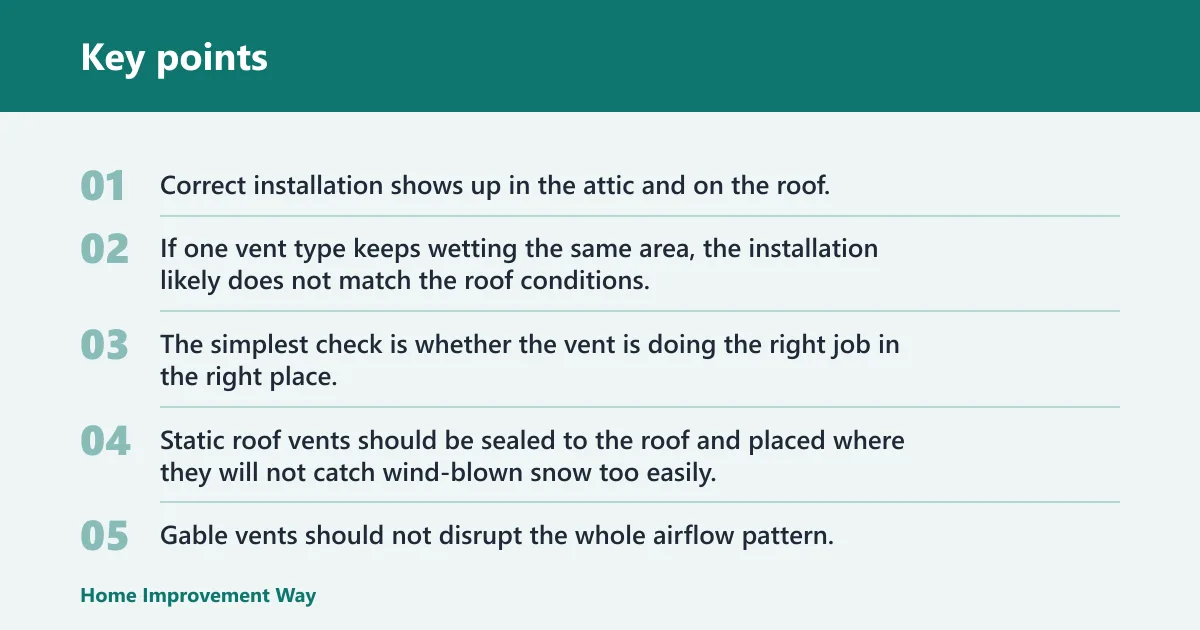
Correct installation shows up in the attic and on the roof. The vent should sit where the roof system expects it, the opening should be sealed and protected, and the attic should still have clear intake at the eaves and clear exhaust at the top. If one vent type keeps wetting the same area, the installation likely does not match the roof conditions.
The simplest check is whether the vent is doing the right job in the right place. Soffits should feed air in. Ridge vents should exhaust air out. Static roof vents should be sealed to the roof and placed where they will not catch wind-blown snow too easily. Gable vents should not disrupt the whole airflow pattern.
Frequently asked questions
Why is snow blowing into my attic through the vents?
Snow usually gets in when wind pressure forces fine, dry snow through an exposed opening. The vent may be too open for the weather, installed in the wrong spot, or missing the baffle, cap, or compatible roof detail it needs to resist wind-driven snow.
How do I stop snow blowing in roof vents?
Start by checking whether the vent type is appropriate for the roof and whether the opening is sealed and protected as intended. Then restore balanced intake and exhaust, clear soffit blockages, and have a roofer inspect recurring problem vents, since closing everything is rarely the right fix.
Should I close attic vents in winter?
Usually no. Closing vents can trap moisture, reduce air movement, and make insulation and sheathing stay damp longer. If snow is getting in, fix the exposed vent, restore soffit intake, and correct the roof detail rather than blocking the attic’s ventilation path.
How do I vent an attic properly in snowy climates?
Use balanced attic ventilation with intake at the eaves and exhaust at the roof peak, then size it by net free area rather than by guesswork. Make sure soffits stay open, the exhaust vent matches the roof assembly, and the vent location does not invite wind-driven snow.
What type of roof vent works best in blizzards?
No vent is immune if it is installed poorly or placed in the wrong exposure, but a ridge vent with the right ridge cap and roof slot is often less exposed than a small high-slope opening. The best choice depends on roof design, wind exposure, and correct installation details.
How do I know if my attic vents are installed correctly?
Check that the vent type matches its role, the soffits are open, the exhaust path is continuous, and the roof opening is sealed with the right underlayment or membrane detail. If snow appears in the same spot after storms, the installation or vent selection needs review.
Sponsored / affiliate links. As an Amazon Associate I earn from qualifying purchases. I may earn additional commission from eligible campaigns.