
Why Are There Wet Spots on My Ceiling in Winter?
Winter ceiling wet spots in cold weather usually come from one of three sources: ice dams if the stain is on an exterior wall or below roof edges, condensation if it appears in repeated cold spots, or a plumbing leak if it grows even during dry spells. If you ignore the source, drywall can fail, mold can hide, and repairs can get larger fast. This guide helps you separate each cause and check the right areas first.
What a winter ceiling stain means
A brown or yellow ceiling water stain usually means water intrusion, not a simple cosmetic mark. Brown spots and yellow water marks can signal an active leak, and yellow marks can spread across drywall if the source is not fixed. If the spot is damp, growing, or paired with sagging drywall, treat it as more than a stain.
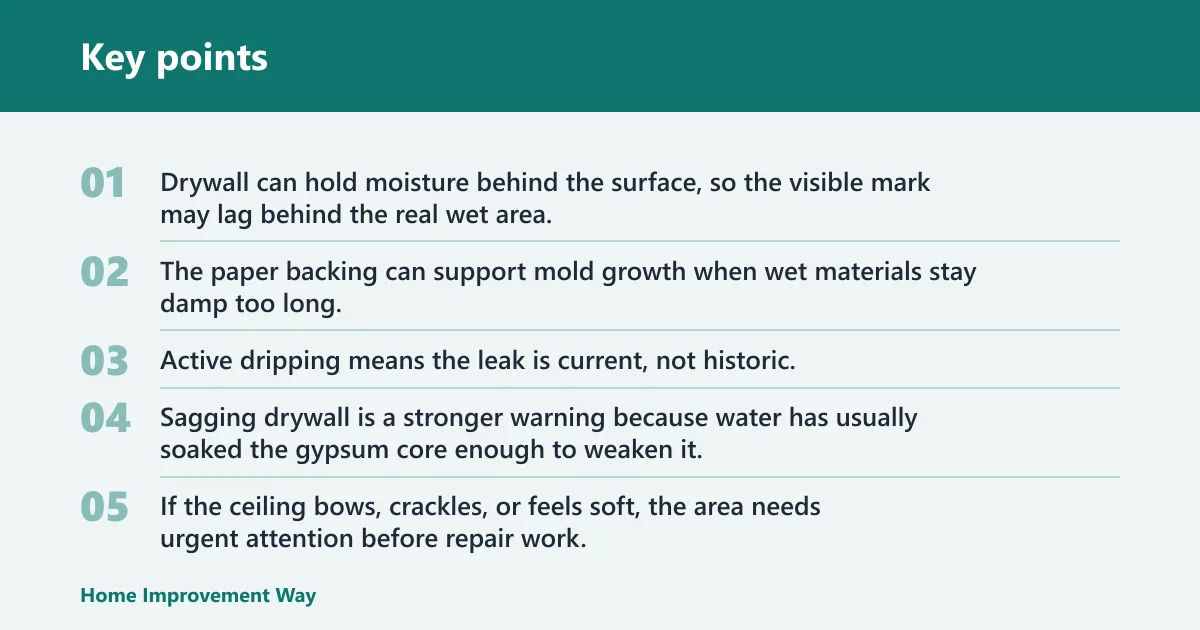
Drywall can hold moisture behind the surface, so the visible mark may lag behind the real wet area. The paper backing can support mold growth when wet materials stay damp too long. That is why the stain often appears after moisture has already moved through insulation or framing.
Active dripping or sagging drywall
Active dripping means the leak is current, not historic. Sagging drywall is a stronger warning because water has usually soaked the gypsum core enough to weaken it. If the ceiling bows, crackles, or feels soft, the area needs urgent attention before repair work.
Water rarely stays in one neat spot. It can travel along joists, studs, and seams, then show up far from the source as a damp patch on the wall or ceiling. Low humidity can make water seem to disappear while material stays wet, which is why a spot can look better and still be unsafe to patch.
Why is there a wet spot on my ceiling in winter?
Winter ceiling wet spots often come from ice dams, attic condensation related to heat loss, or an interior water source such as a pipe leak or appliance overflow. The location matters. A stain near the roof edge points one way, while a spot below a bathroom, laundry room, or furnace often points another.
Ice dams and roof-edge meltback
Ice dams form when roof heat melts snow, then the meltwater refreezes near the eaves. That backup can force water under shingles and into the ceiling below. If the stain sits on an exterior wall, near soffits, or under a roof edge, roof drainage and attic heat loss move to the top of the list.
Attic condensation from heat loss
Warm indoor air leaking into a cold attic can condense on sheathing, rafters, or fasteners and may later drip into the ceiling. This often shows up as repeated damp spots in the same cold area. A cold spot on the ceiling can point to missing insulation, air leakage, or an attic ventilation problem above it.
Interior plumbing and appliance leaks
A pipe leak can be slow and hidden. It may come from supply or drain lines, and it can travel along studs and joists before it reaches the room below. Furnace condensate lines, humidifier overflow, and bath fan condensation can also create ceiling wet spots that look like roof leaks at first glance.
Winter ceiling leak decision table
Use this table to sort likely causes before you start cosmetic repairs. It is a triage tool, not a final diagnosis. If the spot is active, recurring, or near wiring, treat the situation as urgent even if the cause is not obvious yet.
| Symptom | Likely cause | Quick check | Urgency | Next step |
|---|---|---|---|---|
| Brown stain below an exterior wall after a freeze | Ice dam | Check the attic edge and roofline for frost, wet insulation, or ice buildup at the eaves | High | Reduce further melting, inspect the attic, and call a roof pro if the area is active |
| Wet patch in the same cold corner every winter | Attic condensation | Look for air leaks, frost on nails, or damp insulation above the spot | High | Seal obvious air leaks and get the attic checked for insulation and ventilation issues |
| Ceiling stain under a bathroom | Plumbing leak | Use the fixture above the spot, then check for new dripping or a damp pipe chase | High | Shut off the supply if the leak is active and call a plumber |
| Spot near furnace closet or mechanical room | Furnace or humidifier overflow | Inspect condensate tubing, pans, and drain lines for backup or overflow | High | Turn off the unit if water is escaping and schedule service |
| Damp area below a bath fan | Bath fan condensation | Check whether the fan duct is insulated and vented outdoors, not into the attic | Moderate to high | Stop using the fan until the duct path is corrected |
| Leak appears after wind-driven rain | Wind-driven roof leak | Look for stains on windward slopes, flashing, or penetrations | High | Cover the area if needed and have the roof assembly inspected |
| New stain after a deep freeze and thaw | Frozen pipe thaw leak | Check nearby piping for split joints or dripping once temperatures rise | High | Shut off water if needed and inspect for burst or cracked piping |
| Stain around a skylight opening | Skylight leak | Check the interior trim, flashing, and shaft for wetness or staining | High | Limit indoor moisture and get the skylight system checked |
How do I tell a roof leak from a pipe leak?
Roof leaks usually track with weather, roof edges, or roof openings, while pipe leaks often line up with bathrooms, kitchens, laundry areas, or mechanical spaces. A roof problem often appears after snow melt or wind-driven rain. A pipe leak may grow even during dry weather or show up after someone runs a fixture.
Clues from the stain location
Start with where the stain sits. A spot below an exterior wall, eave, skylight, or chimney may point toward the roof system. A spot centered beneath a bathroom, fridge line, dishwasher, water heater, or upstairs plumbing fixture may point toward an interior plumbing source.
Signs that point to the attic
If the stain is below the roof deck but not tied to a plumbing run, check attic access. Look for wet insulation, frost on framing, darkened sheathing, or daylight around penetrations. The diagnostic process includes checking attic access because many winter ceiling leaks start above the room, not in it. Also look for blocked soffit vents, compressed insulation, gaps around attic hatches, recessed lights, bath fan housings, and other openings that can leak warm air into the attic.
Clues that point to supply or drain lines
A pipe leak can be slow and hidden, and it may come from supply or drain lines. If the stain appears after using a bathroom, running a washer, or filling a tub, shut off water to the affected area if possible and watch for change. If the stain grows during dry weather, plumbing rises on the suspect list.
What to do before the stain gets worse
Move fast, but do not rush into cosmetic repairs. Contain the water, protect the room, and decide whether the source is likely plumbing, roof, or condensation. Active leaks worsen daily, and hidden leaks can cause structural damage if the wet area keeps spreading.
-
Protect the room. Place a bucket or pan under any drip and move furniture, rugs, and electronics out of the wet zone. If the stain is near a light fixture or fan, switch off power to that circuit if water is entering the fixture.
-
Shut off water if needed. If the ceiling pattern points to plumbing, close the nearest fixture valve or the main shutoff if the leak is active. This can stop a pipe leak from feeding the stain while you confirm the source.
-
Check the attic safely. Use attic access only if it is safe, dry, and stable underfoot. Walk on joists or a proper walkway, and look for wet insulation, dripping nails, stained sheathing, or frost, but avoid stepping on drywall between framing members.
Say your ceiling stain is 8 inches wide and appears under the upstairs hall bath after a shower. If the spot grows while the bathroom is being used, a plumbing source is more likely than an ice dam. If the same spot appears only after a thaw and sits near an outside wall, roof-edge meltback moves up the list.
Suppose the ceiling has a cold patch in a bedroom corner, but no plumbing is nearby. That points toward attic heat loss or condensation above the room. The next check is not paint; it is the attic, insulation, and air sealing around penetrations.
Some leaks hide behind paint and drywall. That is where tools help. Thermal imaging is used to identify temperature differences behind ceilings and walls, and moisture meters are used alongside thermal imaging to detect hidden moisture. Together, they help separate a surface stain from a still-wet cavity.
Thermal imaging camera
A thermal imaging camera shows temperature differences behind walls and ceilings. Wet areas often read cooler than surrounding dry materials, which can help trace moisture paths. It is especially useful when the visible stain is smaller than the actual wet area or when the source is above the ceiling and not directly visible.
Moisture meter
A moisture meter comes in pin-type and pinless versions. It measures water content in building materials and helps confirm saturation before repair. It is also useful for checking whether a ceiling or wall has dried enough to keep or whether drywall still needs attention.
Why both tools are often used together
Thermal imaging points to suspicious areas, while a moisture meter confirms whether those areas are actually wet. That combination matters because low humidity can make water seem to disappear while material stays wet. A spot that looks dry on the surface may still need drying or replacement underneath.
When can you repair and repaint?
Repair comes after the source is fixed and the area is dry. Ceiling paint primer mainly covers the stain cosmetically; it does not solve the moisture source, and it can fail if the leak continues. If the drywall stayed wet for more than 72 hours, replacement is often needed depending on contamination, drying progress, and the condition of the material, rather than a simple patch.
Drywall drying versus replacement
Drywall can sometimes be dried if the wetting was brief and the board stayed sound. But if it is swollen, soft, or crumbling, or if the paper backing has been wet for a long period, replacement is safer. Damaged drywall is often worse than the stain suggests because the core can weaken before the paint changes.
Mold risk in damp cavities
Mold growth can occur in damp wall or ceiling cavities when wet materials stay wet too long. The risk rises when insulation, framing, and drywall remain damp after the visible leak stops. Hidden mold supports the case for prompt inspection, especially if the spot returned more than once.
Why primer comes last
Primer is the final cosmetic step, not the first fix. Use it only after the source is repaired, the materials are dry, and any damaged drywall has been replaced or stabilized. Otherwise, the stain can bleed back through and the hidden moisture problem stays active.
Frequently asked questions
How do I fix a wet spot in the ceiling?
Fix the source first, then repair the ceiling. If the spot is active, protect the room, stop water if a plumbing leak is likely, and inspect the attic or roof area if the stain sits below an exterior wall or roof edge. After drying, patch or replace damaged drywall.
Can condensation cause damp spots on the ceiling?
Yes. Condensation can create damp spots where warm indoor air reaches a cold ceiling cavity or attic surface. This is common in winter when heat leaks into the attic or a bath fan dumps moist air into the wrong place. Repeated spots in the same cold area point strongly toward condensation.
Is a wet patch on the ceiling always a leak?
It usually means water intrusion, even if the source is hidden or intermittent. A wet patch can come from ice dams, condensation, plumbing, skylights, or overflow from equipment above the ceiling. If the patch keeps returning, assume the moisture source is still active until proven otherwise.
Should I paint over a wet spot on the ceiling?
No. Painting over it only hides the mark and can trap the problem in place if the ceiling is still wet. Use ceiling paint primer only after the source is fixed, the area is dry, and any damaged drywall has been repaired or replaced. Otherwise, the stain often comes back.
When is a ceiling water stain an emergency?
Treat it as urgent if the ceiling is sagging, actively dripping, or near an electrical fixture. Rapid spreading, a soft or bowed surface, or water near lights and fans can signal a larger leak and a safety risk. Shut off water if plumbing is the likely source and get help quickly.
What causes water spots on the ceiling after rain
Rain-related spots usually point to the roof system, flashing, skylights, or wind-driven entry at a roof opening. In winter, meltwater can also reach the ceiling after snow has built up and then thawed at the roof edge. If the spot appears after weather, the roof side of the house deserves a close look.
Sponsored / affiliate links. As an Amazon Associate I earn from qualifying purchases. I may earn additional commission from eligible campaigns.